CA: 5gNhoFFz6UuyWugjiMc1fiuixrH8NvibMFbDKYGKr1Mc
This is the first memecoin engineered around the Fibonacci sequence.
Every buy and sell generates a fee that is used to market-buy. Every token purchased is permanently burned, turning volume directly into supply compression.
As volume accumulates and the float gets tighter, every new buyer competes for a progressively smaller supply.
Volume → buybacks → burns → compression.
https://t.co/BF6WbNVYBP
The long game is where $FIBONACCI gets interesting.
Volume comes and goes. Burns don’t.
Every cycle permanently removes more supply, so time only gives the mechanism more opportunities to tighten the float.
The long game is simply letting the math play out.
The beauty of $FIBONACCI is that the mechanism doesn’t need a story to keep working.
Volume generates fees. Fees buy supply. That supply gets permanently burned.
As long as it trades, the engine has something to do.
What if $FIBONACCI is only the first experiment?
The framework is simple: volume generates fees, fees fund buybacks, and buybacks permanently remove supply.
Now imagine anyone being able to launch a token with that same mechanism built in from day one.
More soon.
The perfect memecoin is simple.
It should get stronger from the same thing every memecoin already depends on: volume.
Every trade generates fees. Those fees buy $FIBONACCI from the market. Every token purchased is permanently burned.
No emissions. No rewards diluting supply. No treasury stacking tokens.
Just one loop that gets more interesting with time:
volume → fees → buybacks → burns → tighter float
The more it trades, the more supply it removes.
As time goes on, $FIBONACCI becomes a different market.
Every burn permanently reduces the supply. The next wave of volume trades against a tighter float, and the cycle repeats.
Time doesn’t reset the equation. It compounds the compression.
The Fibonacci sequence is one of the most universally recognized patterns in mathematics.
$FIBONACCI turns that pattern into a living mechanism where volume feeds buybacks and buybacks permanently reduce supply.
The math enforces the compression. Time allows it to compound.
Velocity is sitting at 4.31×.
That means $Fibonacci is trading more than 4× its market cap in volume.
And velocity is what feeds the formula:
dQ / S = φv
More velocity. More fees. More burns. Tighter float.
Seems like people are starting to pick up on what’s happening with $FIBONACCI.
Every burn tightens the float. As supply keeps getting removed, the same amount of demand can create more price impact.
The longer it runs, the tighter it gets.
$Fibonacci is a ticking time bomb.
Every trade feeds the engine. Every buyback removes more supply. Every burn makes the float tighter.
The clock keeps ticking. The supply keeps shrinking.
⏳ dQ / S = φv
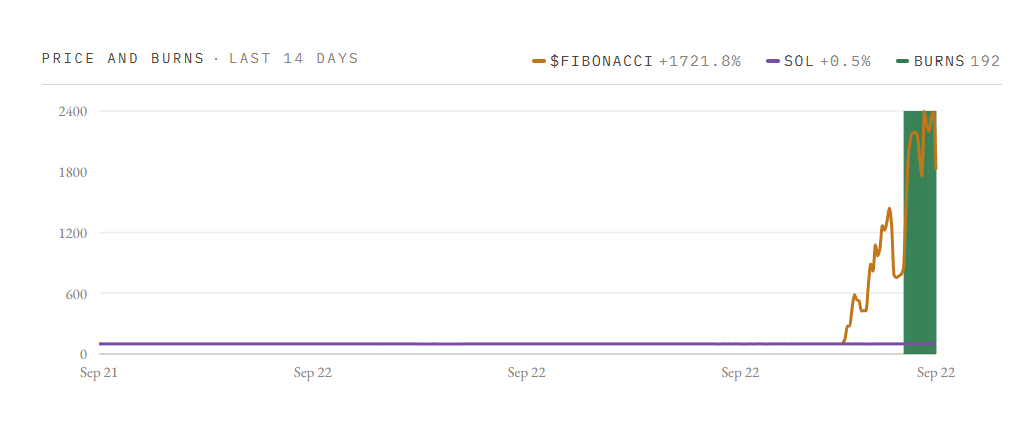
Chart is now properly displaying on the site.
You can watch the $Fibonacci price move alongside every burn in real time.
The green bars are permanent supply being removed from circulation.
https://t.co/p3pTSxBNNE
What happens when a memecoin is built around one of the most recognizable sequences in mathematics?
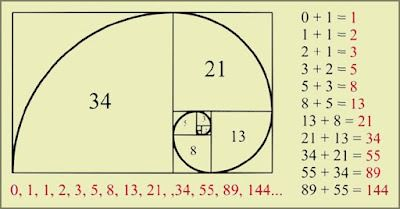
1, 1, 2, 3, 5, 8, 13, 21, 34, 55...
The sequence sets the rhythm. Volume provides the fuel. Time compounds the compression.
FYI for those who know nothing about floats and how supply affects price impact, here's a simple example.
Coin A and Coin B have the exact same demand, but Coin A has 1,000,000 tokens available in its tradable float while Coin B only has 100,000.
A $10,000 buy hits Coin A and has plenty of available supply to absorb it. That same $10,000 hitting Coin B is competing for a much smaller pool of tokens, so it can create significantly more price impact.
This is why float matters.
With $Fibonacci, every completed cycle buys tokens from the market and permanently burns them. If volume continues over time, the supply being traded against becomes progressively smaller.
The idea is that future demand is competing for a tighter and tighter float. Same demand, less available supply, greater potential price impact.
That's the compression thesis behind Fibonacci.