@TomasWyns Sweden already had the biggest deposit, this one beats it into second place. Aside from geopolitics, the CO2 footprint vs Chinese extraction is 50-80 times lower. We just have to choose that we want these mines…
@bataille_chris@DoctorVive@PSFennell It’s really cool. But numbers are unforgiving. Quick BotE: if cement used stayed flat at 4.4 Gt/yr, 60% of steel demand was EAF-based, and 50% of all EAF slag was used this way, this would cover 3% of cement demand…
@TomasWyns My reaction, too - very cool but limited part of the solution. Even if global cement demand stayed at 4.4 bn tonnes, EAFs grew to 70% of steel production via joint uptake of scrap + HBI, and 50% of all slag was used in this way, it would cover only 3% of 2050 cement production.
@CitizenSane1 Does “blast furnaces” really mean “iron making”, so include DRI shafts that were planned to run on natural gas? Otherwise this makes little sense…
All in all, this is an extraordinary opportunity for Europe, but only if the right policy & market conditions are put in place as soon as possible. The 2020s must be the decade of action. We identify 5 key areas: https://t.co/77oM4ejbh4 (8/8)
Decarbonising industry is critical to EU climate targets and to our economic competitiveness and autonomy. Our new report shows exciting momentum in industrial #cleantech, but also critical policy gaps: https://t.co/77oM4eAMFE (1/8)
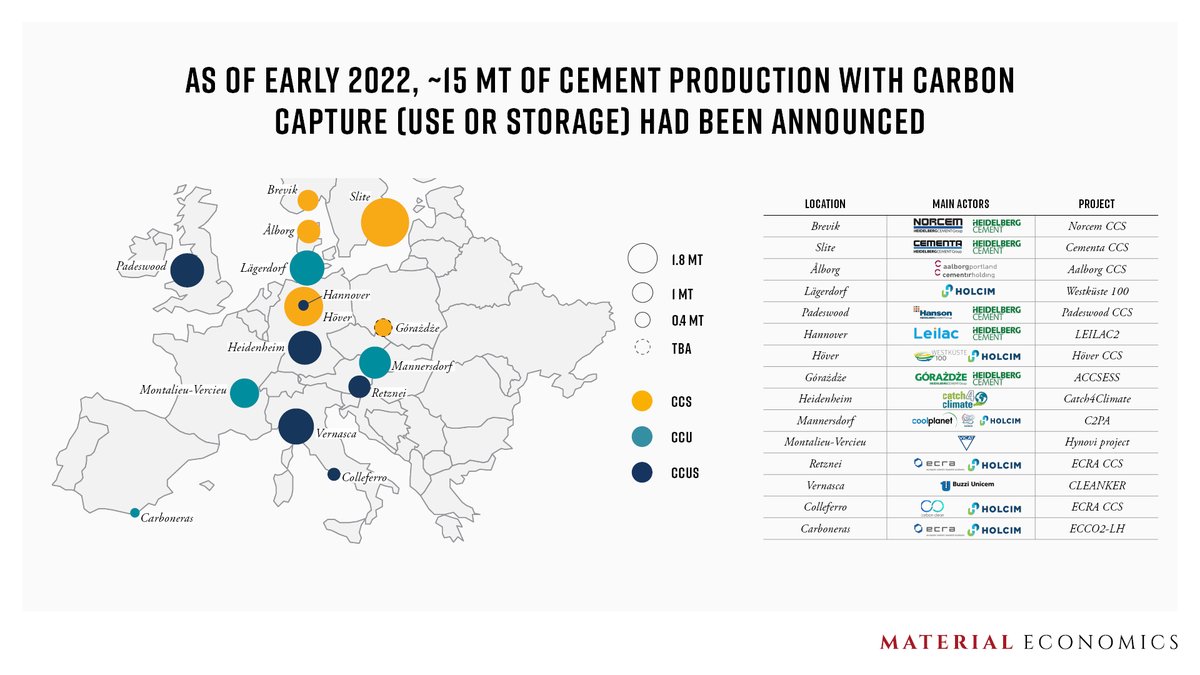
Decarbonising cement production is also crucial to achieving Europe's #netzero commitment. We spotlight pioneering CCS/CCU projects as well as novel cement & concrete formulations. (7/8)
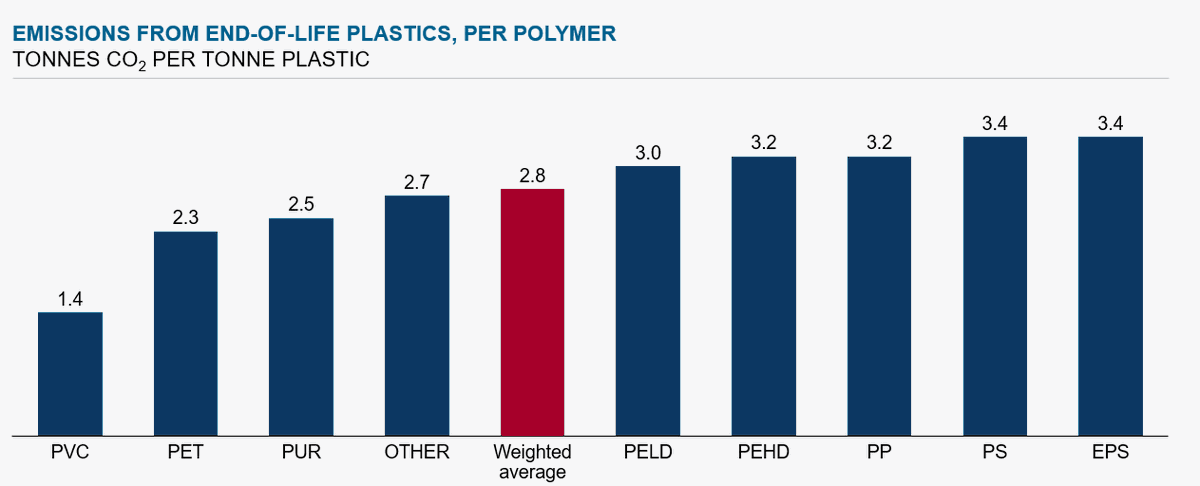
@andiwagner@KWitecka Re CO2: carbon share of polymers varies, from a low for those with lots of chlorine or oxygen, to very high for the polyolefins and polystyrene. 2.8 is a weighted average for EU flows.
@andiwagner@KWitecka Yes, hence my “contains carbon”. Not all is burnt. A lot is landfilled, c 10% of carbon makes it back via recycling. When and if landfilling is phased out as per targets it’s either burn or recycle.
@SomersJulian@KWitecka Quite agree. So need a long-term plan to go from 10% to 70+% circularity and for the remaining virgin production to use non-fossil carbon. https://t.co/LCnvjgEH6R
@SomersJulian@KWitecka New report coming on this Julian. The 20-30 Mt is bottom up data that misses many plastics flows. A major problem that we’re flying with the wrong data on this topic.
@bataille_chris Word. Add my favourite: low-binder formulations, where finely ground limestone, low water content, and then use of plasticicers together reduce the need for clinker (or a substitute) by up to 50%