He put his wife and daughters on a train to Sweden, knowing he would never see them again.Then, the Nazis came for him.
In November 1942, 44-year-old Sigurd Levin stood on a train platform in Oslo, Norway. He watched as his wife, Dora, and their two daughters fled to safety in neutral Sweden.Sigurd stayed behind.
He kissed them goodbye and promised he would join them soon. It was a lie but it was a lie born of pure love, meant to spare his children from the terror of the truth. Knowing the Gestapo was closing in and that escape routes were limited, he made the choice every parent hopes they never have to make: he traded his life for theirs.
Norway had a small, proud Jewish community. But when Germany invaded in 1940, the collaborationist Quisling government immediately turned on them. Passports were marked. Businesses were seized.Then came the raids.
On November 26, 1942, armed police tore through Jewish homes across Oslo. In a single morning, 532 people were arrested, loaded into the dark hull of the German cargo ship SS Donau, and shipped to Germany.
From there, cattle cars took them straight to Auschwitz.
Sigurd was on that ship. Out of the 773 Norwegian Jews sent to Auschwitz during the war, only 34 survived. Sigurd was not one of them.
History often overlooks a crucial fact: Over half of Norway’s Jewish population (around 900 people) actually survived the war.
They survived because of a massive grassroots resistance. Ordinary Norwegians risked their own lives to hide their Jewish neighbors, warn them of impending raids, and smuggle them through forests and across freezing lakes to Sweden.
Dora and her daughters survived in Sweden. They lived the rest of their lives carrying the heavy, beautiful, and unbearable knowledge that their father stayed behind so they could have a future.
Today, if you walk through Oslo, you might notice small brass plaques embedded in the cobblestones. They are called Stolpersteine (stumbling stones), marking the exact homes where Jewish families once lived.
One of them marks Sigurd Levin’s last known address. A quiet, permanent tribute to a man who should have been allowed to grow old in the city he called home.
"To forget the dead would be akin to killing them a second time." — Elie Wiesel
Sigurd Levin never saw his daughters grow up. He never got to hold his grandchildren or see his country liberated. But his sacrifice gave them life.
Remember his name.
In 1889, a biologist named William Hornaday counted every bison he could find in North America. His number was 1,091.
60 years earlier, somewhere between 30 and 60 million bison had moved across the Great Plains in herds so large they took days to pass. The sound of their movement could be heard from miles away.
The Lakota, Comanche, Blackfoot, and dozens of other nations had built entire cultures around them. Then the deliberate government policy of extermination to starve those nations into submission and industrial hunting with repeating rifles reduced that number to 1,091 in the span of a single human lifetime.
Their recovery was driven by a handful of private citizens, ranchers, conservationists, and later public agencies who gathered and protected some of the last surviving animals before they disappeared.
Theodore Roosevelt, William Hornaday, and others helped found the American Bison Society in 1905. Small herds in protected areas slowly grew. Yellowstone became especially important because it was the only place in the lower 48 where wild, free-ranging bison persisted into the 20th century.
By 1902, poachers had reduced its wild herd to about two dozen animals, but the Army stepped in to protect those survivors while also adding bison from private herds.
There are now hundreds of thousands of bison in North America, but most are in commercial or private herds managed largely for meat production. Only a small fraction are managed primarily for conservation, and fewer still live as wild, free-ranging bison on large landscapes where they can migrate, graze, wallow, and reshape prairie ecosystems.
The recovery is real and incomplete simultaneously. A species that nearly vanished within living memory exists in numbers that would have seemed impossible in 1889.
The land that shaped them, and that they shaped, is mostly gone. Both things are true and neither cancels the other. But the bison is still here.
10 July 1936 | A Dutch Jewish girl, Eva Minzer (or Münzer), was born at The Hague.
In February 1944 she was deported to #Auschwitz and murdered in a gas chamber after the selection together with her younger sister Liane (in the picture: Eva (left), Liane (right)).
Her name is Rukhsana Kausar.
She was twenty years old, a farmer's daughter in a small village in Kashmir who had left school after class ten. One night, armed terrorists broke into her home to drag her away. By morning their commander was dead, killed with his own rifle, by her.
It was the night of 27 September 2009. Three militants of the Pakistani terror group Lashkar e Taiba came to her family's house in Rajouri. They forced their way in and demanded that the family hand Rukhsana over to them.
Her father refused. So they began to beat him, and her mother, and her brother, with the butts of their guns.
Rukhsana was hiding under a cot, listening to her family being battered in front of her. And something in her decided that she would not stay hidden while they were killed.
There was an axe in the room. She picked it up, rushed out, and struck the terrorists' commander on the head. As he staggered, she pulled the rifle from his hands, turned it on him, and shot him dead.
She grabbed a second weapon and threw it to her brother. Together they opened fire on the remaining two, who fled into the night.
The man she killed was Abu Osama, a commander of Lashkar e Taiba, a name the security forces had been hunting for years.
A twenty year old girl with no training, who had never held a gun in her life, had killed a wanted terrorist with his own weapon and saved her whole family.
She was given the Kirti Chakra, one of the highest bravery awards India has. Later she put on a uniform of her own and became a police constable.
They came to her home to make her disappear. She made sure it was their commander who never went home.
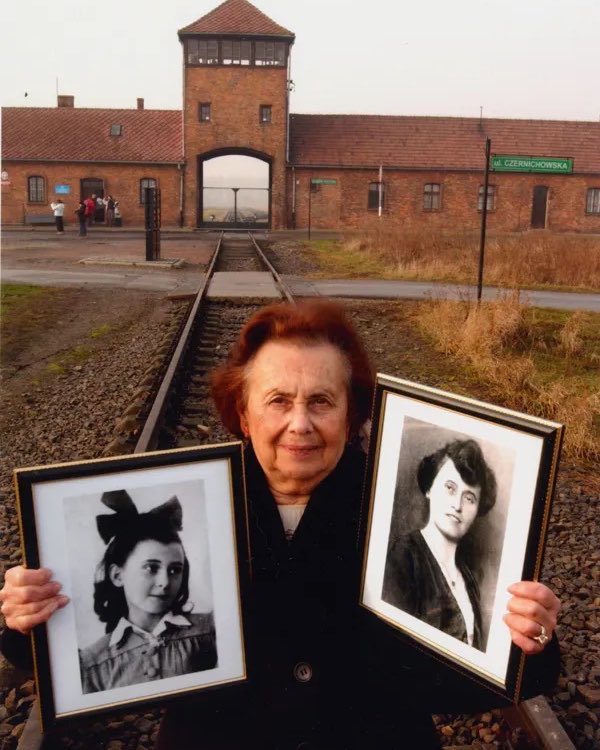
82 years ago today, my great-grandmother, Lily Ebert, arrived at the gates of Auschwitz-Birkenau.
Within hours, her mother, youngest brother and youngest sister had been murdered in the gas chambers. More than 100 members of her extended family were murdered that day. They have no graves. No final resting place. Their ashes were scattered across the fields of Auschwitz.
She survived the unimaginable.
For the next 80 years, she dedicated her life to ensuring the world would never forget what happened there.
Although she passed away in October 2024, her legacy continues to grow.
This morning, our family welcomed her second great-great-grandchild into the world. Lily only had the chance to meet her first.
Hitler lost. The Nazis failed. Lily won.
And the Jewish people are still here.
Little girl named Jazzy is battling Brain cancer for the last 8 years and she and her family was homeless. This brother helped get the whole family a car and he launched a fundraiser for Jazzy and it raised 1 million dollars.
In 1934, at the height of the Great Depression, a 26-year-old artist from upstate New York published a small book about birds. Publisher after publisher had rejected it.
The one that finally said yes, Houghton Mifflin, printed 2,000 copies and worried about selling them during an economic collapse. They sold out in two weeks.
Before Roger Tory Peterson's A Field Guide to the Birds, identifying a wild bird required either a specimen in hand or access to large multi-volume scientific tomes written for researchers, not ordinary birders
What Peterson did was deceptively simple: he illustrated birds the way you actually see them in the field, in natural postures, and added small arrows pointing to the specific visual features that distinguish one species from another.
A flash of wing pattern. A stripe above the eye. The shape of a bill. He called them field marks, and the system let someone standing in their backyard with no scientific training identify what was in the tree in front of them.
The ripple effect of that book is almost impossible to overstate. It created mass birdwatching as a popular activity in America. It changed what millions of people noticed when they went outside. It built the constituency that would eventually fund the conservation movement, lobby for the Endangered Species Act, and sustain organizations like Audubon and Cornell's Lab of Ornithology for decades.
Peterson spent the rest of his life expanding the system, field guides to western birds, European birds, wildflowers, insects, tracks, shells. He died in 1996 at 87, still working. The series he created has sold millions of copies.
The guide in your pack, or on your phone, or on your shelf is the direct descendant of a small rejected book about birds that sold out in two weeks during the worst economic crisis in American history.
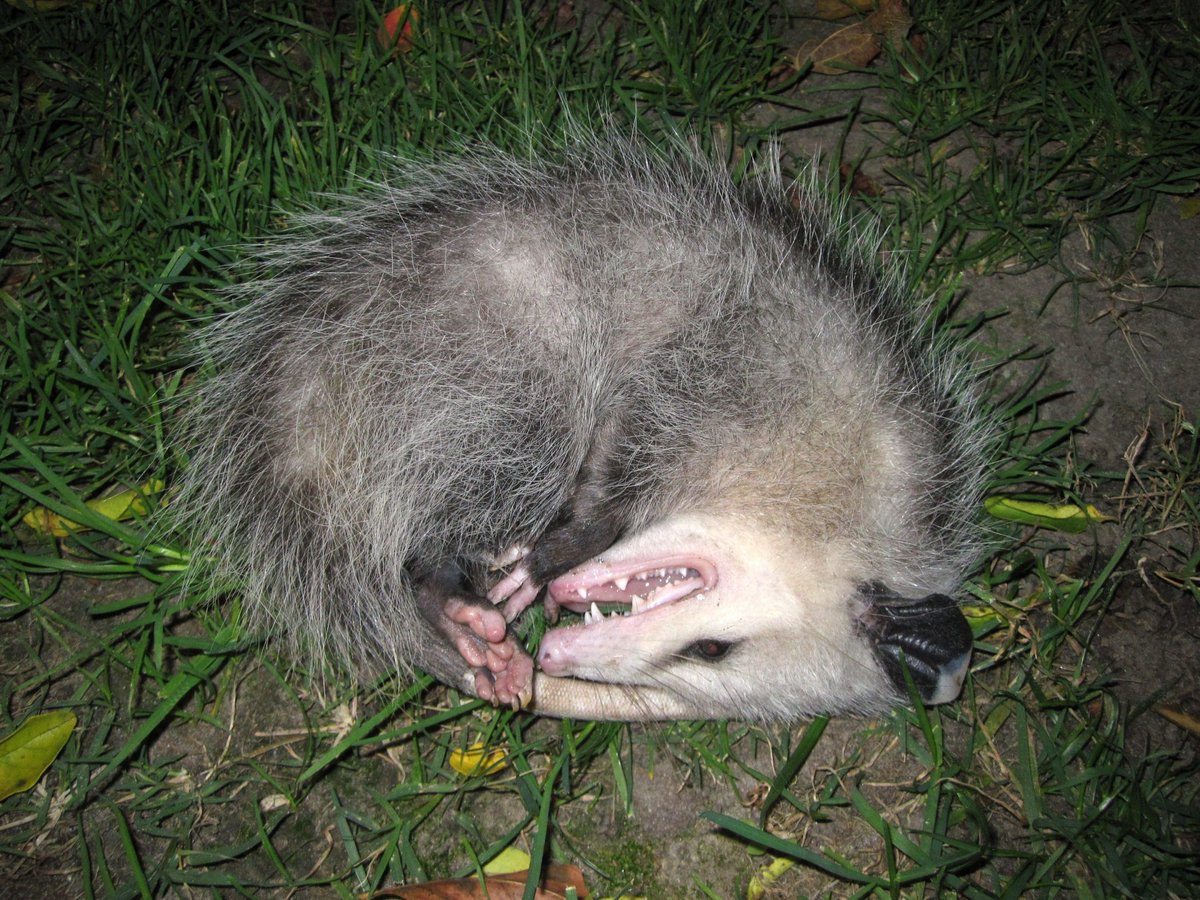
When an opossum plays dead, it's actually not playing at all.
Tonic immobility in opossums is an involuntary physiological response triggered by extreme fear, the same basic mechanism as fainting in humans.
The opossum has no control over it, can't choose to stop it, and can't be snapped out of it by noise, prodding, or anything else. It just has to run its course, anywhere from a few minutes to several hours.
Your move is simple: leave it where it is and walk away.
The northern bobwhite used to be the soundtrack of American farm country. Its two-note whistle, "bob-WHITE," carried from fence lines, pastures, and brushy field edges across much of the eastern and southern United States. It was so familiar that people whistled back at it.
In the last 50 years, the population has declined by roughly 85%. The call that defined rural summers for generations is now missing from much of its former range.
The main cause for the decline is habitat loss. Bobwhites need a specific kind of messy landscape: open grassland, bare ground, brushy edges, weedy cover, native grasses, and scattered thickets close enough together that a bird can feed, hide, nest, and escape predators without crossing a biological desert.
Modern agriculture has cleaned up much of that world. Brushy field edges were sprayed or mowed. Weedy patches disappeared. Old pastures grew into closed-canopy woods or were converted to cleaner, denser fields. Fire was suppressed. The landscape stopped giving them places to live.
The instinct is to try to fix it by releasing pen-raised birds. That usually doesn’t work. Captive-reared bobwhites have very low survival after release; USDA has reported that less than 3 percent survive to breeding season. They often lack the survival skills of wild birds, and large-scale releases can also risk negatively impacting the genetics of the wild populations that are still hanging on.
What brings bobwhites back is habitat: brushy field edges, native warm-season grasses, weedy cover, bare ground, thickets, and the kind of fire-maintained open landscape that once defined much of the rural South.
Some landowners and wildlife managers are doing this work, and in those places the birds are finding a new home.
With great sadness, we received information about the passing of Dr. Eva V. Ebin, a Hungarian-Jewish Auschwitz Survivor.
Born on 31 October 1926, in Budapest, Dr. Eva V. Ebin, née Eva Szegel, grew up in Munkács, a Jewish community where only about 15 percent survived the Holocaust.
Eva was deported from Munkács to Auschwitz in May 1944 at age 17. Her mother and much of her extended family were murdered upon arrival. In November 1944, she was transferred from Auschwitz to Lenzing, a subcamp of Mauthausen in Austria, where she was liberated in early May 1945.
After the war, she raced to fulfill her childhood dream of becoming a doctor. She completed medical school in Vienna, immigrated to the United States, married, and became Dr. Eva V. Ebin, a board-certified pediatrician and psychiatrist in New York.
She died on July 6, 2026, at 99 years old, and is remembered by three of her four children, 22 grandchildren, 58 great-grandchildren, and friends for her elegance, discipline, high standards, and love.
So much wildlife is lost in water troughs each year, and especially owls🦉😢
They go in to have a drink, or have a bath, and then they can't get out.
But it's really simple to make a water trough safe for wildlife. Here's what to do 👇
A dangerous parasite causing weeks of explosive diarrhea is spreading quickly across the United States and has now affected people in 17 states.
The Centers for Disease Control and Prevention is monitoring a significant domestic increase in cyclosporiasis an intestinal infection caused by the microscopic parasite Cyclospora cayetanensis. From May 1 to June 16 2026 health officials confirmed at least 145 cases with 20 people hospitalized.
This parasite does not typically spread directly from person to person. Infections usually occur through consumption of food or water contaminated with microscopic fecal matter most often linked to raw produce.
Notably none of the patients reported recent international travel indicating the source is domestic food contamination within the United States.
New York has recorded the largest number of cases followed by notable increases in Texas and Illinois. Experts believe the actual number is much higher because many people with milder symptoms do not receive the specific testing needed to identify Cyclospora.
Symptoms include severe watery diarrhea bloating nausea and extreme fatigue that can persist for weeks without treatment. Health authorities emphasize that fresh produce is important for a balanced diet but recommend washing all fruits and vegetables thoroughly under running water and scrubbing firmer items such as melons and cucumbers.
[Centers for Disease Control and Prevention. (2026). Surveillance of Cyclosporiasis]
The Nazis believed they knew exactly who the dangerous people were. They put Mildred Harnack's name near the top of the list.
An American born in Milwaukee, Mildred could have lived a quiet life. Instead, she moved to Germany, where she watched Adolf Hitler's regime tighten its grip year after year. While many stayed silent out of fear, she made a decision that carried a death sentence.
Together with her husband, Arvid Harnack, she helped build one of Berlin's most courageous underground resistance networks. The group secretly gathered military intelligence, distributed anti-Nazi leaflets, and quietly urged Germans to resist a government that demanded absolute obedience. Every meeting, every message, every whispered conversation risked execution.
The Gestapo eventually dismantled the network in 1942. Mildred was arrested, interrogated, and brought before the notorious People's Court. She was initially sentenced to six years in prison.
For Hitler, that wasn't enough.
Enraged by what he considered an insult to the Reich, Hitler personally ordered a retrial. This time, the verdict was death.
On February 16, 1943, Mildred Harnack was led to the guillotine at Berlin's Plötzensee Prison. Her final recorded words were simple and unforgettable:
"And I have loved Germany so much."
She became the only American civilian executed on Hitler's direct orders during World War II.
The Nazis called her dangerous because she proved a single determined person could threaten a dictatorship built on fear. They were right. Long after the Third Reich collapsed into history, Mildred Harnack's courage continues to outlive the men who tried to silence her.
#archaeohistories
🚨 BREAKTHROUGH: Scientists have created a single vaccine that could fight ANY cancer.
Not one type. Not a few.
ANY cancer.
And it just shrank tumors that were previously untreatable.
Here’s how this changes everything 🧵
There are roughly 454 adult Ethiopian wolves left on Earth. All of them live on mountain plateaus above 10,000 feet in Ethiopia, hunting giant mole rats across the Afroalpine moorlands. It is the rarest canid species in the world and Africa's most endangered carnivore.
It looks more like a long-legged fox than what most people picture when they hear "wolf," but genetics settled the question: the Ethiopian wolf is remarkably more closely related to the gray wolf and the coyote than to any other African canid.
Its ancestors likely came from wolf-like canids that entered Africa from Eurasia, then gradually specialized into one of the most focused predators alive: a mostly solitary hunter built around catching rodents.
Researchers documented something else a bit unexpected about these canids.
After a hunt, individual wolves were observed wandering into fields of red hot poker flowers and licking the nectar. One wolf visited 30 flowers in a single foraging trip. Pollen covered its muzzle with every visit.
It's the first large carnivore ever recorded feeding on flower nectar. The researchers who published the finding noted it may make the Ethiopian wolf the first known large predator to also function as a pollinator, carrying pollen between plants on its face while hunting an entirely different kind of meal.
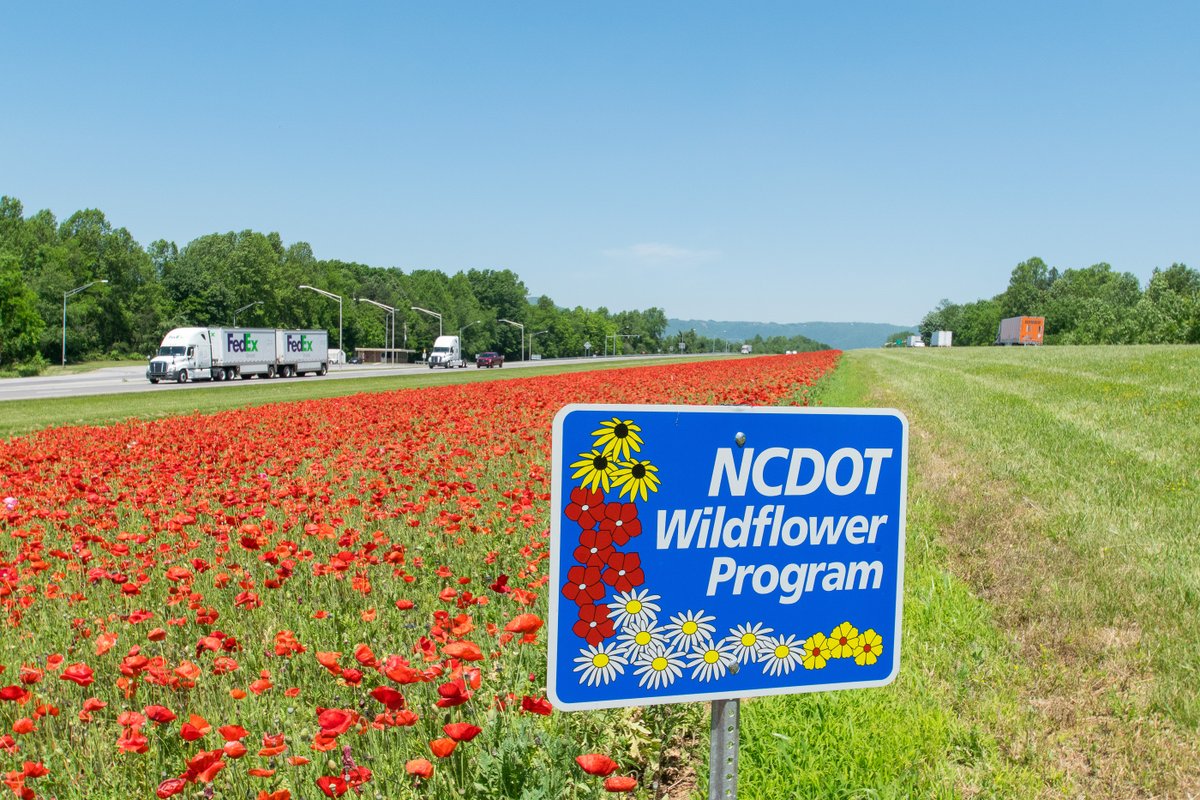
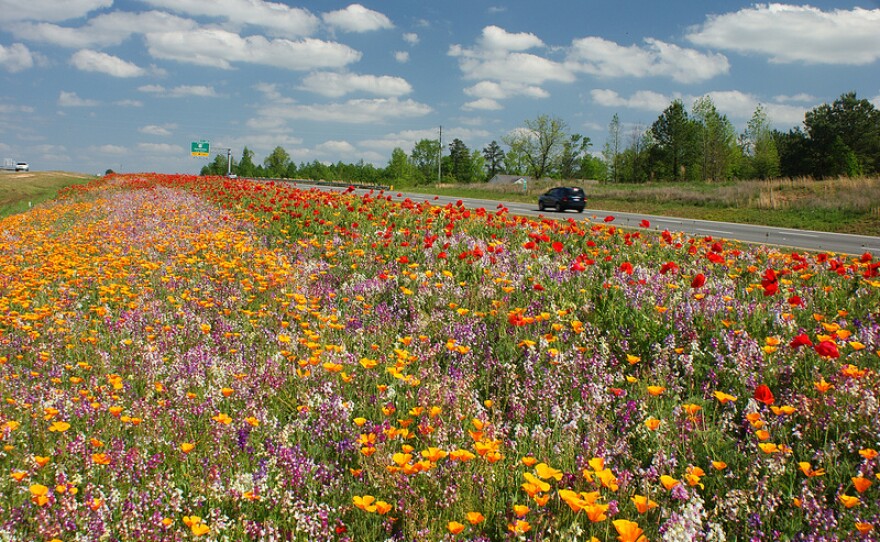
The US mows roughly 12 million acres of roadside every year. That's larger than the state of Maryland, maintained as mowed grass that feeds almost nothing, at a cost of hundreds of millions of dollars annually.
North Carolina figured out a better use for it in 1985. What started as 12 experimental acres of native wildflowers planted along roadsides has grown to 1,500 managed acres across the state, saving an estimated $200,000 a year in mowing costs while providing habitat for pollinators, birds, and the beneficial insects that control crop pests on nearby farms.
A 2024 BioScience review found something surprising to many: a mown safety strip immediately adjacent to the pavement, with native wildflowers planted in the wider verge beyond it, actually reduces insect mortality by keeping pollinators on one side of the road rather than crossing it.
12 million acres is an enormous amount of potential habitat that currently does almost nothing. The fix isn't complicated. It's mostly just stopping the mower in the right places.
Studies:
Doi 10.1093/biosci/biad111
Doi 10.1007/s10841-018-0051-2
Your bird bath might be missing half its potential users at best, and at worst might be drowning them.
Pollinators and smaller songbirds enjoy a good drink on a hot day from a bird bath, but many can't safely drink from standard bird baths. The water is too deep, the edges are too slick, and they can't land safely.
Bees wind up drowning in them, butterflies avoid them, and smaller birds like chickadees and finches wait for a puddle instead.
The fix? A few large rocks. Even a single rock in the center of your bird bath breaks the surface of the water and turns your bird bath into a more usable piece of habitat.
With rocks in place, bees can land and drink safely. Butterflies can perch. Smaller birds have a safe resting spot.
It doesn't cost anything if you're good at looking for rocks, takes about 30 seconds to do, and it likely doubles who can use your bird bath.













![Rainmaker1973's tweet photo. A dangerous parasite causing weeks of explosive diarrhea is spreading quickly across the United States and has now affected people in 17 states.
The Centers for Disease Control and Prevention is monitoring a significant domestic increase in cyclosporiasis an intestinal infection caused by the microscopic parasite Cyclospora cayetanensis. From May 1 to June 16 2026 health officials confirmed at least 145 cases with 20 people hospitalized.
This parasite does not typically spread directly from person to person. Infections usually occur through consumption of food or water contaminated with microscopic fecal matter most often linked to raw produce.
Notably none of the patients reported recent international travel indicating the source is domestic food contamination within the United States.
New York has recorded the largest number of cases followed by notable increases in Texas and Illinois. Experts believe the actual number is much higher because many people with milder symptoms do not receive the specific testing needed to identify Cyclospora.
Symptoms include severe watery diarrhea bloating nausea and extreme fatigue that can persist for weeks without treatment. Health authorities emphasize that fresh produce is important for a balanced diet but recommend washing all fruits and vegetables thoroughly under running water and scrubbing firmer items such as melons and cucumbers.
[Centers for Disease Control and Prevention. (2026). Surveillance of Cyclosporiasis]](https://pbs.twimg.com/media/HMePROmXYAAgsud.jpg)