demethylation in summer. Environmental drivers of these dynamics were integrated into a conceptual model (1). This study provides new insights on the microbial processes influencing the Hg cycle in thawing Arctic permafrost lakes.
Check it out here: https://t.co/hgZsQy976b
The latest paper from the PERMAMERC team has been recently published in Scientific Reports! In this peer-reviewed scientific publication, titled “The role of prokaryotic mercury methylators and demethylators in Canadian Arctic thermokarst lakes”,
the Hg methylation, and hgcA gene coverage from winter to summer, mirroring patterns in mercury methylation rates. These results indicate a seasonal shift in the microbial community, transitioning from a dominance of mercury methylation in winter to a predominance of mercury
✨️RECENT NEWS: the PERMAMERC Project has published two review papers exploring mercury dynamics in Arctic permafrost ecosystems and natural organic matter characterization techniques applied to research in permafrost peatlands ✨️
This review paper focused primarily on recent research employing analytical techniques (i.e. UV-Visible and Fluorescence spectroscopy; FTIR spectroscopy, NMR spectroscopy; FT-ICR-MS) to characterize natural organic matter to study biogeochemical processes in permafrost regions.
Three days to discuss results and write papers in areas as diverse as microbiology (@CiimarUp ), remote sensing (@IGOT_ULisboa ) or environmental chemistry (@istecnico and @universitelaval ) of thermokarst lakes.
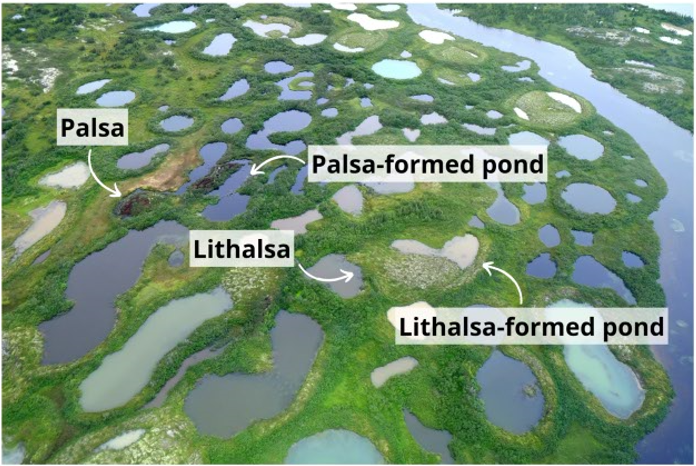
📸: Thermokarst landscapes with palsa-formed (organic soil) and lithalsa-formed (mineral soil) ponds in the wetlands of BGR, in the Sheldrake River basin