The Project for Educational Research That Scales (PERTS) is a nonprofit that equips educators to create learning conditions that boost engagement and accelerate
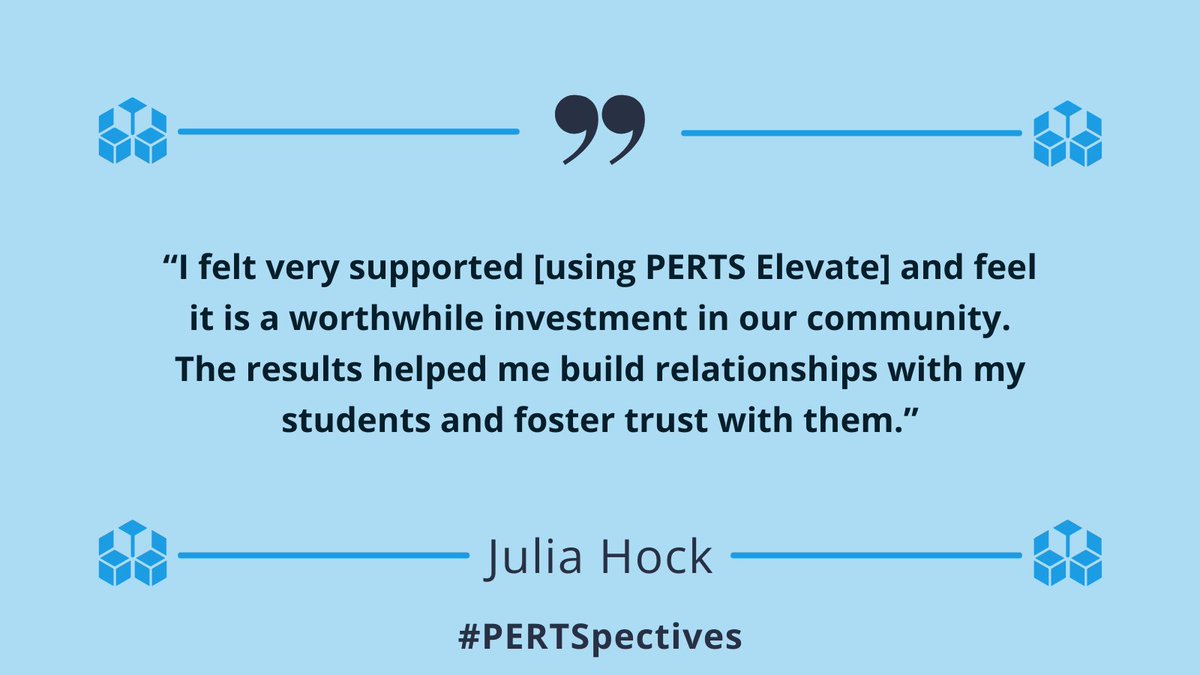
At Dixon Elementary, Julia Hock saw student-teacher relationships flourish through trust and support using insights from Elevate.
When students feel seen and supported, classrooms become positive and uplifting communities.
https://t.co/zC2Sr15bWL
#PERTSpectives
At Prosser Career Academy High School, Marianna Jennings found new focus in her reflection on her teaching practice:
Reflection is powerful, but focused reflection drives positive change for improving student learning conditions.
https://t.co/zC2Sr15bWL
#PERTSpectives
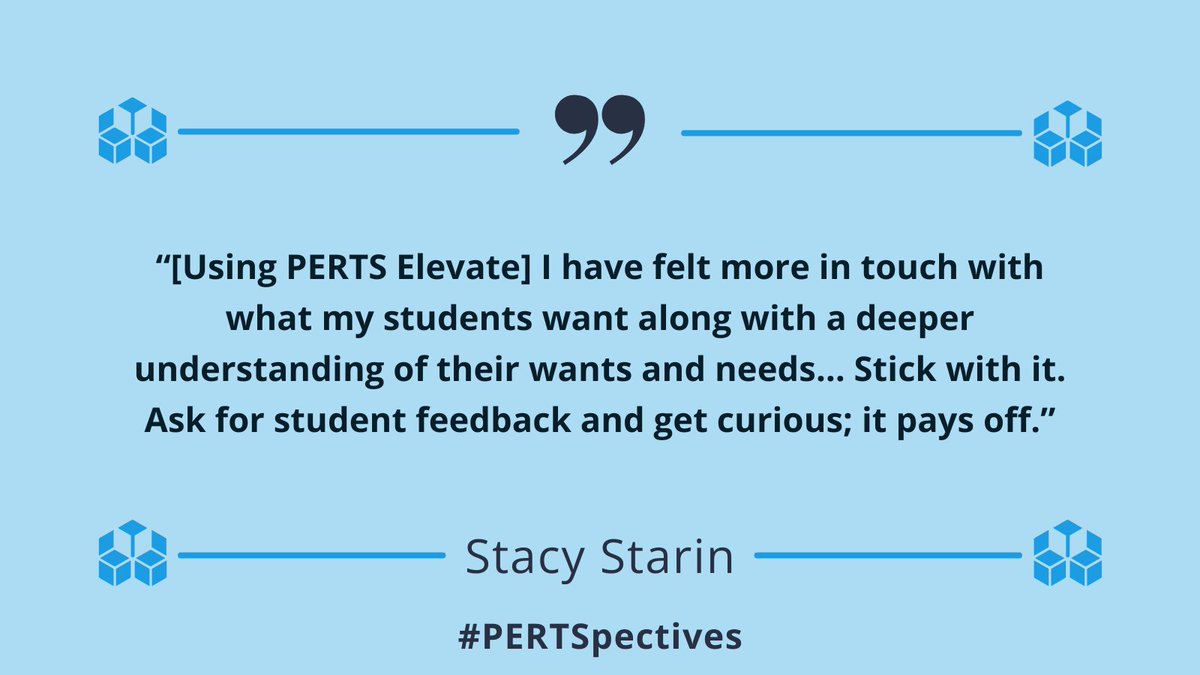
At Waunakee Intermediate School, Stacy Starin deepened her connection to students by leaning into curiosity:
Getting curious is the first step toward building trust with students and transforming teaching.
https://t.co/zC2Sr15bWL
#PERTSpectives
At The Virtual School in Chicago Public Schools, Jamil Cary embraced real-time reflection on student feedback:
Listening to students doesn’t have to wait for the end of a quarter. Real-time feedback helps fuel real-time improvement.
https://t.co/zC2Sr15bWL
#PERTSpectives
At Iron Horse Middle School in SRVUSD, Lacey Lowe found strength and value in collaboration with teachers in communities of practice.
Student voice work grows stronger when educators reflect and grow together.
https://t.co/zC2Sr15bWL
#PERTSpectives
At Bradford High School in Kenosha Unified, Amy Stephan knows that how you introduce student voice surveys matters:
When educators are clear with students about the purpose of a feedback survey, they respond with care.
https://t.co/zC2Sr15bWL
#PERTSpectives
At George Westinghouse College Prep, Keith Dumbleton found that consistency created meaningful feedback loops.
When feedback becomes a habit, students see that their voices make a difference.
https://t.co/zC2Sr15bWL
#PERTSpectives
At Union Local Elementary in Union Local Schools, Autumn Swallie watched classroom culture transform.
When students feel empowered, they don’t just participate, they lead.
https://t.co/zC2Sr15bWL
#ClassroomCulture#StudentEmpowerment#PERTSpectives
At Martin Luther King Middle School in Santa Rosa County, Katheryn McBrien transformed her classroom by listening deeply.
When feedback flows both ways, classroom communities thrive. That’s the power of student voice.
https://t.co/zC2Sr15bWL
#PERTSpectives
The first few weeks of school are a powerful time to co-create the kind of learning environment students want to be part of.
One practical strategy from the Classroom Community guide: Invite students to help create classroom norms. When students collaborate on norms that reflect what they want to see, hear, and feel in class, they’re more likely to invest in upholding them. This promotes mutual accountability, encourages peer support, and lays the foundation for a respectful, collaborative space. 📚🌱
Start with prompts like:
🔷 “What makes a classroom feel welcoming?”
🔷 “What helps you feel comfortable speaking up?”
Learn more: https://t.co/cwlVV07cjp
#BackToSchool #StudentEngagement #ClassroomCulture #CommunityBuilding
Start building a feedback-rich culture with a simple protocol students can use with each other. From the Feedback for Growth guide:
✨ Try the “𝐈 𝐋𝐢𝐤𝐞, 𝐈 𝐖𝐢𝐬𝐡, 𝐈 𝐖𝐨𝐧𝐝𝐞𝐫” protocol to guide peer-to-peer feedback. It helps students offer thoughtful praise, specific improvement suggestions, and curiosity-driven questions. This structure promotes respectful dialogue and reinforces the idea that improvement is for everyone.
🔷 Model it first
🔷 Use it during writing, presentations, or projects
🔷 Reflect on what makes feedback helpful
#StudentOwnership #BackToSchoolStrategies #PeerFeedback #ElevatePractice
Explore more: https://t.co/oGFWYwUuyC
At Waunakee Unified School District, Kristin McKenna uses data to strengthen classroom ownership and trust:
When students know you’re truly listening, they lean in. Elevate helps make classrooms feel like a shared space for growth.
https://t.co/zC2Sr15bWL
#PERTSpectives
Trust grows through consistent, low-pressure opportunities to connect. That’s why early in the school year is the ideal time to introduce classroom circles, a simple structure that helps students see and hear each other in authentic ways.
Circle prompts can range from fun (“What’s your favorite way to spend a weekend?”) to reflective (“What helps you feel ready to learn?”). When practiced regularly, circles help create a classroom culture where students feel known and ready to engage.
✨ From the Classroom Community guide:
🔷 Use a talking piece
🔷 Keep the circle open and inclusive
🔷 Make space for both light and meaningful check-ins
#CommunityBuilding #TrustInClassrooms #BackToSchoolIdeas #ElevateTools
➡️ More ideas: https://t.co/cwlVV07cjp
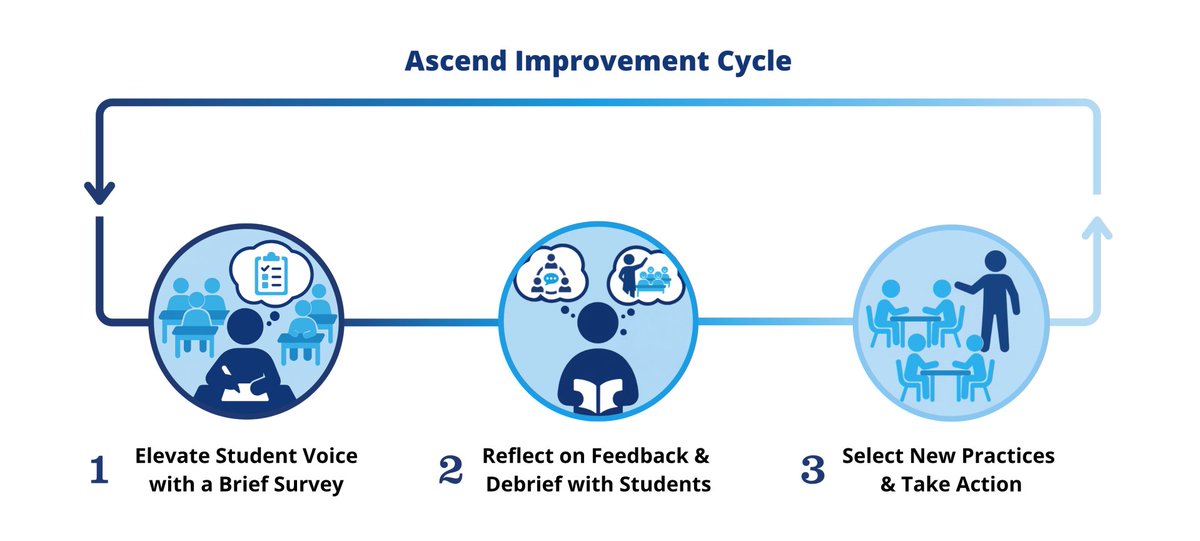
Ascend helps district and campus teams use structured routines, like guided team meetings and empathy interviews, to bring consistency across classrooms.
Rather than relying on isolated changes, Ascend supports leadership teams in embedding continuous improvement into day-to-day systems that faculty already use. A strong system is what turns good intentions into real impact.
Learn how Ascend works: https://t.co/vHmJs2jQ3I
#SchoolImprovement #StartOfSchool #InstructionalLeadership #AscendTools
Early in the year is the perfect time to reframe mistakes as valuable feedback. Research shows that when teachers emphasize learning and growth, rather than perfection, students are more motivated and persistent.
✨Try this practice from the Feedback for Growth guide:
🔷 Highlight errors in student work without correcting them right away.
🔷 Ask students to identify patterns and revisit their work.
🔷 Follow up with time to revise and reflect on what they’ve learned.
This process communicates that everyone is capable of growth, and that feedback is a tool, not a judgment. 🌱
Download the guide: https://t.co/oGFWYwUuyC
#GrowthMindset #FeedbackForLearning #InstructionalPractice #BackToSchool
At Simeon High School, Tyesha Moore used Elevate in her online class to spark real connection:
Even in virtual settings, student voice makes a big impact. Elevate helps educators bridge the gap between the computer and the classroom.
https://t.co/zC2Sr15bWL
#PERTSpectives
Community builds confidence. Use structured activities like classroom circles to help students connect, build trust, and learn together.
✨Try This: Use weekly classroom circles with prompts like, “What helps you feel comfortable speaking up?” Start with light, engaging questions and build deeper connections over time.
From the Classroom Community Guide. 📚
Explore: https://t.co/cwlVV07cjp
#StudentExperience #Belonging #BackToSchoolTips
At the college or campus level, conditions matter just as much as in the classroom. Ascend supports leadership teams in making the everyday systems that guide meetings, planning, and PD more supportive and responsive.
Instead of relying on assumptions, Ascend helps faculty listen to staff and students, using data and dialogue to guide strategic improvements. That approach creates more consistent learning environments across classrooms.
Learn how Ascend supports campus-wide change: https://t.co/vHmJs2jQ3I
#SchoolLeadership #StartOfSchool #LearningCulture #StaffSupport
Creating space for student voice is only half the work, action is essential. School leaders and teachers can move from listening to acting on student input.
✨Implementation Tip:
In Community of Practice (CoP) meetings or Professional Learning Communities (PLCs), incorporate empathy interviews and chalk talk structures so teachers hear students’ ideas. Then use brainstorming protocols to identify high-impact changes, like adjusting routines or lesson formats, based on student suggestions.
📚Classroom Practice:
Run a classroom “Chalk Talk” where students respond in writing. Use the outcomes to adapt class systems and routines before the next CoP cycle.
#StudentVoiceInAction #CoPlanning