Check out the latest FLARE blog post where my colleague Nino Isakovic & I dove into LummaC2’s recent control flow obfuscation scheme!
https://t.co/QdI3lUg8fs
Researchers from Palo Alto Networks Unit 42 identified a variant of the WikiLoader loader for rent (a.k.a. WailingCrab) being delivered via SEO poisoning and spoofing the company's GlobalProtect VPN software. https://t.co/7KCKDRRAcl
From a fake error message to a folder name as a decryption key, this technical analysis of a variant of the malware WikiLoader (aka WailingCrab) shows deceptive campaigns involving a spoof of Palo Alto Networks GlobalProtect VPN. https://t.co/UavG895T5t
Really thrilled and truly honored to receive this year's Pwnie Award for Most Innovative Research with @le_douds. It's a wonderful wrap-up for our work. Can't wait to start the next journey of our research. Great thanks to @PwnieAwards! #defcon32
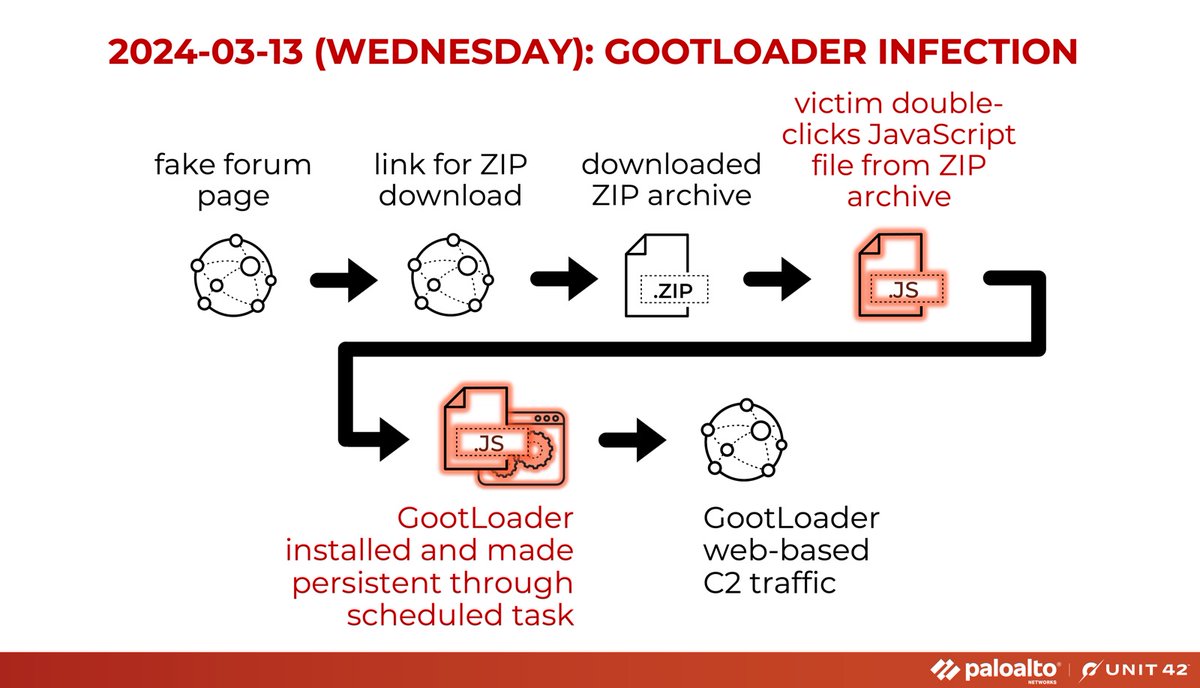
Palo Alto Networks' Riley Porter & Mark Lim (@peta909) describe how to circumvent anti-analysis techniques from GootLoader while using Node.js debugging in Visual Studio Code. https://t.co/B76zKBXon7
.@virusbtn's #VB2023 London is happening now! On Oct. 6 (tomorrow) you can hear PANW Senior Reverse Malware Engineers Mark Lim and Zong-Yu Wu explore selected configuration protection techniques employed by various #malware families. Details here: https://t.co/9f54e4VWMi
Palo Alto Networks' Mark Lim (@peta909), Daniel Raygoza (@danielvx) & Bob Jung share how they extract IcedID malware configuration data directly from memory and how this could be scaled to other families. https://t.co/NCe4YyM7HS
Learn how to deobfuscate a #Guloader sample that uses anti-analysis techniques, as well as others using similar techniques such as #Dridex. https://t.co/uByZGalYYj