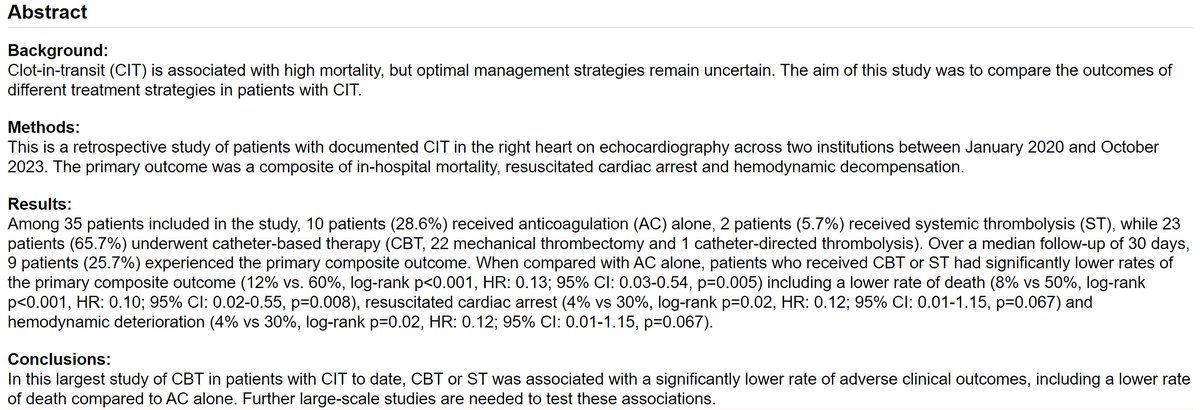
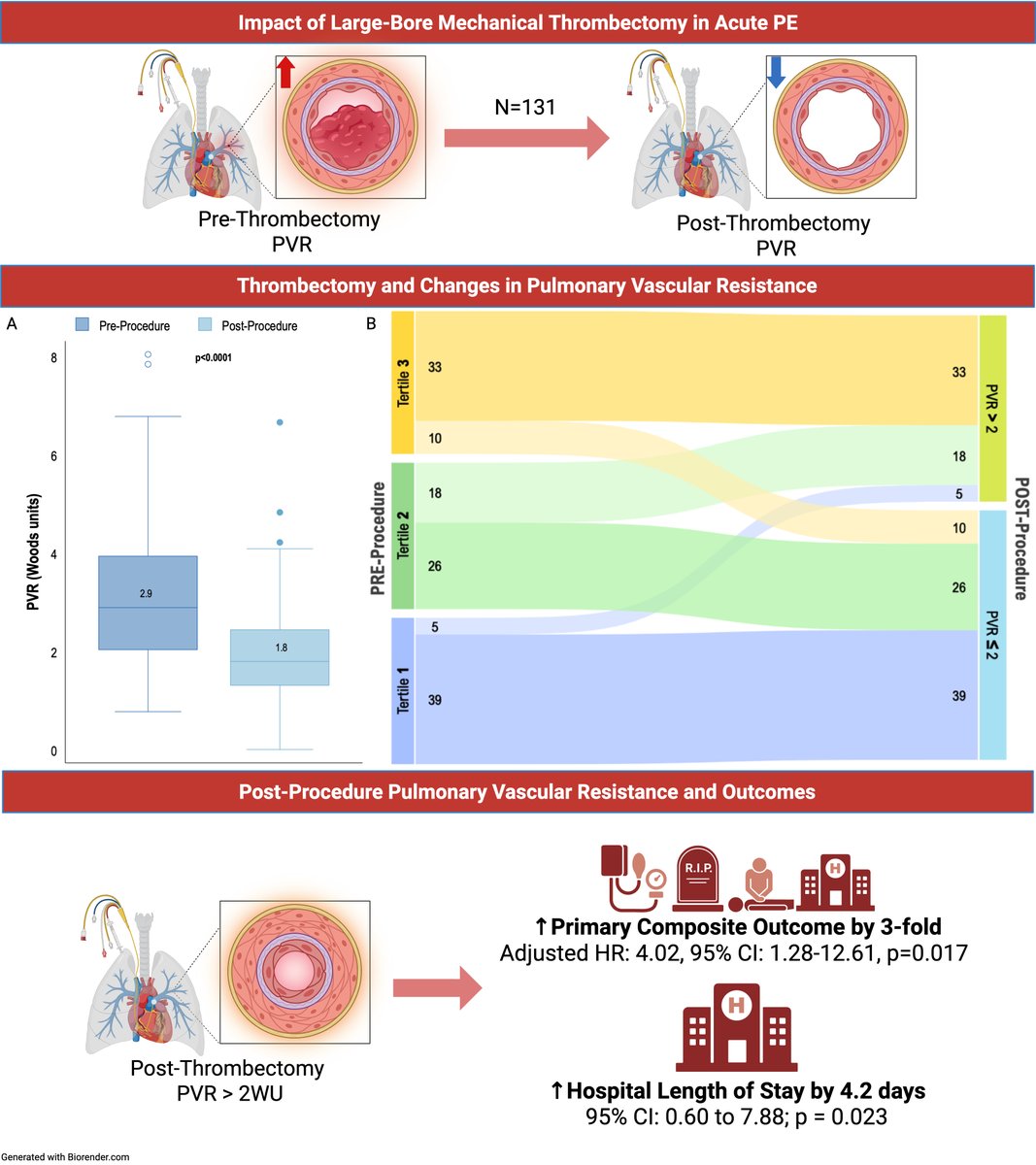
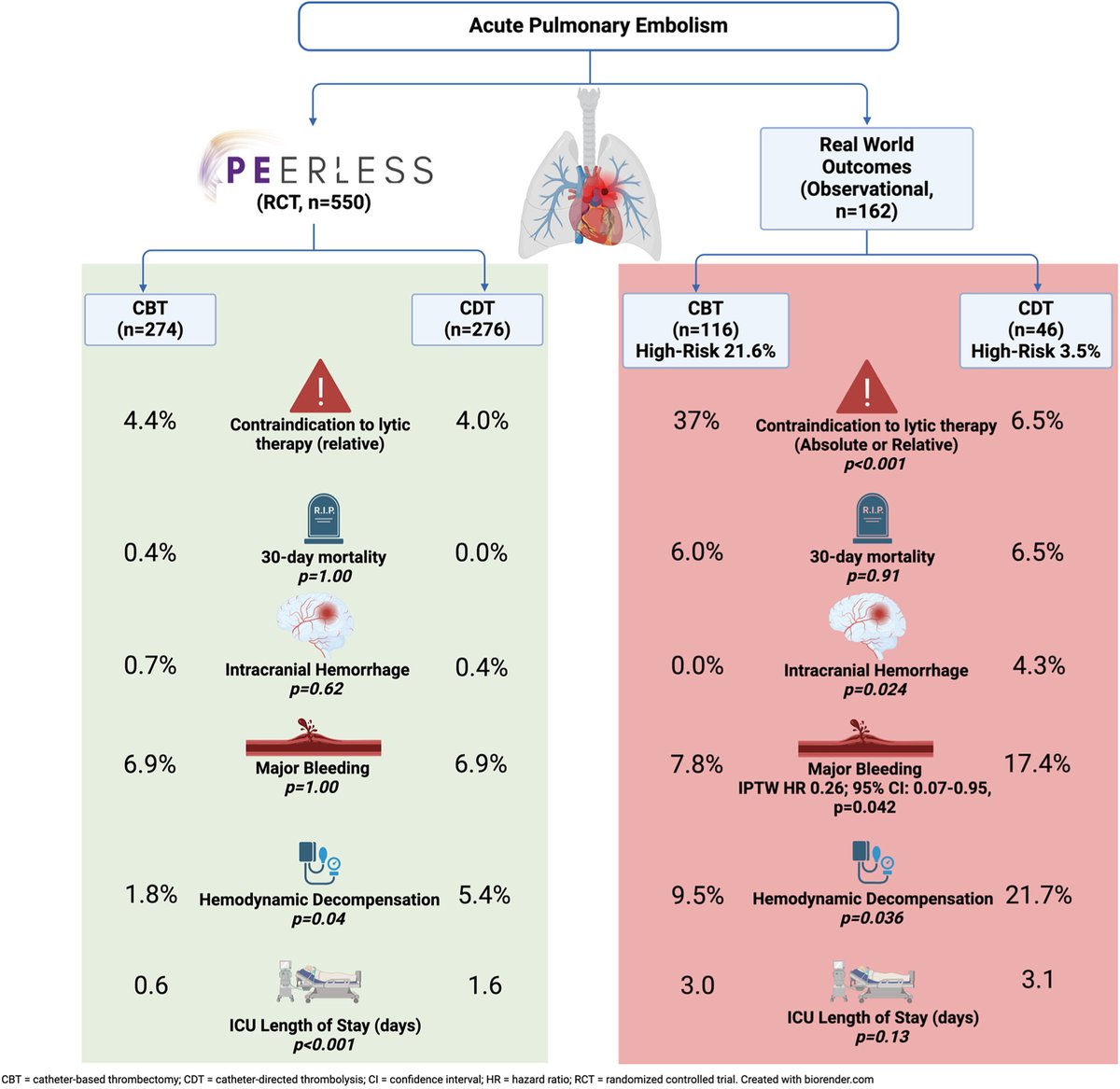
✅out our latest📜🔍in @CRM! In an IPTW analysis, LBMT was associated with better outcomes vs AC alone in intermediate-risk PE pts assessed by local PERT. The CPES score may help identify pts most likely to benefit from LBMT.
@SripalBangalore@CardsNYC
🔗https://t.co/iCqds6aOhP
Accompanying editorial on our latest publication exploring the relationship between syncope and acute PE! 🔎📜@AmJCardio@ShubhaPawar
🔗https://t.co/llKHkEsOrB
@JasonKatzMD@robertshiuzhang@CardsNYC@jameshorowitzmd Definitely! We may have been underpowered to detect a difference. Also important caveat is we only looked at syncope on presentation — there was a reasonable delay between presentation and PAC, so can’t comment on the implication of acute syncope in the acute setting.
Syncope is a common clinical presentation, but whether it portends worse cardiac index / invasive hemodynamics at the time of intervention for PE patients remains unknown. Our group studied that! Check it out: https://t.co/hi6yxImoXm
@robertshiuzhang@CardsNYC@jameshorowitzmd
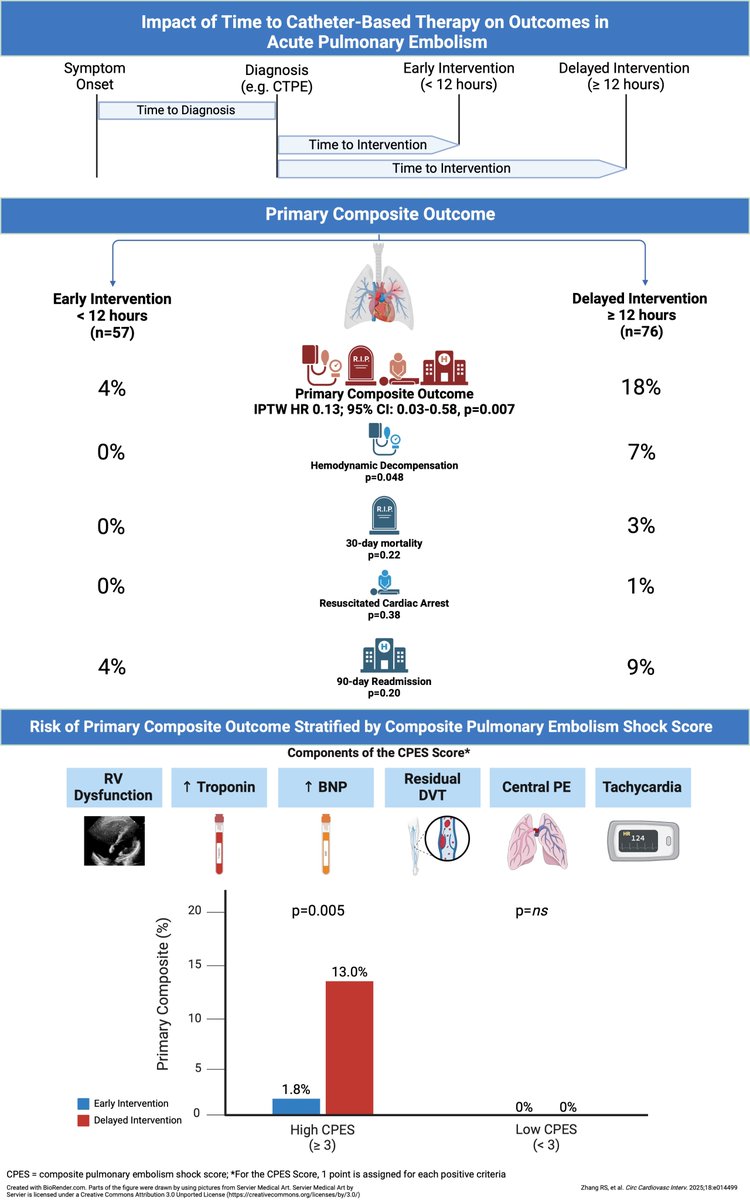
Curious about the impact of "door-to-RV unload time" in PE treated w/ percutaneous interventions? Dive into our latest article in @CircIntv to find out👇
🔗https://t.co/cxvKHZVCod
& don't miss the insightful editorial by @sanjum ⤵️
🔗https://t.co/nWlaVGfnay
@SripalBangalore
Curious about the impact of "door-to-RV unload time" in PE treated w/ percutaneous interventions? Dive into our latest article in @CircIntv to find out👇
🔗https://t.co/cxvKHZVCod
& don't miss the insightful editorial by @sanjum ⤵️
🔗https://t.co/nWlaVGfnay
@SripalBangalore
How do you use echo to predict normotensive shock in PE?
We show the TAPSE/PASP ratio is extremely sensitive and specific.
Right Ventricular-Pulmonary Arterial Uncoupling as a Predictor of Inva... https://t.co/YiPSOsiUvK
📢How are you risk stratifying your pts with intermediate risk PE? Have you considered using the CPES score? ✅out our latest 📜 in @CircIntv showing that the CPES score predicts adverse outcomes in PE.
🔗https://t.co/X3bv4d3JLu
@SripalBangalore@SVRaoMD@CardsNYC
A short 🧵 ⤵️
📢I'm excited to share our 📃showing🚫difference in ☠️🪦between housestaff vs APP-based teams in the CCU, & the educational exp for housestaff ⬆️⬆️after implementation of an APP-based team.
🔗https://t.co/iKAaaeypRE
@carlosalviar@JasonKatzMD@JACCJournals@SripalBangalore
✅out recent 📄 demonstrating that ⬆️⬆️ IVC reflux is associated with a ⬇️ cardiac index in acute PE. IVC reflux, obtained at time of CTPE, can be a valuable tool for immediate risk stratification in these pts
https://t.co/sPsgVocfHN
@CardsNYC@SripalBangalore@ThrombosisRese1
Check out the latest from NYU cardiology and @NYULH_DeptofMed! Excited to see how PE management and risk stratification continue to evolve. Grateful as always for the opportunities and awesome mentors & leaders @robertshiuzhang@CardsNYC@SripalBangalore
📢How are you risk stratifying your pts with intermediate risk PE? Have you considered using the CPES score? ✅out our latest 📜 in @CircIntv showing that the CPES score predicts adverse outcomes in PE.
🔗https://t.co/X3bv4d3JLu
@SripalBangalore@SVRaoMD@CardsNYC
A short 🧵 ⤵️