Every business has a decline curve if it isn’t actively managed and reinvested in.
Whether it’s oil and gas, software, healthcare, or services, sustainable growth comes from continuously compounding cash flow back into the business to offset attrition and create long-term momentum.
I’m a daily user and advocate for proper use of Ai. Nonetheless, some things are more useful analog-style. This is a must read! https://t.co/N1hFSfXZq7
There are multiple infrastructure constraints every investor in AI-adjacent businesses needs to understand.
Here are 3 of them:
1 - Turbine availability:
There's a 2-year wait list right now. The equipment to generate power at scale isn't sitting idle waiting to be deployed.
2 - Transmission efficiency:
Turbines convert natural gas to electricity at ~30-40% efficiency. More than half the energy value is lost before it even leaves the power station.
3 - Chip supply:
Semiconductor manufacturers can't keep pace with demand. The processing capacity to run AI at scale is still catching up to the appetite for it.
Zoom back out and you see a system feeding AI right now that’s basically trying to suck a watermelon through a garden hose.
And with that comes opportunity.
Every industry has risk, but long-term success comes from being honest about those risks and building a strategy designed to overcome them through disciplined growth and reinvestment.
The strongest companies don’t ignore the decline curve, they build systems specifically meant to outgrow it.
Pressure has a way of revealing how we respond to adversity.
In difficult moments, the choice is often between reacting emotionally or slowing down enough to think clearly, adapt, and work through the problem with discipline and perspective.
The hardest reps in leadership are the ones that happen when no one else is watching.
They’re the correction you give before the pattern becomes a problem, the principle you hold when the cost is still small, and the conversation you have before it becomes a crisis.
Those reps don't get documented. Nobody applauds them, but the team notices over time.
Not because you announced your standard, but because your behavior in the quiet moments confirmed it.
My King is Jesus. That standard doesn't change based on the audience.
Durable authority is not claimed in a good quarter. It is built in the ordinary days that precede one.
Real assets produce real things.
Natural gas powers homes, hospitals, and data centers.
The wells we drill produce hydrocarbons that enter the supply chain and fuel the infrastructure modern life depends on.
That is increasingly rare. Capital markets are crowded with paper instruments and financial structures that produce nothing tangible.
When investors ask what they are actually buying, I can take them to a field.
I can show them production numbers and point to communities running on what we pulled out of the ground.
That is our whole business.
2024 was hard.
Hard for me as a leader and hard for PetroVybe.
It took longer than expected to raise capital, it was harder to dial into the right team than we wanted.
There’s a lot more, but you get the point.
But here’s the thing:
“Count it all joy my brothers, when you meet trials of various kinds, for you know that the testing of your faith produces steadfastness, and let steadfastness have its full effect, that you may be perfect and complete, lacking in nothing.”
— James 1:2-4
For context, this isn’t a guru hack. It’s the authority of scripture and it’s a command. Better yet, it’s actually good for us.
That’s the friction that my King (Jesus) is pulling me through so that we don’t quit just because things are hard or don’t go the way we want them to.
Interestingly, the progression of 2025 and 2026 is beginning to really shape a good story of the direction that we started in the very beginning anyway.
In the end, joy is simply a requirement in the journey. I’m so glad my King wants that for me and He wants it for you too.
I gave a weekly update to our partners last week. It was a twenty-minute video, no script. I do it every week.
I told them where the wells are, what's moving, what's not, and why.
Partners who are invested in the actual work want to know what's happening, and they like to know it in a real way.
Consistency. Transparency.
They’re more than important… they’re non-negotiable.
This all flows from my allegiance to my King. He sees and knows all anyway, so let’s get to it already.
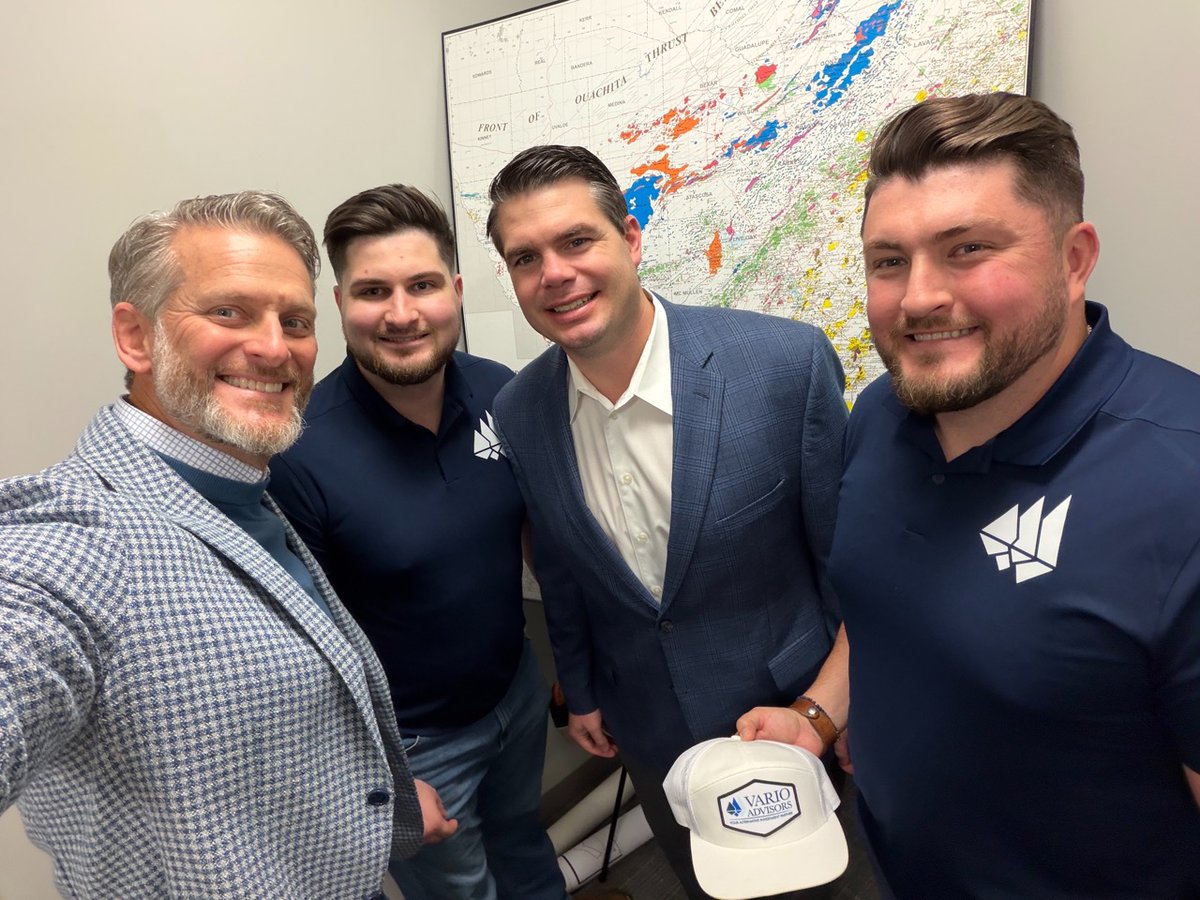
I walked around our office a few weeks ago and shot a video on my phone.
“This is what a real oil and gas company looks like,” I said.
You could see engineers at desks, maps on walls, production reports open, and people solving tangible problems with actual consequences.
It wasn’t polished.
But that’s not what people are looking for.
People are hungry for real. The financial world is full of paper instruments, structures, and vehicles, most of which produce nothing you can touch.
We produce hydrocarbons. You can move them, price them, and deliver them.
And people like knowing they’ve invested in something tangible.
I have operated under frameworks. I have also operated under a King, Jesus Christ. They are not the same thing.
Frameworks help, but frameworks get revised when the pressure is high enough.
They bend with the quarter, find exceptions when you need exceptions, and are, at the end of the day, a more sophisticated version of your own preferences.
A standard set by a King you did not appoint and cannot revise holds independent of the quarter you are in.
That is what connects vision to execution. Not a system. A standard above you.
My King is Jesus.
That means execution becomes faithfulness that drives performance, not performance for its own sake.
The result is a team that moves with less noise, honest accounting, and partners who make decisions with complete information.
That is the most durable operating model.
"Where there is no prophetic vision the people cast off restraint, but blessed is he who keeps the law." — Proverbs 29:18 (ESV)
I was at the rodeo a few weeks ago, talking into my phone about demand destruction. Not the most obvious setting for energy economics.
But something about the distance from the desk loosened up the thinking in a way the office had not.
Ecclesiastes does not specify where you find the pleasure in the toil. It just commands you to find it.
That is a theological instruction, not a productivity hack.
The work does not have to be glamorous to be worth doing well. Most of the best work I’ve done happened somewhere nobody would have filmed it.
Find the conditions and build them in deliberately.
Motivation is a faulty operating system.
It shows up when things are exciting and disappears when they're not. In business, the work isn’t always exciting.
It's just necessary.
Discipline is different. Discipline doesn't care how you feel about the task. It shows up because you decided it would.
Plan the work. Do it when it's necessary, not just when it’s comfortable or when you want to.
Motivation doesn’t compound, but discipline does.
"For the moment all discipline seems painful rather than pleasant, but later it yields the peaceful fruit of righteousness." — Hebrews 12:11 (ESV)
People ask me about nuclear all the time.
I like it.
Long term, it's one of the most critical energy stories in the country.
But here's what I tell anyone building infrastructure right now: nuclear isn't on your timeline.
The permitting, the policy, the construction window, none of it pencils for a project you're trying to bring online in the next five years.
And data centers aren't going to wait.
So the play is straightforward: Optimize natural gas now, then build the relationships, the policy knowledge, and the site positioning for nuclear along the way.
What once felt restrictive can become a powerful advantage when you understand its purpose.
Constraints, done right, create discipline and protect long-term growth.
The shift is seeing them not as limits to work around, but as tools to help you operate with clarity, integrity, and better decisions.