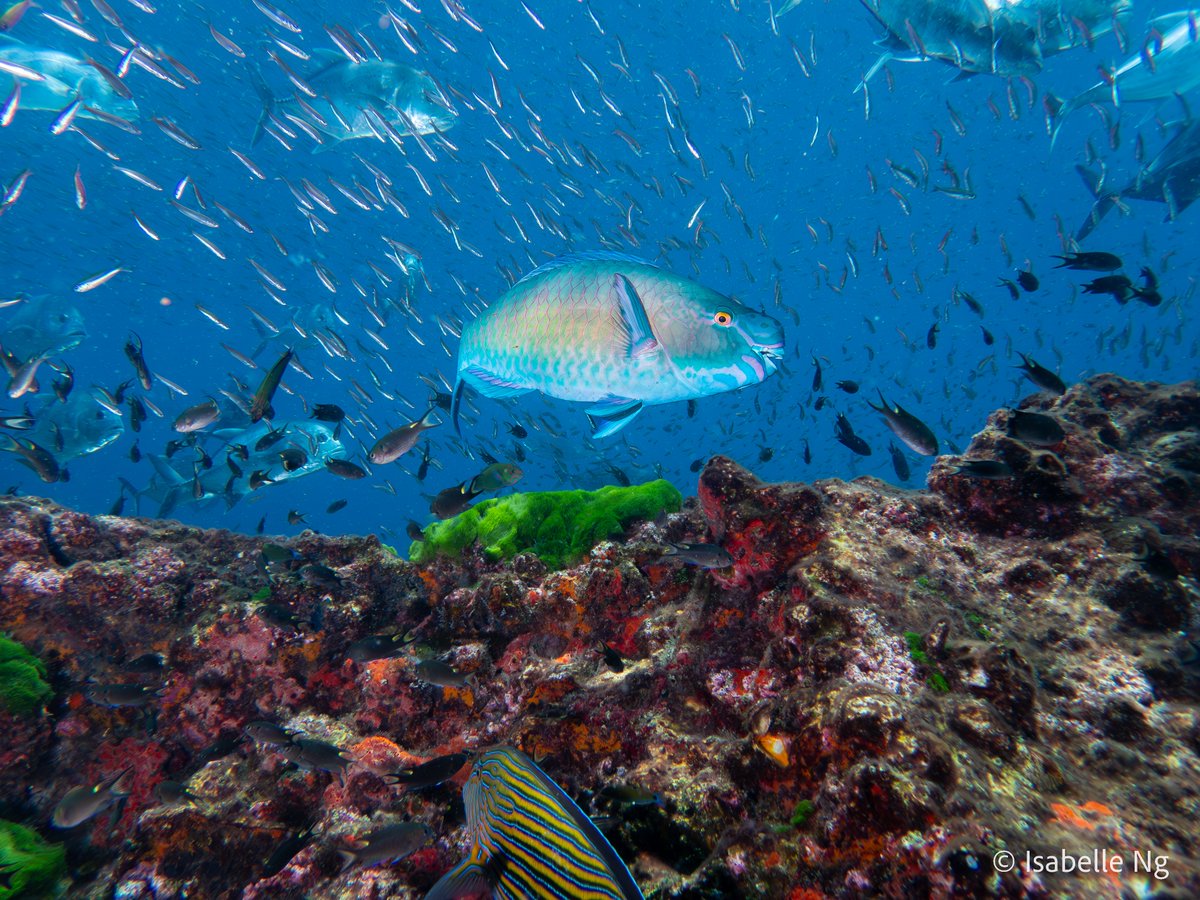
When thinking of the 'model' planktivore on reefs, fusiliers come to mind – their fusiform bodies and large eyes seem built for the job. But are these traits common among most plankton-feeding reef fishes? 🐟
🔗 The story is more nuanced than we thought: https://t.co/IByloTx9sh
Hi all,
the final paper of our 6 year multi-generational experiment on climate acclimation of coral reef sea urchins is out in Marine Biology:
https://t.co/qXL4eu4Q5y
Unfortunately, it looks unlikely for this species to survive anthropogenic climate change. 😔
Pleased to share our new #GiantClam research out now in @Ecol_Evol!
Genetic analysis shows small giant clams (Tridacna maxima) in the Coral Sea & Cook Islands have high haplotype diversities but different population structures.
📝: https://t.co/IDLAMNj8B7
📸: @PeterCDoll
Some great work by @ChandlerJosie and team. 4k video workflows to image 40+ conlonies per dive and predict 3D surface area from rapid 1D field measures for a wide range of corals! @CoralReefEcoLab@burn_deborah@PeterCDoll Agus Piccaluga Abby Johnades.
https://t.co/2UwercGSGv
New comment in @NatureClimate.
"This is not a call for inaction. We must act - with haste. But popular urgency should not prioritize technological and scientific feasibility over climate action and evidence-driven care for social-ecological systems."
https://t.co/FGtcntTI8V
Dive in to the next chapter of your career with 3️⃣ AIMS at JCU #Postdoctoral Research Fellowships up for grabs!
🪸 Reef Responses to Environmental Change
🪸 Modelling Coastal Dynamics
🪸 Reef Connectivity
Apply now ➡️ https://t.co/Q6QFdOlHx1
📆 Close 19 Aug 2024
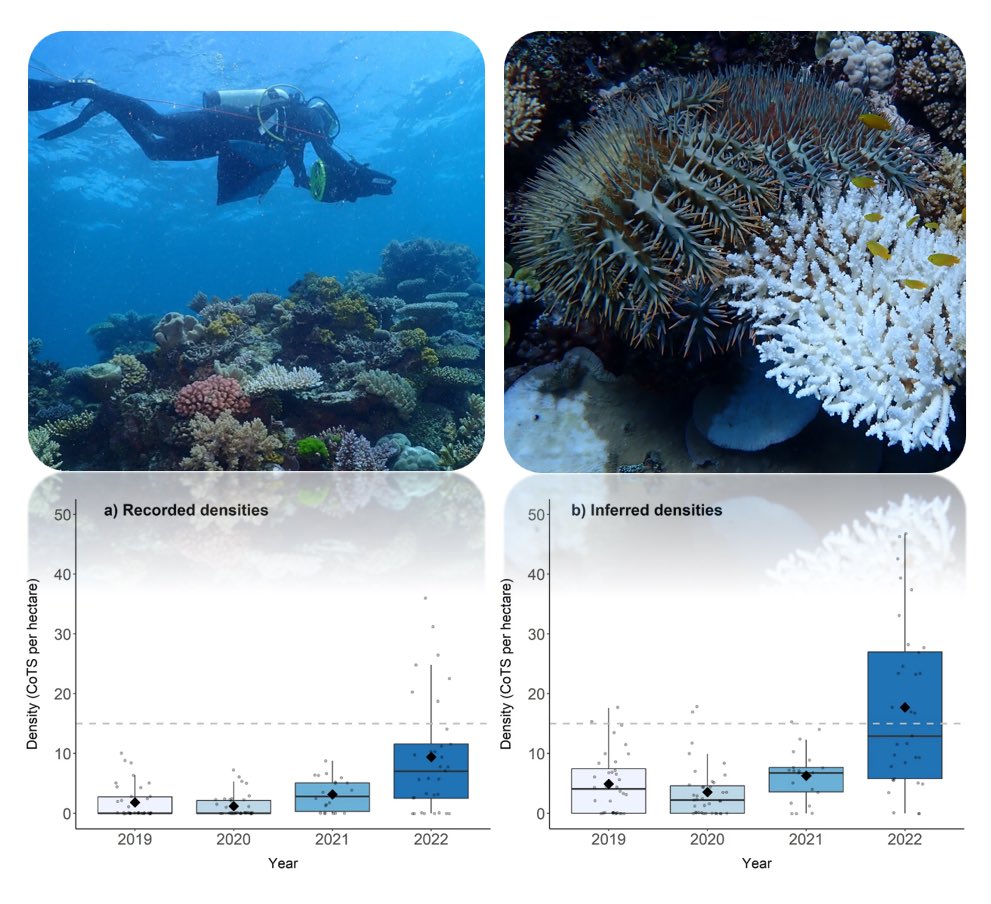
Finally out!!! New paper from my lab detecting the 5th crown-of-thorns seastar outbreak on the GBR with eDNA:
eDNA monitoring detects new outbreak wave of corallivorous seastar (Acanthaster cf. solaris) at Lizard Island, Great Barrier Reef"
https://t.co/nntuVChXh4
A nitrogen-fixing organelle, or “nitroplast,” has been identified in a marine alga. This discovery sheds light on the evolutionary transition from endosymbiont to organelle.
Learn more this week in Science: https://t.co/n5wifuxYxm
The 2024 mass coral bleaching event on the Great Barrier Reef in numbers (preliminary analysis):
- 46% of reefs experienced record high DHW
- new record of 17.7 DHW from the southern GBR
- 37% of the GBR has been exposed to three or more >6DHW events in the past decade
(1/n)
Super cool coral alert 👀 Stephanocyathus (Acinocyathus) spiniger from 384m in Perth Canyon. Look at those long 'legs' - they are actually elongated costal spines that help anchor it in the substrate whilst preventing it from being buried.
Hi, Bert here! (@robert_p_streit)
After 4 years in the FunHub as Comms Manager & PostDoc, I'm moving on.
Thanks for the fun, follows, likes & celebration of science on social media!
My new job will be far less fishy, so I'll leave with this:
(from ABC Top5 in '22 @ABCaustralia)
@JezRoff@CoralReefEcoLab indeed, we have, but already on our way north again. High recent mortality in the Capricorn group (& ongoing), much less in the central GBR sectors, fortunately. Sad to hear about Eyrie (was already looking quite bleachy in Feb); wonder how North Direction and LIZ North Reef went
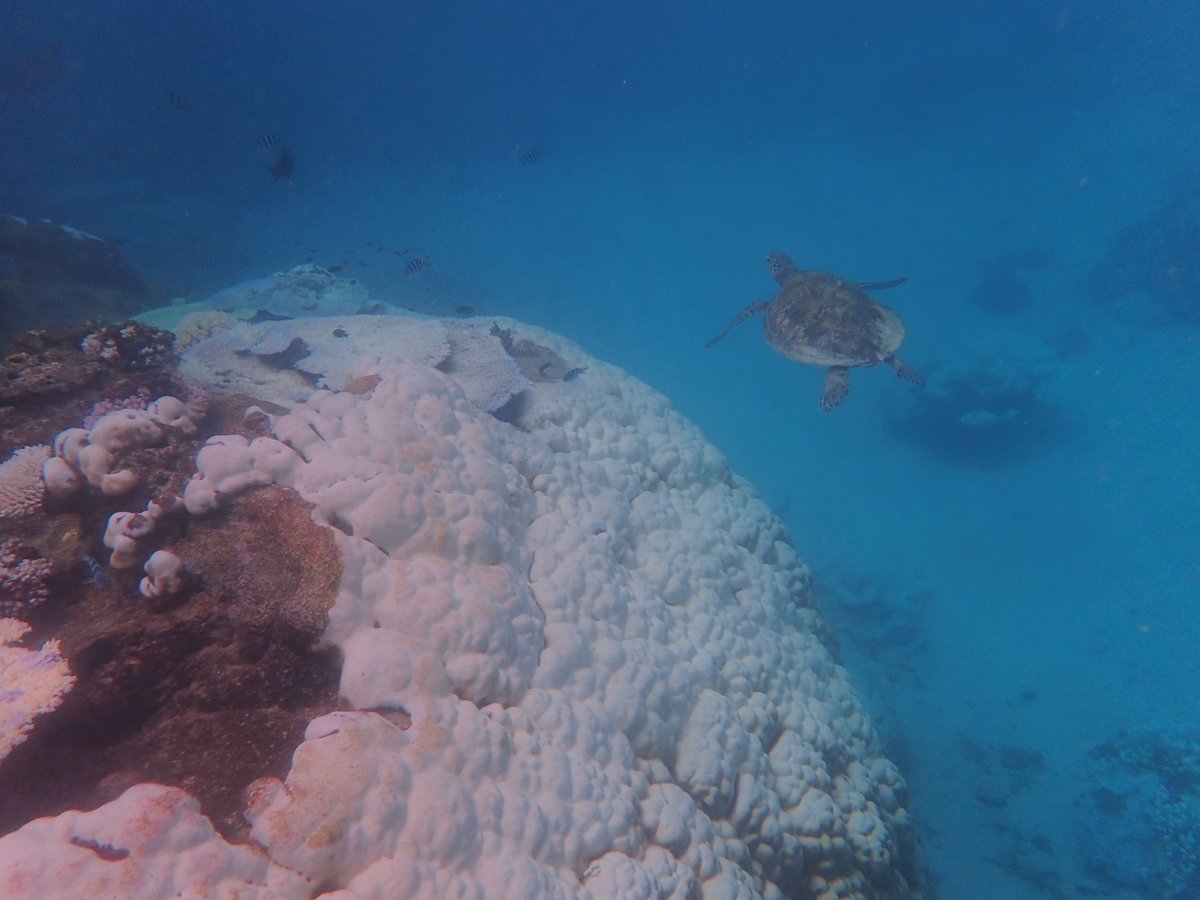
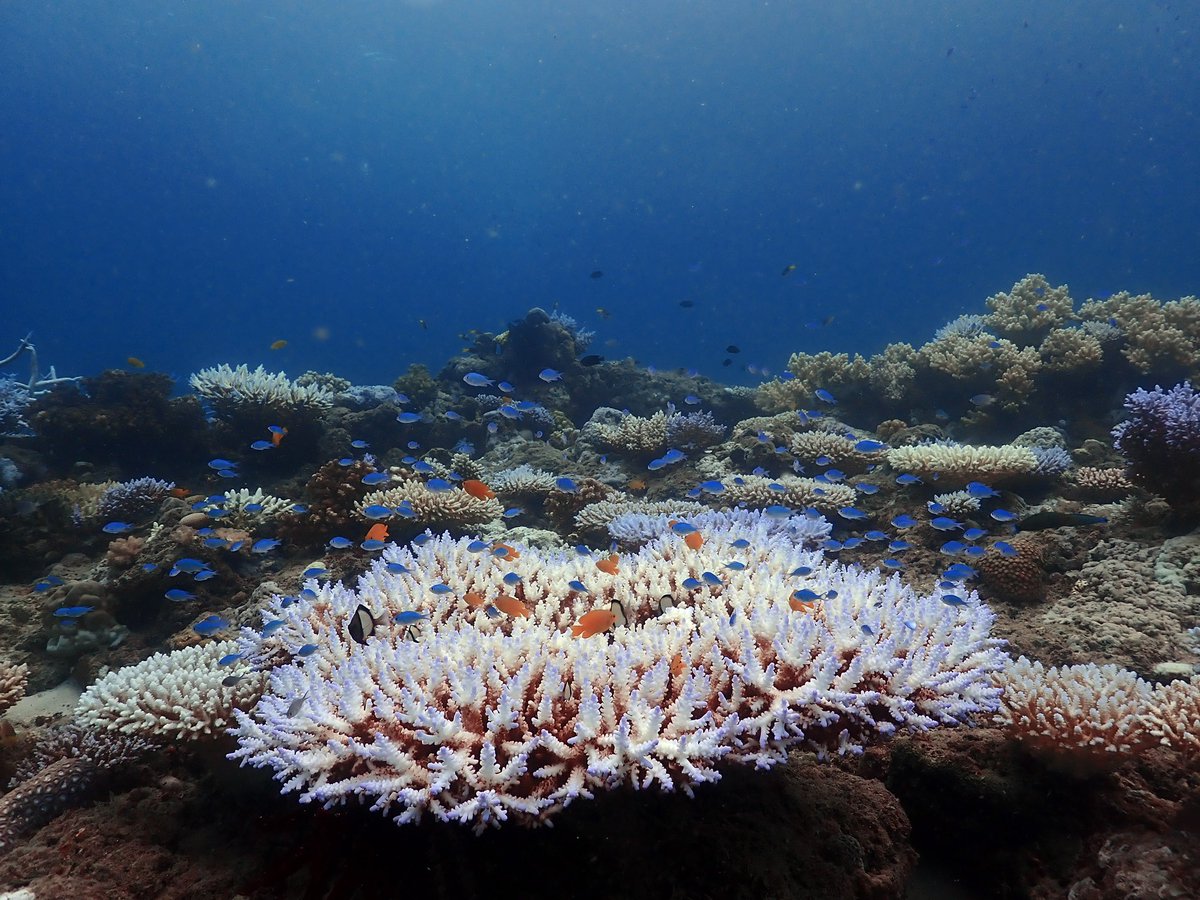
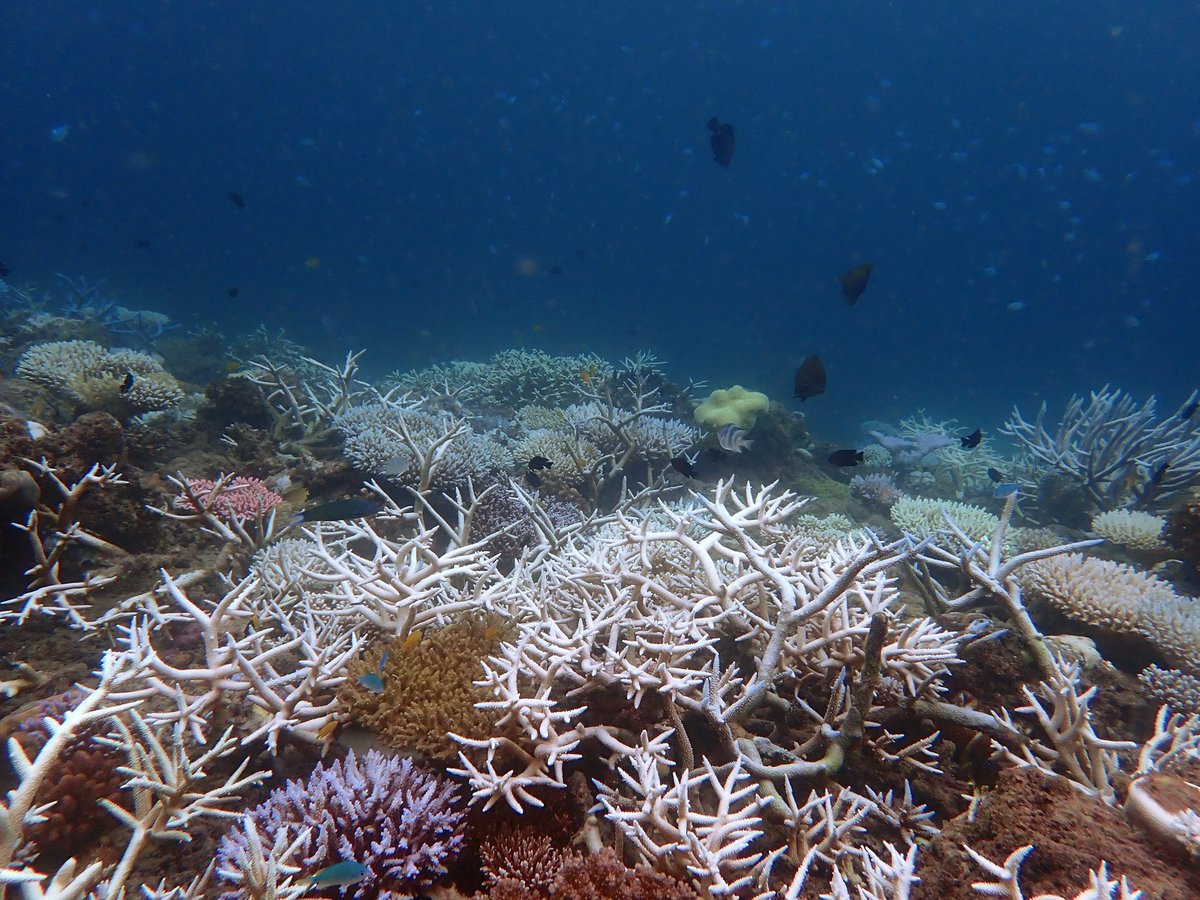
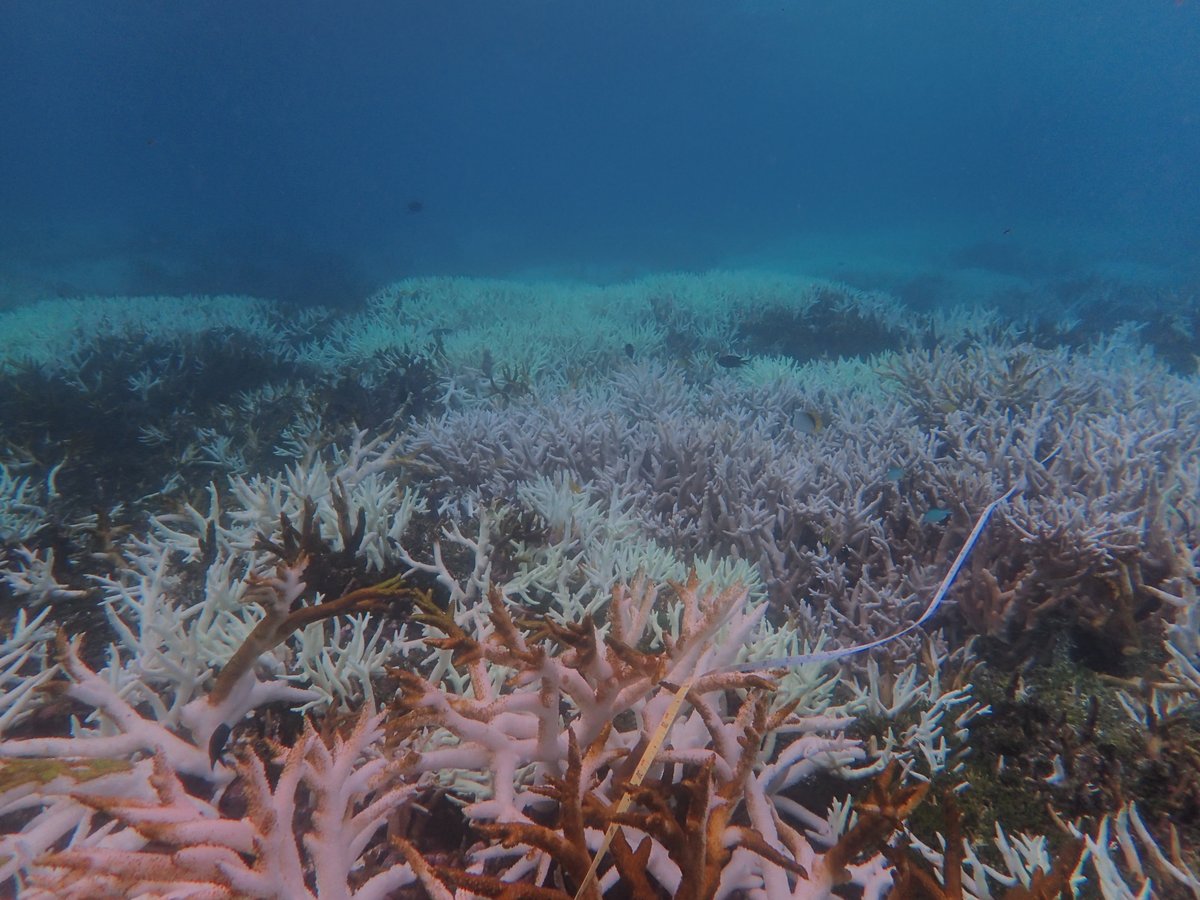
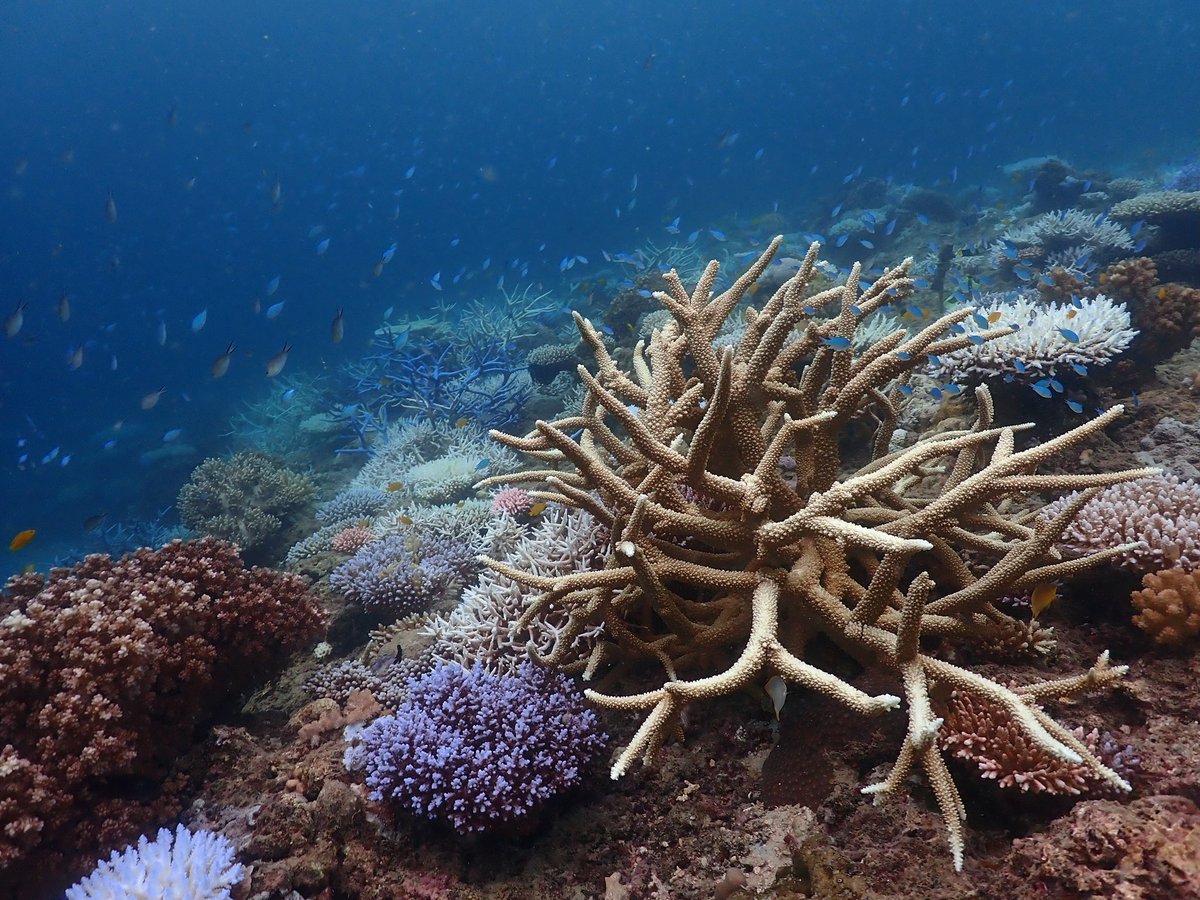
meanwhile in the southern GBR.. mass coral bleaching (& recent mortality) at all reefs & sites surveyed this weekend, affecting vast majority of genera & all size classes; unfortunately, slope (~8m) almost as severely affected (~80% of colonies across sites) as the crest (>90%)!
More underwater images of the mass bleaching unfolding in the northern GBR. Water temperatures appear to be dropping after prolonged heating of >5 DHW, but the coral bleaching at this reef is severe (>80% colonies), with exceptionally high rates of mortality in juvenile corals.
Excited to announce a new paper from our group: Detailed feeding rates of different crown of thorns seastar (Acanthaster) larvae measured using flow cytometry by Frances Patel @SeaSim_AIMS@aims_gov_au
https://t.co/kOJCETOerv
The final chapter of my PhD is out! We explored the patterns of coral bleaching, revealing how small-scale hydrodynamics and colony size shape resilience in individual coral colonies 🪸
Find the paper in Mar Env Res #OpenAccess https://t.co/zFgTWyax1J
@ReefFunctionHub
Alongside spawning #coral@SeaSim_AIMS, we also spawn #CrownOfThornsStarfish! Each year the team raise >5 million larvae for their research.
📺 @klesita shows us how they check if the starfish are ♂️ or ♀️ and explains their research to answer “how old are you?”
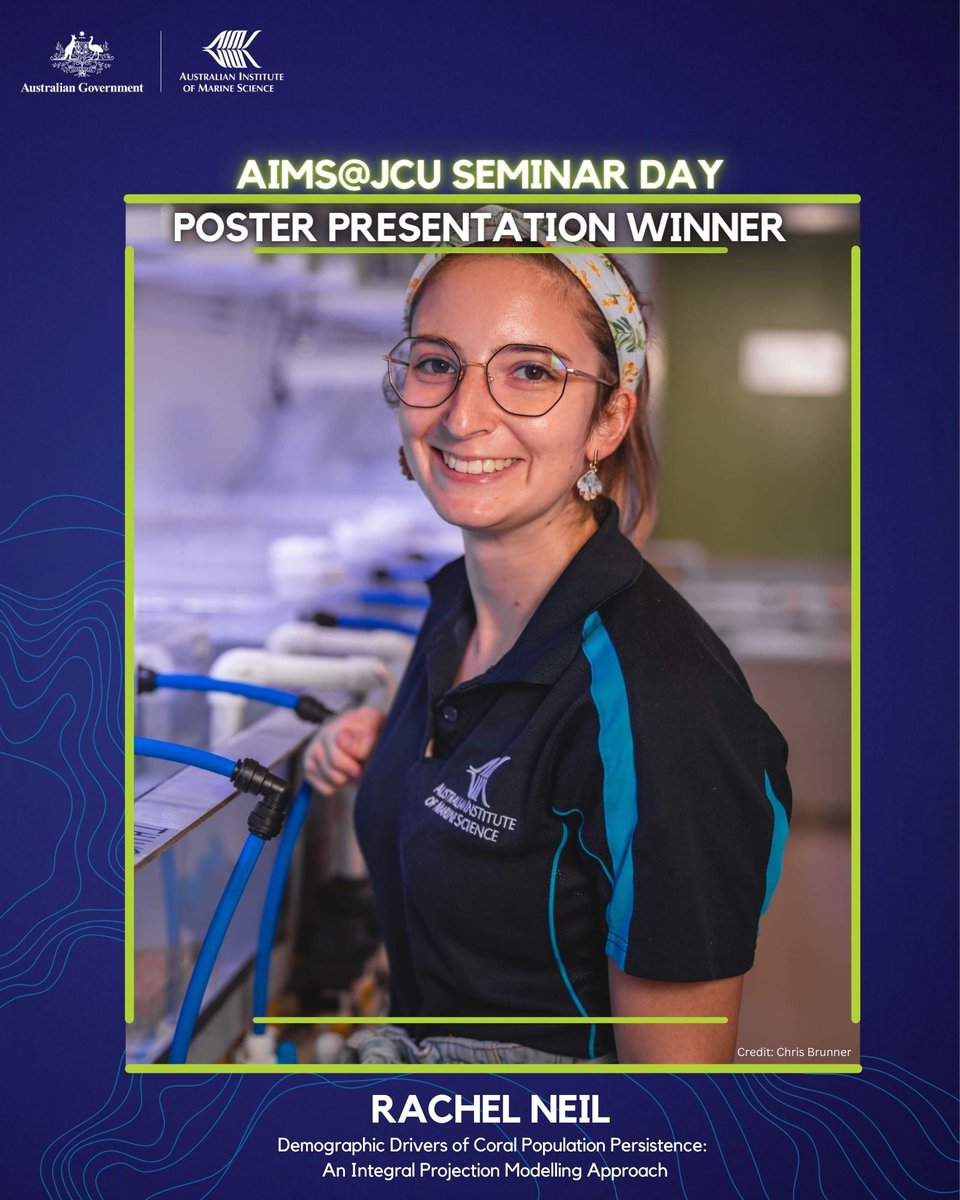
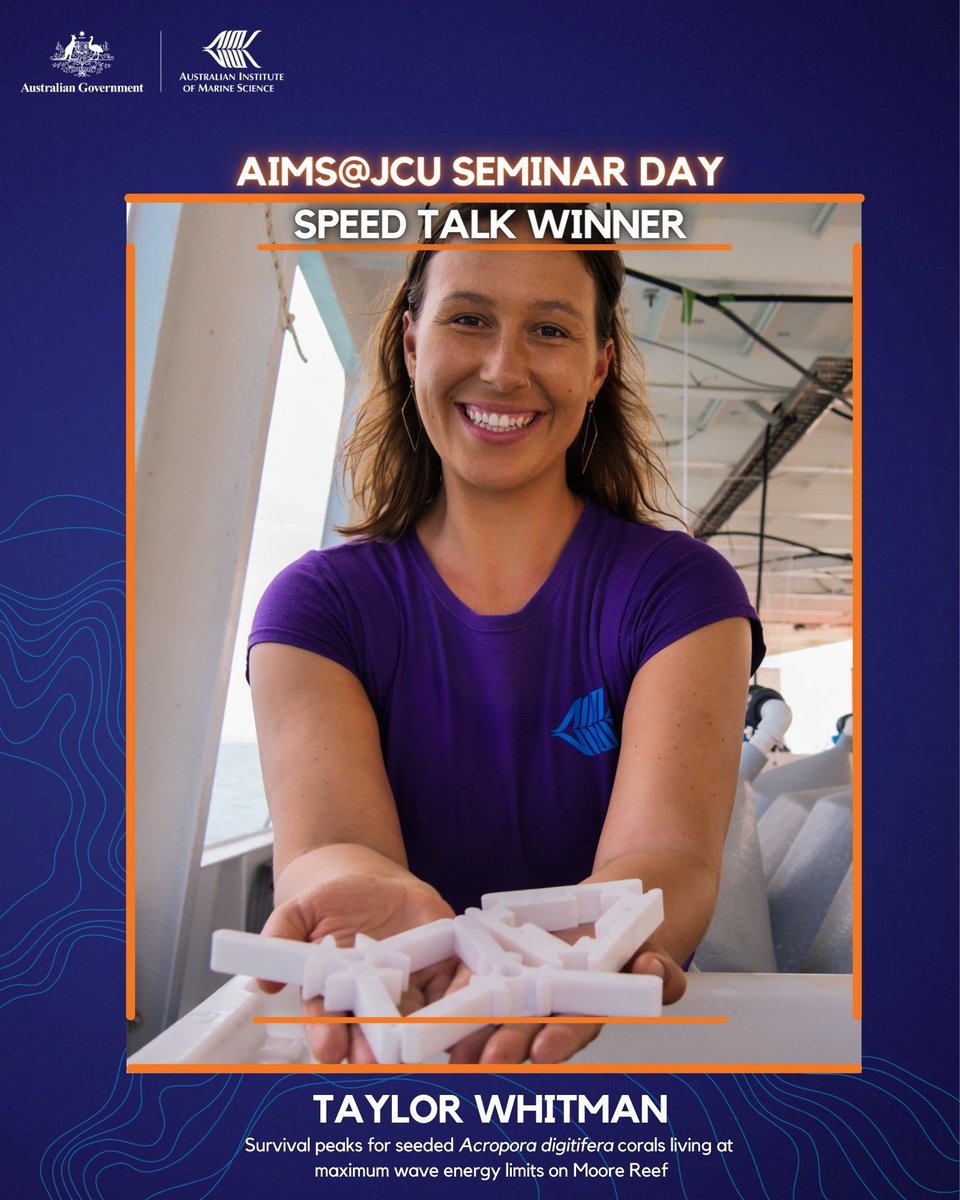
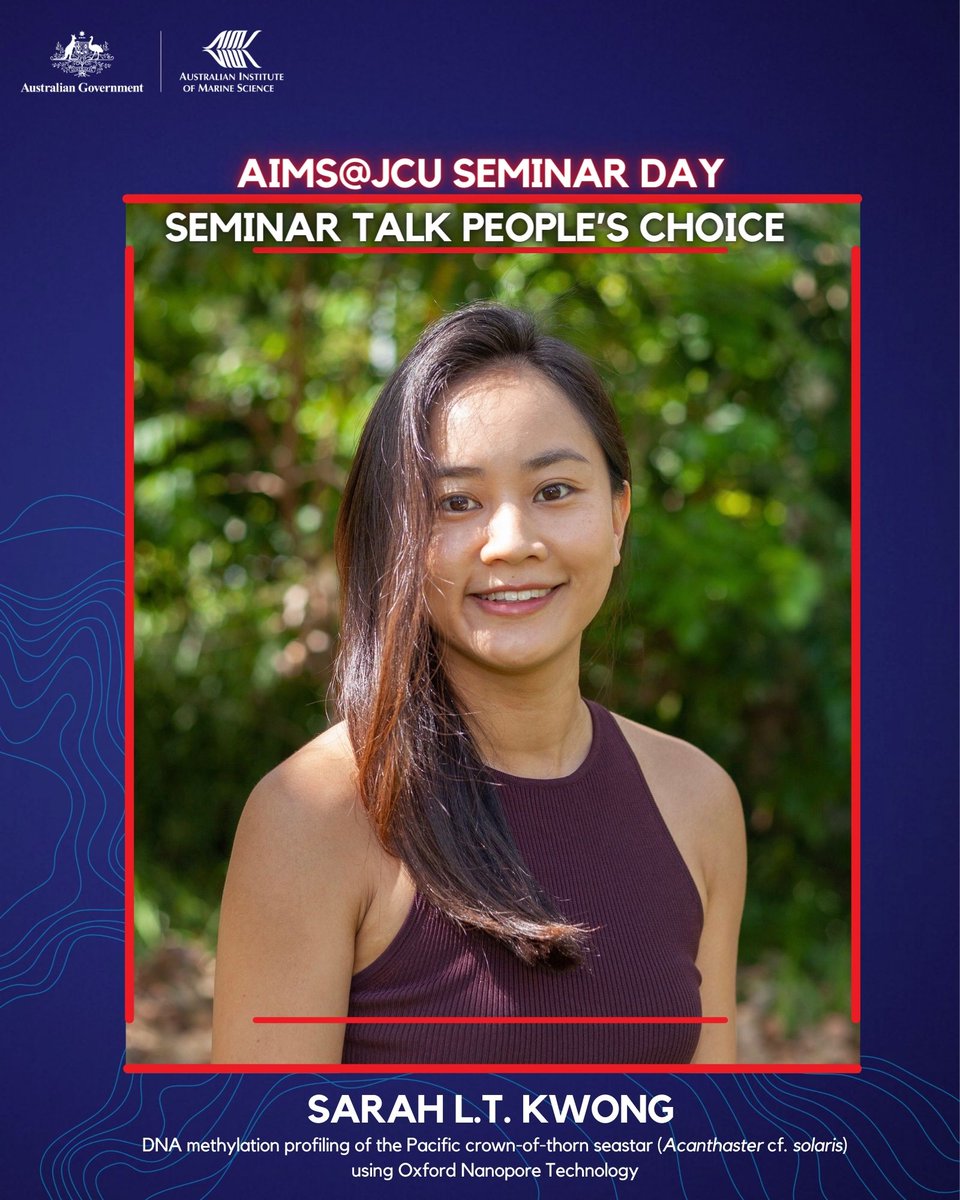
AIMS at JCU students dived into scicomms at their annual seminar day. The #PhD candidates showcased their cutting-edge research on #marinescience in a series of seminar + poster presentations, and speed talks.
Congratulations to all speakers and winners 👏