University of Otago. Teaching: security, foreign policy, intel studies. Research: Early Cold War intelligence. Co-Director Otago National Security School
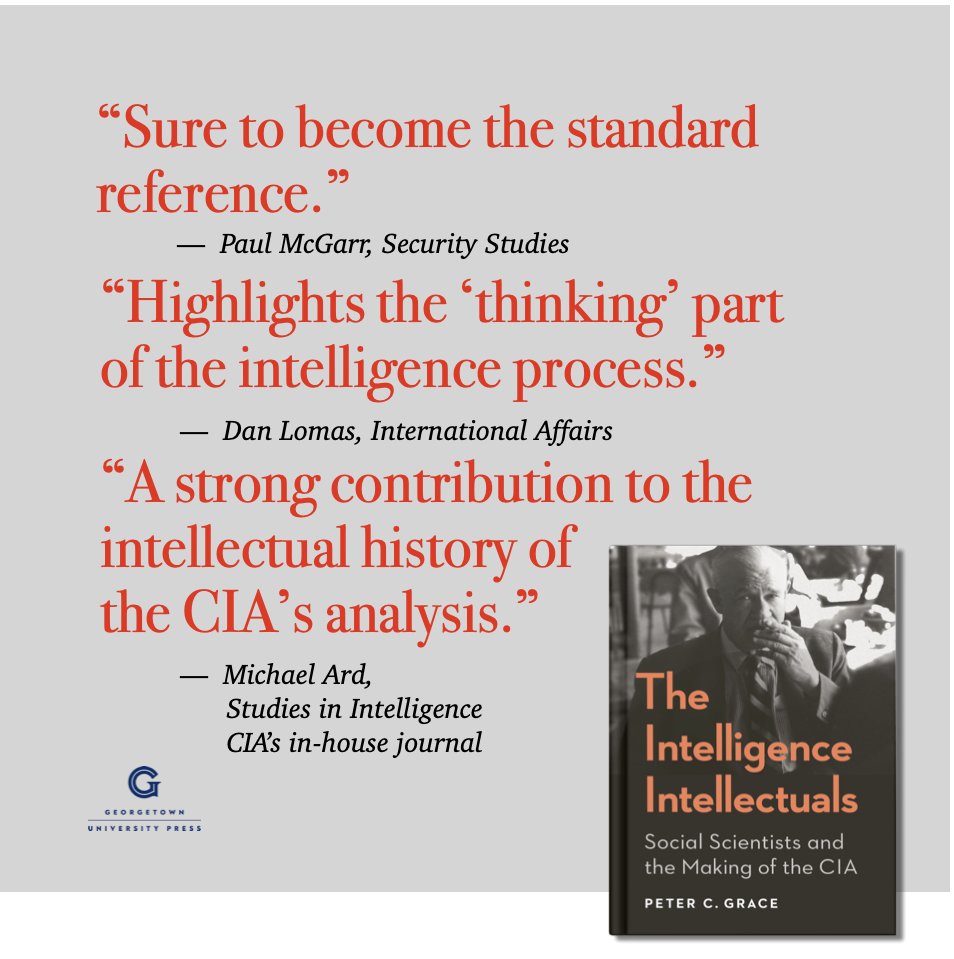
"Sure to become the standard reference for anyone seeking to understand the intellectual foundations of American intelligence analysis," says @SecStudies_Jrnl. @IAJournal_CH says it is "meticulously researched" and the @cia journal "an insightful study." https://t.co/r8dngWHbv0
“With The Intelligence Intellectuals, Peter Grace illuminates an exciting historical chapter in the intellectual and institutional history of the CIA.” Thanks to Jakob Kullik for his thoughtful review!
Wie sich Sozialwissenschaftler als intellektuell-analytische Geburtshelfer der 1947 gegründeten CIA betätigten, zeichnet Peter C. Grace in "The Intelligence Intellectuals" nach. Laut Jakob Kullik ein verdienstvolles Unterfangen mit kleineren Schwächen.
https://t.co/3ScNRaN6xj
“Impudent” @otago students asking the right questions of our political candidates - now in its seventh series. https://t.co/NhyXWkMHty @HelenClarkNZ@jacktame@bryce_edwards
Rapidly changing geopolitics create uncertainty. Historians and political scientist provide explanations. As the Cold War unfolded CIA reached out to social scientists to map trends and patterns to inform foreign policy decisions: https://t.co/Ih3ymb4QDd @Krystelvk
New podcast with @PeterCGrace on his book The Intelligence Intellectuals. Tune in for a discussion on how professors like William Langer, Sherman Kent , and Max Millikan developed systematic approaches to intelligence analysis that transformed the CIA’s methodology and gave the US a decisive advantage during the Cold War.
https://t.co/w0aBwBhkPR
https://t.co/WMH8d6h49f
“…the book complements in useful and sometimes surprising ways well-known previous studies, from Fred Kaplan’s Wizards of Armageddon to Inderjeet Parmar’s Foundations of the American Century.” @fmkaplan@USEmpire@Georgetown_UP
Jervis Forum Review 193: Greg Barnhisel reviews
Peter C. Grace, The Intelligence Intellectuals: Social Scientists and the Making of the CIA.
https://t.co/mwzhQHKwqI
Thank you Peter! You were fantastic and I highly recommend to everyone to pick up your book. Looking forward to having you on again.
https://t.co/UiI1FnG2DR
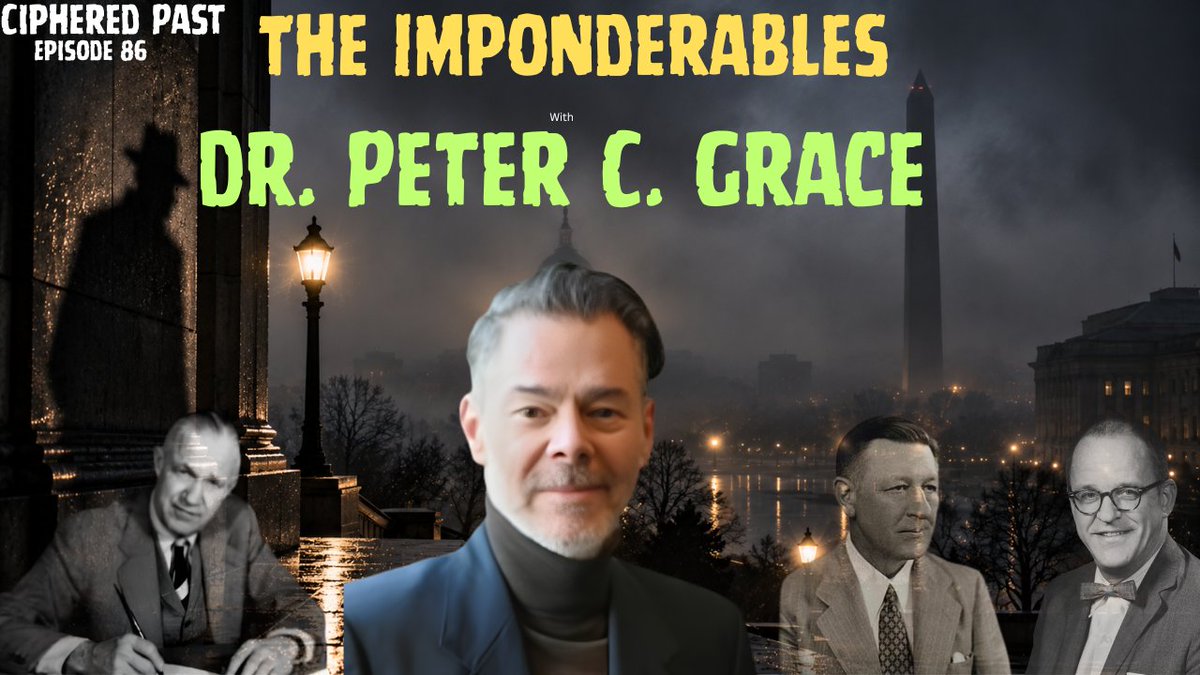
Great to catch up with @timgproject and @BowTiedPinto on @CipheredPast. We compared CIA’s intelligence problems of the 50’s with those of today. I also managed to find the time (according to the photo below) to channel Martin Short’s Ed Grimley. Liking the look.
New Episode of @CipheredPast titled "The Imponderables" with @PeterCGrace and @BowTiedPinto will be available on all streaming services at 6pm est/ 3pm pst.
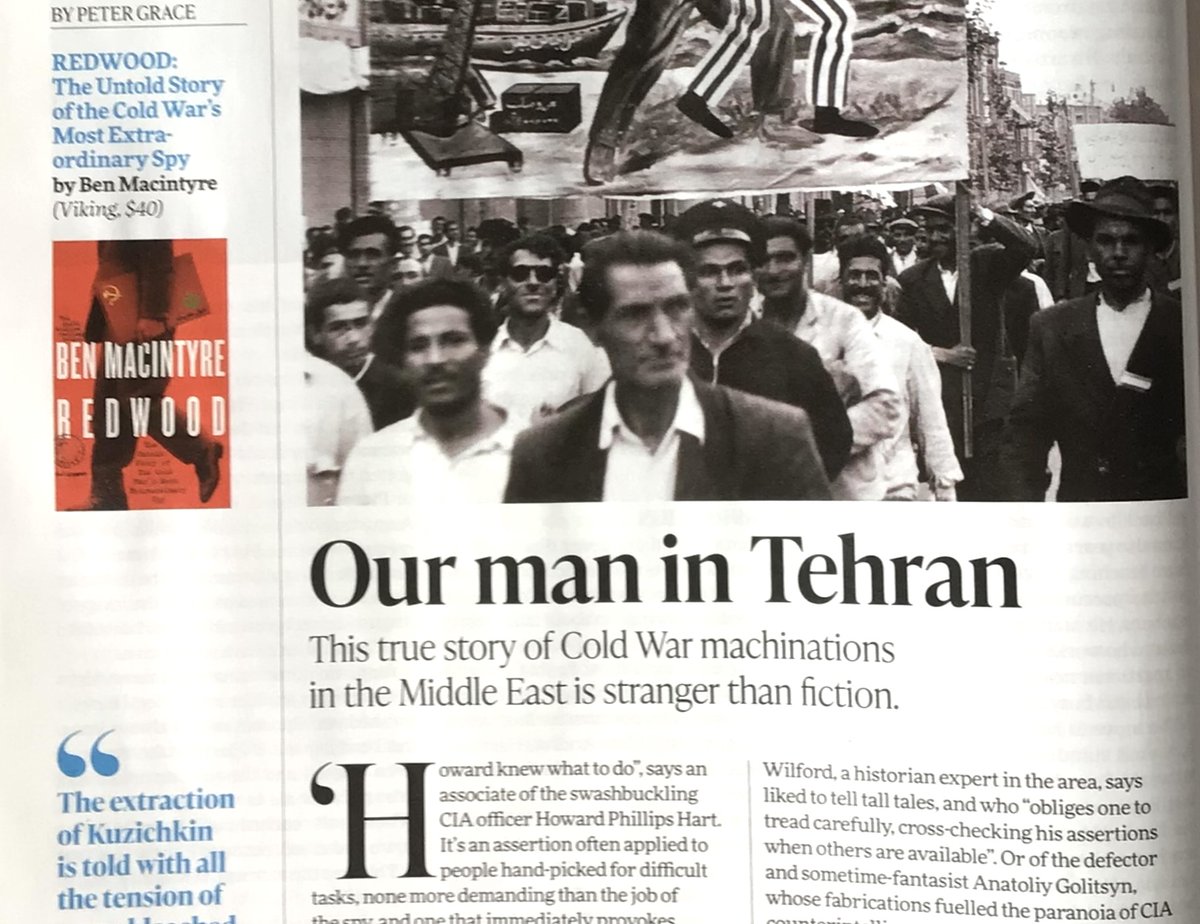
My review of @BenMacintyre1's "Redwood" is in the @nzlistener today. Like Shaun Walker's "The Illegals", it's a terrifically well-researched book that leaves no historical stone unturned. Also a very human spy story: skewiff perspectives, tortured souls and (very) lucky breaks.
@turgayerlikaya Thank you Professor for such a learned discussion on The Intelligence Intellectuals. I visited Ankara in 2019, giving a few lectures & making good friends. Türkiye played an integral role in the peaceful conclusion to the Cold War, and I was mindful of this when writing the book.
What would Sherman Kent have made of the AI revolution in intelligence analysis? I spoke to @cenkarslan about the principles that might still hold, the augmented analyst and the motivation for today’s intelligence intellectual to work in national security. https://t.co/7HNQbdBdeE
🎤 TeknoPolitika’da uzun zamandır yapmak istediğimiz işlerden biri, alanın önemli isimleriyle daha uzun ve derinlikli söyleşiler yapmaktı. Peter C. Grace ile bir söyleşi gerçekleştirmek güzel oldu.
Dr. Grace’in The Intelligence Intellectuals kitabından yola çıkarak Sherman Kent’in dünyasından bugünün yapay zeka destekli analistine kadar uzanan bir sohbet yaptık.
Özellikle istihbarat çalışmaları, AI ve akademi-devlet- özel sektör ilişkisiyle ilgilenenlerin ilgisini çekeceğini düşünüyorum.
“On the other hand, we see a growing OSINT movement, of which @bellingcat is just one example, which has no allegiance except perhaps to the truth. And there is enough open source data out there still to show that informational power can stay democratic…”
What would Sherman Kent have made of the AI revolution in intelligence analysis? I spoke to @cenkarslan about the principles that might still hold, the augmented analyst and the motivation for today’s intelligence intellectual to work in national security. https://t.co/7HNQbdBdeE
“Albert Einstein’s view that he would spend 55 minutes defining and framing the problem and only 5 minutes coming up with a solution. This ability to work with the imponderables in framing and reframing may come to be seen – as George Kennan saw it – as a special human gift.”
What would Sherman Kent have made of the AI revolution in intelligence analysis? I spoke to @cenkarslan about the principles that might still hold, the augmented analyst and the motivation for today’s intelligence intellectual to work in national security. https://t.co/7HNQbdBdeE
What would Sherman Kent have made of the AI revolution in intelligence analysis? I spoke to @cenkarslan about the principles that might still hold, the augmented analyst and the motivation for today’s intelligence intellectual to work in national security. https://t.co/7HNQbdBdeE
"Grace takes us on a deep dive into the personalities and bureaucratic politics ... examining the push to shape the analytic output of CIA intelligence gathering, processing, and analysis between 1946 and 1949." says @fplantan in History: Reviews of New Books. @Georgetown_UP
Proud to see the Votechat series, started by @bryce_edwards and @JamesMeagerMP now in the very capable hands of Alex Van der Veit and Sophie Bowmar. Great first interview today featuring Sophie, @Nikau_ES and a very charming Chris Hipkins.