🤙🏾Katonga Bridge for you!
Sometimes we critique, unfairly, @GovUganda on not doing enough. Yet it never stops delivering! In Katonga bridge you have a bridge designed to withstand all generational flooding for the next 100 years!
Where else have you seen a bridge designed with a century in mind?
@MoWT_Uganda
👍Thank you @MwijukyeIvan for the kind appreciation and for highlighting the cleanliness along the expressway!
Your contributions directly help us maintain high standards of cleanliness, and incident management along the Expressway!
Shoutout to @KEE_UG and our dedicated teams working tirelessly behind the scenes.🤙🏾
DID YOU KNOW??
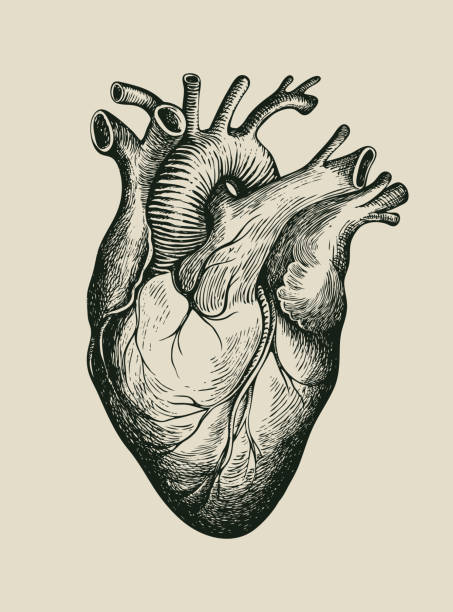
The human heart beats roughly 100,000 times a day, 24 hours non-stop, because it is made of a hyper-specialized, elite muscle tissue found nowhere else in the universe!
While your skeletal muscles (like your biceps) get exhausted and require sleep due to a buildup of lactic acid, your heart is composed of cardiac muscle. These unique cells are biologically engineered to be completely immune to fatigue. If your heart took even a brief coffee break, your brain cells would begin to die within three minutes.
To pull off this perpetual-motion miracle, the heart relies on cellular cheat codes that make it the ultimate biological engine. Walk with me 👇🏾👇🏾
1. The Cellular Fuel Miracle:
The secret behind the heart's endless stamina lies deep within its microscopic anatomy.
Mitochondria are the "powerhouses" of our cells, turning food into cellular energy (ATP). While standard skeletal muscle cells are only made of about 1% to 2% mitochondria, cardiac muscle cells are packed with them, making up a staggering 40% of their physical volume.
Because it is packed with these powerhouses, the heart doesn't just rely on glucose (sugar) for energy like the brain does. It is an opportunistic omnivore. It continuously vacuums up fatty acids, lactates, and ketones directly from your blood stream, converting them into mechanical power on the fly. It is practically impossible for a healthy heart to run out of fuel.
2. The Internal Electric Spark:
Your heart doesn't wait for your brain to tell it to beat. It generates its own electricity.
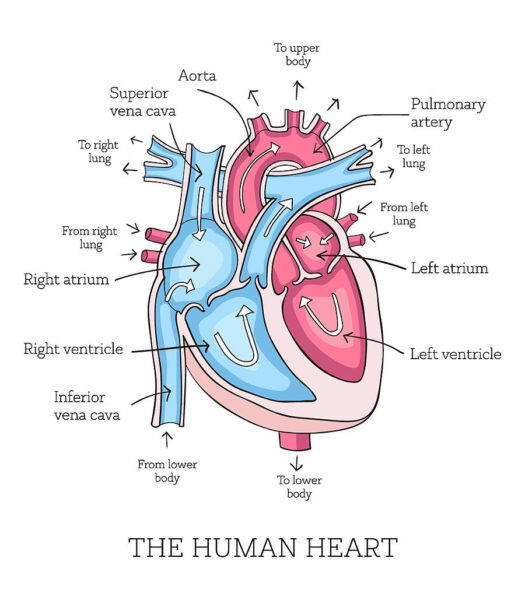
Tucked away in the upper right chamber (the right atrium) is a tiny cluster of specialized cells called the Sinoatrial (SA) node. This node acts as a natural, automatic battery.
It spontaneously fires rhythmic electrical currents that shoot through the left and right ventricles, forcing the muscular walls to contract and pump blood in perfect synchronization.
This autonomous electrical system is so independent that if a surgeon completely removes a heart from a human body during a transplant, the heart will continue to beat rhythmically in mid-air on the medical tray, completely detached from the nervous system, as long as it has oxygen.
3. The Power of the Lifetime Pump:
The sheer cumulative output of this 24/7 workload defies mechanical engineering. Over an average human lifetime, a heart will beat more than 2.5 billion times without a single second of downtime.
Every single minute, it forcefully ejects about 1.5 gallons of blood through a complex highway of blood vessels. Over a lifetime, that adds up, pushing roughly 1 million barrels of liquid; enough volume to completely fill up three supertanker ships.
The pressure it generates is strong enough to squirt blood across a room, a necessary force to ensure oxygen fights gravity to reach your brain.
FINALLY!
The heart is the ultimate non-stop machine. By packing its cells with a massive 40% density of mitochondria and firing its own independent electrical grid, it ensures it never runs out of energy or misses a beat. It works tirelessly in the dark so you can live in the light.
Well we all hope it never stops ehh? For that would be deathly joke, not funny at all 🌚😂
Hopefully you've learnt something new today?
Cheers 🥂 😅
The Medic Who Writes™🌚