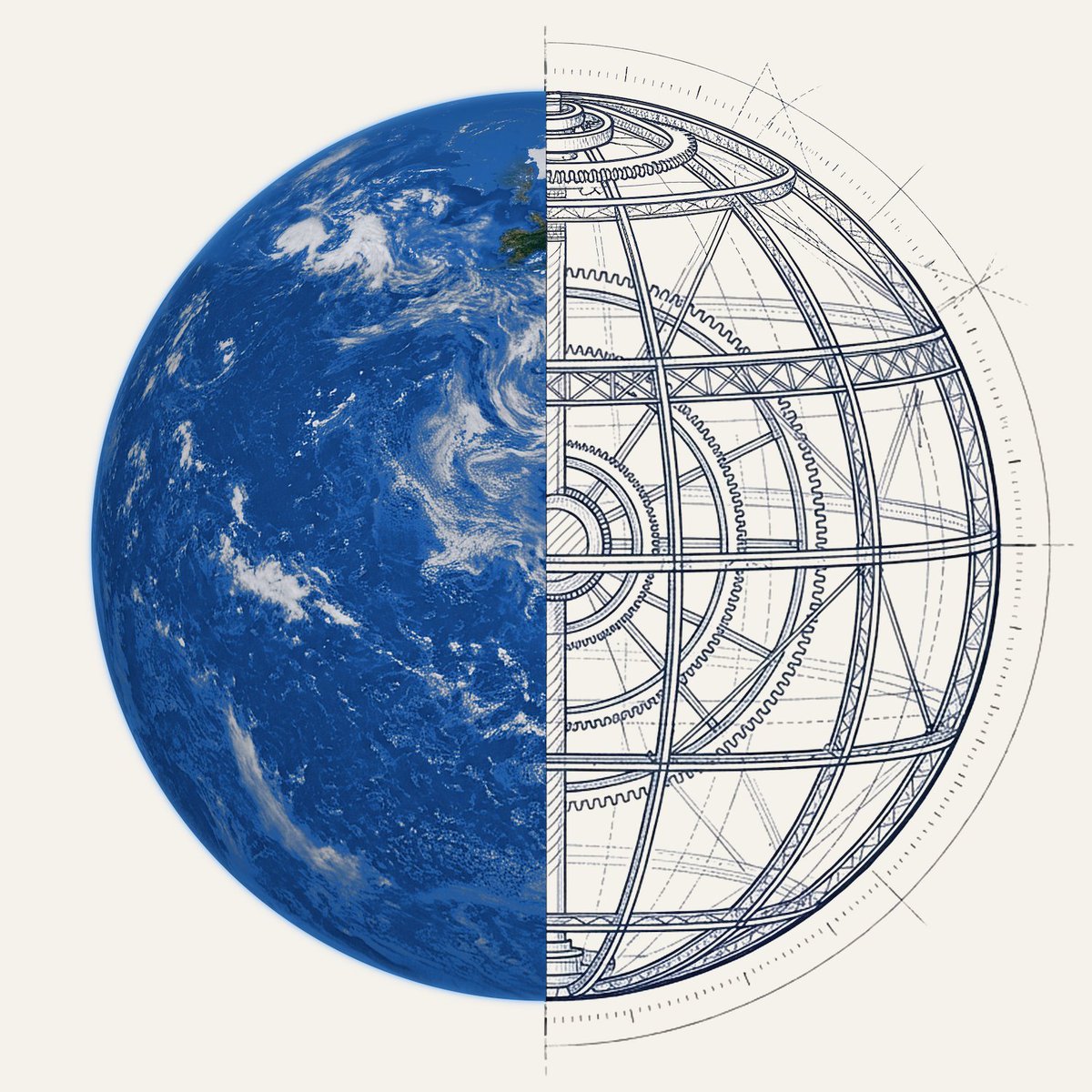
Today we’re releasing *SciNet: The Anatomy of Science*, an open database that maps every scientific discipline down to its research tasks.
It describes what scientists spend their time on and helps us understand where AI has potential to accelerate discovery. 🧵
Overall the interviews show that AI is already changing work, and there is wide variation in how companies are responding.
Much more in the report: https://t.co/DH78S6IuPh
How is AI diffusing through businesses?
We spent two months interviewing 58 Anthropic customers, ranging from dentists’ offices to start-ups to hedge funds.
Today, we release our new report on how AI is changing jobs and organizations.
Companies sought to harness AI by broadening roles, like adding design and product responsibilities to engineering roles.
They also redeployed employees away from automated tasks, like one company that shifted eligibility administrators into high-touch customer engagement.
Very grateful to have collaborated with an amazing team that put this report together: Johannes Hermle, @bfjo, @AlthoffLukas (lead authors) and Ryan Heller, Thomas Lyttelton, @carolyn_sms, @natewilmers, Maxim Massenkoff.
Will AI accelerate the pace of scientific progress and discovery? If so, which fields are poised for faster rates of innovation & which fields might face bottlenecks that AI alone may struggle to overcome?
Very excited to share new research on the economics of AI for science.
New blog showing that labor market tightness measures produced by LinkedIn track US inflation, wages, and JOLTS/BLS measures well! Thanks to Casey Weston for sharing the data, and @PeterMcCrory for introducing us (and creating the JPJI!).
https://t.co/JSpA0KPHUr
@gregorschub I see what you mean. Though, I usually take these arguments and discussions to implicitly be about r* and whether current policy would be inflationary/deflationary all else equal.
This is an important limitation of the model. We focus on the supply side of the AI transition (what AI can do, how fast it spreads, how quickly workers change jobs).
Prices are flexible and aggregate demand is equal to what the economy can produce.
More thoughts in 🧵
Anthropic's economic scenario analysis is interesting. But this is not something you can ignore, this is the most important consideration! "the model cannot generate the negative feedback in which disruption depresses demand and amplifies its own labor-market consequences"
Great to see Anthropic's new Public Benefit Report today, especially the new pillar focused on empowering every person pursue to pursue a good life, including meaningful work.
In earlier research, that's one of the main things that people hope for in an AI-transformed economy — working toward this vision is a big reason why I joined Anthropic in the first place.
Anthropic is a Public Benefit Corporation. Today, we’re publishing our annual Public Benefit Report. This report shares our five pillars and takes stock of the actions we’re taking to advance them.
Read the full report at this page: https://t.co/MTCgtzCoPH
I’m speaking at the IMF in an hour about the singularity and why I believe it has begun and the choices we'll need to make. Watch live here: https://t.co/Hj9HzcXx5h