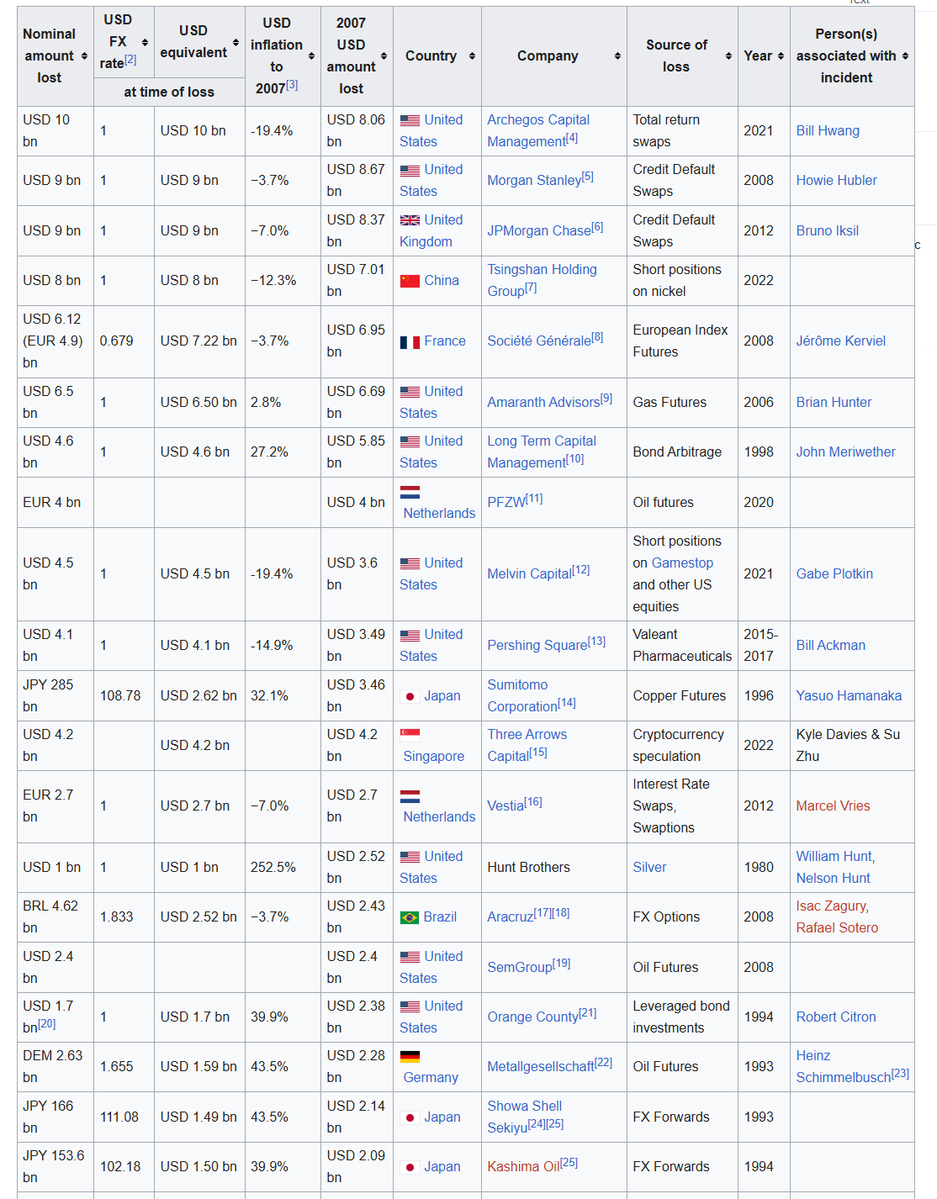
Top 20 trading losses of all time ...
Saylor / MSTR is currently down $12bln Marked to Market
MSTR sold 32 BTC last week and it drops $15,000
Imagine whats going to happen when he has to sell 10,000 ...
This is the biggest trading disaster of all time already and it hasn't even gotten started.
https://t.co/zfSKzhao7N
At 25, the average person stays in regular touch with about 18 people. By 40, it is down to around 13, and it keeps thinning after that. They rarely leave in one big blowup. It is jobs, rent, distance, and a week that fills with everything except the people in it.
Those numbers come from a study that combed the phone records of three million people, and the same slow fade showed up across the board. So if adulthood has pushed you to go quiet and pull back, you are moving the way the data says most people move.
The posting usually goes first. Sharing your life feels like a chore when you are barely keeping up with the life itself. Then the replies slow down, and whole stretches go by where the only people you talk to are the ones you have to.
Plenty of people are sitting in this exact spot. The World Health Organization spent three years on it and found that one in six people on the planet feels lonely right now, closer to one in five among young adults. We can reach each other more easily than any people in history, and somehow more of us feel alone than before.
The quiet carries a cost, and a lot of it is physical. That report tied loneliness to around 100 deaths every hour, more than 870,000 a year, and put the harm to your body in the same range as smoking. A quiet feed often hides a hard year.
The slide does not run to zero. The same study found that late in life it settles into a small core, about six to eight people, and that inner circle barely changes once it forms. Life is slowly sanding the list down to the few who actually fit.
Going quiet is almost always a season. The job settles, the money stops being a weekly panic, and a little energy comes back. The handful of people who matter most tend to still be there when you come up for air, usually kinder about the silence than you feared, because they have lived their own quiet years too.
The feeling of disappearing is real. It is also one of the most common things people go through. Almost everyone you scroll past in silence is somewhere in the same stretch, carrying the same weight, posting nothing about it.
Most people don’t understand the extent of theft in Kenya, here in Europe you are considered top 1% with 3 million euros and that’s almost the amount of money the Nairobi county official had in cash in his house, what company does he own to make such colossal amount of money??. This kind of treasonous thuggery is the reason we don’t have a clean city, garbage collection, potholed roads and essential city services. Such people should be hanged together with wamadimples who is the head of the snake. Maumbwa sana!
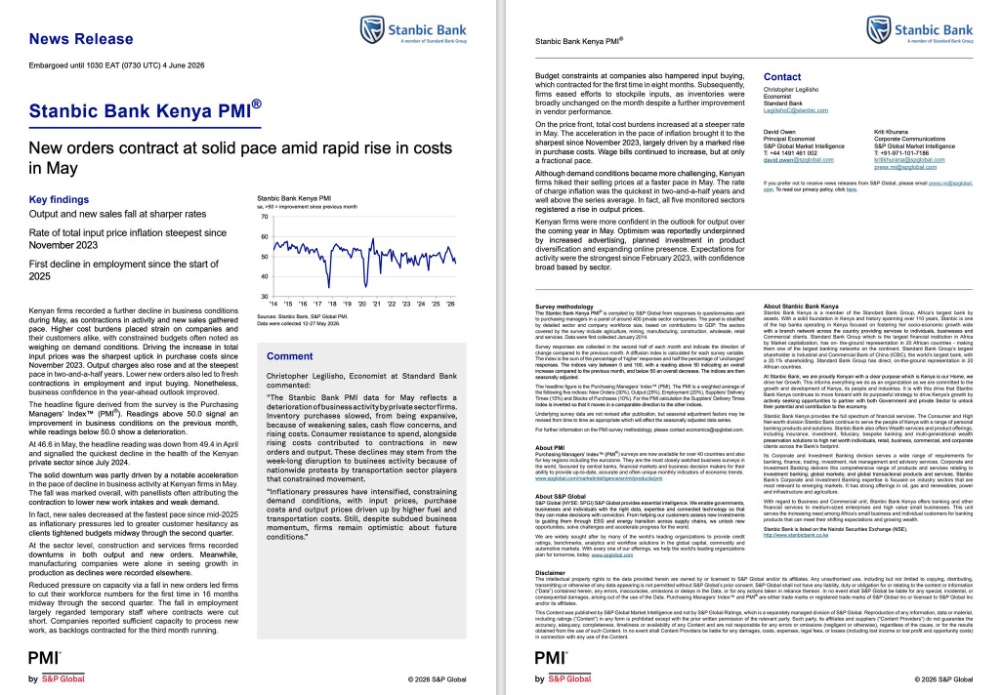
🚨 NEW: Kenya’s private sector just flashed its sharpest distress signal in nearly two years. The May 2026 Stanbic Bank PMI plummeted to 46.6 (down from 49.4 in April).
Behind the top-heavy GDP numbers, the ground-level economy is entering a dangerous stagflationary trap. 🧵👇
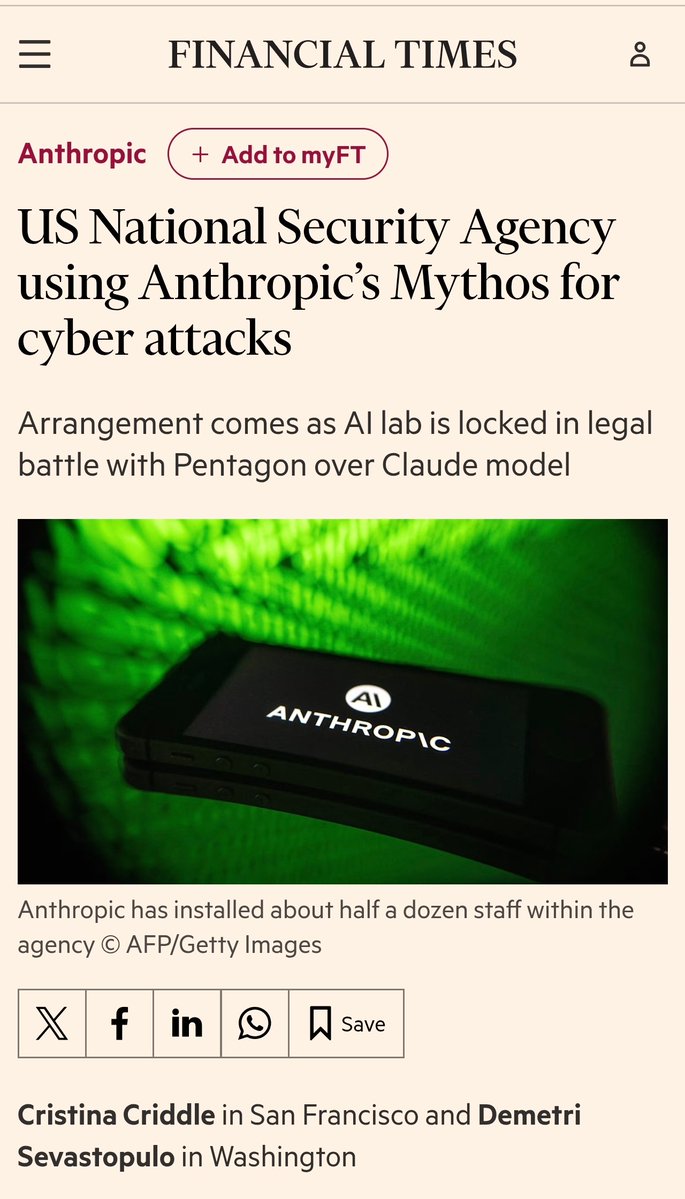
There you go: the FT confirms that not only is the NSA using Anthropic's AI "for offensive cyber operations" against "nations such as China or Iran" but Anthropic is actively helping them in that effort.
As per the article, Anthropic "installed about half a dozen staff within the NSA as so-called forward-deployed engineers to guide the use of the technology and customise models for specific applications."
It confirms two things. First: the United States is the most aggressive state actor in cyberspace, by far. It offensively infiltrates other nations' networks, and is now supercharging that capability with AI. Heck that is literally one of the core mission statements of the NSA, one of the largest security agencies of the US government.
Second, that Anthropic's carefully cultivated image as the ethical, safety-first AI company that "partners with the church" is a fiction. In reality, it is the most deeply embedded AI company in the US security state. Instead of building guardrails, they're literally weaponizing their own AI inside the NSA.
Src: https://t.co/sWmXvPSUy4
Every woman who wants a successful relationship needs to understand male nature.
Men and women are not equal.
Men will:
• Stay silent when hurt.
• Think deeply but show less.
• Test loyalty through actions.
• Observe more than they speak.
• Lose interest when unappreciated.
• Avoid vulnerability as it’s high-risk.
• Stop explaining when misunderstood.
• Value peace of mind over attention.
• Distance themselves when disrespected.
Accept men as they are, not as you wish them to be ladies.
Britam’s Britam Tower solar project, commissioned October 2025, generates 390,000 kWh annually, supplying over 50% of the building’s power needs.
It offsets 198 tCO2e in emissions per year, equivalent to planting 10,800 trees.
The rooftop installation also doubles as a multifunctional event space.
Separately, EV charging stations installed at both Britam Centre and Britam Tower in 2024 support clean transport adoption for staff, visitors, and the public.
This is so ridiculous, even before it gets annoying and horrifying. The British military has the largest training base in Nanyuki, even larger than its largest base in the UK. That's insane.
But I'm not surprised. Reading Kenya's history has made me jaded about how we didn't decolonize.
PCB Motor Stator
Why is industry so slow to move to PCB stator tech? You can sandwich a bunch of PCB stators together and create very densely wound coil.
Copper windings are the slow and expensive part of making motors and actuators, so why are we still winding copper coils when we’ve have a better solution since the 80s?
PCB stators are 70% lighter, they’re cheaper, they’re denser, they last longer.
Well it’s finally happening.
Multi-layer PCB stacks, better substrates than FR4, and better design and simulation software all combine to make PCB Stators technically and now commercially superior to copper windings.
IF… If you want to mass produce light machinery, then you could be developing your PCB stator capabilities.
They’re 70% lighter, and no manual windings, you can make them 10x faster and easier. Lower left is cottage industry stuff, lower right is very clearly the 10E8 technology.
At eg 50mm size…
A traditional high speed flyer-winder can make maybe 5,000 units / 24hrs
But a single lamination press machine can etch and press 50,000 PCBs / 24hrs, and they’re more precise. Fewer process steps.
In quite a few manufacturing applications the flyer-winder is what limits production capacity of an entire product line.
Also, have you heard of CVD Diamond etching?
Industry can already grow single crystal diamonds that are 20x20mm wafers.
When we can do this at 100mm you can get diamond stators, and because the diamond band gap is ultra wide, diamond stators could carry huge voltages and thus very high power density with excellent thermal dissipation.
So errr, yeah.
If I was an ASI and I was interested in embodiment… and I was looking to allocate some resources to the sort of embodiment I would like… this might be the sort of thing I would put a high value on.
People don't grasp the sheer speed and scale of Europe's decline.
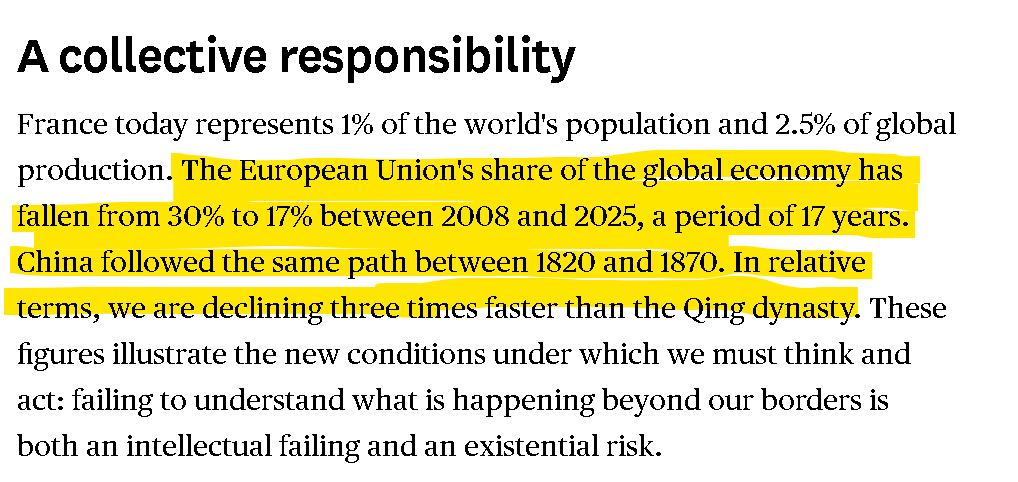
This 👇 is an extraordinary number shared by Luis Vassy, director of Sciences Po (one of France's most famous schools) in this article: https://t.co/BQbkXb2kPl
He calculated that the EU is declining 3 times faster than the Qing dynasty at the height of China's century of humiliation.
Back then, it took China 50 years to drop from 30% of world GDP to 17%, whereas it took the EU just 17 years (from 2008 to 2025).
Insane 😢 And, sadly, given the current direction and the EU's systematically suicidal policy choices (latest example: https://t.co/6EYJgdXVVo), it's just the beginning...
The "better" your childhood environment was, the more likely you were to be stuck in a gender-segregated bubble. A massive study tracking 500,000 kids across 37 countries, found that richer kids with high emotional regulation are 36% less likely to have opposite-sex friends by age 11. For girls, less opposite-sex friends meant less likely to major in STEM. Why? Because wealth and good behavior breed social complacency. Wealthy families enroll kids in expensive, highly structured, gender-segregated activities (like competitive sports or dance). If a kid is well-behaved, they fit perfectly into those bubbles and never feel the friction needed to leave them. Meanwhile, kids with "behavioral difficulties" get rejected by their default same-gender hierarchies. To avoid isolation, these "outlier" kids look outside the default boundary. The rigid gender wall is the first thing to drop. Rejection by their own gender forces an early, adaptive bridge to the opposite gender, making them social pioneers purely out of the necessity for connection.
People are the hardest thing about manufacturing and you’re all missing it.
Metal and plastics and wood don’t have feelings, family, mood swings, allergies, sick parents.
Machines don’t get insulted.
If you wanna be really good at manufacturing, you have to be great at people.
The bottleneck for mass-producing humanoids is not just AI.
It's the actuator and the supply base that sits underneath it.
Study these companies for each of the components.
- Japan dominates precision mechanical (reducers, bearings).
- Germany and Switzerland own high-end motion.
- China owns volume motors, reducers, and the upstream magnet supply.
Who am I missing?
Nobel Prize winning economist Kenneth Arrow wrote about "learning by doing" decades ago. He knew that productivity and expertise improve through experience.
The messy, repetitive works is often where you learn the patterns that eventually become judgment. Knowledge can be taught, but judgement is built through lived experience.
The first draft you rewrite. The customer call you listen to. The bug you fix and fix again. The factory floor you walk.
Small decisions you make every day teach you judgement. And, judgement is the thing everyone wants from senior people in the workplace. If we automate away every entry-level task without replacing the learning loop, we are removing a part of the process that creates experts.
The goal should be to use AI to accelerate learning, remove friction, and give people better tools to build expertise faster.
https://t.co/MpFZzCk1An
Thanks @Fortune & @tbove4 for sharing this story. Link in the comments.
MIT's Nobel Prize-winning economist proved that AI is mathematically guaranteed to destroy human knowledge.
They published a massive NBER paper modeling the long-term impact of AI on human cognition.
And they found the most alarming conclusion in the AI literature so far.
It’s called "Knowledge Collapse."
Here is how human progress actually works.
When you struggle to solve a complex problem, you generate two things:
General knowledge about how the world works, and context-specific knowledge about your exact problem.
Normally, humans acquire both at the same time. You do the hard work to solve your specific problem, and in the process, you learn a general principle.
You share that principle. That is how human knowledge grows.
Then comes Agentic AI.
AI is incredibly good at giving you the exact, context-specific answer you need right now. It hands the solution to you on a silver platter.
So you stop doing the hard work.
And because you stop doing the work, you stop generating the "general knowledge" that society relies on.
Acemoglu calls it the "knowledge-collapse equilibrium."
When AI reaches a certain accuracy threshold, the incentive for humans to learn drops to zero.
Nobody verifies. Nobody explores. Nobody discovers new fundamental truths.
Society gets increasingly sophisticated automated outputs, while our actual capacity to generate new knowledge quietly erodes.
But here is the most terrifying finding in the paper.
Welfare is "non-monotone" to AI accuracy.
That means as AI gets more accurate, society actually gets worse off.
A prototype proves something can be built.
Scale proves a company can survive.
Many hardware startups focus on technology differentiation. The best ones also obsess over manufacturing, supply chains, and operational learning from day one.
Eclipse Partner Greg Reichow's new Industrial Scaling Playbook explains why: https://t.co/3yOxDRNK0r
My dad used to tell me the signs of a failed institution is where you have separate toilets / eating areas / other facilities for staff and it has taken me a lifetime to understand what he meant.