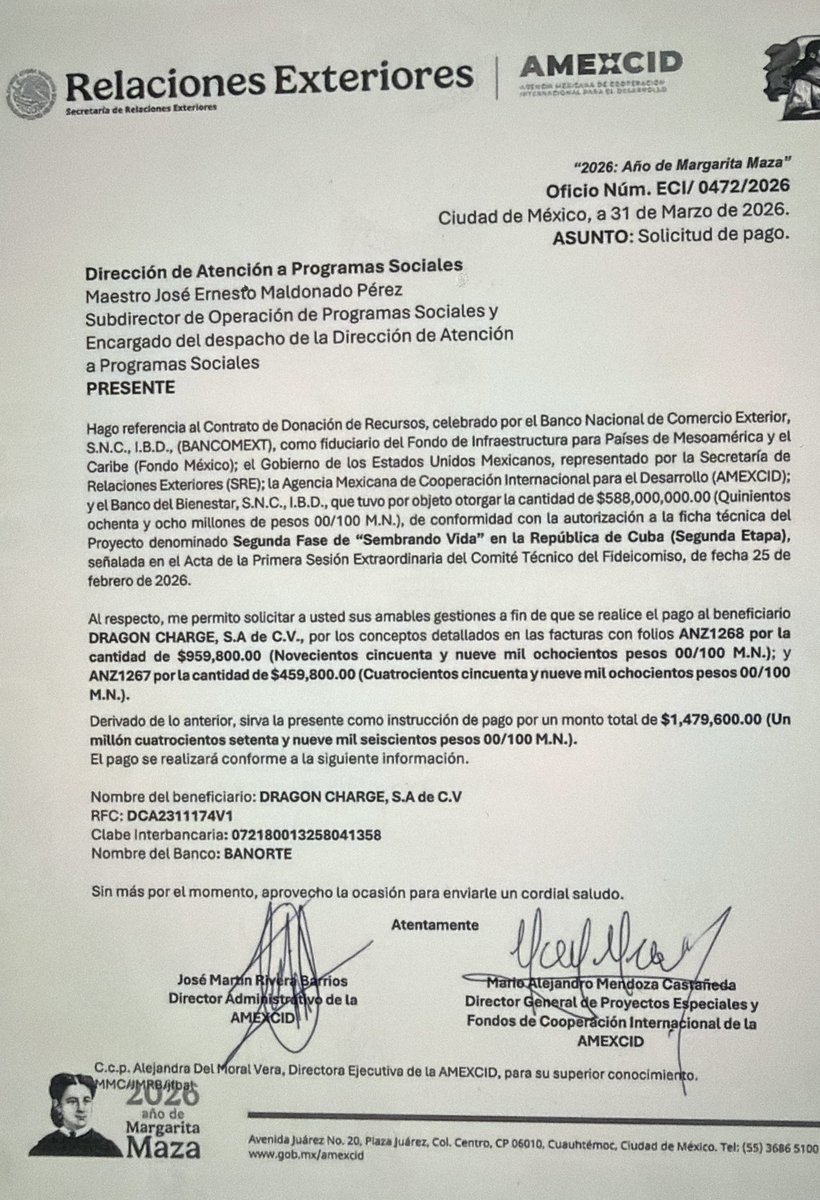
El gobierno mexicano le regaló 588 millones de pesos al Gobierno de Cuba para el programa Sembrando vida, a través de la empresa china Dragón Charge sa de cv, que es la que maneja a BYD México
Esto a través de la AMEXCID. Saltando las sanciones de Estados Unidos.
@mario_dico50
The Mexican Attorney General’s Office (FGR) and the Secretariat of Foreign Affairs (SRE) are currently engaging in a transparent exercise of legal obstruction and violation of the Mexico-U.S. Extradition Treaty. By publicly insisting that extradition requests will only proceed when allegations meet "legal standards" in Mexico, the government is deliberately ignoring the mechanics of the Treaty.
Under Article 11, a provisional arrest warrant requires no formal evidence of guilt, only the existence of an indictment and a commitment to provide documentation within 60 days. This "evidence" hurdle is not a legal necessity, but a political firewall designed to buy time for a regime that is terrified of what happens when the 60-day clock starts ticking.
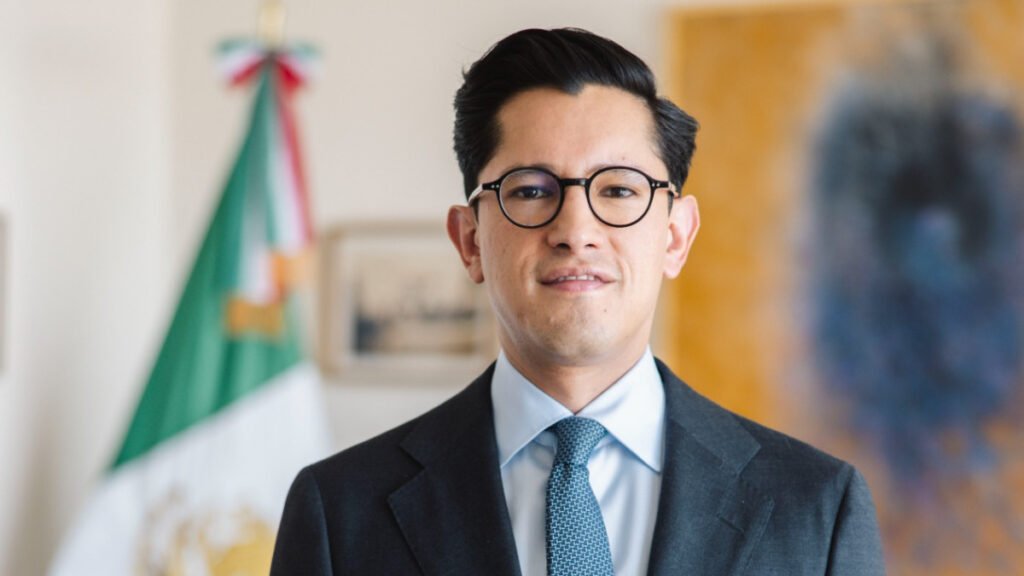
The performance of Foreign Secretary Roberto Velasco has been objectively deficient, revealing a diplomat clearly outmatched by the aggressive posture of the Trump administration’s DOJ. By claiming the U.S. order lacked "evidence," Velasco is either fundamentally ignorant of treaty protocols or, more likely, he is executing a desperate stalling tactic on orders from Claudia Sheinbaum. His failure to manage the diplomatic fallout has left the Sheinbaum administration exposed, as Washington is no longer interested in the polite fictions of Mexican "sovereignty" when it comes to the Sinaloa Governor’s indictment.
This procedural stalling is a symptom of a much deeper, more dangerous internal blackmail. LBR sources confirm the Governor’s ultimatum to Sheinbaum is categorical: any move to facilitate his "provisional detention" will be met with a total disclosure of the governing party’s logistical and financial ties to the Sinaloa Cartel. The threat ("if I am delivered, I talk about AMLO, you, and the party") has paralyzed the federal response. The FGR’s sudden concern for "sufficient evidence" is the only shield the administration has left to buy time and prevent the Governor from reaching a U.S. courtroom where he would inevitably trade his testimony for a reduced sentence.
The situation has moved beyond diplomatic friction into a state of existential threat for Morena and Sheinbaum. Game theory is now against her: if the FGR continues to block the provisional arrest, the U.S. will likely interpret it as a formal refusal to cooperate, and everyone involved will be assumed to be obstructing the U.S. justice system, triggering immediate and severe sanctions. If they comply, they risk a "domino effect" of testimony that could decapitate the party's leadership. The margin for error has been erased by the Governor’s counter-threat. Sheinbaum is no longer managing a legal process: she is managing a hostage crisis where the hostage is the secrets of the Mexican state.
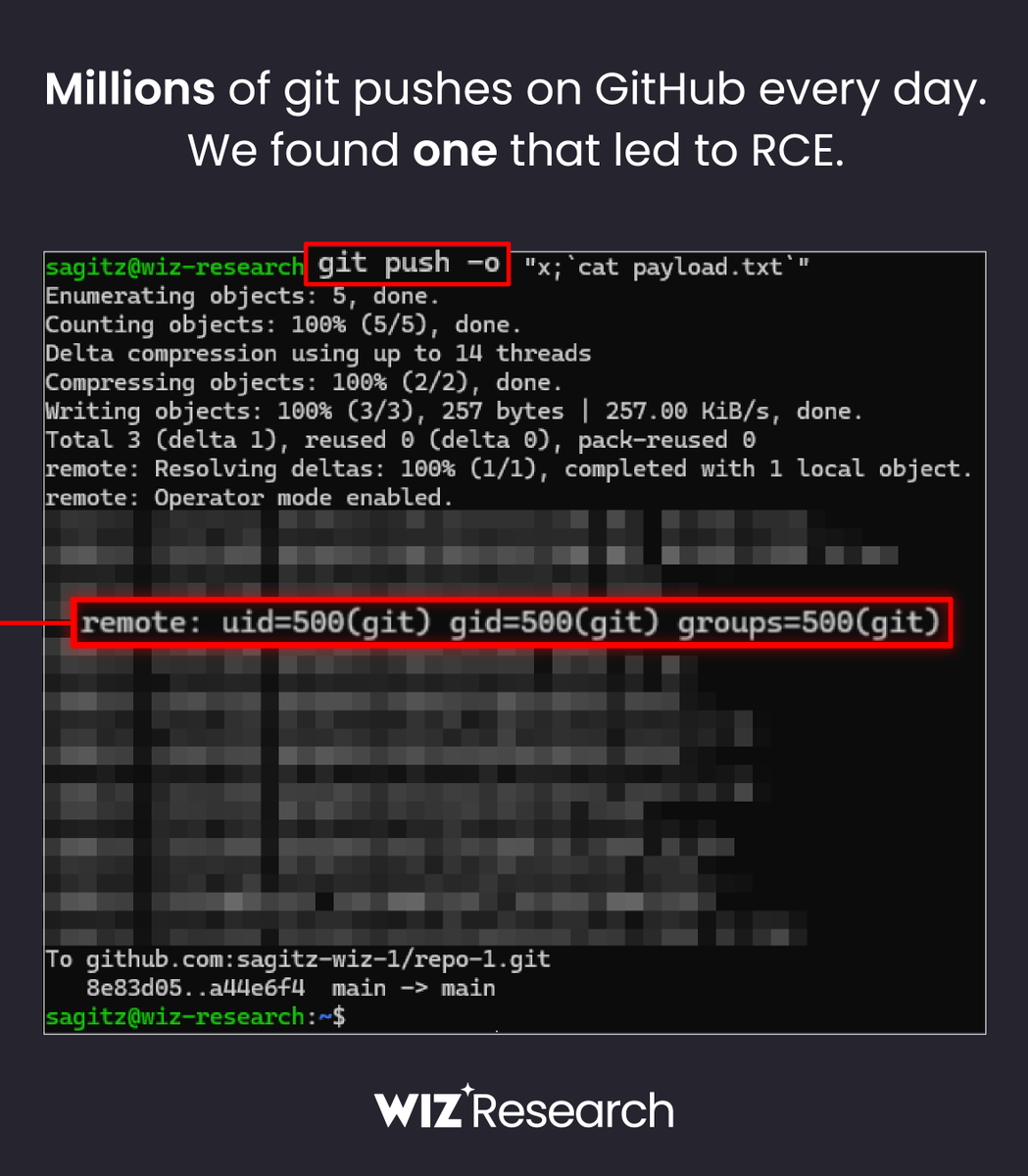
🚨 BREAKING: Wiz Research discovered Remote Code Execution on https://t.co/SvN2lGsnbO with a single git push
The flaw in @github allowed unauthorized access to millions of repositories belonging to other users and organizations 🤯
Our Mexico City desk can confirm that Pemex and senior Mexican government officials privately acknowledge that the spike in crude prices near $100 and the paralysis risk in the Strait of Hormuz expose a structural vulnerability in Mexico’s energy system that is far more severe than the government publicly admits.
Roughly 20% of global oil flows move through the Strait of Hormuz, making any disruption a systemic shock to global energy markets. The current price surge reflects the market beginning to price in that risk. If Iran mines the strait or tanker traffic remains constrained, the shock would not remain confined to oil markets. It would propagate through refined fuels, petrochemical products, insurance, and global trade simultaneously.
Mexico enters this environment with an unusually fragile energy balance. Despite being an oil producer, the country depends structurally on imported fuels and imported natural gas. The United States exports more than 1.9 million barrels per day of refined petroleum products to Mexico, covering over 70% of the country’s gasoline, diesel, and jet fuel consumption. In parallel, CFE´s electricity production has become structurally dependent on U.S. pipeline gas.
Approximately 74% of Mexico’s natural gas demand is satisfied through imports from the United States, most of it flowing from Texas shale basins. This dual dependency means Mexico’s energy security is effectively externalized.
Under normal conditions, that dependency is manageable because U.S. supply is abundant and cheap. In a war-driven energy shock, however, the system becomes exposed. Oil above $100 immediately raises refined product prices in the Gulf Coast market where Mexico buys most of its gasoline. At the same time, global LNG competition and oil-linked contracts tend to push natural gas prices upward. Mexico does not maintain significant strategic reserves of gasoline or natural gas to buffer these shocks. If global prices spike while domestic prices are artificially suppressed, the imbalance manifests not as higher prices but as shortages.
The current discussion inside the Mexican government about using the IEPS tax mechanism or pressuring fuel distributors to hold gasoline below 24 pesos per liter reflects exactly this risk. Fiscal subsidies or price caps can temporarily dampen inflation, but they do not change the physical supply constraint. When governments suppress prices during supply shocks, consumption remains high while suppliers reduce deliveries or divert fuel to higher-paying markets. This results in shortages, rationing, and fiscal strain. Mexico experienced a version of this dynamic in 2022, when fuel subsidies cost the treasury more than $15 billion.
The strategic concern becomes more acute if the Hormuz crisis escalates into a prolonged conflict between Iran and the United States. In that scenario, Washington’s political and military focus would shift heavily toward the Middle East. Energy markets would tighten globally, and the United States would prioritize domestic stability and allied supply chains critical to its own industrial base. Mexico’s heavy reliance on U.S. fuels and gas means that any tightening of Gulf Coast supply would immediately propagate south through pipeline and shipping networks.
The paradox is that Mexico remains an oil producer while lacking fuel security. The country produces crude but lacks sufficient refining configuration and capacity to meet domestic demand, forcing it to export crude while importing gasoline and diesel. At the same time, the power sector increasingly runs on imported natural gas. This combination leaves Mexico exposed to exactly the kind of external shock now emerging from the Middle East.
If the Sheinbaum administration does not begin securing strategic fuel reserves, alternative supply arrangements, or emergency storage capacity, the country risks entering a supply shock environment within weeks if the conflict persists. Rising global prices, combined with domestic price suppression, would push Mexico toward the classic symptoms of energy stress: fiscal drain, fuel shortages, electricity cost spikes, and inflationary pressure across transport and agriculture.
The problem is no longer oil prices alone. It is the structural fragility of Mexico’s hydrocarbon balance. A prolonged disruption in global energy markets would expose how little buffer the country has built into its system. Without rapid contingency planning, the combination of global war risk, price suppression, and external energy dependence could push Mexico into a full supply shock scenario.
¡NO LE VAYAS A DAR RT! Ella es Silvia Rocío Delgado García, exabogada de El Chapo Guzmán, quien actualmente se desempeña como Juez del Bienestar e intenta callar al activista @MiguelMezaC, furiosa de haber sido exhibida por el mismo como narcopolítica.
Repito: ¡NO LE VAYAS A DAR RT! Se enoja la exabogada de El Chapo y usurpadora del cargo de Juez. Aleja ese dedo del botón RT.
➡️ | ME DEMANDARON POR "DAÑAR LOS SENTIMIENTOS" DE UN SENTENCIADO POR HOMICIDIO
Un joven SENTENCIADO por el homicidio de su "mejor amigo" me demandó porque mis publicaciones, según su demanda, "dañaron sus sentimientos, decoro así como su estabilidad física y psicológica".
Quiere que le pague por el daño moral y lo indemnice económicamente, además de solventar todos los gastos y costos que origine el juicio.
Yo informé de las argucias legales que ha usado para evitar cumplir con la condena tras el fallo judicial. Desde 2018 se registró el hecho en el que murió Kevin Miranda y sus familiares no han visto justicia... ¡Por casi ocho años!
A mí me demandan por poner este asunto en la agenda pública, pero yo insisto en que el periodismo debe ser incómodo, debe incidir y usarse justo para difundir casos de evidente injusticia.
No soy de hule, claro que tengo miedo, pero soy fiel a mis principios.
¡Gracias siempre por su apoyo!
Amazon’s AI coding assistant may have just pulled off the Son of Anton gag from Silicon Valley: “it’s possible that…the most efficient way to get rid of all the bugs, was to get rid of all the software.”
Taking AWS down for hours (on multiple occasions). Unreal.
Your job as a developer:
20% writing code
30% reading code
50% figuring out what the product manager actually meant
Soon it'll be:
0% writing code with AI
10% editing your AI code
110% figuring out what the AI and the product manager actually meant