One must not dismiss first version of AI applications. They are quite likely to be lacking - since most engineers are still learning how to build them.
Rule changes for the SpaceX $SPCX IPO:
Index providers waived the profitability requirement and cut the seasoning window from 90 days to 5.
This forces over $30 trillion in passive 401k and retirement money to buy SpaceX at IPO valuations.
Bloomberg Intelligence estimates S&P 500 funds must absorb 19% of SpaceX's float within 6 months.
Russell 1000 and Nasdaq 100 funds will absorb 24%.
The rules built to protect passive investors:
1. S&P 500 has required 12 months of trading and 4 quarters of GAAP profitability since 2002. Both waived.
2. Nasdaq cut its inclusion window from 90 trading days to 15.
3. FTSE Russell cut its to 5.
All three benchmarks are now structured to buy SpaceX at IPO pricing.
If sales grow by 10x in 10 years (26%) and the price goes up 4x (15%) then it goes from 10 P/S to 4 P/S.
Plausible growth. Avg market returns.
For 10% return. 2.5 P/S
Market tries price it so that any new entrant today doesn't make alpha.
Price to Sales ratio for big tech (not price to earnings):
1. Nvidia: 20x
2. Apple: 10x
3. Alphabet (Google): 11x
4. Microsoft: 10x
5. Meta: 7.5x
6. Micron: 19x
As Scott McNealy of Sun Micro said back on 2002: "At 10x revenues, to give you a ten-year payback, I have to pay you 100% of revenues for 10 straight years..."
This is an insane bubble, even bigger than 1999.
Political violence in WB is an important indicator of whether things are going to change. This violence is about 40 years old - back when CPIM and Congress used to fight.
This isn't a good start.
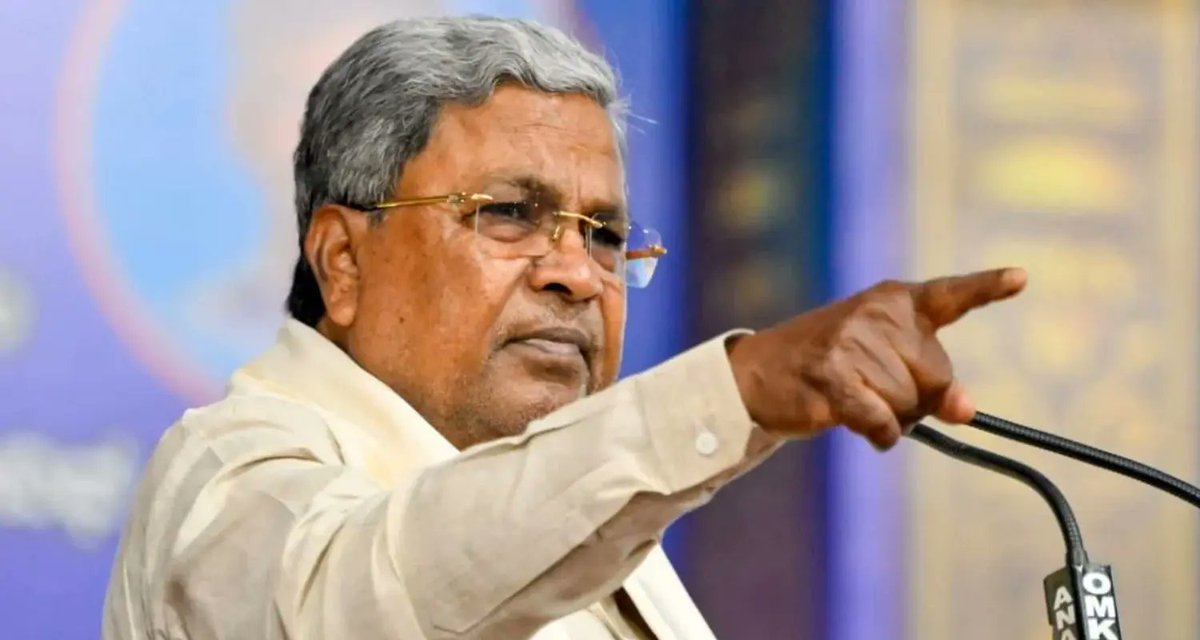
There is a memory I carry with me from my years as a civil servant. It has never left me....
Back then, I had just been transferred as Collector to Mangalore, a city then shadowed by communal violence and a menacing sand mafia. Before I left, word came that the Chief Minister wished to see me personally. It was unusual. Collectors don't typically get called in. I walked into his chamber with a knot in my stomach.
He looked at me, that familiar, unreadable face. Steady. Unhurried.
"Banri…" he said. (Come in.)
"Nimage ondhe kelasa… alli ennum communal aaga baradhu."
(You have only one job there. No communal incident should happen.)
That was it. No preamble. No politics. No performance. Just a Chief Minister, alone with a young IAS officer, telling him exactly what mattered. In that single sentence lived an entire philosophy of governance. one rooted not in optics, but in the protection of ordinary people from extraordinary hatred.
Fifteen days later, Mangalore erupted. Two communal murders, two communities, one city on edge. He called me again. Just as directly.
"DC... Do what is required. Take anyone into custody, even our party people. Don't bother. But stop this within a day."
To a young collector, those words were everything. They were permission. They were protection. They were political will at its most honest.
I have known the contrast too. Under a different dispensation, in a similar crisis, the instruction from the top was the opposite. Do nothing strongly. Let things fester. …That silence said everything about who governs for whom.
Siddaramaiah Ji was never that kind of leader.
He carried government finances in his fingertips and social justice in his spine. He refused to tour places that reeked of feudalism. He spoke plainly, governed sharply, and stood on the side of the last person in the room.
If there was one political figure I have genuinely admired, from the stage and up close, it has been him. His legacy is not in the schemes he launched or the budgets he read. It is in the kind of Chief Minister he chose to be when no one was watching. . On that quiet phone call. In the way he asked a nervous young officer to go out and keep the peace.
And now, as he steps back with the same quiet dignity with which he always led, I find myself moved. He has handled this transition with the grace of someone who always knew that principles outlast positions.
Siddaramaiah Ji....long life, good health, and please keep guiding us. The Congress, and this country, still needs the kind of moral clarity only you carry so naturally.
Chronic debaters are lethal to new ideas for the same reason pessimists are. They sound smart because they’re good at finding flaws before anything has had a chance to work.
Politics of self interest perhaps is much better than politics of ideology.
parties like CJP, AAP, TVK, RSP (Nepal) are coming up and likely such politics will stay.
If a deal is struck to end the Iranian conflict because it is believed that the Strait of Hormuz cannot be protected from Iranian terrorism and Iran still possesses the capability to destroy major Gulf oil infrastructure, then Iran will be perceived as being a dominate force requiring a diplomatic solution.
This combination of Iran being perceived as having the ability to terrorize the Strait in perpetuity and the ability the inflict massive damage to Gulf oil infrastructure is a major shift of the balance of power in the region and over time will be a nightmare for Israel.
Also, it makes one wonder why the war started to begin with if these perceptions are accurate. I personally am a skeptic of the idea that Iran cannot be denied the ability to terrorize the Strait and the region cannot protect itself against Iranian military capability.
It is important we get this right.
@NeelChhabra I think it is simpler that that.
Trolling is the business model. Gets visibility.
I don't think there are emotions like envy/resentment involved here.
A beautiful phenomenon in investing is "refusal to sell".
i.e. when the conviction of an investor in the value of a stock (and expected return) is so strong that even in the face of large loss, person refuses to sell and then gains massively.
War is not over but the ceasefire is also not over.
Hormuz closed, but is open with permission, but is also blockaded.
US Iran are not talking, but also talking.