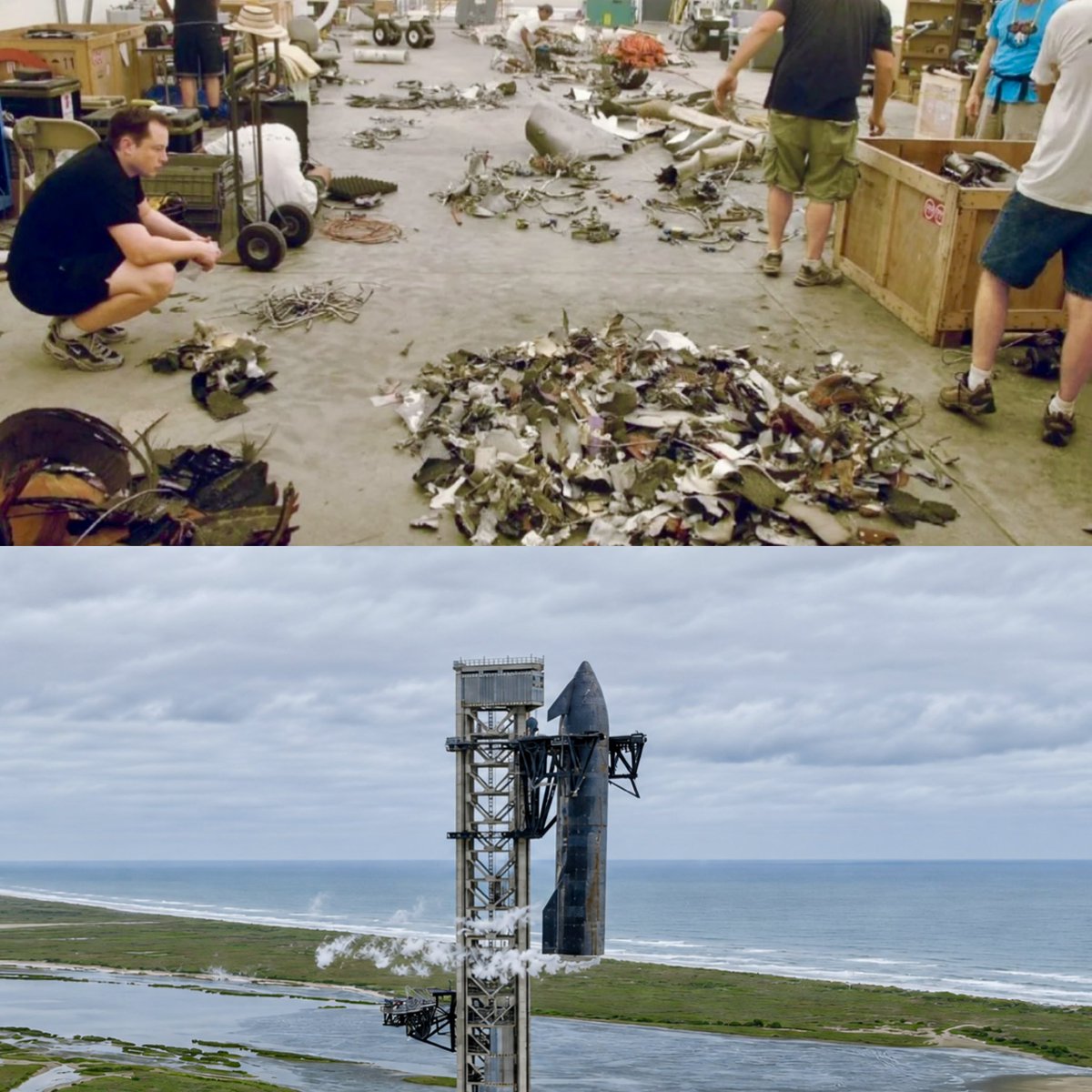
Being right too soon is socially unacceptable. Elon Musk is doing the right thing, and he's ahead of his time.
"If I died knowing that I did what was right or did my best to do what was right and even If in the History books They said I did wrong, I would still feel okay about that, I care about the reality of goodness and not the perception of it."
There's something that's been bothering me lately, and I feel it's worth addressing.
Many of you know that my account has become one of the go-to sources for educational content, especially during market drawdowns, along with technical and fundamental analysis. That's something I genuinely take pride in.
Throughout this year, I've spent countless hours researching, analyzing markets, and creating educational content using hand-sketched, whiteboard-style illustrations to simplify complex concepts.
Recently, several friends, including some well-known accounts in the trading and investing community, have reached out after noticing how closely certain educational content resembles my work, especially my hand-sketched visual presentations.
And I've noticed it myself, not just in the visuals, but also in how concepts are explained and presented.
I'm not here to point fingers, but it's genuinely disappointing to see work built on years of learning and countless hours of creativity being replicated with little originality.
Did I invent the hand-sketched style? Absolutely not. But I've developed my own approach, combining educational research with a consistent visual style many of you recognize today.
I have no problem with people taking inspiration from others. That's how we all learn and improve.
But take that inspiration and develop your own creative approach instead of simply copying someone else's work.
I'm an investor and trader first. Creating educational content is something I'm passionate about, and I'll continue sharing what I've learned to help others improve.
You might copy my work. You might imitate my style. But you can never copy the creativity, research, and thought process behind it.
My brother’s friend drives a Tesla. This is 3 videos of the same accident. The Tesla, on self drive, sees the approaching car coming from behind at excessive speed and moves out of the way. Driver of speeding car was killed. Amazing technology @elonmusk.
Turns out that the Starlink software, built for managing the movement of vast amounts of data through space and to the ground, is also very well suited to training super intelligence
There is one thing I would like to say.
My expertise is in semiconductor technology and the semiconductor industry. I have a PhD in semiconductor engineering and work as a design engineer in Silicon Valley. I also run a community with hundreds of semiconductor professionals. Through seminars and conversations with people in the industry, I continue to study and research where the technology and the industry are heading.
The articles I started writing earlier this year have helped many readers, and my X and Substack have attracted more attention than I expected. I am always grateful for that.
I have my own views as an individual investor, and I share opinions on certain companies and industries. However, analyzing a company’s technology and competitiveness is different from accurately predicting stock prices or knowing exactly when to buy and sell. My expertise lies in the former. I cannot claim to be good at the latter. If I were, I would probably be working on Wall Street in New York rather than in Silicon Valley.
That is why I always mention NFA and DYOR when sharing my investment views. My judgment has limitations, and you should examine the reasoning and make your own decisions. In fact, when someone recklessly tells people to buy or sell with absolute certainty, I firmly believe that person is a fraud.
The same applies to how I view the memory industry.
I remain optimistic about the memory business. Based on what I see and hear, my experience working in the industry, and my technical understanding, I still see plenty of reasons for optimism in demand trends and the structural changes in memory technology. That is why I do not change my view of the industry simply because memory stocks fall. If you criticize me for discussing the memory business when I could not even predict the selloff, I do not have much to say in response. Sorry, but that simply is not what I am good at…
If changes in supply, demand, or technological competitiveness overturn the basis of my view, I will change my opinion. NVHBM is what I am watching most closely right now. I plan to have more conversations with memory experts toward the end of the year and share my insights.
So, coming back to the question, if you ask me, “Memory stocks have fallen this much, and you are still optimistic about memory?” my answer is yes, because the industry fundamentals I see still support that view. I will not pretend to know when the stocks will rebound. In the meantime, I will keep researching the memory business and checking whether the basis for my view still holds.
Going forward, I will not praise a company simply because it sponsors me, nor will I write only favorable articles about a company simply because I own its stock. I will also not change the basis of my analysis merely because a company’s stock price rises or falls.
What I want to offer here is evidence and perspective that help you understand changes in semiconductor technology and the industry, so you can make your own judgments. You do not have to agree with my conclusions. But if my writing makes technology a little easier to understand, gives you another question to ask about a company or industry, or helps you reassess your investment decisions using more concrete evidence, then I believe my research is doing its job.
Thank you.
Since I’ve been asked a lot:
Buy stock in several companies that make products & services that *you* believe in.
Only sell if you think their products & services are trending worse. Don’t panic when the market does.
This will serve you well in the long-term.