🧵 I just gave Claude Code sub-agents write access to our production code.
Most CTOs called me insane. Here's what happened:
→ $253k saved annually
→ 3x faster feature delivery
→ 73% fewer bugs in production
→ Zero regressions across 127 PRs
My "AI dev team" in action:
Scientists say AI has decoded communication patterns in mice, dolphins, apes, birds, whales, and cuttlefish — a step that could eventually enable direct communication between humans and animals.
Model routing will shape AI’s future. Frontier labs may try to build moats via their AI harnesses, but for consumers, model capabilities likely flatten and commodify. A preview of the AI Harness Wars of 2027.
https://t.co/5hKFSCdkmV
Model routing is an important thing
Controversial idea: the frontier labs will want their AI harness to be the moat, but ultimately the best case for consumers is that model capabilities flatten and commodify
Preview of the AI Harness Wars of 2027
Cut Docker build size by ~99.8% (1.87 GB → 2.5 MB) just by using https://t.co/AXruNel5tS 😌 Worth testing for faster CI and smaller images.
via @Kikobeats
Claude Code introduces a harness for every task by enabling dynamic workflows that adapt to each coding challenge. This flexible approach matches tools to needs, streamlining processes without fixed constraints, and looks worth testing for diverse development tasks.
Gemma 4 12B delivers high-performance multimodal intelligence directly on laptops without traditional encoders. This unified, encoder-free model shrinks memory needs and adds native audio input, making on-device AI more capable and efficient for real-world apps.
32GB DDR5 now costs $375 as AI-driven demand outpaces supply. For PC builders, this means higher costs for RAM and tougher choices when balancing budgets against performance needs.
Meta’s AI training tool logs employee keystrokes and clicks but now lets workers pause tracking for 30 mins or opt out, after privacy and workload concerns. Tool design must weigh data needs versus user control to maintain trust and reduce friction.
Larry Ellison predicts society under constant AI-driven and drone surveillance will self-regulate behavior due to pervasive recording. For builders, this signals that tech design will need to balance transparency, user trust, and ethical privacy safeguards.
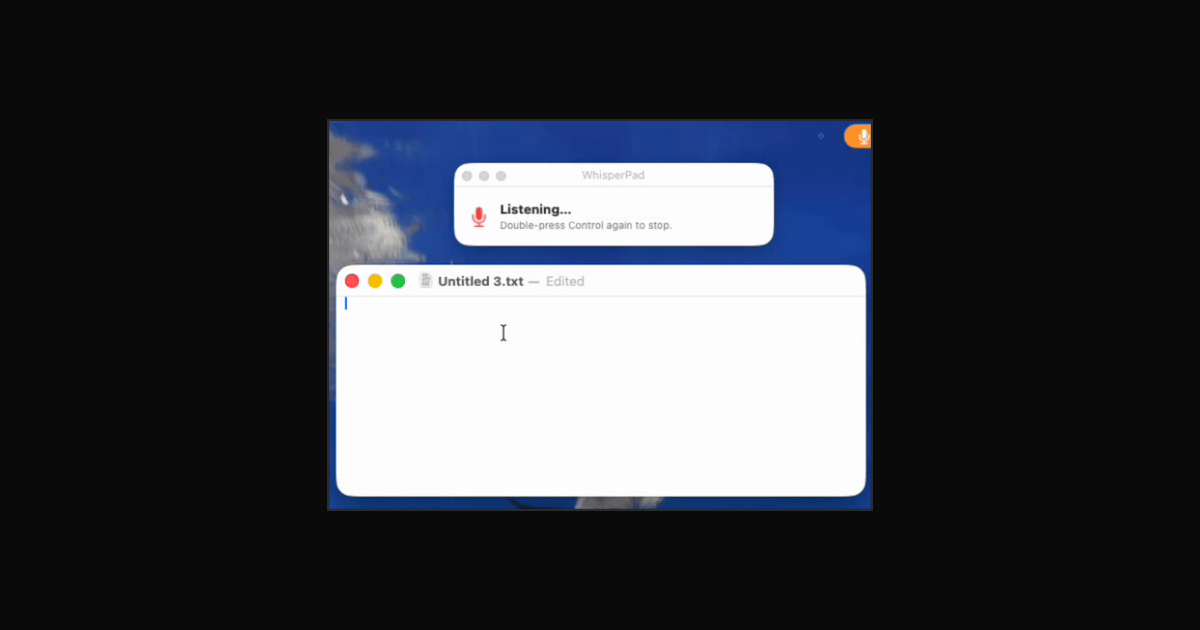
Apple rejected a dictation app that injects transcribed text via the accessibility API, citing non-accessibility use despite earlier approvals. This stops a privacy-first, hands-saving feature and shows how platform policy changes can disrupt assistive workflows.
Chinese scientists made a metal–polymer conductor that stays conductive after twisting, stretching, or folding—solving wires breaking under repeated bending. This looks worth testing for flexible electronics.
https://t.co/sAEZlHAzNs
Chinese scientists created a metal–polymer conductor that stays conductive even when twisted, stretched, or folded, solving the problem of wires breaking under repeated bending.
BREAKING: A cognitive scientist from MIT has mathematically proven that evolution guarantees we see zero percent of true reality, that most consciousness in the universe
It already derives time dilation and quantum
https://t.co/Aqs3Qd7g5s
🚨BREAKING: A cognitive scientist from MIT has mathematically proven that evolution guarantees we see zero percent of true reality, that most consciousness in the universe exists without a body, and that non-human intelligences with a wider window on reality than ours can reach in and manipulate it the way a programmer manipulates a video game.
Donald Hoffman (@donalddhoffman) is a cognitive scientist at UC Irvine who has spent 40 years building a mathematical theory of the observer. His work was cited by John Wheeler in the "It From Bit" paper. He studied under Marvin Minsky at MIT, spent two decades secretly meeting with Francis Crick to study consciousness, and has nine specific mathematical conjectures on the table that would derive general relativity, quantum field theory and the Big Bang from a single framework. The top high-energy physicists in the world, Nima Arkani-Hamed and Nobel laureate David Gross, are already saying spacetime is doomed. Hoffman thinks he knows what replaces it.
This interview is the first time he has publicly laid out what his mathematical model explains about alien life, embodiment and the structure of reality.
It already derives time dilation and quantum wave functions directly from differences in observer window size. Physics has spent a century failing to solve the measurement problem because it has been looking in the wrong place. The observer has to come first, and no physicalist framework can get you there.
A consciousness with a larger observer window has access to the underlying structure of our reality in ways we can't perceive or counter. A craft going Mach 40 instantaneously in our headset could be a leisurely maneuver in theirs.
The implications for UAP and alien life are immense.
Embodiment, being locked into a body with fingers and toes as your only interface with the world, is a probability zero anomaly in the full space of possible minds. He also says current large language models are dumber than cucumbers. His new framework, the recursive trace logic, is a completely different architecture, and some of the biggest names in frontier AI have already come to him about it.
The framework has no ceiling, and the implication is a single unified consciousness exploring itself through an unbounded number of perspectives, each one capable of waking up.
Death, in this framework, is just the closing of an icon on the desktop.
Full conversation is live now.
Search as Code shifts agentic AI: old way—agent calls search and moves on; new way—agent scripts the search pipeline in Python (parallel queries, deduplication) before a token hits context. 2.5× faster, 85% fewer tokens.
via @Suryanshti777
Diffusion and flow matching-based robot planners are slow and produce noisy, jerky trajectories. This ICRA 2026 paper uses IMLE to boost planning frequency 19x (4.3 to 83 Hz) and cut jerk by 38% versus flow matching.
https://t.co/5zin04YRBS
Diffusion and flow matching-based robot planners are slow and generate noisy and jerky trajectories.
Delighted to share our ICRA 2026 paper, which leverages IMLE to improve planning frequency 19-fold from 4.3 Hz to 83 Hz and reduces jerk by 38% relative to flow matching.
Joint work w/ Grayson Lee, Minh Bui, Shuzi Zhou, Yankai Li and Mo Chen.
(1/7)
MIT’s Nobel economist models AI’s impact and finds “knowledge collapse.” AI solves problems for us, so we stop learning general principles. As AI accuracy rises, human knowledge and welfare can actually decline.
via @HowToAI_