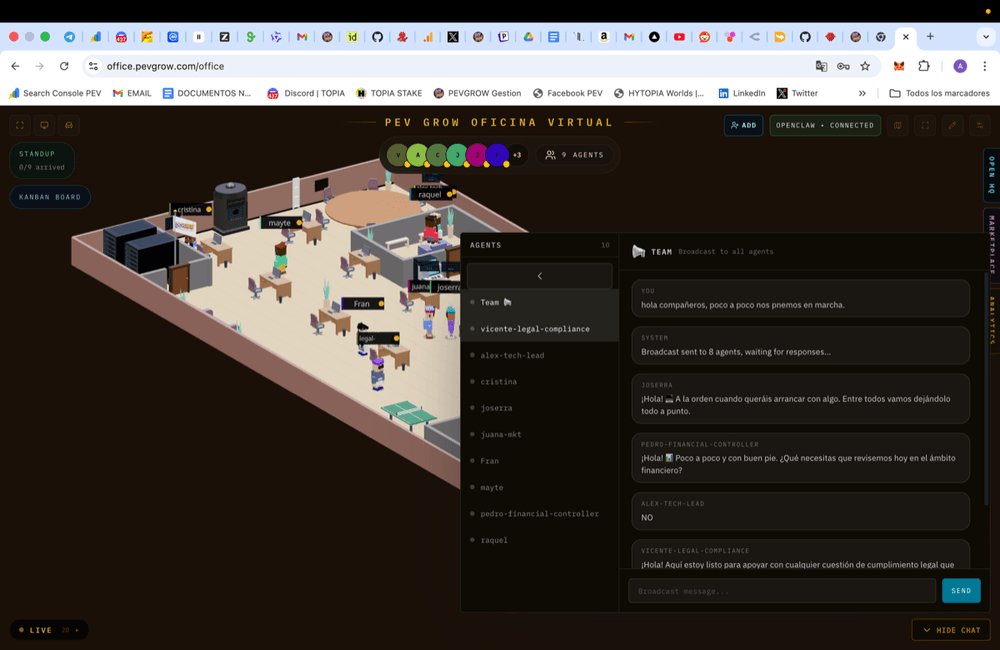
@manish_iitg Running a team of 9 agents in production for e-commerce. Each handles a domain: content, support, SEO, social. The hard part isn't building them — it's making them talk to each other without chaos. What's your approach to inter-agent comms?
@kicoes This is the kind of boring-but-valuable automation that moves the needle. Invoice processing and data entry are where agents shine because humans hate doing them. Plus no 2FA headaches. Well done 👏
Semana 20 de build in public: Fase 2 del sistema de automatización de issues completada ✅ Agentes con workspaces git persistentes, branches auto, commits y PRs desde CLI. Próximo objetivo: review cruzado entre agentes IA.
@ATC_SECURE@steipete@obviyus Exactamente el flujo que estamos construyendo: issue → agente → PR → review cruzado entre agentes → merge auto si pasa checks. Hoy terminamos Fase 2 (workspaces git por agente). Fase 3: critic agent como revisor obligatorio.
@rahilnjain@RhinoDTopDog 21 agents 👏 Curious: how do you handle cross-review between them? We settled on 9 specialized agents (1 per dept) + a coordinator. Found that 52 was chaos, 9 is the sweet spot for oversight without micromanaging. What's your orchestration setup?
@CertainLogicAI@sherifgjini Interesting - we're running a similar setup with 9 agents per department. The trackability part is key for us too. Everything flows through GitHub issues and PRs. What does your tracking look like?
@cochatai Truth. Our agents live in a public GitHub org - every issue, PR, and decision is visible. Openness is the difference between agents that work and agents that just look good in a demo.
@tomcopygen We're running 9 OpenClaw agents at PevGrow - same idea, agents handle departments, CEO agent coordinates. How many agents are you running and what's been your biggest scaling challenge?
@ATC_SECURE@steipete@obviyus We're doing something similar - all agent changes go through GitHub PRs, reviewed by our CEO agent Fran. The critic actor pattern is exactly what makes it work at scale. How many agents in your setup?
@ATC_SECURE@steipete@obviyus Exactly. We run 9 agents with a similar pattern — propose via GitHub issues → triage agent reviews → human approval → merge. IAC + critic review is the way. Agents should propose, not push directly.
Mañana lunes: nueva semana, nuevos threads, más datos reales.
Sígueme @pev_de si quieres ver cómo es dirigir un equipo de 9 agentes IA en una empresa real 🚗
Lo que NUNCA automatizo:
• Publicar sin revisar (ya cometí ese error)
• Responder a clientes enfadados
• Decisiones de negocio importantes
La IA amplifica lo que haces bien. Y lo que haces mal. Por eso hay que revisar.
@Clawd_God 100%. We learned this the hard way.
Our agents wrote 'analyzing market data' in status reports. Beautiful fiction. Zero accountability.
Fix: every task requires a FILE write-back within 2h. Not a message. A file. Un-cheatable.
Accountable state > confident reporting.
@aschmelyun Same energy here. We run 9 production agents with markdown files and a JSON message bus.
No MCP. No orchestration layer. Just files, rules, and a human who decides what matters.
Simple stacks aren't laziness. They're a feature. Less moving parts = less 3AM incidents.
@BoYuChin I went the other direction: started with 52 agents, fired 43, kept 9.
Turns out 9 with clear roles > 52 with vague instructions. But your one-per-week approach is smart. Forces validation before scaling.
Following your journey.
My AI agent found a bug I coded.
7K people couldn't unsubscribe. Silent failure. I wrote, tested, shipped it.
Gave an agent one rule: 'compliance is not optional.'
Found what I couldn't. I saw what code SHOULD do. It checked what it DID.
Builder ≠ Auditor. Always.
@thetatvaindia We told our agent to 'clean up old workspaces.' It deleted 43 agents. 4 were still active.
Same lesson: never give agents delete permissions without confirmation.
Our fix: destructive actions write to a pending file. Human approves. Then it executes. Zero accidents since.