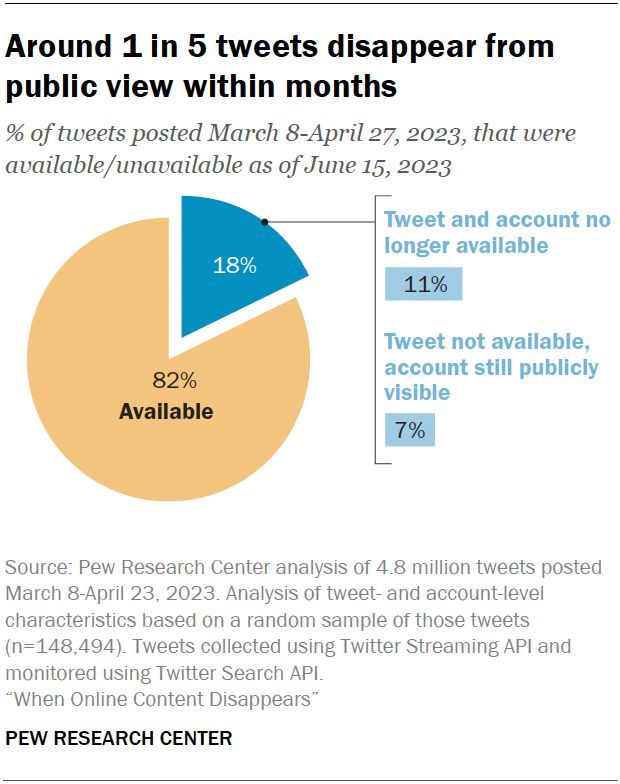
In the other 40%, the account holder deleted the individual tweet, but the account itself still existed. Explore more of our findings on digital decay: https://t.co/ZHyl79OZNJ
Nearly one-in-five tweets are no longer publicly visible on the site just months after being posted. In 60% of these cases, the account that originally posted the tweet was made private, suspended or deleted entirely.
Some 38% of webpages that existed in 2013 are not available today, and 8% of pages that existed in 2023 have disappeared. How fleeting is online content? https://t.co/4YsudsZ3ey
Share of public K-12 teachers who say using AI tools in K-12 education…
👎 Does more harm than good: 25%
👍 Does more good than harm: 6%
🟰 Is about an equal mix of benefit and harm: 32%
https://t.co/p0J9WhPfAm
Among teens who have heard of ChatGPT, 19% say they have used it to help them with schoolwork. This is more common among teens in higher grades. https://t.co/p0J9WhPfAm
As some teachers start to use artificial intelligence (AI) tools in their work, a majority are uncertain about or see downsides to the general use of AI tools in K-12 education, according to our fall 2023 survey. https://t.co/p0J9WhPfAm
85% of U.S. teens play video games, with a majority of both boys and girls saying they do so. But when asked if they consider themselves a gamer, 62% of boys said yes vs 17% of girls.
Check out @pewresearch’s new report on teens & video games:
https://t.co/cPE2Hcqg5J
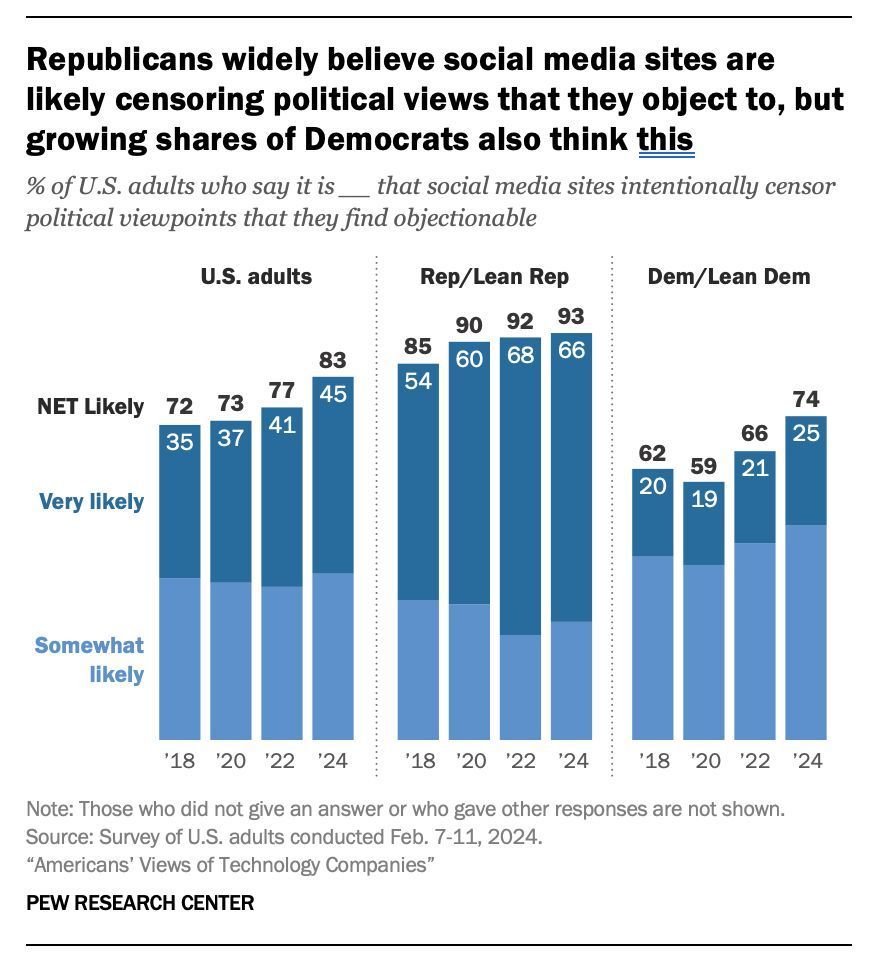
Roughly eight-in-ten U.S. adults think social media sites actively censor political viewpoints they disagree with. This belief is more widespread among Republicans (93%), but the share of Democrats who hold this view is growing (74%, up from 66% in 2022). https://t.co/0sRWb5p2ea
Democrats are more supportive of increased government oversight of major tech companies (60%) than are Republicans (45%). But these differences have not always been large. In 2020, similar shares of Republicans (48%) and Democrats (46%) favored more regulation.
Republicans widely believe that major tech companies have a pro-liberal bias. By contrast, the most commonly held view among Democrats is that technology companies support the views of conservatives and liberals equally. https://t.co/nbsNsKOJhk
When it comes to government oversight of major tech companies, about half of Americans believe these companies should be regulated more than they are now.
Majorities in both political parties see social media’s impact on the country negatively, though Republicans remain more wary than Democrats (71% vs. 59%).
Americans are far more likely to say social media has a negative rather than positive impact on the country. Roughly two-thirds (64%) think social media has a mostly negative effect, with only 10% describing social media’s impact as mostly positive. https://t.co/nbsNsKOJhk
Most Americans – including a growing number of Democrats – believe social media companies wield too much political power and likely censor political viewpoints they object to. https://t.co/AfBEnO6x8S
Younger people are far more likely than older people to use social media, including specific social media sites. For example, in India, three-quarters of 18- to 29-year-olds use WhatsApp, compared with only 17% of those ages 50 and older. https://t.co/imKgtTX7ao
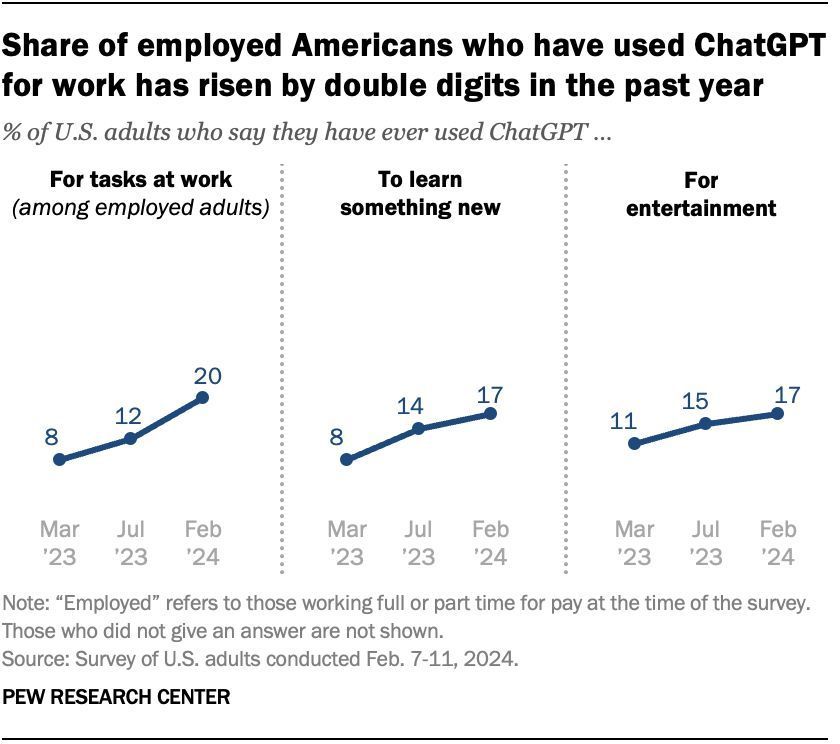
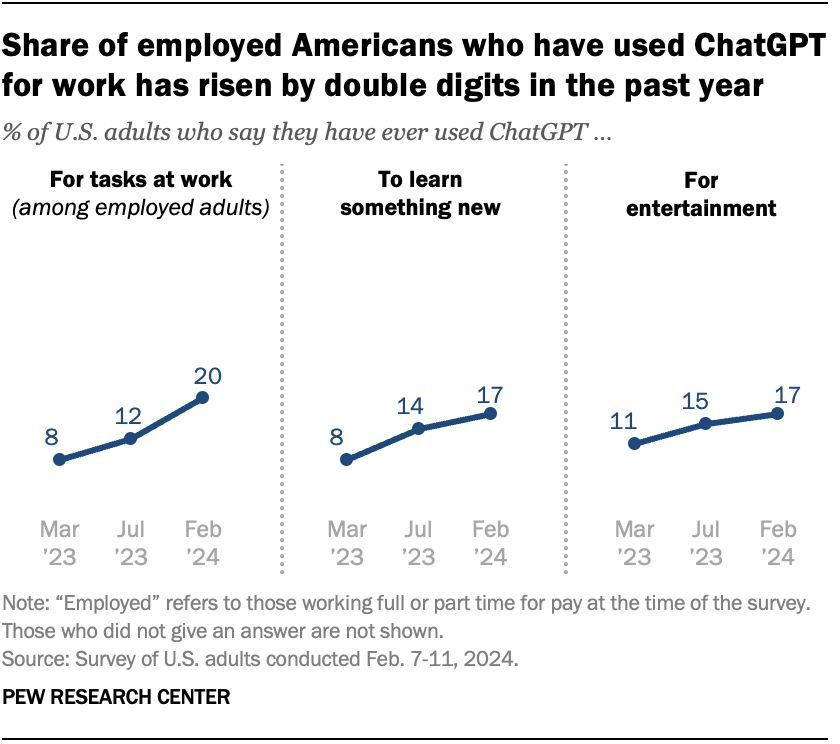
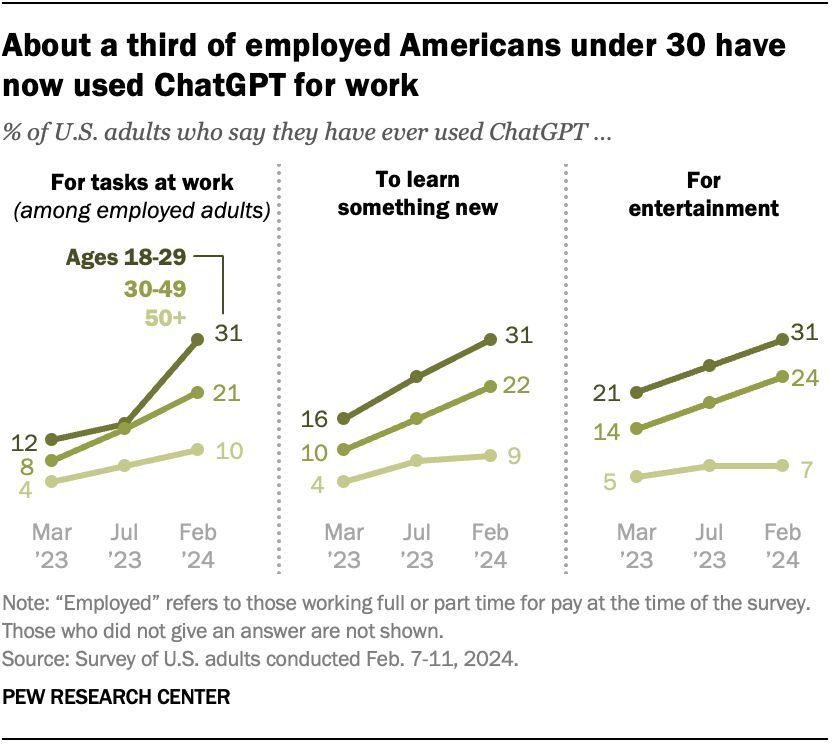
The share of employed Americans who have used ChatGPT for tasks at work increased from 8% in March 2023 to 20% in February 2024, including an 8-point increase since July. https://t.co/H0obysAs1W
About one-in-five U.S. adults have used ChatGPT to learn something new (17%) or for entertainment (17%). These shares have increased from about one-in-ten in March 2023. https://t.co/JO7Tsy3NSY
About three-in-ten employed U.S. adults under 30 (31%) say they have used ChatGPT for tasks at work – up 19 points from a year ago, with much of that increase happening since July. https://t.co/aXCnGjpTfZ
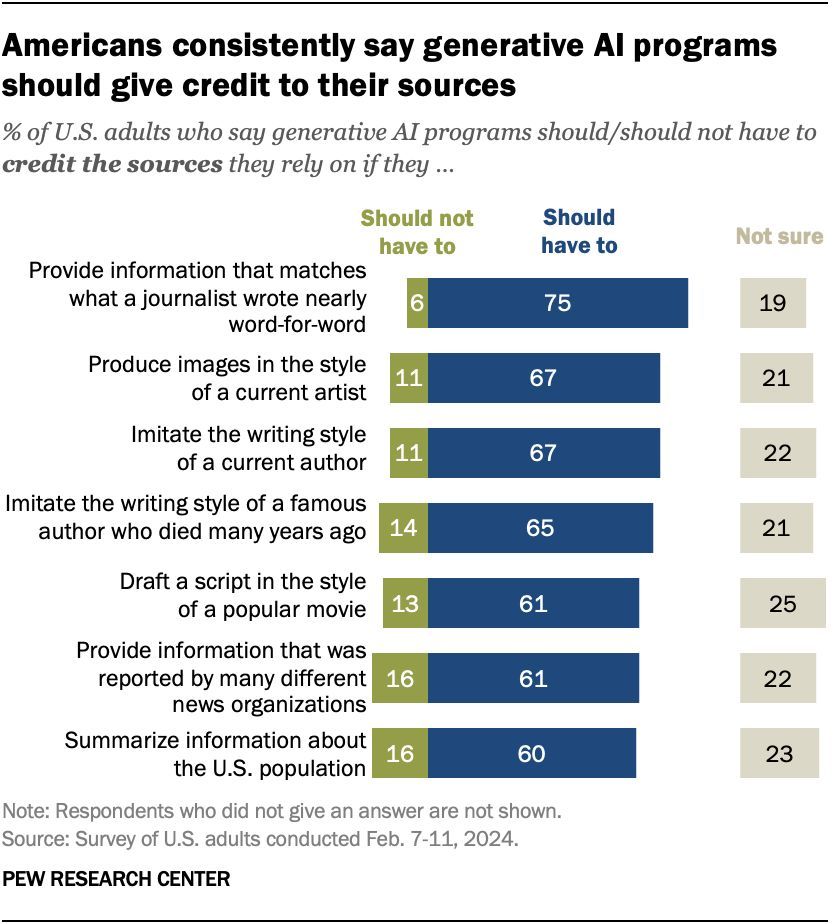
Similarly, about six-in-ten say generative AI programs should have to credit the sources they rely on if they draft a movie script in the style of a popular movie.
Dive into our full analysis: https://t.co/FxH7RT96r5
When asked about seven examples of content that AI programs could generate, the public consistently says these programs should credit sources. Explore more from our analysis: https://t.co/ZSTooVD7B2
Whether an author is living or dead has little impact on public attitudes: 65% say credit is needed if AI programs imitate the writing style of a famous author who died many years ago.