Fourteen days ago, a stranger who has been stalking me for nearly a decade was sentenced to 20 years in prison. From my first report of his behavior to his sentencing, 1,614 days passed. During that time, I chose not to share what was happening so the case would have the best chance of success and so the law could finally halt what it has too long enabled.
The prosecution relied entirely on my documented experiences and my testimony. I took the stand four times during the trial, with the stalker seated front and center as a captive audience. For the chance of a few years of reprieve, I handed him my playbook and exposed my life, my fears, and the steps I took to stay safe. That trade is a cruel but inevitable feature of criminal justice and a risk I had to take. Since the day this individual first darkened my door, I have prayed that he would go away. I knew in my gut that he was dangerous and I have not been able to shake that sense of threat.
Stalking is an insidious and terrifying crime that sits on the pathway to lethal violence, yet it often does not receive the response it requires. Stranger stalking is even less common, with offenders often offered the chance to plead to lesser charges, if anything at all. I am fortunate that is not my story.
I have been battling the system and this stalker for the greater part of my twenties. This individual had multiple opportunities to change and refused. He is a repeat violent offender who has dodged accountability more times than anyone should be comfortable with. People like him do not suddenly begin this type of behavior in their thirties or forties. His extensive criminal history exposes his sustained pattern of harm and disregard for the law and for others. He shows no remorse for the devastating impact of his actions and nothing suggests he intends to stop. He is a delusional predator who preys on others under the false pretense that consequences only apply to his adversaries. Unfortunately for him, he picked the wrong girl.
Unlike most crimes, this offense forces the victim to become the case builder, documenting the pattern, preserving evidence, and repeatedly reliving the events while the perpetrator’s history sits isolated across multiple agencies and case files. That level of vigilance became a full-time job and kept the case moving, but it is not a fair or realistic standard to expect from most victims, especially when the offender has a known history and should already have been removed from the community.
The fear of escalation and retaliation, both in the years before trial and in anticipation of his eventual release, has been all consuming. Living with that kind of uncertainty changes how you move through the world, how you make decisions, and how you feel in the most ordinary moments. For me, the burden is personal. I had to put my entire life on pause to manage this risk and carry the case to the finish line. Responsibility should not rest on how much a woman can contort her life, absorb harm, or perform for the system. We can and must do better.
Stalkers, like all high-risk offenders, do not stop because someone asks them to be reasonable. They stop when there is a multi-agency response that uses the full force of the law to stand between them and the people they hunt. I am deeply grateful to the Collin County District Attorney’s Office, the Frisco Police Department, the Collin County Sheriff’s Office, and the U.S. Marshals Local Fugitive Task Force for their coordinated efforts to finally hold this individual accountable to the fullest extent the law currently allows.
Special mention to my starting five:
Dewey Mitchell
Kailey Gillman
Kim Laseter
Sarah Putman
Brenna Bearden
“If you want peace, prepare for war.”
The quoted statement has a typo. The gifts started in 2021 when I was 24.
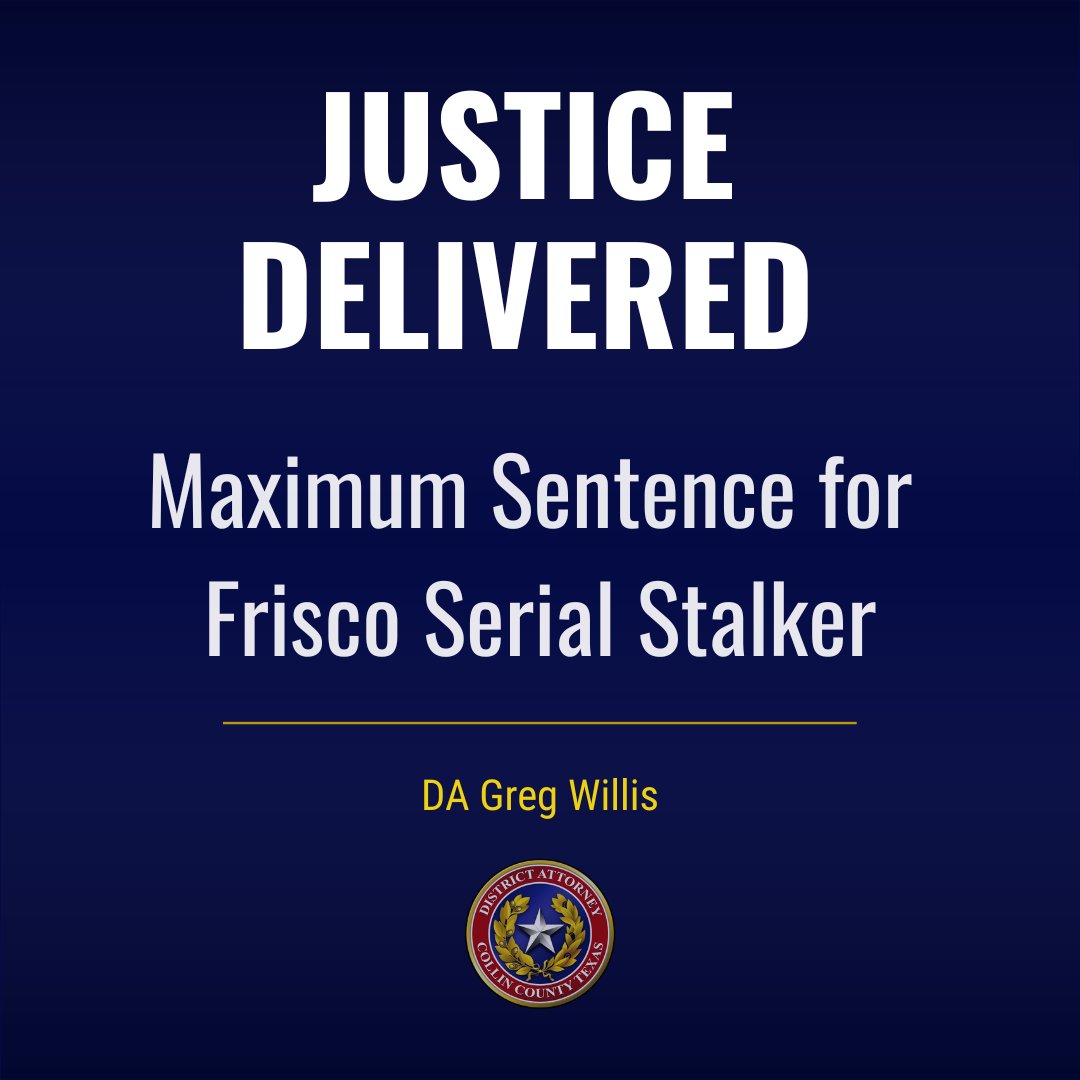
DA Greg Willis Announces Maximum Sentence for Frisco Serial Stalker
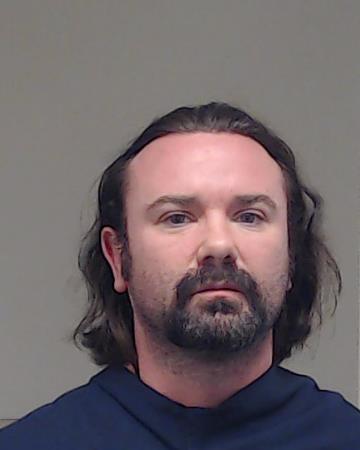
Collin County District Attorney Greg Willis announced that Robert Bevers, 40, of Frisco, was sentenced to the maximum 20 years in prison for stalking a Collin County woman in 2024. The sentence followed evidence showing that Bevers had also targeted four other women dating back as far as 2016.
The Crime
In 2022, a 27-year-old Frisco woman began finding unsolicited gifts left on her porch by Bevers—a man she had never met. Her family installed surveillance cameras that captured Bevers’s car repeatedly circling the home. The victim obtained a civil protective order, which Bevers appealed. After that order was set aside, he resumed contacting her in 2024—sending messages over social media and email that became increasingly sexual and racist. She reported the conduct to Frisco Police, which opened a felony stalking investigation.
The Investigation and Arrest
Detective Brenna Bearden led the investigation, securing search warrants for cell-phone, social-media, and location data. Records showed Bevers first tried to contact the victim as early as 2016—initially under his own name, later through fake accounts. After an extensive investigation, Detective Bearden obtained an arrest warrant, and U.S. Marshals Task Force agents arrested Bevers on April 29, 2024.
The Trial
Trial began on October 28, 2025. A Collin County jury quickly found Bevers guilty of stalking, a third-degree felony that carries up to 10 years in prison. Because prosecutors alleged a prior-conviction enhancement, the punishment range increased to a maximum of 20 years.
During a two-day punishment hearing before State District Judge Kim Laseter, prosecutors proved that Bevers was a serial stalker who had harassed four other women. The women described eerily similar experiences: two former college classmates, the younger sister of a high-school teammate, and a Dallas criminal defense attorney—none of whom had ever met Bevers. One victim asked for the maximum sentence so the group could finally have “a moment of peace.”
The court also heard that, as a juvenile, Bevers was committed to the Texas Youth Commission and, as an adult, served a five-year prison term for aggravated assault against his grandmother. Judge Laseter sentenced Bevers to the maximum 20 years in prison and imposed a $10,000 fine.
Statement from DA Greg Willis
“Serial stalkers like this destroy their victims’ peace of mind,” said Willis. “My office exists to protect the people of Collin County, and that protection includes making sure those who prey on women face the full weight of the law.”
Prosecution Team
Assistant Criminal District Attorneys Dewey Mitchell and Kailey Gillman prosecuted the case, assisted by District Attorney Investigator Sarah Putman and Victim Assistance Coordinator Jill Moore.
#PursuingJustice #ProtectingOurCommunity #CollinCounty #CollinCountyDA
Fourteen days ago, a stranger who has been stalking me for nearly a decade was sentenced to 20 years in prison. From my first report of his behavior to his sentencing, 1,614 days passed. During that time, I chose not to share what was happening so the case would have the best chance of success and so the law could finally halt what it has too long enabled.
The prosecution relied entirely on my documented experiences and my testimony. I took the stand four times during the trial, with the stalker seated front and center as a captive audience. For the chance of a few years of reprieve, I handed him my playbook and exposed my life, my fears, and the steps I took to stay safe. That trade is a cruel but inevitable feature of criminal justice and a risk I had to take. Since the day this individual first darkened my door, I have prayed that he would go away. I knew in my gut that he was dangerous and I have not been able to shake that sense of threat.
Stalking is an insidious and terrifying crime that sits on the pathway to lethal violence, yet it often does not receive the response it requires. Stranger stalking is even less common, with offenders often offered the chance to plead to lesser charges, if anything at all. I am fortunate that is not my story.
I have been battling the system and this stalker for the greater part of my twenties. This individual had multiple opportunities to change and refused. He is a repeat violent offender who has dodged accountability more times than anyone should be comfortable with. People like him do not suddenly begin this type of behavior in their thirties or forties. His extensive criminal history exposes his sustained pattern of harm and disregard for the law and for others. He shows no remorse for the devastating impact of his actions and nothing suggests he intends to stop. He is a delusional predator who preys on others under the false pretense that consequences only apply to his adversaries. Unfortunately for him, he picked the wrong girl.
Unlike most crimes, this offense forces the victim to become the case builder, documenting the pattern, preserving evidence, and repeatedly reliving the events while the perpetrator’s history sits isolated across multiple agencies and case files. That level of vigilance became a full-time job and kept the case moving, but it is not a fair or realistic standard to expect from most victims, especially when the offender has a known history and should already have been removed from the community.
The fear of escalation and retaliation, both in the years before trial and in anticipation of his eventual release, has been all consuming. Living with that kind of uncertainty changes how you move through the world, how you make decisions, and how you feel in the most ordinary moments. For me, the burden is personal. I had to put my entire life on pause to manage this risk and carry the case to the finish line. Responsibility should not rest on how much a woman can contort her life, absorb harm, or perform for the system. We can and must do better.
Stalkers, like all high-risk offenders, do not stop because someone asks them to be reasonable. They stop when there is a multi-agency response that uses the full force of the law to stand between them and the people they hunt. I am deeply grateful to the Collin County District Attorney’s Office, the Frisco Police Department, the Collin County Sheriff’s Office, and the U.S. Marshals Local Fugitive Task Force for their coordinated efforts to finally hold this individual accountable to the fullest extent the law currently allows.
Special mention to my starting five:
Dewey Mitchell
Kailey Gillman
Kim Laseter
Sarah Putman
Brenna Bearden
“If you want peace, prepare for war.”
The quoted statement has a typo. The gifts started in 2021 when I was 24.
DA Greg Willis Announces Maximum Sentence for Frisco Serial Stalker
Collin County District Attorney Greg Willis announced that Robert Bevers, 40, of Frisco, was sentenced to the maximum 20 years in prison for stalking a Collin County woman in 2024. The sentence followed evidence showing that Bevers had also targeted four other women dating back as far as 2016.
The Crime
In 2022, a 27-year-old Frisco woman began finding unsolicited gifts left on her porch by Bevers—a man she had never met. Her family installed surveillance cameras that captured Bevers’s car repeatedly circling the home. The victim obtained a civil protective order, which Bevers appealed. After that order was set aside, he resumed contacting her in 2024—sending messages over social media and email that became increasingly sexual and racist. She reported the conduct to Frisco Police, which opened a felony stalking investigation.
The Investigation and Arrest
Detective Brenna Bearden led the investigation, securing search warrants for cell-phone, social-media, and location data. Records showed Bevers first tried to contact the victim as early as 2016—initially under his own name, later through fake accounts. After an extensive investigation, Detective Bearden obtained an arrest warrant, and U.S. Marshals Task Force agents arrested Bevers on April 29, 2024.
The Trial
Trial began on October 28, 2025. A Collin County jury quickly found Bevers guilty of stalking, a third-degree felony that carries up to 10 years in prison. Because prosecutors alleged a prior-conviction enhancement, the punishment range increased to a maximum of 20 years.
During a two-day punishment hearing before State District Judge Kim Laseter, prosecutors proved that Bevers was a serial stalker who had harassed four other women. The women described eerily similar experiences: two former college classmates, the younger sister of a high-school teammate, and a Dallas criminal defense attorney—none of whom had ever met Bevers. One victim asked for the maximum sentence so the group could finally have “a moment of peace.”
The court also heard that, as a juvenile, Bevers was committed to the Texas Youth Commission and, as an adult, served a five-year prison term for aggravated assault against his grandmother. Judge Laseter sentenced Bevers to the maximum 20 years in prison and imposed a $10,000 fine.
Statement from DA Greg Willis
“Serial stalkers like this destroy their victims’ peace of mind,” said Willis. “My office exists to protect the people of Collin County, and that protection includes making sure those who prey on women face the full weight of the law.”
Prosecution Team
Assistant Criminal District Attorneys Dewey Mitchell and Kailey Gillman prosecuted the case, assisted by District Attorney Investigator Sarah Putman and Victim Assistance Coordinator Jill Moore.
#PursuingJustice #ProtectingOurCommunity #CollinCounty #CollinCountyDA
Wow, 10 times is TRULY remarkable @CACheetahs ! What a legacy you have created. Congrats to our 2025 MAJORS champions, and the Cheetahs that came before them! 😼💙🏆
See you in Texas, our work isn’t done yet!