The PGC Functional Genomics workgroup serves as a dynamic hub for collaborative, open discovery science and scalable method development. We aim to understand how genes, cells and molecules impact the symptoms and course of psychiatric disorders in populations globally.
Ultimately, we:
🌟drive inclusive and diverse 'omics' mental health research,
🌟and foster a collective effort that transcends individual capabilities for global science🌎!
🧵3/3
So, who are the the Functional Genomics Working Group?
🎯Our goal is to understand how genes🧬, cells🦠and molecules💠contribute to psychiatric disorders🧠
We work with other PGC groups and different 'omics data (methylation, cytometry, single cell etc.) to do this🧪
🧵1/3
We have two awesome chairs ✨@HjerlingLeffler and @MLynall✨, who started the group in Fenruary 2024!
We also have 5 project groups, 🔬exploring different ways of understanding #FunctionalGenomics in psychiatric disorders🧠
🧵2/3
✨Welcome to the Functional Genomics Takeover of the PGC main account!✨
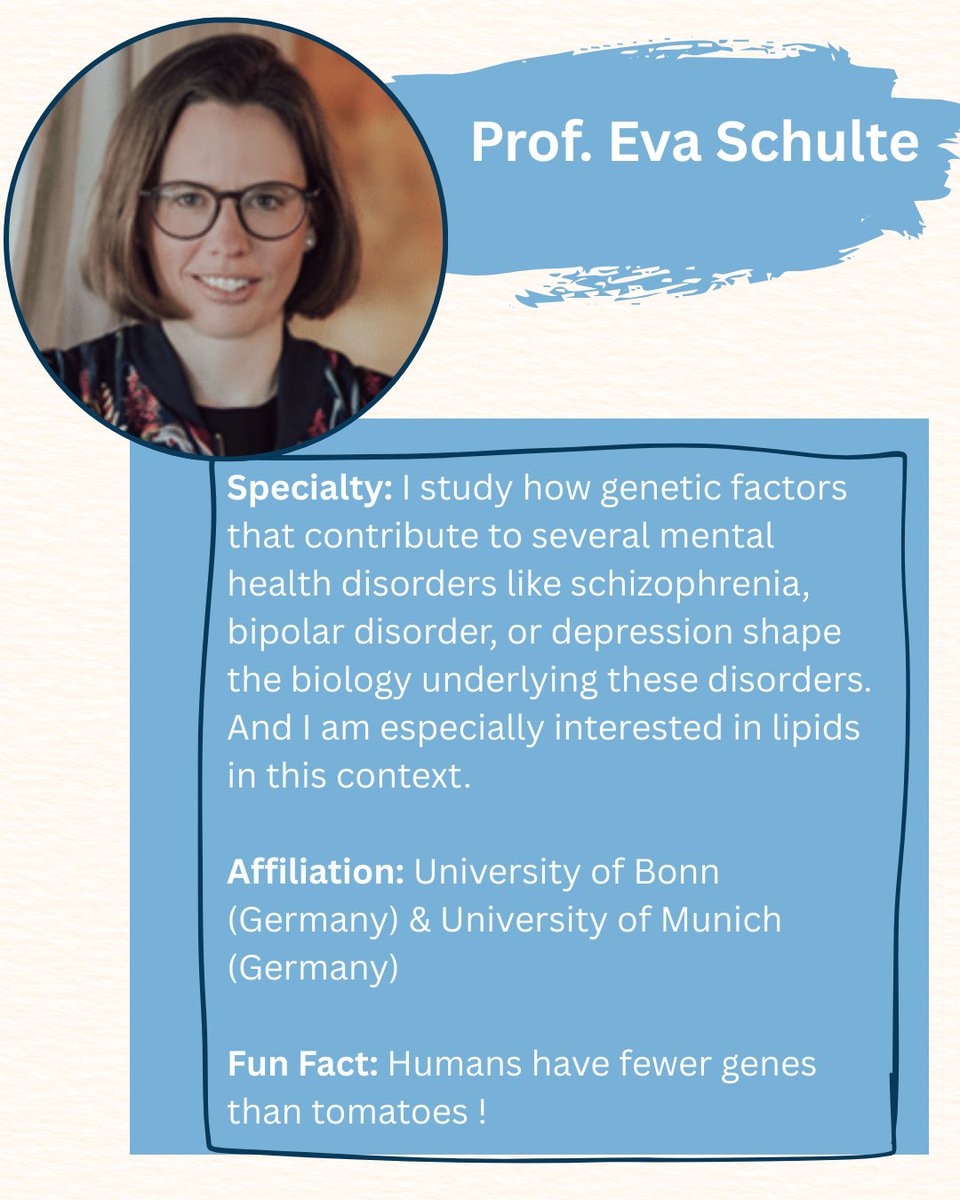
For the next 2 weeks @BertholdNatasha and @Eva_C_Schulte will be taking you through the achievements and highlights of year 2 in the @pgc_fg.
Key Takeaways🔑:
✨EpiAnceR+ improves ancestry adjustment when genotyping data aren’t available
✨and is compatible with all major Illumina methylation arrays
🧵5/6
Results📊:
✨EpiAnceR+ improved on existing methods✨
Its ancestry PCs:
1⃣clustered repeated samples more tightly,
2⃣correlated more strongly with true genetic ancestry,
3⃣and outperformed methylation-based PCs and surrogate variables for ancestry correction
🧵4/6
✨Hello folks!✨
We're back in your feed with an amazing paper spotlight by Kira Höffler & colleagues📰🔦
"Optimizing genetic ancestry adjustment in DNA methylation studies: a comparative analysis of approaches"
🔗https://t.co/iHuJfSAb9h
Read our overview below!
🧵1/6
Methods🗒️:
To address this, the team developed EpiAnceR+🧑🏾💻,
an R-based tool for ancestry adjustment in DNA methylation studies🧬
Function:
1⃣removes technical and biological noise, integrates SNP-related data
2⃣and generates ancestry PCs for downstream analysis
🧵3/6
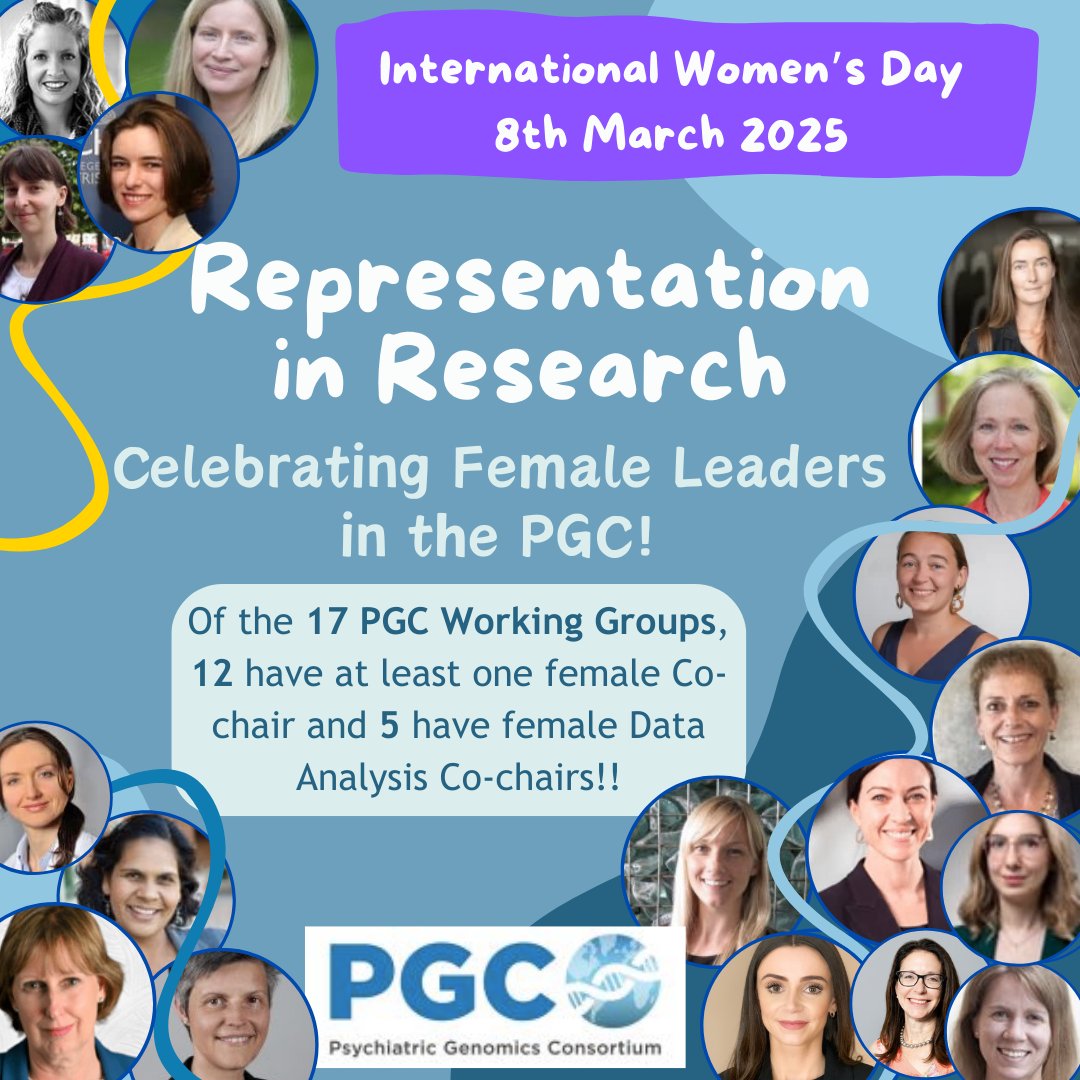
Happy #InternationalWomensDay for 2025 folks! 🎉
We hope you had a great day, and thought we’d celebrate some of our awesome #FemsinSTEM with you all👩🔬
🧵1/3
The FG PGC is proud to have✨4 out of the 7✨leadership roles held by women.
These fearless fem leaders include @janitzamontalvo@hyejung_won@ShenXueyi and of course, our wonderful co-chair @MLynall
🧵2/3
Excited to share our latest paper from a collab w Patrick Sullivan and others where results from two different data-driven approaches (GWAS/human-snRNAseq and fMRI) converge on the amygdala and hippocampus as key regions for schizophrenia: https://t.co/R1Zd32vMmX 🧵
Open Opportunity.......Hosted by @UniOslo this March, this free online, hands-on training on GWAS analysis is available to Ph.D students on a first come, first serve basis 😀 Register now 👇🏽https://t.co/BRU2t3nWf4
We're so excited for a #science paper ✨highlight✨!
@shuyang_Yao and @HjerlingLeffler et al. have performed an awesome investigation🕵️of how #genetics may functionally affect brain connectivity in psychiatric disorders🧠
Check out the summary video and find the🔗below!
🚨 Countdown Alert! 🚨
📢 Less than 1 week to go until the 15th @AfSHG_Genetics & 1st Ugandan Society of Human Genetics and Bioinformatics Conference in beautiful Entebbe, Uganda 🇺🇬
💡 Check flyers below for a stellar lineup of workshops
#Genetics#AFSHG2025#Africa