Listen to what he says about his Haitian employees: "I wish I had 30 more. They come to work every day, they don't have a drug problem, they will stay at their machine, they'll hit their numbers, they're here to work. That's a stark difference from what we're used to."
Today on Anthony Bourdain’s birthday, let’s honor Tony by sharing a meal…with a friend or with a stranger…and making sure they’re okay. @wckitchen we are honoring him in a way by being next to the people of Venezuela after the earthquakes. Sharing food and hope. #BourdainDay
Don't hate wildlife for accepting the invitation we accidentally gave them.
A fox getting into chickens is not a fox being evil, it's a fox finding unprotected prey.
A coyote killing an outdoor cat is awful. Losing a pet that way is brutal. But the coyote didn't break some agreement with us. It did what coyotes do.
The part we control is whether our animals are put in that situation.
Chickens need real predator-proof housing. Not chicken wire. Not a cute little prefab coop with gaps everywhere. Real hardware cloth, buried or skirted edges, secure latches, covered runs, and a closed coop at night.
Likewise, cats need to be indoors, supervised, leash-trained, or in a catio.
It's not because foxes and coyotes matter more than chickens or cats, but because chickens and cats depend on us to make better decisions than they can.
Wildlife isn't cruel, it's just wildlife. Our job is to stop setting everyone up for a tragedy.
There is an animal that eats anthrax, botulism, cholera, and rabies for lunch and walks away fine. It doesn't have a good PR team, so most people have no idea what it's actually doing for us.
The turkey vulture's stomach acid runs at a pH of around 1, roughly as corrosive as battery acid, and hot enough to dissolve bones, hide, and virtually any pathogen that comes with the carcass.
A vulture eating a diseased animal isn't spreading the disease, but putting an ending to it. The infection chain terminates in the vulture's gut and goes nowhere else. Few other scavengers on Earth does this reliably.
Without vultures, things get bad for humans in a hurry. We've learned this hard lesson first hand.
In the 1990s, Indian farmers started giving their cattle a cheap painkiller called diclofenac. When vultures ate the carcasses, the drug destroyed their kidneys. The population collapsed by more than 95 percent in under a decade, one of the fastest declines of any bird species ever recorded.
The carcasses didn't disappear. Feral dogs and rats moved in to do the cleanup instead. Both species actually carry and spread rabies. Both brought the disease into contact with human populations in ways vultures never would have.
A 2024 study in the American Economic Review estimated the vulture collapse contributed to roughly 500,000 additional human deaths over the following decade. Not metaphorically. Counted deaths, linked statistically to the collapse of one bird.
The same thing is now beginning in sub-Saharan Africa, where poachers bait carcasses with poison to kill lions and elephants that might alert rangers. Vultures find the carcass first, as they always do. Six of Africa's eleven vulture species are now threatened with extinction.
The animal that shows up to the things nobody else will touch is doing more disease control than most of what we actively protect. It just has the misfortune of looking exactly like what it is.
Se llama Michel Kuka Mboladinga. Tiene 49 años. Lleva desde 2013 yendo a los partidos de la República Democrática del Congo a hacer exactamente lo mismo: pararse en la tribuna, brazo derecho en alto, inmóvil como una estatua, durante los 90 minutos completos.
No grita. No salta. No celebra.
Su pose imita la estatua de Patrice Lumumba en Kinshasa — el primer ministro que arrancó la independencia del Congo del colonialismo belga en 1960. El mártir asesinado a los 35 años. El símbolo de una soberanía robada.
Se hizo viral en la última Copa África. Un delantero argelino se burló de él tras eliminar al Congo. La Federación de Argelia tuvo que pedir disculpas públicas.
La FIFA tuvo que intervenir para conseguirle el visado del Mundial. Luego no pudo viajar al primer partido contra Portugal por cuarentena obligatoria de 21 días — brote de ébola en su país.
Con él ausente, el Congo le empató a la Portugal de Ronaldo. Sus propios jugadores pidieron a la Federación que viajara con la delegación oficial.
Esta noche estuvo en el Estadio Akron. Colombia lo vio de frente.
Un hombre que no necesita moverse para conmover.
#LumumbaVea #ColombiaVsCongo #Mundial2026 #Leopardos
Before you pull that "weed," take a quick look at what it actually is.
The violet spreading through your lawn is the sole host plant for all 14 species of greater fritillary butterflies in North America. The caterpillars eat nothing else. If your yard has violets and your neighbor's doesn't, your yard may be the sole key to a butterfly's survival.
Fleabane, those small daisy-like flowers that pop up in disturbed ground, is an early-season nectar source for native bees and one of the first things blooming after the dandelions finish. Bees find it. Skippers find it. Beetles find it.
The plantain, the broad-leafed one with the parallel veins, is the host plant for the buckeye butterfly and also one of the first plants colonizing disturbed ground, meaning it's stabilizing your soil while feeding insects.
It arrived in North America with European settlers and spread so thoroughly the Wampanoag called it "Englishman's foot." It's everywhere because it's good at surviving. So are the things that depend on it.
None of these are failures of your lawn, but a sign your lawn is doing something useful. A short patch left uncut in a corner, or even a deliberate tolerance for what's already there, can provide host plants and early nectar at a moment in the season when almost nothing else is blooming.
The question isn't whether it looks like a weed. The question is what's eating it.
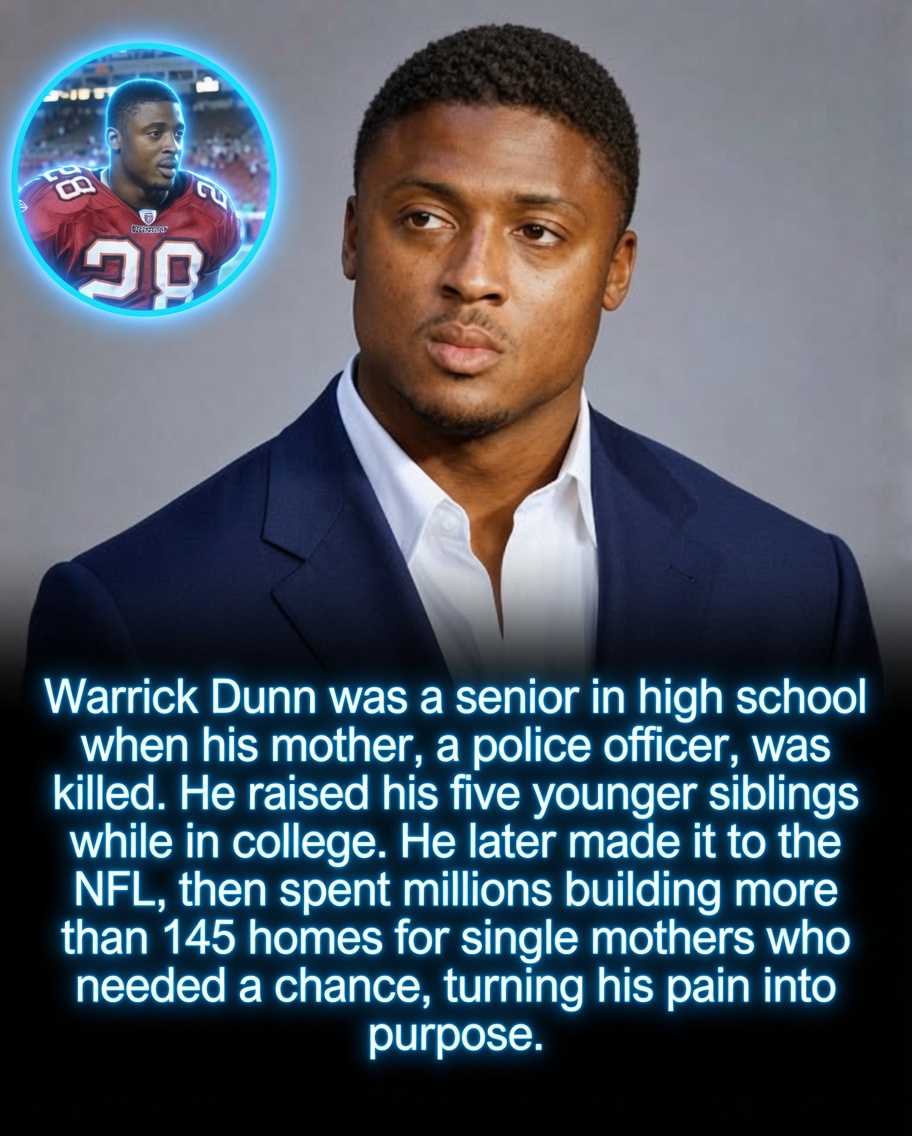
At just 18 years old, Warrick Dunn lost his mother, Baton Rouge police officer Betty Smothers, who was killed in the line of duty.
Overnight, he stepped up to help raise his five younger siblings while still in high school and later college, all while pursuing his dream of playing in the NFL.
He succeeded on the field, but his true legacy was built off it. Honoring his mother’s dream of homeownership, Dunn used his NFL success to help hundreds of single mothers and their families. He has funded down payments, furnished homes, and provided stability to more than 145 families in need.
Warrick Dunn turned his deepest pain into purpose, giving other families the security and opportunity his own family lost far too soon.
Alex Freeman chose soccer over football even though his father was a Green Bay Packers great. Now, at 21, he is the national team’s breakout player. https://t.co/HjWbYn5wFX
A lot has changed in the Russian-Ukrainian war. Let's sum it up:
1. Europe has replaced the US in finances & arms deliveries. Ukraine's financial situation is better than Russia's. Ukraine has better arms than Russia.
2. Ukraine has got rid of harmful US military advice & restrictions.
3. Ukraine is now shooting more drones than Russia & it has bombed both Moscow & St. Petersburg. The Russian elite is finally feeling the war.
4. Ukraine is gradually cutting off the supply lies to Crimea & many Russians leave Crimea.
5. Ukraine has managed to cause a petroleum shortage in large parts of Russia, which Russians feel.
6. While territory is no longer key, Ukraine has gained territory the last few months.
7. Many more public manifestations of opposition in Russian videos.
8. Europe is more united behind Ukraine than ever after Orban's demise.
Conclusions:
Ukraine is winning, but slowly.
The Ukrainians know what they are doing.
Maintain full European support & keep Trump out!
When Florence Balogun, a Nigerian who lived in London, visited New York 25 years ago while heavily pregnant, airline staff refused to let her on the plane home, and so Folarin Balogun was born in Brooklyn. He was not even two months old when he went home to the United Kingdom—with American citizenship as his birthright.
In 2023, Balogun successfully petitioned FIFA to switch his affiliation to play for the U.S. team. Less than two years later, on Donald Trump’s first day of his second term, the President signed an executive order overturning birthright citizenship. “How far the U.S.M.N.T. will go in the future may depend on how far they can embrace their multiethnic identity,” Louisa Thomas writes. Read more about the power of the diaspora at the year’s World Cup: https://t.co/mukiGBPDVu
WE MADE IT!!! Germany vs Ivory Coast 🇩🇪🇨🇮
Our second game of the World Cup, and the strongest opponent in our group stage awaits us. This should be a great match!
I'm a cardiologist. I prescribe cholesterol-lowering drugs every single day. They save lives. That science is settled and I will never tell you otherwise.
But I'm going to say something that will make a lot of my colleagues uncomfortable — because someone needs to say it, and your doctor probably won't.
Too many physicians make you feel crazy when you bring up statin side effects.
You walk into your appointment and say "my muscles ache constantly" — and you're told it's in your head. You say "I'm exhausted all the time" — and you're told it's your age. You say "my sex drive disappeared" — and you get an awkward silence followed by a subject change. You say "I don't feel like myself anymore" — and you're told the benefits outweigh the risks, take the pill, stop reading the internet.
I've watched it happen in my own field for twenty years. The conversation gets shut down. The patient gets dismissed. And then they do the one thing we should be most afraid of — they stop the medication entirely, without telling us, and lose the cardiovascular protection that's keeping them alive.
That is the real cost of not being honest. Not the side effects themselves — the silence that drives patients away from treatment.
In my practice, I see statin-related complications in at least 25% of my patients. Muscle pain. Fatigue that doesn't resolve with sleep. Reduced sexual drive. Brain fog. Cramping. Joint stiffness. Weakness that makes exercise — the very thing we tell them to do — feel impossible.
Some of these improve with CoQ10 supplementation and optimizing vitamin D. Many do not.
I wrote about the diabetes risk of statins in a New York Times op-ed in 2012. The backlash from the cardiology establishment was immediate. I was told I was undermining trust in a life-saving drug class. Fourteen years later, every major guideline acknowledges the risk I warned about. It's in the prescribing information. The physicians who attacked me for saying it now teach it to their residents.
The truth doesn't care about professional comfort. It never has.
Now a paper published this week in Science Advances has finally explained the mechanism behind statin myopathy — and the finding validates what millions of patients have been telling their doctors for years.
Researchers discovered that statins activate the NLRP3 inflammasome in muscle cells — triggering an inflammatory cascade that causes muscle cell death, activates atrophy pathways, and disrupts muscle metabolism. This is entirely independent of the drug's cholesterol-lowering effect.
The muscle damage isn't caused by lowering cholesterol. It's caused by a completely separate pharmacological action through a different pathway.
The critical implication: the side effect can potentially be separated from the benefit.
Blocking NLRP3 or restoring isoprenoids prevented muscle cell death without interfering with cholesterol reduction. Future therapies could preserve the cardiovascular protection while eliminating the muscle toxicity.
Even more striking — the researchers found that background systemic inflammation significantly lowered the statin dose needed to trigger muscle damage. Patients with chronic inflammation, gut dysbiosis, or metabolic syndrome may be experiencing myopathy at doses their doctors consider "too low to cause problems." They're not imagining it. Their inflammatory state is priming the pathway.
The muscle pain was never in their heads. It was in their NLRP3 inflammasome. And we finally have the molecular proof.
Here's what I actually do in my practice — because I refuse to choose between protecting the heart and respecting the patient.
Whenever possible, I avoid statins as my first-line approach for eligible patients by using alternatives that lower LDL through entirely different mechanisms with no muscle toxicity:
PCSK9 inhibitors — Repatha and Praluent. Injections every 2-4 weeks that dramatically lower LDL without touching muscle tissue. No myopathy. No fatigue. No brain fog. For patients who can access them, these are transformative.
Inclisiran — Leqvio. An siRNA injection I administer twice a year in my office. It silences the PCSK9 gene in the liver. Two shots a year. LDL drops roughly 50%. No muscle side effects. No daily pills. Now approved as first-line monotherapy. This is the future of lipid management and I use it aggressively.
When statins ARE clinically necessary — and sometimes they are, especially post-heart attack or in combination therapy — I choose hydrophilic statins like rosuvastatin or pravastatin. These do not easily cross the blood-brain barrier. The cognitive complaints — the fog, the memory issues, the feeling of "not being yourself" — are substantially less common with these formulations because the drug stays out of the central nervous system.
I never prescribe a statin without CoQ10. 100-300mg daily. Statins deplete the cellular energy molecule your muscles and heart depend on. Replenishing it reduces muscle symptoms in many patients. It should be standard practice. The fact that it isn't is a failure of our field.
I check vitamin D and optimize it aggressively. Low vitamin D — which is epidemic — worsens muscle symptoms independently and compounds whatever the statin is doing. Target 50-80 ng/mL, not the bare minimum of 30.
Bempedoic acid — Nexletol — for patients who can't tolerate any statin. Works upstream in the cholesterol pathway and is not active in muscle tissue. Specifically designed to avoid myopathy.
Ezetimibe added to a lower statin dose. Cut the statin intensity, add ezetimibe to maintain the LDL reduction, and halve the muscle exposure.
There is no excuse in 2026 for telling a patient "just deal with the muscle pain." The toolbox is deep. The alternatives exist. The only barrier is a physician's willingness to listen and adapt.
I want to speak directly to every patient who has been dismissed.
Your muscle pain is real. Your fatigue is real. Your cognitive changes are real. Your loss of drive — in every sense of the word — is real. A paper in Science Advances just proved the mechanism. You were never crazy. You were experiencing a documented inflammatory response in your muscle tissue that your doctor didn't have the science to explain — until this week.
And I want to speak directly to my colleagues.
We have to be honest. Not just about the benefits — which are enormous and undeniable — but about the side effects, the mechanism, and the alternatives. Patients who feel heard stay on treatment. Patients who feel dismissed stop their medications in silence — and die from the heart attacks we could have prevented if we'd simply been willing to have an honest conversation and switch the approach.
The cardiologist who tells you statins are flawless is not protecting you. The wellness influencer who tells you statins are poison is not protecting you either. The truth lives in the middle — where it always has.
Statins save lives. The side effects are real. The mechanism is now proven. The alternatives exist. And you deserve a doctor who holds all four of those truths at the same time.
Both things can be true. They always could.
Now we have the science to prove it.
A British physiologist named Brett Gooden published a paper in 1994 that quietly proved every human walking around on this planet has an emergency reset button hidden in the skin of their face, and almost nobody knows how to use it.
His name is mostly forgotten outside diving medicine. The paper is called "Mechanism of the Human Diving Response," and the body of research it kicked off has been replicated by neuroscientists, cardiologists, and physiologists in labs across the world for the last thirty years.
The mechanism it described is the single fastest way to lower a human heart rate that has ever been documented.
The discovery actually began long before Gooden formalized it. Physiologists had noticed for decades that seals, whales, dolphins, and otters could slow their heart rates dramatically the moment their faces touched water, allowing them to dive for long periods without running out of oxygen.
The question Gooden helped answer was whether the same reflex existed in humans, and what exactly triggered it.
The answer turned out to be a network of nerves almost nobody outside neurology had paid attention to.
The trigeminal nerve is one of the largest nerves in your head, and it covers the entire surface of your face, especially the area around your eyes, nose, forehead, and mouth. When cold water touches that skin, the trigeminal nerve fires a signal straight into the brainstem, which then routes a command through the vagus nerve directly to the heart.
The vagus nerve is the master switch of your parasympathetic nervous system, which is the part of the body responsible for calm, recovery, and the slowing of the heart.
The entire signal chain takes about a second to complete. Cold water hits the face. Trigeminal nerve fires. Vagus nerve responds. The heart slows.
Human heart rate has been documented to drop anywhere from 5 to over 50 percent during this response, depending on the temperature of the water, how much of the face is covered, and how strongly the person is holding their breath.
In infants the response is so powerful that it has been implicated in cases of Sudden Infant Death Syndrome, because the same reflex that protects a baby underwater can be triggered accidentally by bedding pressed against the face during sleep.
The reflex is called the mammalian dive reflex, and the broader nerve circuit it sits inside is called the trigeminocardiac reflex.
Researchers who study it now consider it the single most powerful autonomic reflex in the human body, which means it is faster and stronger than almost any other automatic response your nervous system is capable of producing.
The detail Gooden zeroed in on is the part that should matter most to anyone who has ever had a panic attack, a racing heart at 3am, or a moment of overwhelming anxiety they could not breathe their way out of.
Two ingredients trigger the response. The water has to be cold, ideally under about 15 degrees Celsius, and it has to touch the area around the forehead, eyes, and nose. The skin of the cheeks and chin alone is not enough.
The receptors that fire the reflex are concentrated in the upper face, which is exactly the part of a seal that hits the water first when it dives. Evolution kept that wiring intact in humans even though we stopped diving for our food a long time ago.
This is why splashing cold water on your face during a moment of panic actually works. It is not psychological. It is not a placebo. You are activating a neurological circuit that has been sitting in your body since before your species walked upright, and the circuit does exactly what it was built to do.
A psychiatrist at Harvard named Marsha Linehan eventually wrote this exact protocol into a dialectical behavior therapy technique she called the cold water dive, which she taught to patients in acute emotional crisis. The instruction was simple.
Fill a bowl with cold water and ice. Hold your breath. Submerge your face from the forehead down to the chin for thirty seconds. Within the first ten seconds, the heart begins to slow. By the time the face comes out of the water, the body has shifted out of fight-or-flight and into the parasympathetic state that makes thinking clearly possible again.
Emergency room physicians have used the same trick to reset abnormal heart rhythms in patients with certain types of tachycardia for decades. They call it the diving reflex maneuver.
A bag of ice water held against the face for fifteen to thirty seconds can convert a runaway heart rhythm back to normal without a single drug being administered.
Same nerve. Same reflex. Same biology your ancestors used to hunt for fish underwater two hundred thousand years ago.
The strangest part of all of this is how few people know it exists. The cold plunge industry has built itself into a billion-dollar movement based on full-body cold exposure, ice baths, and dramatic protocols that require expensive equipment and serious commitment.
But the fastest, most underrated nervous system reset available to a human being requires a sink, a few seconds, and the upper half of your face.
Your nervous system has an emergency brake. You were born holding the handle.
France's domestic spy agency has terminated its contract with Palantir.
The news couldn't come at a worse time for Palantir. France is the second country in as many weeks to cancel its work with the creepy surveillance company led by CEO Alex Karp. Several European nations are expected to follow France's footsteps in the coming weeks and also cancel all existing contracts with Palantir.
https://t.co/ui8jD7FTPv...
I've been reading through court dockets, trying to disrupt polite talk of progress with cold hard facts. Turns out Alabama prisons missed a 2025 deadline to fill all mandatory & essential posts, and are more crowded today than anytime in the past decade. https://t.co/g4PARwgK0e
Tom Burnett called his wife Deena four times from Flight 93. By the third call, he had confirmed that two other planes had deliberately crashed into buildings. "I know we're going to die," he said. "Some of us are going to do something about it." He was a senior vice president at a medical device company. He was 38 years old, with three daughters under ten. He asked Deena to call the authorities and tell them everything. He was gathering information. Quietly organizing. His fourth call was brief. "We're going to rush the hijackers," he said. "I love you. I love the girls. I'll call you back." He never called back. Flight 93 crashed in a Pennsylvania field at 10:03 a.m. The Capitol building believed to be the target was spared. Tom Burnett's words have been quoted in congressional testimony, memorials, and national remembrances. And yet, for many Americans who visit the Flight 93 memorial, his name is new.Story based on historical records. This post is shared for educational purposes.
I cried today. I'm not going to pretend I didn't.
Four presidents shared a stage in Chicago, a thing that used to be ordinary and now feels almost holy, and I felt the tears come before I understood them. At first I thought I knew what they were. I thought they were grief. I thought I was crying for how far we've drifted from that morning in 2008 when so many of us let ourselves believe, all the way down, that America could be better than her history. That we could be better. The distance between that morning and this one felt like the whole sad arc of the story, and for a moment I let myself sit inside the ache of it.
But the longer President Obama spoke, the more I understood I had it backwards.
He told a story I can't stop thinking about. The line we all know, the arc of the moral universe is long, but it bends toward justice, didn't start with Dr. King. King was borrowing it from a Boston minister named Theodore Parker, who preached it more than 170 years ago. And here is the part that broke me open: Parker preached it at one of the darkest moments this country had ever seen. The Compromise of 1850 had just made it a federal crime to shelter a man fleeing slavery. In Boston, a young fugitive had been seized, tried, and marched to the harbor by hundreds of armed officers, put on a ship, and sent back south into chains. While the whole city watched.
That is when Parker said it. Not in triumph. In the dark.
He admitted he couldn't see how it would end. “I do not pretend to understand the moral universe,” he preached. “The arc is a long one. My eye reaches but little ways. I cannot calculate the curve... I can divine it by conscience. And from what I see, I am sure it bends toward justice.”
He couldn't see it. He believed it anyway. And then he kept fighting.
As Obama put it today, Parker's words were “a declaration of faith, a defiant call, not to abandon hope or give way to fear, but to stay true to our better selves, and true to one another, and to keep fighting... even in the face of cruelty and bitter disappointment, even in the face of impossible odds.”
And that's when my tears changed. Right there. They stopped being grief and became something else, something that scared me a little with how much it felt like hope. Because I realized I wasn't witnessing a eulogy for a country we'd lost. I was watching a man reach down and hand us back the very thing we had set down in our exhaustion. The arc doesn't bend on its own. It never did. It bends because people put their hands on it and pull, people who can't see the end and reach for it anyway. People in the dark, refusing to believe the dark gets the last word.
He would not let the day be about him. He said it plainly: America's story “isn't frozen in the past. It has chapters yet to be written, not by one person or a few people, not by Barack and Michelle... but by all of us.” Michelle said the same thing in her own way, that the center was never about them, never for them. Look up at that building and you'll see three words cut into the stone: You are America.Not him. Not them. You. Us. The ordinary, the unfamous, the tired, us.
And then Bruce Springsteen walked out with a guitar and sang “Land of Hope and Dreams.” If you don't know it, it's a song about a train, a train with room for everybody on it. Saints and sinners. The lost. The broken. The ones who've been left standing at every other station their whole lives. This train carries everybody. He sang it soft and aching, like a prayer he wasn't sure would be answered but was going to say anyway, and when the last note left him he turned to the Obamas and said the only thing left to say. “I love you.”
The United States has roughly 2 billion parking spaces, an enormous amount of paved land with huge potential for solar energy generation without disrupting natural landscapes.
JPMorgan Chase has demonstrated this potential on a grand scale. At its McCoy Center campus in Columbus, Ohio, the second-largest single-tenant office building in the country after the Pentagon — the bank has transformed a massive parking lot into one of the largest commercial solar installations in the world.
By installing approximately 40,000 solar panels on elevated canopies over a 9,000-space parking area, combined with rooftop solar arrays, the system now supplies about 75% of the 2-million-square-foot facility’s electricity needs.
The 14.8-megawatt installation generates enough clean power for more than 1,000 average American homes. It ranks as the second-largest solar array on a commercial office campus in the United States, behind only Apple’s headquarters in California.
Importantly, the project required no new land development or habitat destruction. It repurposes existing asphalt while providing practical benefits such as shade for parked cars and reduced urban heat.
Juneteenth is the day the Union Army entered Galveston, TX under the leadership of General Gordon Granger, who announced that all enslaved African Americans were free. Nat’l Museum of African American history offers perspectives: https://t.co/J5n47jKcSh