Telling Canada's Stories: Discover the legacy of Sir Samuel Benfield Steele, the true embodiment of Canadian leadership and adventure! Big thanks to Historian and Author Norman Leach from Edmonton who shares his thrilling journey through history.
#TellingCanadasStories #SamSteele #Canadianhistory
Dear humans around the world:
That thunderclap you just heard came from Gander, Newfoundland.
At 92 years old, Jean Chretien just gave the speech of his life.
With the most memorable, important words of his life.
Because he speaks for what most Canadians are feeling in our stomachs and hearts today, better than anyone else could.
God bless him. God bless Canada.
#911Remembrance
@ianbremmer And if all others accepted the lie which the Party imposed—if all records told the same tale—then the lie passed into history and became truth.”
On August 27, U.S. President Donald Trump signed an executive order directing the American federal government to call Lake Ontario “Lake America.”
The order followed the breakdown of Canada–U.S. trade negotiations and an escalating tariff dispute. It directs U.S. federal agencies to adopt the new name—but it does not determine what Canada, international organizations or anyone outside the American government must call the lake.
Before Lake Ontario was an internationally recognized boundary, it already had a name.
“Ontario” comes from the Wendat word “Ontari’io”, commonly translated as “the lake is beautiful” or “the lake is great.” The name is more than 400 years old, predating both Canadian Confederation and the United States’ Declaration of Independence.
The lake’s history also shows why neither country can treat it as its own.
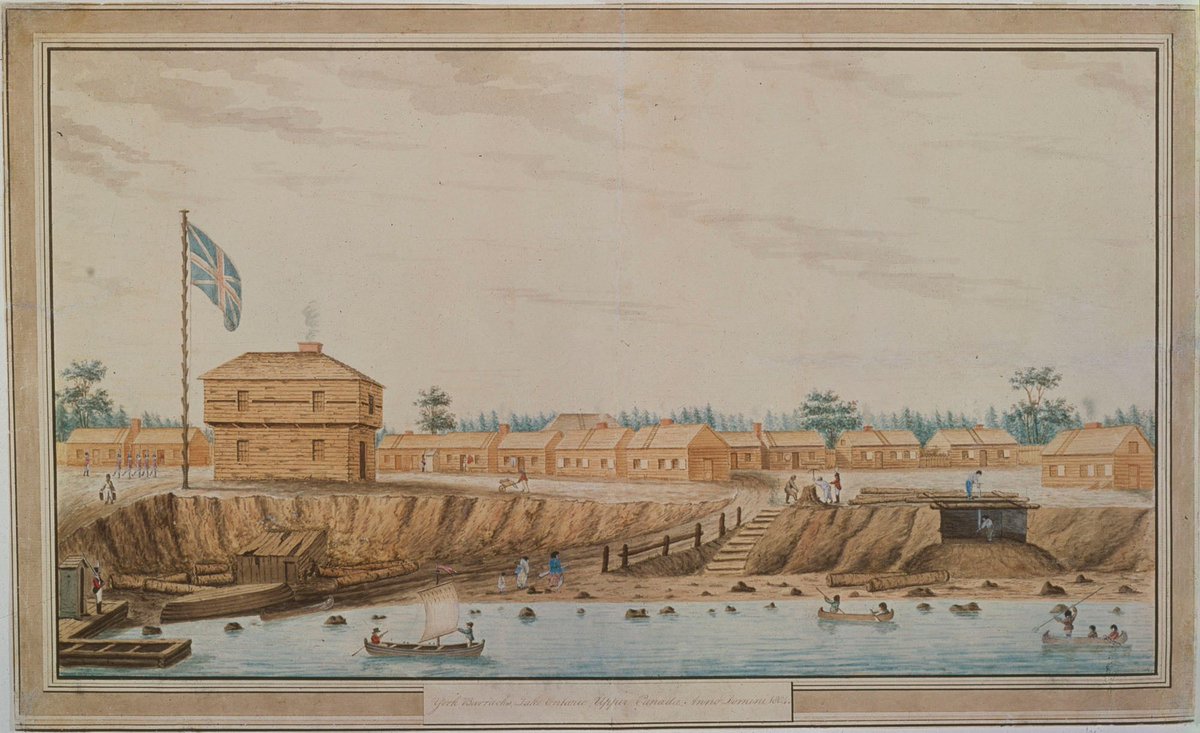
During the War of 1812, control of Lake Ontario was essential to moving troops and supplies. The British operated from Kingston, while the Americans built ships at Sackets Harbor, New York. What followed was an extraordinary freshwater naval arms race.
In 1814, British shipbuilders launched HMS St Lawrence, a massive warship carrying 112 guns. Its presence helped secure British control of the lake late in the war without it ever fighting a major battle.
But the more important development came afterward.
In 1817, Britain and the United States reached the Rush–Bagot Agreement. On Lake Ontario, each side was permitted only one small armed vessel. The fleets that had represented their struggle for control were dismantled, beginning the gradual demilitarization of the Great Lakes.
The 1909 Boundary Waters Treaty strengthened cooperation between the two countries. It protected shared navigation rights and created the International Joint Commission to help Canada and the United States prevent and resolve disputes over their boundary waters.
Lake Ontario has been a transportation route, a battlefield, an international boundary and an economic highway. Over time, it also became an example of something Canada and the United States have historically done remarkably well: managing shared geography through treaties, institutions and cooperation.
A president can change the name used on his government’s maps.
But that cannot erase the Indigenous history carried in the name Ontario or change the geographical reality that has shaped relations across the lake for centuries:
The lake is shared.
Sources: White House, Executive Order 14420, August 27, 2026; Rush–Bagot Agreement, 1817; Boundary Waters Treaty, 1909; International Joint Commission; Naval History and Heritage Command; Parks Canada, Library Archives Canada
On Saturday, Prime Minister Mark Carney framed the Canada–U.S. trade dispute as something larger than a disagreement over tariffs.
That is because the United States was reportedly seeking not only concessions on steel, aluminum, automobiles and agricultural access, but changes touching Canadian sovereignty: restrictions on Canada’s ability to negotiate with other countries, changes affecting supply management, and compromises involving Canadian culture and the protection of the French language.
Carney said Canada was prepared to remove retaliatory tariffs, return American alcohol to provincial shelves and make administrative changes around supply management in exchange for meaningful U.S. tariff relief.
But some things, he said, were not negotiable.
It is not the first time a trade agreement with the United States has become a referendum on Canadian sovereignty.
In 1911, Prime Minister Sir Wilfrid Laurier negotiated a reciprocity agreement with President William Howard Taft. It would have reduced or eliminated tariffs on agricultural products, natural resources and selected manufactured goods.
Laurier believed Canadian farmers and exporters would benefit from greater access to the enormous American market.
His opponents feared something else: that economic integration would eventually make Canada dependent upon—and subordinate to—the United States.
Then American politicians appeared to confirm those fears.
Champ Clark, Speaker of the U.S. House of Representatives, declared that he supported reciprocity because he hoped to see the day when:
“The American flag will float over every square foot of the British North American possessions, clear to the North Pole.”
President Taft was less provocative, but his warning that Canada had reached “a parting of the ways” in its relationship with Britain was equally damaging.
Those statements transformed the Canadian debate. Reciprocity was no longer simply about the price of wheat, fish or lumber. It became a question of whether economic integration was the first step toward political absorption.
Robert Borden’s Conservatives presented Canadians with a stark choice:
“Canadianism or Continentalism.”
The outcome of the 1911 federal election turned on this issue. Laurier took the reciprocity agreement to the country, asking Canadians to endorse closer trade relations with the United States.
They rejected his plans.
On September 21, 1911, Canadians ended 15 years of Liberal government and elected Borden’s Conservatives with a commanding majority. The proposed reciprocity agreement died with Laurier’s defeat.
Historians Patrice Dutil and David MacKenzie, authors of the book Canada 1911: The Decisive Election that Shaped the Country, identify the election as a turning point in Canada’s political and economic development. It did not prevent Canada and the United States from becoming more closely connected. But it demonstrated that Canadians would resist when economic integration appeared to threaten their ability to determine their own future.
The parallels with today are striking—but they are not exact.
Canada in 1911 was still part of the British Empire and did not possess the full legal sovereignty it exercises today. The reciprocity agreement was also much narrower than today’s deeply integrated continental trading system.
Yet the underlying question sounds remarkably familiar:
How much independence should Canada exchange for access to the world’s largest market?
Laurier believed Canada could trade more freely with the United States without becoming less Canadian. Carney says a future agreement is still possible—but only if it respects Canadian sovereignty.
In 1911, Canadians were asked to choose between a proposed trade agreement and the perceived risks of deeper continental integration.
Their decision changed the government—and Canada’s economic direction.
More than a century later, history may be happening again
Before Wayne Shuster became one half of Canada’s famous comedy duo Wayne and Shuster, his cousin Joe Shuster helped create Superman.
Born in Toronto in 1914, Joe gave the Man of Steel his iconic look. Superman debuted in Action Comics No. 1 in 1938 and helped launch the modern superhero genre.
Joe Shuster’s story reminds us that Canadian creativity has shaped popular culture around the world.
Thanks to Kalil from @TorchandMaple for sharing this great story.
Who should we feature next? Submit your idea to Telling Canada’s Stories via our website or use the hashtag #TellingCanadasStories
#JoeShuster #Superman #CanadianHistory
Some of Canada’s most important stories are still waiting to be told.
Telling Canada’s Stories invites Canadians to share the life of a historical figure whose contributions deserve greater recognition. Submit a short video or written post and help preserve a broader record of the people who shaped this country.
Share your story: https://t.co/xoYCuGe1nM
#TellingCanadasStories #CanadianHistory #HistoryMatters #CIHE
Canada’s history is just getting started.
The History Matters podcast brings leading historians and thinkers together to explore the people, events and ideas that shaped Canada, and continue to influence the country today.
Watch the latest conversations and discover why history still matters.
🎧 Explore the series: https://t.co/I7OnniBFfH
#Canada #History #ContextMatters
Canada Day is more than a celebration. It is an invitation to remember. This Canada Day, don’t forget history. Help tell it.
Share a story of a person, place, family, or moment that matters to you.
Who is one Canadian whose story you think ought to be better known?
Canada Day is more than a celebration. It is an invitation to remember.
The people who built this country were not only the names in textbooks. They were newcomers and neighbours, workers and parents, soldiers and teachers—people whose choices, sacrifices, and stories helped shape the Canada we share.
This Canada Day, don’t forget history. Help tell it.
That's the idea behind Telling Canada's Stories. We are asking everyone to answer the following question "Who is one Canadian whose story you think ought to be better known?"
Share a story of a person, place, family, or moment that matters to you—and help ensure Canada’s story is told in all its richness, complexity, and humanity.
Telling Canada’s Stories
Every Canadian has a story worth telling. See our website for more information:
https://t.co/EvU9CVuIhn
Canada Day is more than a celebration. It is an invitation to remember.
Don’t forget history. Help tell it.
Share a story of a person, place, family, or moment that matters to you - and help ensure Canada’s story is told in all its richness, complexity, and humanity.
Canada fought in Korea. More than 500 Canadians died there. Yet for many, it remains the “Forgotten War.”
In 1950, only five years after the end of the Second World War, North Korean forces crossed the 38th Parallel and invaded South Korea. The United Nations called on its members to respond — and Canada answered.
Under Prime Minister Louis St. Laurent, Canada committed destroyers, fighter pilots, and ground troops to what became the country’s first major military action of the Cold War.
More than 26,000 Canadians served in Korea. They fought in some of the war’s most difficult battles, including Kapyong in April 1951, where Canadian soldiers helped stop a major Chinese offensive against UN lines.
By the time the fighting ended in an armistice, more than 500 Canadians had been killed and over 1,000 wounded.
There was no clear victory parade. No final peace treaty. The war sat between the Second World War and Vietnam — two conflicts that shaped public memory more loudly.
But for the Canadians who served, Korea was never forgotten.
Learn more about Canada’s military history and its lasting impact at https://t.co/UkvQQsOtI2.
#CanadianHistory #KoreanWar #ForgottenWar #ColdWarHistory #MilitaryHistory
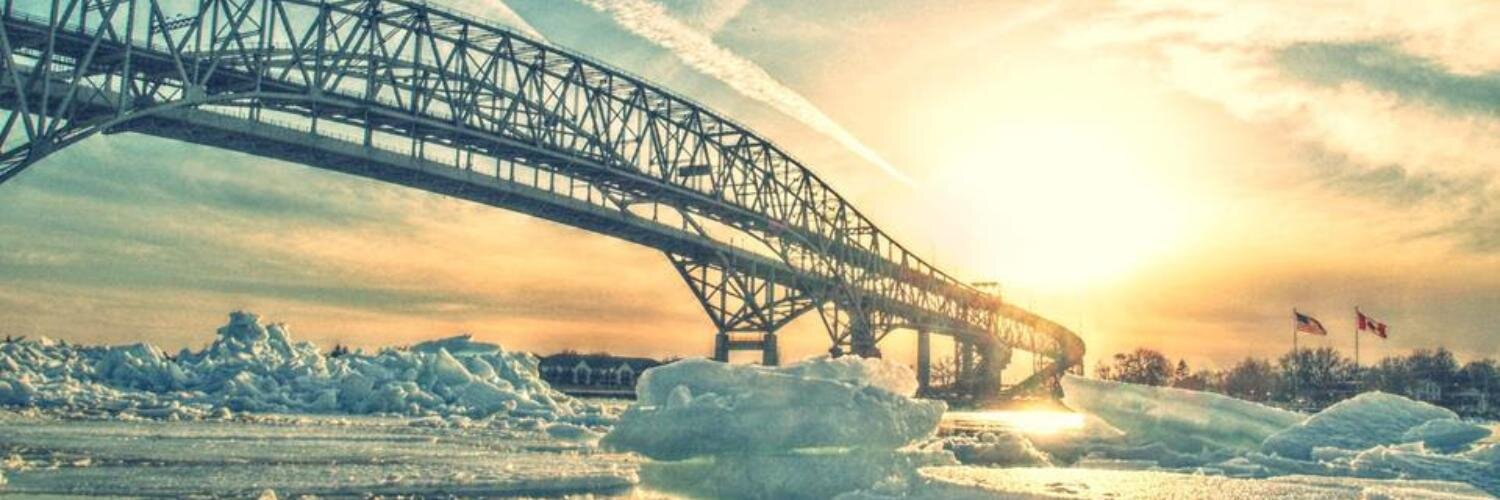
Before there was a bridge connecting Windsor and Detroit, there was Gordie Howe.
The Gordie Howe International Bridge was intended to open a new chapter in the relationship between Canada and the United States. Yet questions and delays surrounding its opening have left that moment uncertain.
Even so, the bridge remains a fitting tribute to a man whose life spanned the border long before the structure bore his name.
Born in Saskatchewan in 1928, Gordie Howe became a hockey legend in Detroit, where generations of Americans came to know one of Canada's greatest athletes simply as "Mr. Hockey."
When it eventually opens, the bridge named in his honour is expected to carry millions of travellers and billions of dollars in trade between two sovereign nations. Yet its name already reminds us that the relationship between Canada and the United States has always been about more than economics or politics. It has also been built by people.
Howe never held public office. He negotiated no treaties. But through talent, character, and sportsmanship, he became one of the most recognizable Canadians in America.
There is something uniquely Canadian about that.
Many countries name major infrastructure after presidents, generals, or political leaders. Canada chose a hockey player.
Not because hockey is our national pastime, but because Gordie Howe represented something larger: a Canadian whose excellence earned admiration on both sides of the border without ever requiring him to stop being Canadian.
Long before steel and concrete connected these two countries, Gordie Howe did.
#CanadianHistory #GordieHowe #HistoryHappeningAgain #CanadaUSRelations
Canada’s role on D-Day is often overshadowed — but it shouldn’t be.
On June 6, 1944, nearly 15,000 Canadian soldiers landed at Juno Beach, an eight-kilometer stretch of heavily defended coastline in Normandy.
They faced rough seas, mines, machine-gun fire, concrete bunkers, and rising tides that made the landing even more dangerous. Hours earlier, Canadian paratroopers had already dropped into France in darkness, tasked with securing key positions before the beach landings began.
By the end of the day, Canadian forces had pushed farther inland than any other Allied force on D-Day.
The cost was devastating: more than 350 Canadians were killed and over 500 wounded.
D-Day was not just an American or British story. It was also a Canadian one — shaped by courage, sacrifice, and the brutal reality of war.
Learn more about Canada’s military history and its lasting impact at https://t.co/UkvQQsOtI2.
#CanadianHistory #DDay80 #JunoBeach #SecondWorldWar #MilitaryHistory