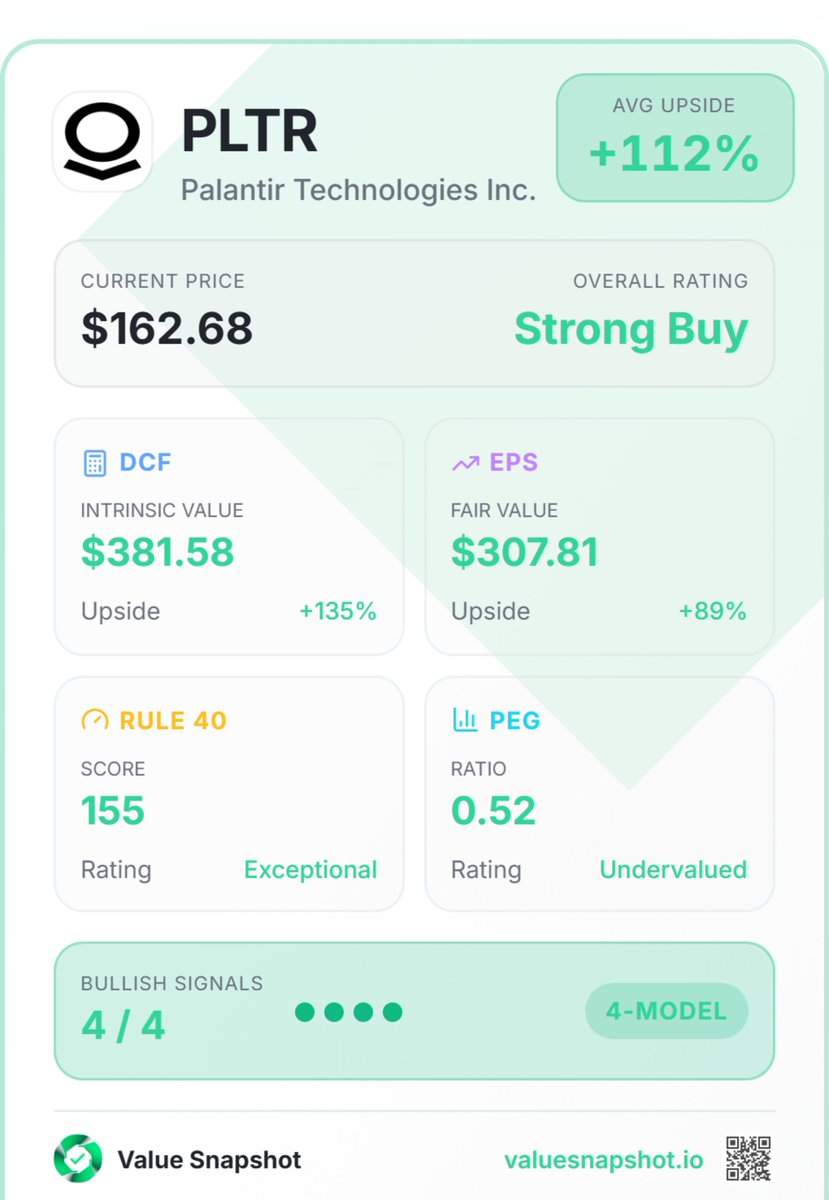
$PLTR is basically Windows, just for enterprises, and in the age of AI.
Eventually, every computer that wasn’t Apple’s had one.
On the last AWS call, Andy Jassy said the middle of the enterprise bell curve, which is by far the largest part, is still largely pre-AI.
That leaves a lot of enterprises that still need to install their AI OS.
(Not investment advice.)
The $IREN thesis is playing out in real-time. ⚡️
The appointment of Eric Hammersley as CISO is not just a standard executive hire—it is the direct bridge to capturing the $91B US Federal AI budget.
Look at the chess pieces being moved:
1️⃣ The $NVDA connection: Hammersley previously led software product security architecture for NVIDIA’s high-performance computing (HPC) environments. The hardware-infra trust layer is fully secured.
2️⃣ The Pentagon Gateway: He served as Chief Engineer supporting the Joint Chiefs of Staff (J6) and is a U.S. Navy veteran. He holds the clearances, the institutional knowledge, and the background required to crack the strict US Gov "FOCI" (foreign influence) and security guidelines.
3️⃣ The Mirantis Orchestrator: Coming from Nutanix (VP Engineering/CPSO), he brings the exact pedigree needed to scale IREN's newly acquired Mirantis software stack into a fully compliant, Gov-grade cloud platform.
With 810MW operational, a massive 2.1GW under construction in Texas, and now the ultimate defense-sector security veteran leading the charge, $IREN is systematically building a highly secure, sovereign AI fortress.
The market is currently distracted by short-term paper noise, but the fundamentals are quietly building a monster.
Own the weights. Own the infrastructure. 🛡️💻
#SovereignAI #AIInfrastructure #Infrastruktur #DefenseTech #Alpha
The AI infrastructure trilemma is officially solved. If you want to win the next phase of industrial and sovereign AI, you don’t rent from public clouds. You own the means of production through the new Triumvirate.
The ultimate vertical integration of Power, Hardware, and Software:
1️⃣ The Physics: $IREN delivers the one resource Big Tech is starved for: massive, grid-connected megawatts at scale (e.g., the 2-GW Sweetwater Campus).
2️⃣ The Brains: $NVDA provides the raw compute with Blackwell and architectural independence via their Nemotron open-weight models.
3️⃣ The Nervous System: $PLTR (AIP) provides the secure enterprise operating system, guaranteeing absolute data integrity and air-gapped, government-grade environments.
The Economic Catalyst:
Palantir CEO Alex Karp exposed it perfectly: Big Tech's "Tokenmaxxing" pay-per-use model is a trap—a wealth tax on corporate intellectual property. Enterprises are livid. They want to own their model weights and compute.
When $PLTR deploys its AI OS natively on $NVDA-backed infrastructure sitting inside $IREN data centers, the loop closes. While the tech giants provide structural stability, $IREN represents the ultimate asymmetric lever for a massive valuation multiple expansion.
Own the weights. Own the stack. ⚡️🤖🛡️
The AI infrastructure trilemma is officially solved. If you want to win the next phase of industrial and sovereign AI, you don’t rent from public clouds. You own the means of production through the new Triumvirate.
The ultimate vertical integration of Power, Hardware, and Software:
1️⃣ The Physics: $IREN delivers the one resource Big Tech is starved for: massive, grid-connected megawatts at scale (e.g., the 2-GW Sweetwater Campus).
2️⃣ The Brains: $NVDA provides the raw compute with Blackwell and architectural independence via their Nemotron open-weight models.
3️⃣ The Nervous System: $PLTR (AIP) provides the secure enterprise operating system, guaranteeing absolute data integrity and air-gapped, government-grade environments.
The Economic Catalyst:
Palantir CEO Alex Karp exposed it perfectly: Big Tech's "Tokenmaxxing" pay-per-use model is a trap—a wealth tax on corporate intellectual property. Enterprises are livid. They want to own their model weights and compute.
When $PLTR deploys its AI OS natively on $NVDA-backed infrastructure sitting inside $IREN data centers, the loop closes. While the tech giants provide structural stability, $IREN represents the ultimate asymmetric lever for a massive valuation multiple expansion.
Own the weights. Own the stack. ⚡️🤖🛡️
You think rates are going to blow up the economy, anon?
You under estimate the difference it is having a macro hedge fund manager running the Treasury. He knows the game, the stakes and he knows the dials.
No one is going to sacrifice the midterms if they can absolutely avoid it... and they will do EVERYTHING possible to win them.
Relax. It'll all be fine. Better than fine fine in fact. The liquidity spice is flowing, everything else will be dealt with.
One of the more interesting signals in the data right now is that the yield curve continues to flatten despite a significant increase in oil prices on a trailing three-month basis. Historically, in a more traditional economic cycle, an energy shock that is being monetized by the Federal Reserve would steepen the curve, not flatten it. The Fed is not monetizing this energy shock.
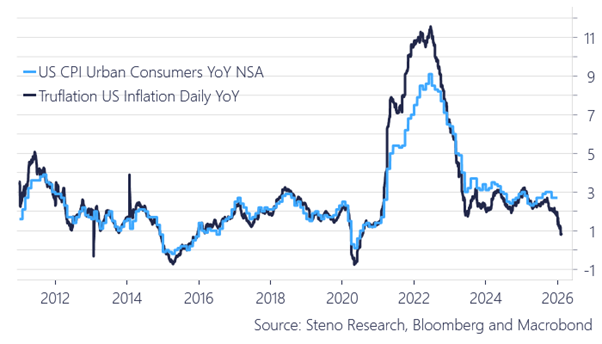
In our view, the bond market may be beginning to discount something much more powerful: the deflationary impact of artificial intelligence and technologically enabled productivity gains across the economy.
The cost to train AI models is falling dramatically. Inference costs are collapsing even more rapidly. At the same time, productivity growth appears to be accelerating beneath the surface of the official data, while unit labor costs remain remarkably subdued.
Much of the market narrative today is centered around tariffs, deficits, and structurally higher inflation. Yet the underlying signals increasingly suggest that disinflationary forces tied to innovation are building momentum.
We believe inflation is likely to surprise on the low side over the next 6–9 months. If that proves correct, the implications for interest rates and long-duration equities could be profound.
Historically, the market has tended to underestimate the speed and scale at which technologically driven innovation can reshape the macroeconomic environment.
I share my thoughts on this month's episode of In The Know.
I can see how despondent everyone is about crypto and the pure chartists are telling you it's all over, but I don't agree...
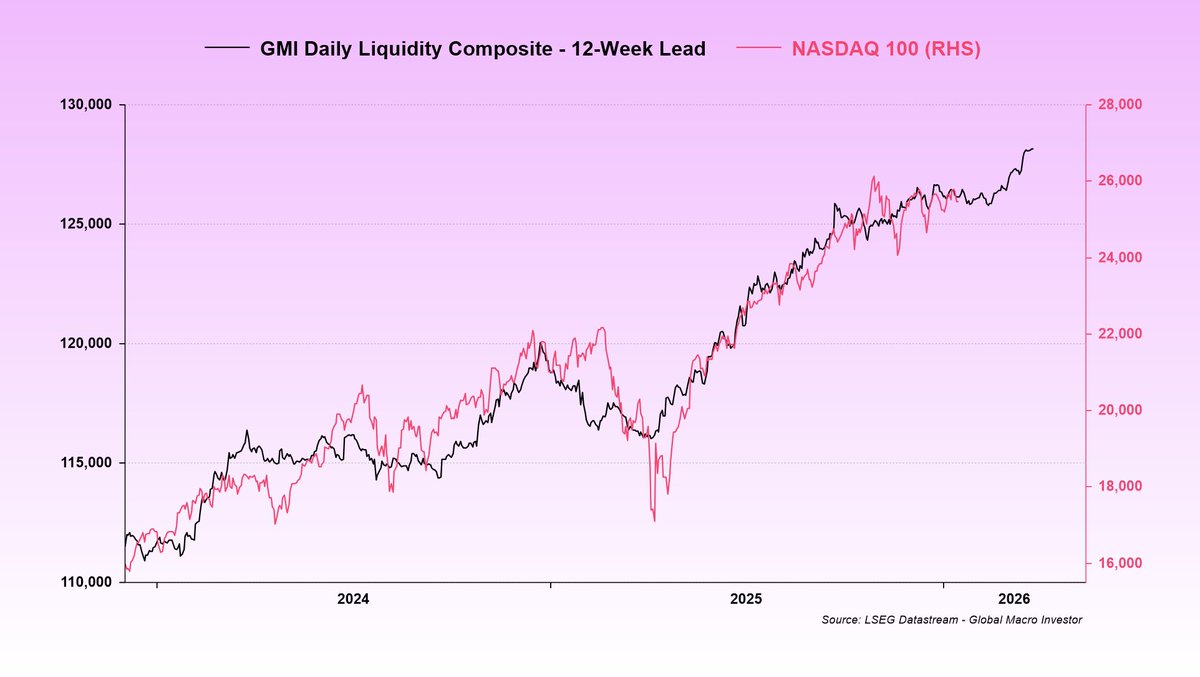
Global Liquidity is the most dominant macro factor in history with a 90% correlation to BTC and 97% to NDX since 2012. It is growing at around 10% a year and is not slowing.
GMI financial conditions lead it by 6 months. They are still easing.
The air pocket was US Total Liquidty which was curtailed by the shut down. It leads crypto by 3 months and is accelerating from its low 3 months ago.
The business cycle is the key driver of earning and thus risk. It is accelerating.
The eSLR is the mechanism by which banks can increase liquidity via credit and absorbing treasury issuance. This liquidity is rising too and will accelerate.
Tax refunds land on bank balance sheets and add to propensity of credit creation and thus liquidity.
China is accelerating expanding its balance sheet.
More rate cuts are coming in the US and will add to disposable income and thus risk taking.
CLARITY Act will likely get agreed and adds to flows. The wall of banks and asset managers wanting to use this technology is enormous and this bill sorts that out.
Stablecoins are accelerating and issuance grew 50% last year and is accelerating. Volumes are in the trillions of $'s and are accelerating.
We have the most supportive government for crypto ever in the US.
Finally the agents are coming and will hyper accelerate. They are an entirely new TAM
The crypto market is still in fear and by most measures the most oversold in history.
Weekly DeMark indicators would give a very solid base in 2 weeks (you can now get them officially on Trading View).
Daily DeMark's are stack up too. Any weakness from here will complete the dailies and the weeklies indicating full trend reversal potential.
The risk factor is how long oil prices stay up.
The next 2 weeks are the key focus.
I think this all resolves positively.
Higher.
Vertical integration sets $IREN’s AI Cloud platform apart.
Construction discipline is what makes it possible.
In British Columbia, Texas, and soon Oklahoma, we’re building the future of AI infrastructure end-to-end: from grid-connected power to data centers to compute.
🚨ALERT: 50% of Data Centers will NEVER connect to the grid.
Half of the data centers announced in the last 24 months will NEVER connect to the grid.
Kevin O’Leary said it. The data proves it.
While everyone’s chasing “paper capacity,”
$CIFR and $IREN are sitting on EXECUTED grid connections that can’t be replicated.
Here’s why they’re untouchable:
266 GW of power projects canceled in 2025 alone. That’s 2.4x the cancellations from 2024.
Why? Because the U.S. grid is facing a structural deficit that nobody wants to talk about.
• Data centers need 18-36 months to build
• Grid connections take 5-7 YEARS (sometimes 12)
• Interconnection queues in PJM and ERCOT now average 7 years
• Average interconnection cost in MISO: $753,116 per MW
Translation:
You can announce a data center tomorrow. But you CAN’T connect it to power until 2032.
The math doesn’t work. The timeline doesn’t work. The physics don’t work.
$CIFR - The Fixed-Price Power Moat:
Cipher control one of the lowest-cost power portfolios in North America.
> Power cost: $0.027/kWh (fixed, long-term PPAs)
> Debt: $0
> Portfolio: 2.2 GW across Texas
But here’s what everyone’s missing:
Their 1-gigawatt Colchis site has a FULLY EXECUTED Direct Connect Agreement with American Electric Power.
Not “in the queue.” Not “under study.”
EXECUTED.
Energization: 2028.
While competitors are stuck waiting 7+ years for interconnection approvals, $CIFR already has a Tier 1 grid connection locked in.
And they just signed:
• $5.5 billion, 15-year lease with AWS for 300 MW
• 10-year hosting deal with Google/Fluidstack for 168 MW
That’s $8.5 billion in contracted lease payments for AI infrastructure.
$IREN - The Microsoft Validation:
$IREN didn’t just secure power.
They secured the ONLY thing that matters: a hyperscaler willing to pre-pay billions.
November 2025: $9.7 billion AI Cloud contract with Microsoft.
Let me repeat that. Microsoft PRE-PAID for capacity that doesn’t exist yet.
Deal structure:
• 200 MW of liquid-cooled AI capacity
• $1.94 billion annual recurring revenue (once online)
• 20% prepayment to fund $5.8 billion GPU purchase from Dell
• Four “Horizon” data centers at their 750 MW Childress campus
But the real alpha? Their 2.91 GW portfolio of GRID-CONNECTED power.
Not speculative. Not “in the queue.”
Connected. Energized. Operating.
> Sweetwater 1: 1.4 GW (energization accelerated to April 26)
> Childress: 750 MW (operating)
> Prince George: 160 MW hydro (23k GPUs for AI)
$IREN is scaling to $3.4 billion in AI Cloud ARR by end of 2026 using only 16% of their total power capacity.
The Peer Comparison Nobody’s Talking About:
Everyone’s excited about $RIOT, $MARA, $CORZ, and $WULF.
Here’s the problem:
$RIOT: 1.7 GW portfolio, mostly Bitcoin-focused. 25 MW HPC lease with AMD ($311M over 10 years).
That’s 1/30th the size of IREN’s Microsoft deal.
$MARA: Building “behind-the-meter” natural gas generation to BYPASS the grid entirely. Smart strategy, but they’re starting from scratch. 1.8 GW capacity, mostly mining.
$CORZ: $10B+ contract with CoreWeave sounds massive. But they’re CONVERTING old mining infrastructure. Not purpose-built for AI. Currently unprofitable.
$WULF: 750 MW at Lake Mariner. Zero-carbon hydro/nuclear. Clean energy story is strong. But only 72.5 MW of HPC capacity by Q2 2025.
Meanwhile:
• $CIFR has 2.2 GW with executed grid agreements and $8.5B in hyperscaler contracts
• $IREN has 2.91 GW of energized capacity and a $9.7B Microsoft deal
The Cooling Bottleneck:
Secured power means NOTHING without secured cooling.
November 2025: CyrusOne data center in Illinois went down for 10 hours because ONE chiller failed.
This facility handles TRILLIONS in CME trading volume. Energy, agriculture, crypto derivatives markets frozen globally.
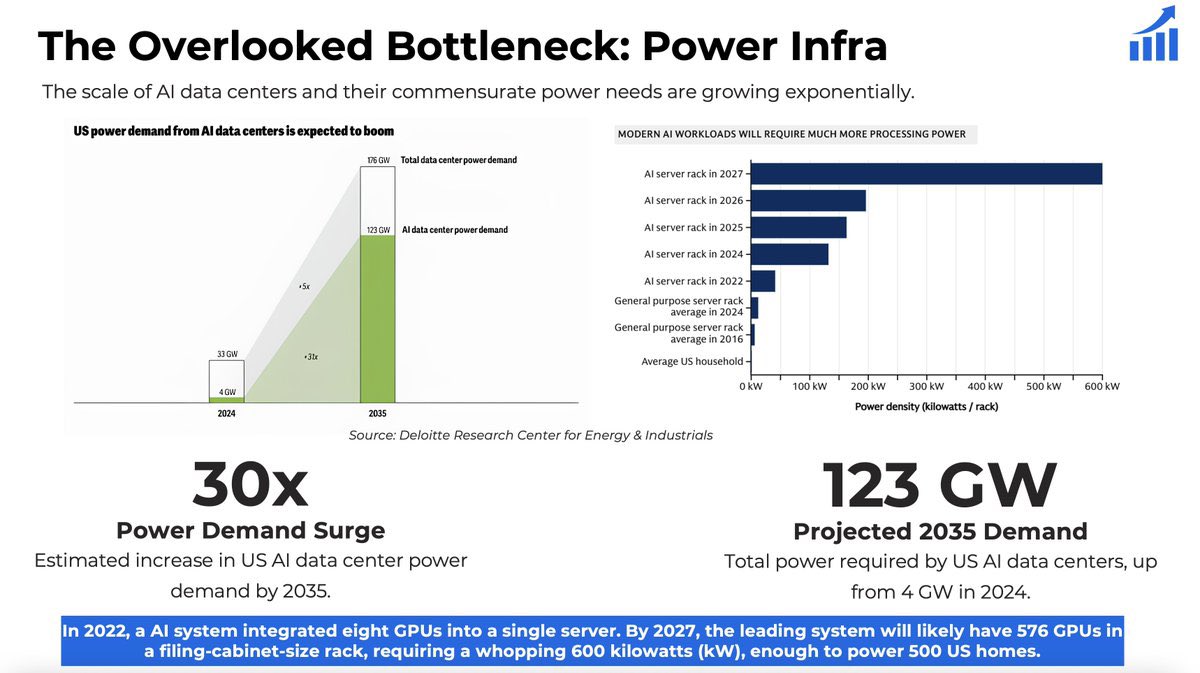
Why? Because AI racks now consume 600 kW of power (enough to power 500 homes).
A single rack failure creates catastrophic heat buildup.
$IREN’s solution: Liquid-cooled infrastructure at all Horizon facilities.
$CIFR’s solution: Turnkey air-and-liquid cooling delivery for AWS.
Hyperscalers aren’t paying billions for “power connections.”
They’re paying for THERMAL RELIABILITY.
The Numbers That Matter:
> PJM capacity prices: 10x increase from 2024 to 2025 (extreme scarcity signal)
> Interconnection costs in Louisiana/Missouri: $900,000+ per MW
> $64 billion in U.S. data center projects blocked or delayed in 2024-2025
> 25+ major data center projects canceled in 2025 alone
The grid is saturated. The timeline is broken. The infrastructure doesn’t exist.
But $CIFR and $IREN?
They already own the infrastructure.
They already have the grid connections.
They already have the hyperscaler contracts.
The Bottom Line:
> AI demand is doubling every 90 days.
> Grid capacity takes 5-7 years to build.
> You can’t close that gap with announcements.
You close it with EXECUTED agreements and ENERGIZED megawatts.
$CIFR: $0.027/kWh power, $8.5B in contracts, 1 GW Tier 1 grid connection
$IREN: $9.7B Microsoft deal, 2.91 GW energized portfolio, $3.4B ARR target by 2026.
While half the industry fights over interconnection queues, these two are already plugged in.
The power crunch isn’t coming. It’s here.
And the only winners will be the ones who secured their megawatts BEFORE the grid broke.
Bullish $CIFR and $IREN.
Note: This is NOT financial advice.
The reality is I've never seen anyone trade a secular rising asset making more money by trading it. The people who make the most money just hold it and add on weakness to compound returns over time.
Choose your fighter.
STAN WAWRINKA. 🤯🤯🤯🤯
The last one handed backhand winner he ever hit at the Australian Open.
It’s enough to send chills down your spine.
One of the most beautiful shots in the history of tennis… it’s not up for debate. 🥹
I posted this earlier in the week on @RealVision, but thought it was worth sharing here as well, just to give everyone something to think about.
If you step back and look at the data, something interesting is happening in markets right now…
When you line up liquidity with equities, you get this (chart 1).
And then compare that with the same liquidity measure versus Bitcoin (chart 2), a simple truth emerges:
Both cannot be right...
Either equities are fundamentally mispricing liquidity despite trading near record highs, or Bitcoin is correctly signaling that the liquidity cycle has already peaked and that risk assets are about to roll over. Only one of these outcomes can ultimately be correct.
Now let’s separate data from opinion for a moment...
The data is clear:
Global liquidity has not yet peaked.
Now to my subjective view…
I think Bitcoin remains the outlier here, and that the events around 10/10 temporarily distorted price discovery, for reasons I’ve discussed at length previously.
Equities, credit, and broader risk assets are behaving exactly as you would expect in a rising liquidity regime. They’re hovering near all-time highs...
Bitcoin, by contrast, is pricing a liquidity peak that the data simply does not support at this stage.
At some point you have to step back and ask:
Is it more likely that one asset is right, or that every other BTC-correlated risk asset is wrong (chart 3)?
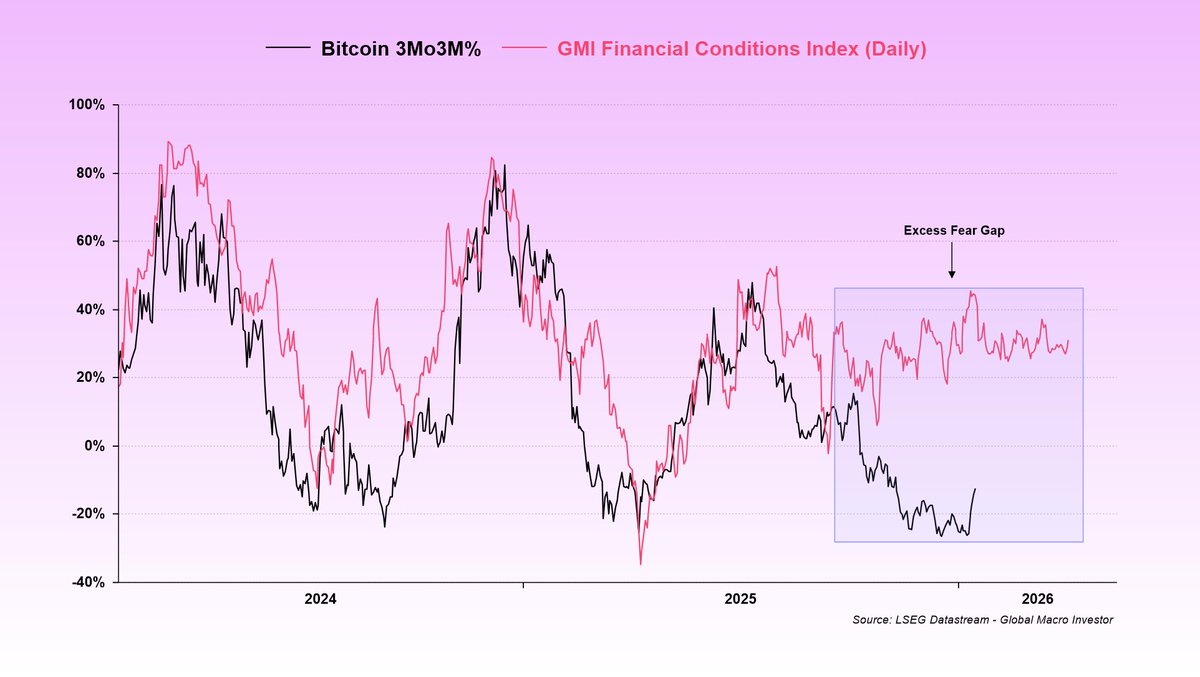
If you then layer in broader financial conditions, it stops being about opinion and becomes more about probabilities (chart 4).
What really stands out to me is the sheer magnitude of the “Excess Fear Gaps” that have opened up relative to the macro and liquidity fundamentals.
Right now, the weight of the evidence suggests liquidity is still rising and, in our view, will continue to rise, and that is what risk assets are reflecting.
That means Bitcoin is the anomaly.
What I’ve done here is present the data objectively and my view subjectively.
This is the battlefield for 2026.
The bull versus bear debate comes down to one thing and one thing only:
The direction of global liquidity...