Pour une fois, un anti-centre donné pose une excellente question à la fin de ce reportage sur un datacenter Microsoft : « Qui aura la maîtrise des données ? ».
On connait la réponse, c'est Microsoft, mais quidam, lui ne sait pas forcément.
https://t.co/QTvXXxJS2G
On continue d'envoyer : contrats, données RH, docs financiers, pièces d'identité via des outils conçus pour partager des photos.
La vraie question n'est plus "est-ce simple ?"
Mais : Qui peut accéder aux données ? Qui possède les clés ? Cloud Act ?
https://t.co/ejM1rR33jC
Petit stream à 14 heure, on parlera de l'OSXP 2026 , de VDI avec Bekane & #proxmox et on soudera les RAMs de l'ami @lefinnois --> https://t.co/zDrFi939yi
Demain on retourne jouer avec les choupy ESP32. On va parler wifi et aussi un peu NTP histoire de garder ces petites bêtes à l'heure. Ça commence à 8h et ça se passe ici: https://t.co/v0UxJUOON0
Announcing inventory release 1.2
A pain-reduction tool for Linux and *BSD system administrators.
It lists all your packages from every installer, incuding: apk, apt, bun, cargo, conda, dnf, emerge, eopkg, flatpak, gem, go, guix, homebrew, nix, npm, pacman, pip, pipx, pkg, pkgsrc, pkgtools, pnpm, rpm, rpm-ostree, snap, swupd, tdnf, tlmgr, urpmi, uv, xbps, yarn, yum, zypper. It normally tries to skip packages in your system base, but you can override this.
New in this release:
Added support for conda, pnpm, bun, tlmgr, and uv.
What was -c mode is now -p -v.
-p mode reports reliability of dates and user-install filtering
Major overhaul of documentation.
https://t.co/EIdwnejgVx
@SpaceX fournira environ 110 000 GPUs NVIDIA plus l'infrastructure associée, pour la modique somme de 920 millions de dollars par mois à compter d'Octobre 2026 (fin de contrat prévue pour juin 2029.)
Google disait il y a peu qu'ils n'avaient pas besoin de GPU Nvidia,...quelques temps plus tard ils signent pour un peu moins d'un milliard par mois pour 110.000 GPU. Ne regardez pas ce que les gens déclarent mais ce qu'ils font.
Après Anthropic, c'est au tour de Google de passer à la caisse auprès de SpaceX Dans les faits, il y a un réel besoin d'infrastructure, et pour l'instant @elonmusk est le seul à pouvoir y répondre.
@googlegemma Thank you Google Deepmind for caring about local users and making it more efficient for us!
We made QAT GGUFs which you can now run locally with here: https://t.co/Tc65MCo1Kn
Je recherche toujours depuis 2023 une photo, ou même une publicité concernant le magasin d'informatique (entre autres) ROCCA, situé dans la galerie marchande d'Auchan Aubagne au début des années 80.
Si quelqu'un a ça en stock, merci de me contacter 📷
Je recherche la même chose (photo ou publicité) sur le magasin NASA qui était situé à Marseille avenue Cantini en 1989 (c'était également une chaîne de magasin)
Merci et bon week-end !
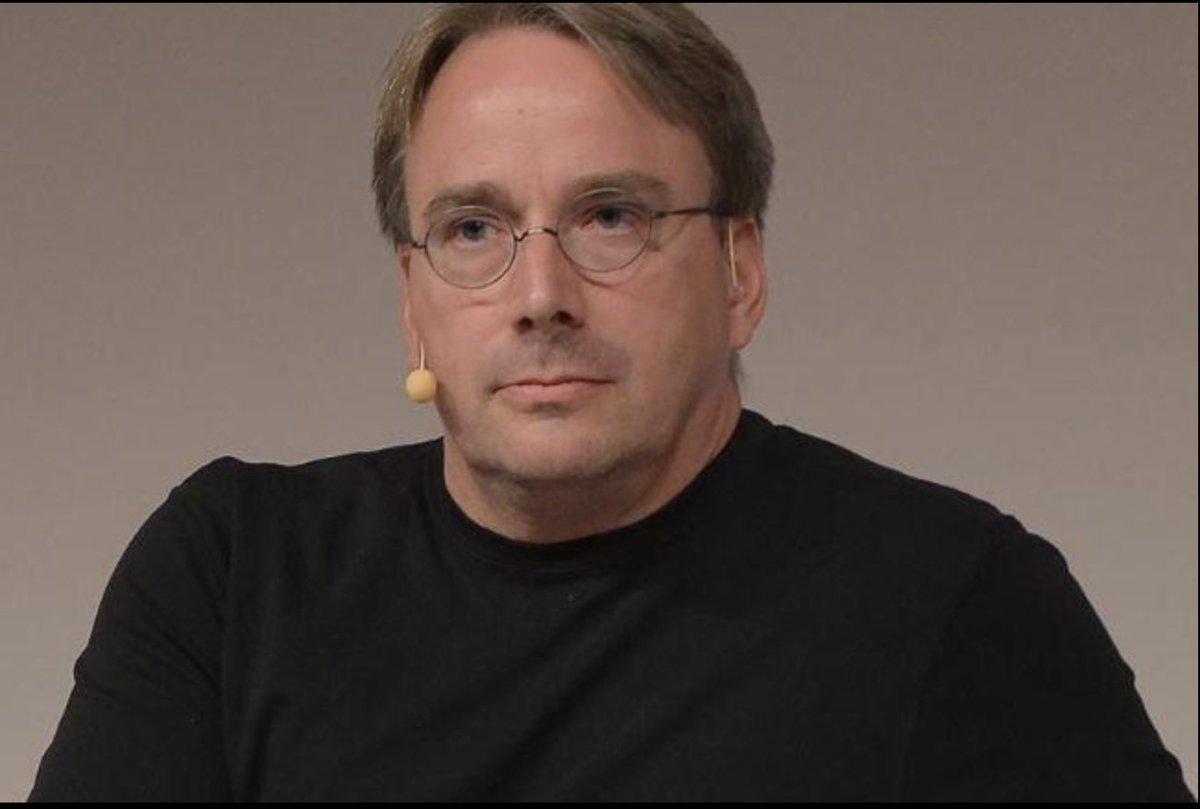
The creator of Linux just publicly called out the AI hype. Word for word.
Linus Torvalds took the stage at Open Source Summit 2026 and said this:
"When I see people saying 99% of our code is written by AI, I literally get angry. Because those same people — I can pretty much guarantee — 100% of their code is written by compilers. But they never say that."
He is not anti AI. The Linux kernel saw a 20% jump in submissions this release because of AI tools. He uses it. He gets it.
His point is something most people are too afraid to say.
AI is a productivity tool exactly like compilers were. Compilers boosted programming by 1000x. AI adds another 10x on top. Enormous. But nobody says "the compiler wrote my code." So why are we saying AI wrote it?
He also flagged something nobody is talking about.
AI is flooding small open source projects with drive-by bug reports. Someone runs a prompt, files a report and disappears when asked for a patch. Maintainers with one or two people are drowning trying to keep up.
"Sometimes AI reports a bug and when you ask for more information the person has done that drive-by and does not even answer your question. That is the real burnout issue."
And his final warning was the sharpest of all.
"People who do not understand the complexity of systems will prompt systems and write processes that will fail."
The AI hype crowd is very loud right now.
Linus has been building real systems for 35 years. When he talks, engineers listen.
Full interview here:
https://t.co/LmXJtvKc4O
Google releases Gemma 4 QAT. ✨
You can now run Gemma 4 at 3x less memory with near original performance.
Quantization-Aware Training (QAT) makes it possible to run Gemma 4 26B-A4B on 16GB RAM.
GGUFs: https://t.co/wQgEocxUId
QAT Guide: https://t.co/Nsm1yeGEHx
@GeorgeSmit62538 True. Plan 9 never became mainstream. But for a failed OS, it ended up influencing Linux, containers, UTF-8, distributed systems, and Go. That's a pretty good failure. 😄
The guys who built Unix hated Unix.
So Ken Thompson, Dennis Ritchie and Rob Pike spent a decade building its replacement at Bell Labs. They called it Plan 9. Named after a 1957 Z-grade sci-fi movie as an inside joke.
They released it for free in 2000. Anyone could use it. Anyone could change it. Anyone could run it.
What it introduced that the world was not ready for:
- Everything is a file. Networks, devices, processes, window systems. All one unified namespace.
- Every user gets their own private view of the entire system. Not shared. Yours alone.
- Distributed computing was not a feature. It was the entire foundation.
- UTF-8, the encoding standard the whole internet runs on today, was born here.
- The networking model inside Linux, Android and modern containers traces directly back to Plan 9.
- Rob Pike took these ideas and used them to design Go, now the language powering cloud infrastructure worldwide.
Windows costs $139. macOS locks you into Apple hardware. Linux carries 50 years of Unix decisions nobody can undo.
Plan 9 costs nothing. Runs anywhere. And its ideas already live inside every OS you have ever touched.
The world ignored Plan 9.
Then stole everything from it.
Ken Thompson never got the credit. Neither did Plan 9.
Someone hid a self-replicating worm inside 37 npm packages.
Written in Rust.
Hidden behind an eBPF kernel rootkit.
Talking to its operator over Tor.
It steals 86 environment variables.
AWS keys. GCP keys. Vault secrets. Kubernetes tokens.
Your Anthropic API key. Your OpenAI key.
Your Exodus wallet seed phrase.
Then it uses your own npm credentials to republish itself into your packages.
So your code infects the next developer.
Who infects the next one.
The commits were backdated up to 13 years.
The commit author name was “claude.”
The malware named itself after the AI to hide in plain sight.
The attacker also left their own wallet recovery phrase in the debug data.
Nobody is having a good day.
Check your preinstall hooks.
I spent a whole blog post doing #ZFS on-disk math by hand - just to corrupt one byte and watch #OpenZFS healing process.
Interested?
Feel free to join the journey into the on-disk jungle.
https://t.co/mTMrfsVKht
#storage#FreeBSD#Linux#Storage#Filesystem
I recall this was the reason why Windows NT 4.0 was the most stable and polished release - force to use it since some alpha stage also as development platform.
Sources:
- https://t.co/Mixxf6HtSZ
- https://t.co/c3pp75hMbJ
1/x