Bài trước up cả lên X và Phở Bò, post lúc 11 rưỡi đêm, đúng kiểu mình vui và muốn kích thích ae nên có hứng thú ứng dụng công nghệ để thay đổi dần quy trình giao dịch & đầu tư. Vì mình thấy sức mạnh của người biết dùng và không biết gì nó đang ngày càng cách nhau cực kì xa.
Có thể do trên X ae đã biết mình trước, biết kinh nghiệm và năng lực của mình ít nhiều nên 90% cmt là tích cực, ủng hộ. Trên Phở thì toxic vcđ, 50% là tiêu cực và đều đến từ những người chưa biết mình là ai.
Nói thật mình chả có thời gian để mà để bụng hay tự ái gì đâu. Sống nửa đời người, làm bố 3 con rồi, việc mình thì mình làm thôi. Cứ không ảnh hưởng đến tiền ăn sáng của gia đình là mình kệ mẹ hết :D
Chẳng hơi đâu mà đi chứng minh với kể lể là mình làm được cái A cái B làm gì, vốn họ ko hiểu và ko muốn hiểu thì giao lưu chiêu thức chỉ tổ tốn thời gian.
Bài này cũng post lên cả Phở, sợ lại một số cao nhân nhảy vào đánh giá nên cho xin 3 phút giải thích trước rồi vào nội dung chính sau nhé.
1️⃣ Cá nhân mình đã có kinh nghiệm trading nhiều thị trường, đến nay là sang năm thứ 11 rồi. Mình tồn tại và sống khỏe, nuôi được gia đình bằng nghề này. Ae khỏi phải lo cháy nổ gì hộ mình. Mà ae cũng nên bơn bớt vào bài người khác lo cháy TK đi, cháy nó chỉ có trên mồm mấy ông con bạc thôi. Trader thì làm méo gì có chuyện cháy TK, hỏi có lãi đều hay lỗ thông thì đc chứ cháy làm sao đc mà cháy?
2️⃣ Một số bác đang build bot, build hệ thống trade cũng vào góp ý thì mình phải nói rõ thế này. Có thể các bác đang build bot cho Fx, vàng, stock... Thì mình tin là 99% các bác đang build chỉ dựa trên dữ liệu OHLCV (tức là nến Nhật + volume trên chart cho các bác newbie dễ hiểu).
Nhưng mình tập trung trade crypto, và đặc thù trong thị trường crypto nó có 3 loại dữ liệu nữa:
🔸 Dữ liệu on-chain: duy nhất crypto có, dữ liệu này cực kì mạnh và hữu ích khi phân tích kết hợp.
🔸 Dữ liệu cex-data: hay bên các thị trường khác gọi là volume profile, order flow style đấy. Nhưng mình khai sinh ra tên gọi "cex-data" là vì crypto nó có những dữ liệu đặc thù mình nó có, ví dụ như "funding fee" chẳng hạn. Dữ liệu này đc coi là nhạy nhất với xu hướng market, OHLCV là dữ liệu của quá khứ, cex-data là dữ liệu dự đoán tương lai
🔸 Dữ liệu tâm lý thị trường: cái này team mình ko đủ sức làm. Mình phải mua từ bên thứ 3, nhưng nôm na là họ sẽ lọc thông tin từ các MXH, các hội nhóm te.le, dis.cord, red.dit... Và đánh giá tâm lý thị trường. Đồng thời đưa ra các dữ liệu về volume, tiêu cực hay tích cực với các từ khóa hoặc tên altcoin mình yêu cầu.
Và các bác có thể đang nghĩ những gì mình phân tích nó là đơn giản. Thực tế team mình đang xử lý gồm cả những dữ liệu phía trên, cùng với PTKT là 4 nhóm dữ liệu chính. Mỗi tháng team đang phải trả hơn 1500$ chỉ cho dữ liệu đầu vào. Nói như vậy để các bác có thể hiểu là mình nghiêm túc, có kinh nghiệm, hiểu những việc mình đang làm đến đâu. Chứ một số bác lại tưởng mình là con gà vibecode đc mấy ngày bị fomo. Hay lại cứ lo mình mới build bot trade đc vài hôm đã vội ti toe. Mình nói thẳng là mình ko ở level đấy, hay nói đúng hơn level của mình cao hơn giai đoạn đấy nhiều lắm rồi.
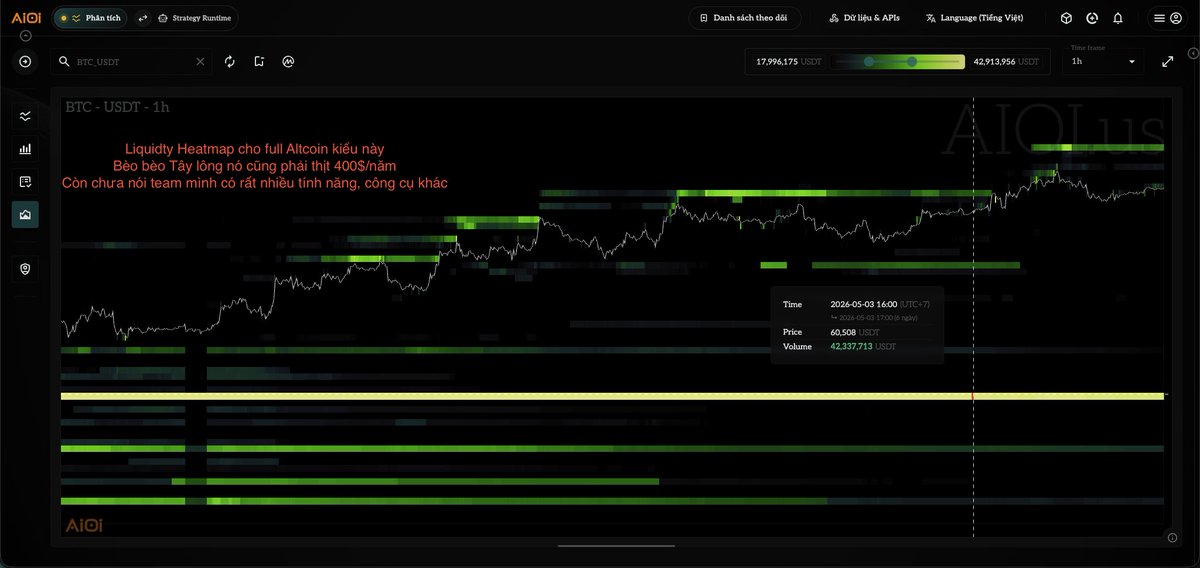
Mình để phía dưới 2 cái ảnh demo vài tool dev team mình build. Hàng VN chất lượng Tây, vẫn đang build dở, chưa hài lòng chưa thèm quảng cáo bán đâu. Các bạn muốn dùng cũng chả được ko lại cứ lo bị lùa.
👌🏻👌🏻👌🏻
Rồi, quay lại chuyện AI giúp mình đc gì và thế giới tài chính đang thay đổi ra sao này.
2 hôm cuối tuần mình bận chút việc nên cũng chưa cải tiến được gì nhiều. Cả ngày chỉ ngồi tối ưu và mong muốn tìm ra các logic trade hiệu quả nhất.
Nếu là trước đây, quy trình backtest sẽ là:
- Thử nhiều setting, thay đổi cách vào lệnh, SL, xử lý trailling stop...
Cứ chạy đi chạy lại, điều chỉnh cho đến khi hài lòng thôi.
Nhưng hiện tại AI giúp backtest làm được NHIỀU VÀ NHANH HƠN rất nhiều.
- AI có thể đối chiếu các round kết quả, nó hiểu được các dữ liệu dùng để backtest và đưa ra gợi ý hướng cải thiện.
Việc này trước đây là không thể, bạn là người duy nhất phải động não để cải thiện. Và thường thiên kiến cá nhân sẽ làm bạn khó khăn khi nghĩ các hướng để backtest. Giờ có AI, cộng sự thứ 2 mà nó lại có thể tư duy theo nhiều hướng vì kiến thức của nó rộng hơn 1 cá nhân rất nhiều lần.
Đặc biệt với mình, hiện tại mình chỉ mới sử dụng 2 dữ liệu kết hợp với đường giá để phân tích mà đã ung cả thủ, ong hết cả đầu và nhanh chóng mất nhịp sau vài round test. Chỉ có AI với khả năng xử lý và đối chiếu khối lượng lớn dữ liệu mà không bị "choáng" mới có thể giúp mình nhanh chóng tìm ra các setting phù hợp.
Đây là những gì được một trader 11 năm kinh nghiệm rút ra, đây không phải là góc nhìn của một đồng chí amateur (nghiệp dư) mới vọc AI đc vài tuần phát biểu. Hiểu được thì ấm vào thân các bạn, khó nghe nhưng nó là thật.
Chính vì mình đối chiếu được cách tiếp cận cũ, quy trình cũ với những gì AI đang làm được. Mình mới muốn gõ 1 hồi chuông cảnh tỉnh những ae còn đang mơ màng chưa nhận ra sự thay đổi đang đến gần.
CN nghỉ sớm, đưa vợ con đi chơi tí. Bài viết ko nhằm mục đích bán hàng, khỏi phải thuyết âm mưu. Mục đích lớn nhất:
ĐÁNH TRỐNG KHUA CHIÊNG CẢNH BÁO MỘT LỚP NHÀ ĐẦU TƯ NHỎ LẺ SẼ SỚM BỊ ĐÀO THẢI KHI KHÔNG THAY ĐỔI KỊP VỚI THỜI ĐẠI
Nếu quan tâm những góc nhìn hoặc ví dụ thực tế trong quá trình mình vibe code cùng AI mảng tài chính, crypto thì nên để lại 1 follow. Rất nhiều thứ hay ho sẽ post dần ae nhé.
Page 4: Learning to Wait Instead of Trying to Win Everything
There was a time when I thought I always had to keep moving forward. I had to make more money, become better, move faster, and prove that my decisions were right.
I entered the crypto market in 2017. Nearly a decade has taught me that the market will never move according to my wishes. Some days, a single good decision can make you more money than others earn in years. But on other days, one bad decision can wipe out the results of months of hard work.
I have made a lot of money. I have also lost a lot of money.
And if there is one thing those numbers have taught me, it is that money does not tell the whole story of a person’s ability. Sometimes, making money simply requires a favorable opportunity. But keeping it through multiple market cycles requires much more: discipline, emotional control, and the humility to accept what you cannot control.
I have begun to understand that not every opportunity needs to be taken. Not every market movement needs to be traded. And not every day has to be profitable.
Sometimes, the best decision is to do nothing at all.
Staying out of the market when there is no clear opportunity does not mean you are weak or incapable. It means you are protecting your capital, preserving your judgment, and waiting for a position that is truly worth taking. I do not need to win every trade. I only need the patience to wait for trades with favorable odds and the discipline to accept that I can still be wrong.
I have gradually come to realize something else, too.
The older I get, the less I feel the need to prove myself to others. People who know me in real life may simply see me as an ordinary businessman. They do not necessarily need to know what I trade, how much money I make, or what I have been through.
I like it that way.
I want people to be around me because of who I am, not because of my wealth, reputation, or what I can offer them. Because if one day all those things disappear, I still want to have genuine relationships, a life I enjoy, and the peace of mind that comes from being comfortable with the person I have become.
I do not think I have figured life out. There is probably still a lot I need to learn. I will continue to make mistakes, and there will still be days when I feel lost. But at least I no longer want to sacrifice everything just to win a game that has no finish line.
I want to make a lot of money, but not at any cost.
I want to succeed, but I do not need everyone to acknowledge it.
I want to go further, but I also want to enjoy the journey along the way.
Because in the end, making money is a lifelong pursuit. The market will still be there tomorrow. New opportunities will always come. There is no reason to turn every day into a battle that I must win.
I no longer try to win everything. I simply want to make sound decisions, protect what I have built, and wait for the moments that are truly mine.
Perhaps that is the kind of maturity I have been searching for.
Not becoming someone who can win every game.
But becoming someone who knows which games are worth playing, which ones to walk away from, and when to step back and live life on my own terms.
End of Page 4.
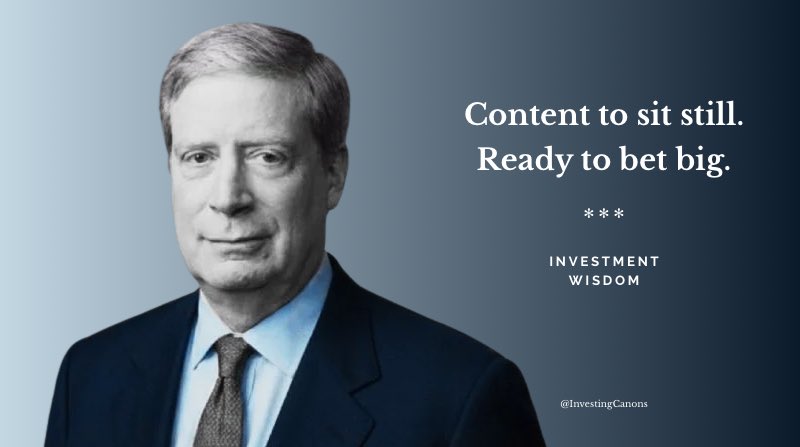
Stanley Druckenmiller: “I like to be very patient and then when I see something, go a little bit crazy.”
The great opportunities are rare. That’s why they require patience & aggression.
The ability to sit still when nothing stands out. The ability to bet big when something does
One month ago, I turned 20K USDT into 1.3M USDT, then reset my account back to 20K. The entire trading history is still on my X account. Nothing to hide.
After trading for a few days, I was fortunate enough to grow the account from 20K to 60K. Then I spotted a special opportunity in $ZEC.
That’s why I decided to break my usual rules and deposit an additional 500K USDT into my Futures account, bringing my total capital to 550K. I announced this decision to my Premium group. Maybe many of them didn’t understand why I did it at the time, but by now, I think they probably understand.
Honestly, I really wanted to go all-in long on $ZEC at 1,050 and Bitcoin around 75K when I shared those entries. I wanted to maximize the opportunity the market was offering. But the reality was that my capital was already spread across multiple positions.
One #ZEC position with 1M in volume, one #BTC position with 2.5M in volume, along with #MSTR and #ETH. Almost all my capital was already deployed, so I chose not to use 20x leverage, even though higher leverage could potentially generate larger profits.
Dare to take action. Dare to make moves. But never be greedy beyond your limits. Protect the foundation you build after every win.
If that trade had gone wrong, I would have lost around 120K USDT. I had already calculated the potential loss and set my stop-loss for that trade.
In just 7 days, my account grew to 2.2M USDT. With additional capital available, I started DCAing into Bitcoin from 81K and recently added another 500K in volume at 86K.
Of course, sometimes I still wonder: If I had more capital back then, could I have executed a different strategy?
Maybe. But the market doesn’t offer just one opportunity, and I don’t need to capture every single move.
What I like about the DCA-on-the-way-up strategy is the flexibility and peace of mind it provides. I don’t have to put all my expectations on a single entry. I can allocate capital across different price levels, adjust my positions as the market changes, and reduce the pressure of having to predict the exact bottom.
Of course, DCA is not a foolproof strategy. If the market continues to decline sharply, the account still faces significant risks. But when combined with proper capital management and discipline, it allows me to approach the market in a way that better aligns with my long-term goals.
In the end, perhaps the most frustrating thing isn’t missing an opportunity, but not having enough resources to capitalize on it the way you wanted.
But it’s all good. The market will still be here, and the next opportunity will come.
Now, sit back, look at everything I’ve written, and think about what you can learn from it.
Wishing all of you a season filled with big profits.
From Zora.
A market correction lasting just three days can be enough to bring back the memories of a previous bear market.
Traders who have experienced significant drawdowns in the past often don’t react purely to current data. They react based on what they experienced before.
A few consecutive red days → loss aversion kicks in → confidence deteriorates → positions get cut or completely liquidated.
That’s a form of behavioral reflex built from previous periods of pain.
And when the majority starts acting emotionally, liquidity can begin transferring from impatient participants to those who remain disciplined.
My plan hasn’t changed just because the market has corrected for a few days.
I’m not trying to catch the exact bottom. I’m simply waiting for the market to reach a zone where the risk/reward becomes attractive enough to start accumulating.
If a short-term correction is enough to make you completely abandon your thesis, perhaps the problem isn’t the market it’s that you didn’t have a clear enough plan from the beginning.
And this is exactly where I start buying.
If you’ve been here long enough, you’ve probably seen my trading style.
There have been periods when I was almost all-in.
But those moments are extremely rare. When the probability, positioning, and opportunity are good enough, I’m willing to take significant risk.
Right now, however, I’m being much more cautious.
If I had to choose the most fundamental principle of investing, it would be risk management, not maximizing profits.
Profit is simply the outcome.
Risk management is what allows you to survive long enough to achieve that outcome.
In investing, your first priority shouldn’t be figuring out how to make as much money as possible. It should be making sure that one wrong decision can never take you out of the game.
That’s why my priorities are always:
1. Preserve capital.
2. Control downside.
3. Allocate capital properly.
4. Only take risks that I can afford and manage.
5. Then optimize returns and let profits compound over time.
An investor can miss 10 opportunities and still have hundreds more ahead.
But if you lose 100% of your capital just once, none of the opportunities that come afterward matter anymore.
Especially in crypto, where volatility is extreme and leverage can amplify both gains and losses, this principle becomes even more important.
You don’t need to win every trade.
You don’t need to catch every move.
You just need to manage risk well enough that your losses never take you out of the game, while your winning trades have enough room to generate meaningful returns.
I’d rather miss an opportunity than sacrifice my stability just to catch it.
Because investing isn’t a game played over a few days, a few weeks, or a few market cycles.
It’s a game played over many years.
And in a game this long, what determines how far you go isn’t just your ability to make money.
It’s your ability to avoid losing everything you’ve built.
Profit is optional. Survival is mandatory.
Profit is the goal.
Survival is the principle.
Not every day needs a trade. Not every opportunity needs to be taken. Sometimes, staying still is the hardest decision to make.
I don’t know where the market will go tomorrow. I only know that when the real opportunity comes, I want to still be here.
And if this life were a book about all the times I won and lost, the final page wouldn’t say how much money I made.
It would simply say:
“He’s still here.”
The Final Page
In the end, he was still sitting in front of the screen.
Not because he hadn’t made enough money.
And not because he still had something to prove to the world.
It was simply because, after all the wins, all the losses, and all the times he thought he finally understood the market only to realize he understood nothing at all — he began to understand something much simpler:
You don’t have to win every time. You just have to stay sharp enough to wait for the next right opportunity.
He used to be impatient. He wanted to turn a thousand into a hundred thousand as quickly as possible. He used to think that a good opportunity was one you had to grab immediately.
Then the market taught him that sometimes, the most valuable trade is the trade you don’t take.
He still made money.
He still lost money.
He was still greedy sometimes.
And there were still days when he looked back and wondered, “What if I had done things differently?”
But he no longer lived by “what if.”
He walked out of the room, leaving the screen behind.
Tomorrow, the market would open again.
Bitcoin would rise.
Bitcoin would fall.
There would always be another coin that made millions of people believe they were about to get rich.
And there would always be another one that reminded them how dangerous overconfidence could be.
And him?
He would come back.
Not to catch every wave.
Just to wait for the wave worth betting on.
And if there was one final thing he wanted to write to himself, it was this:
Patience won’t make you rich quickly.
But it keeps you alive long enough to become rich tomorrow.
He turned off the screen.
For the first time in many years, he didn’t need to know what tomorrow would bring.
Because he knew he would face it.
Zora.
Not every trading opportunity requires you to enter a position.
Sometimes, the best thing you can do is stay out, observe, and wait. There will always be opportunities in the market, but not every opportunity is meant for you.
Be patient and wait for the right entry, stay disciplined enough to skip unclear setups, and most importantly, protect your capital so you’re ready when the real opportunity comes.
Trading isn’t a competition to see who can take the most trades. Sometimes, the person who makes the most money is simply the one who knows how to sit and wait the longest.