The internet got cheap. Real thinking didn't.
I'm calling what I publish Loose Pixels: one honest essay a week from inside the work.
14 years at @Apple, now solo founder, still suspicious of certainty.
https://t.co/zo9hRN0Trs
@alliekmiller I struggle with where to draw the line now. MCP/API for anything repeatable or high-stakes, sure. But if computer use gets super reliable, does everything else just become "use the app"?
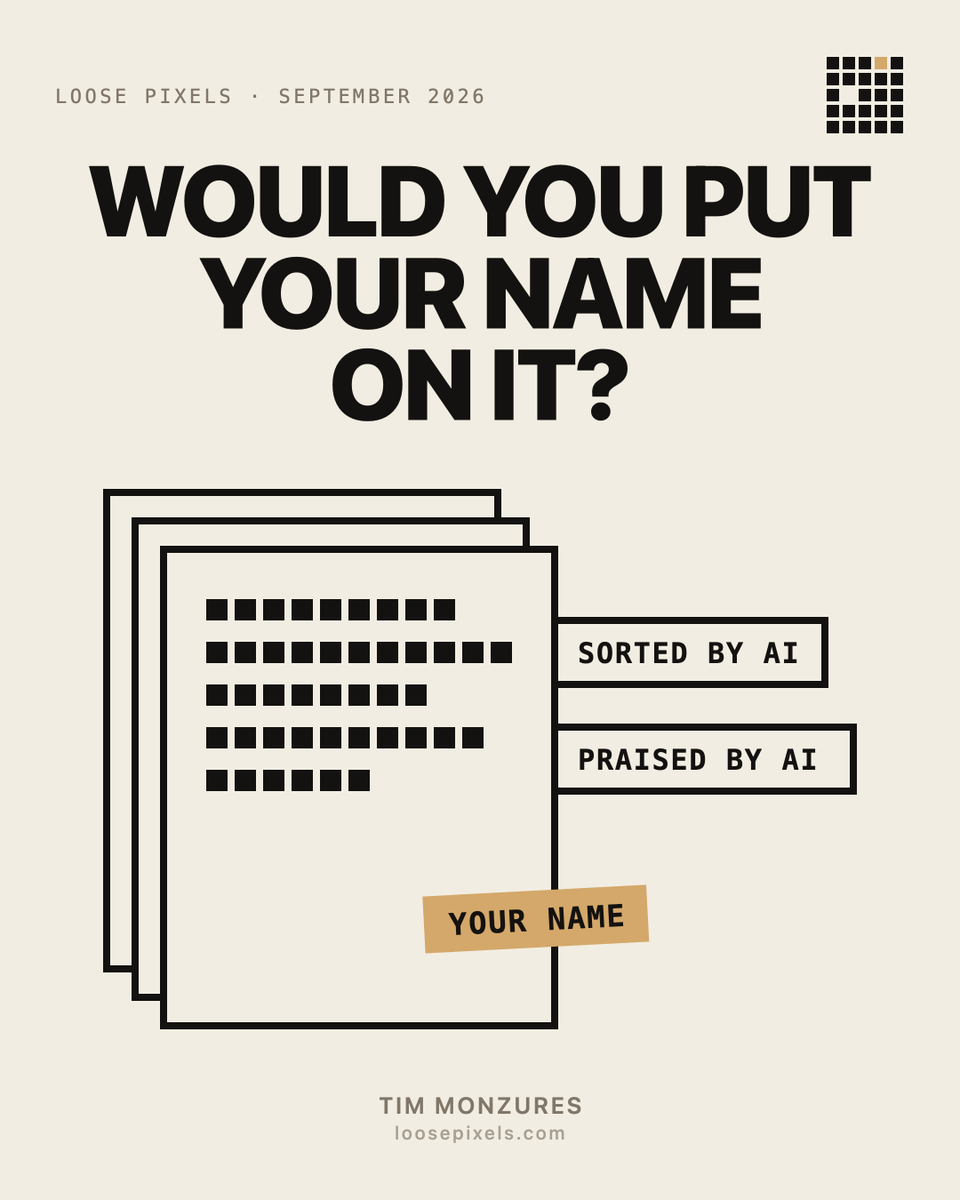
An AI sorted 284 code changes. Another AI congratulated me for maintaining the labels.
I hadn't. I almost took the compliment.
The catalog was useful. Its history was invented. Apparently my guard goes down when the mistake flatters me.
https://t.co/ET9bq6xsb9
@dhaber I’ve found the return rarely comes from the person you helped. Years later, your name comes up in a room you’re not in, often because of something you barely remember doing.
@signulll Core models are commoditizing, pushing labs toward harnesses, infra, and FDEs built around specific customer needs. With no clear product boundary, some will try to serve everyone and bloat the core product that got them there.
Nobody in my seventh-grade class made a better mix CD than me.
Prompt engineering is starting to feel familiar.
You have to get close enough to a tool to be fooled by it. Then remember when it fools you.
https://t.co/GQIWTkvDNs
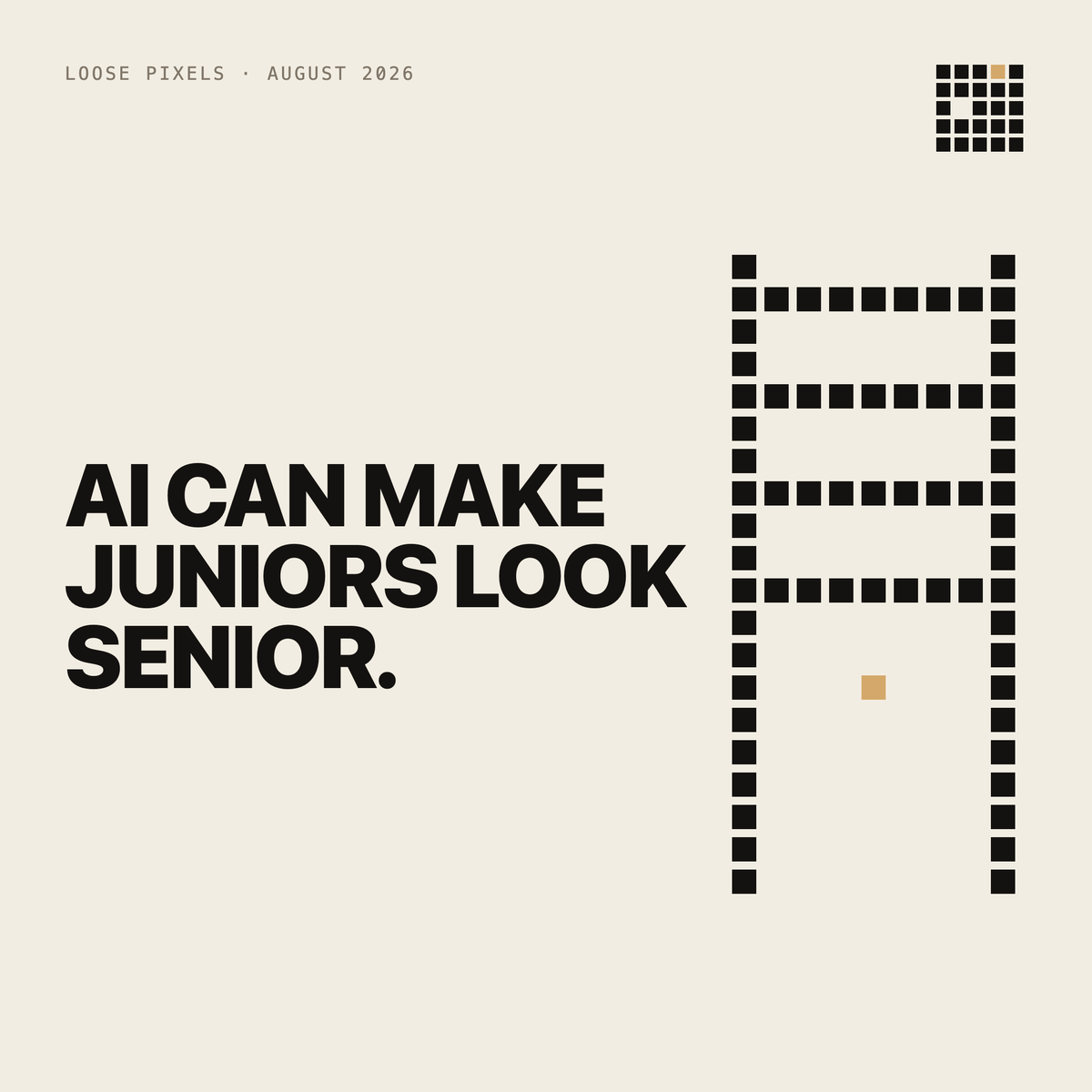
I spent a decade helping engineers become senior. Judgment formed in rejected plans and decisions they had to make without me.
AI is absorbing more of those reps.
The experience still has to come from somewhere.
https://t.co/aG4tK8BFVa
@signulll NLP may just become another layer in the stack. Most people don’t know how cars work and still drive everywhere. Mechanics are doing fine. LLMs and workflows will need them just the same.
@signulll Time is scarce. X has certainly found ways to prove that.
It also lets one useful lesson reach people you’ll never meet. You still spent the hour. It just stopped helping one person at a time.
Twelve of my last 21 alerts were the same alert. Each one cleared itself in about nine minutes.
The one that actually mattered sat for sixteen hours, because it looked exactly like the rest.
Agents make alerts nearly free to produce. Human attention didn't get the same upgrade.
https://t.co/uEWahFxpFO
Tokens down 73%. Runtime down 71%. Eval score: zero.
Most of the runs had crashed. The rest politely apologized for not reaching the data.
I measured the absence of work and called it optimization.
https://t.co/tXOlCgTVnw
@jinayoon_@paulg wrote “Taste for Makers” a while back and it’s still the closest I’ve found. To me, taste is knowing what to leave out before the data makes it obvious.
https://t.co/uRYEPcCbzp
@contextconor Companies still use employees as the synchronization layer. That was already expensive; with agents moving at machine speed, it becomes untenable.
The model is the easy part.
What's hard is the harness: the exceptions, the source of truth everyone ignores, who decides when the data conflicts, when a human takes the wheel back.
Software drops in. Agents move in.
https://t.co/UDjP7NXzkQ
Innovation over automation is the part that lands.
Most innovation comes from recombining existing ideas, then testing the combination fast enough to find something useful.
As AI removes more of the rote work, we get far more shots at that, and the biggest breakthroughs may come from new applications as much as smarter models.