In 2019, Damilola Savage was the most promising young lawyer in Lagos.
Sharp. Hungry. Beautiful mind.
She had one dream: to make partner at Okonkwo & Associates before 35.
What she didn’t know was that the firm had already decided her fate — before she walked through the door on her first day.
Okonkwo & Associates occupied the entire 14th floor of a glass tower on Adeola Odeku Street, Victoria Island.
Senior Partner — Chief Emeka Okonkwo, SAN.
62 years old. Silver-haired. Yale-educated. A man who had drafted legislation that shaped modern Nigeria.
And a man who did not lose.
Damilola had joined straight from Lagos Law School. First class. Best graduating student.
Chief Okonkwo had personally recruited her.
“You remind me of myself,” he told her at the hiring dinner at Nok by Alara.
She should have asked what he meant by that.
She didn’t.
For four years, she worked like the building would collapse if she left.
Nights. Weekends. Public holidays.
She billed more hours than any associate in the firm’s 30-year history.
Her name was on every major deal. Her fingerprints were on a ₦4.2 billion acquisition that made the front page of BusinessDay.
She was untouchable.
Or so she thought.
In March 2023, Chief Okonkwo called her into his corner office.
Floor-to-ceiling windows. A view of the Lagos Lagoon that made you feel like God.
“Damilola,” he said, leaning back in his leather chair.
“We’re making you partner.”
She felt her eyes burn. Held it together. Barely.
“Effective when?” she asked.
“June 1st,” he said.
She walked out of that office and cried in the bathroom for seven minutes.
The partnership agreement arrived on her desk two weeks later.
47 pages.
She was tired. She was happy. She trusted Chief Okonkwo.
She signed on page 47 without reading pages 1 through 46.
This is where the story truly begins.
The clause was on page 31.
Paragraph 14(c).
“In the event of dissolution, departure, or termination — voluntary or otherwise — the Partner hereby waives all rights to client relationships, matters originated, and revenue generated from accounts introduced to the firm during the period of association.”
In plain English?
Every client she had brought. Every deal she had built. Every relationship she had cultivated for four years.
Belonged to Okonkwo & Associates.
Not to her.
She didn’t know.
For eight months, everything was perfect.
Her name was on the letterhead.
Partner. Corporate & Commercial.
She had an office now — not a cubicle.
She had an assistant named Rotimi who brought her green tea without being asked.
She was, by every measure, winning.
Then in February 2024, she got a call.
Dangote Agro. One of her oldest clients — she’d been their outside counsel since they were a ₦200 million startup.
They were now worth ₦11 billion.
And they wanted her to lead a landmark merger.
The fee: ₦180 million.
She called Chief Okonkwo to discuss resource allocation.
He listened quietly.
Then he said: “I’ll be handling Dangote Agro personally from now on.”
Silence.
“I’m sorry?” she said.
Page 31, paragraph 14(c),” he said.
Not unkindly. Almost gently. The way a man says something he has rehearsed.
“All client relationships belong to the firm, Damilola. You agreed to that.”
She sat very still.
Outside her window, Lagos hummed and moved and did not care.
She called Dangote Agro directly that evening.
Their CFO — a woman named Amaka who Damilola had mentored — picked up.
“Amaka, they’re trying to take you off my portfolio—”
“Dami.” Amaka’s voice was careful. Apologetic. “Chief Okonkwo called our MD this morning. Apparently there are contractual issues.”
“There are no contractual issues. Those are my clients—”
“Dami.” A pause. “They showed us the agreement.”
She hung up.
Sat in her car in the parking garage for 45 minutes.
Then she called the only person she knew who could help.
The idea that Arsenal became a cultural phenomenon because it signed Black players is too simplistic.
Like much of London, Arsenal positioned itself as a club that extended belonging towards the margins. Not racial margins alone, but the margins of football's imagination.
Kanu arrived after heart surgery that could have ended his career. Bergkamp arrived carrying the weight of a disappointing spell at Inter. Henry arrived as a talented but unsettled player still searching for his place. Kolo Touré was potential before proof. Arteta arrived as a midfielder many thought was entering decline, only to be entrusted with the captaincy. Wenger himself was a foreign manager challenging the assumptions of English football.
The pattern was not diversity for its own sake. It was recognition before validation.
Arsenal repeatedly seemed willing to see people not simply as they were, but as they could become. It trusted before consensus arrived. It built a reputation for offering a second chance, a fresh start, or a path to fulfilment where others saw limitation, uncertainty, or decline.
That is why former players, injured players, and out-of-contract players so often found their way back to Arsenal. The club developed a reputation for treating people as more than their immediate utility.
Representation matters. But recognition creates loyalty.
People did not just see players who looked like them. They saw an institution that appeared willing to enlarge its definition of who belonged.
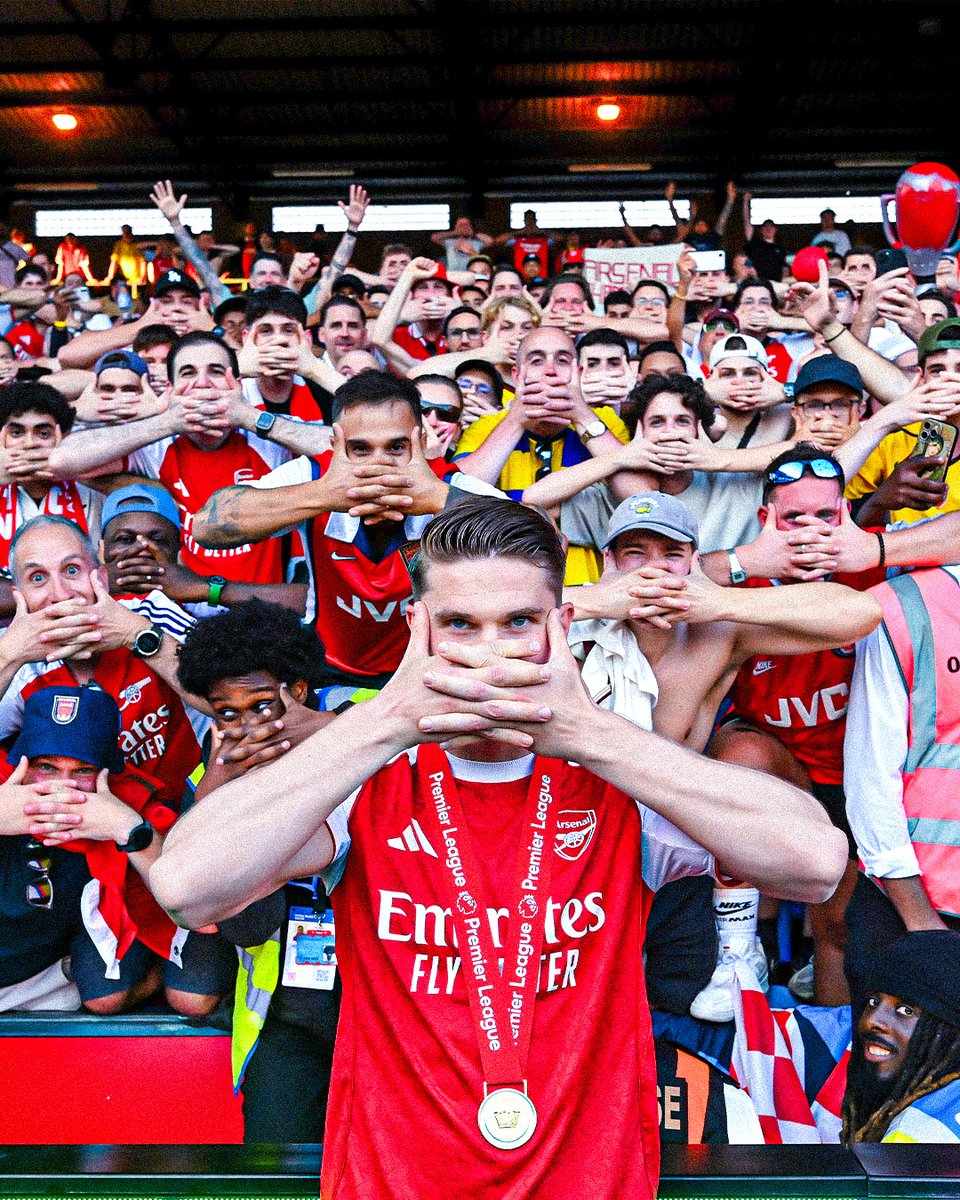
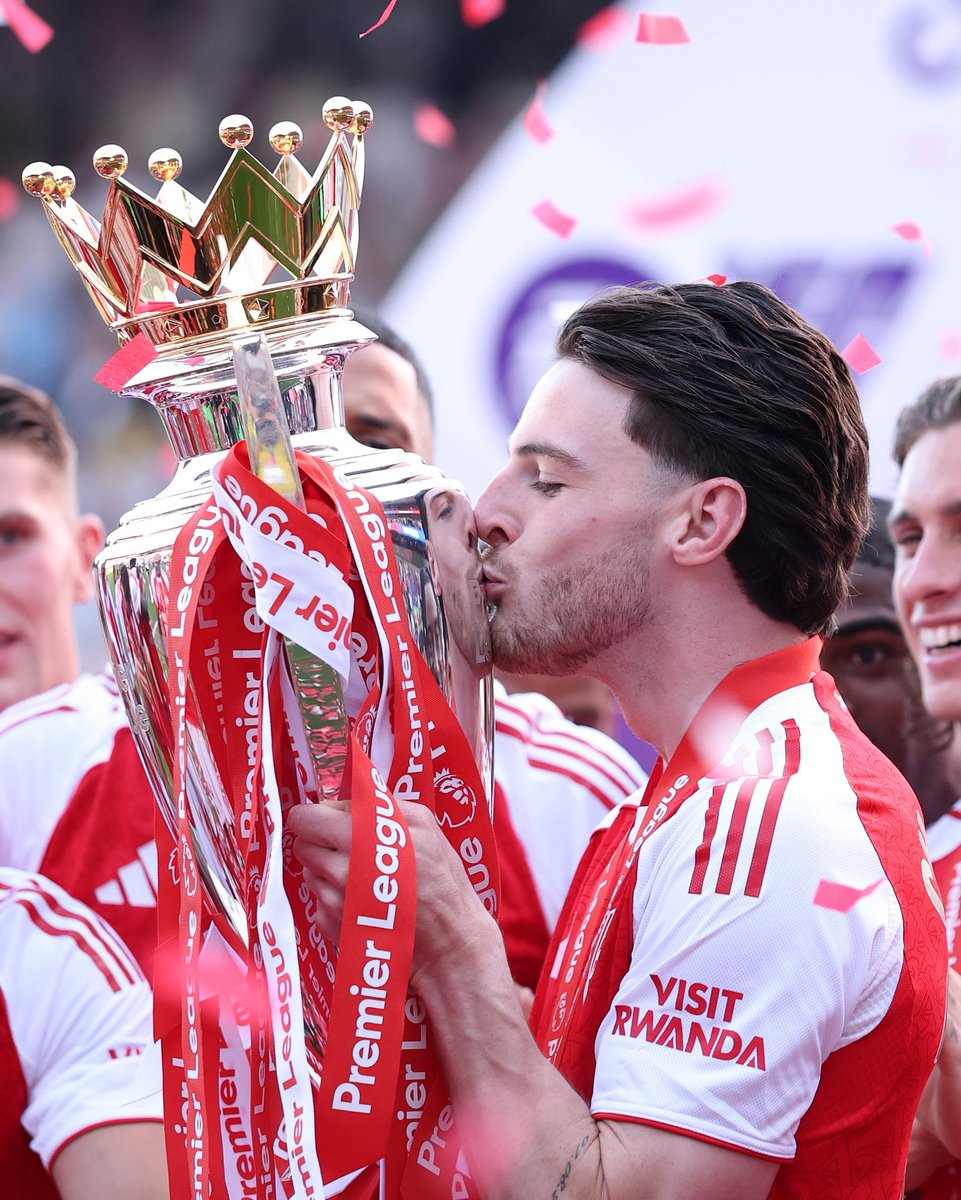
The Empire State Building shines red and white tonight in celebration of @Arsenal’s Premier League Title and trophy celebration.
See the lights live: https://t.co/iavtXSm3Fx
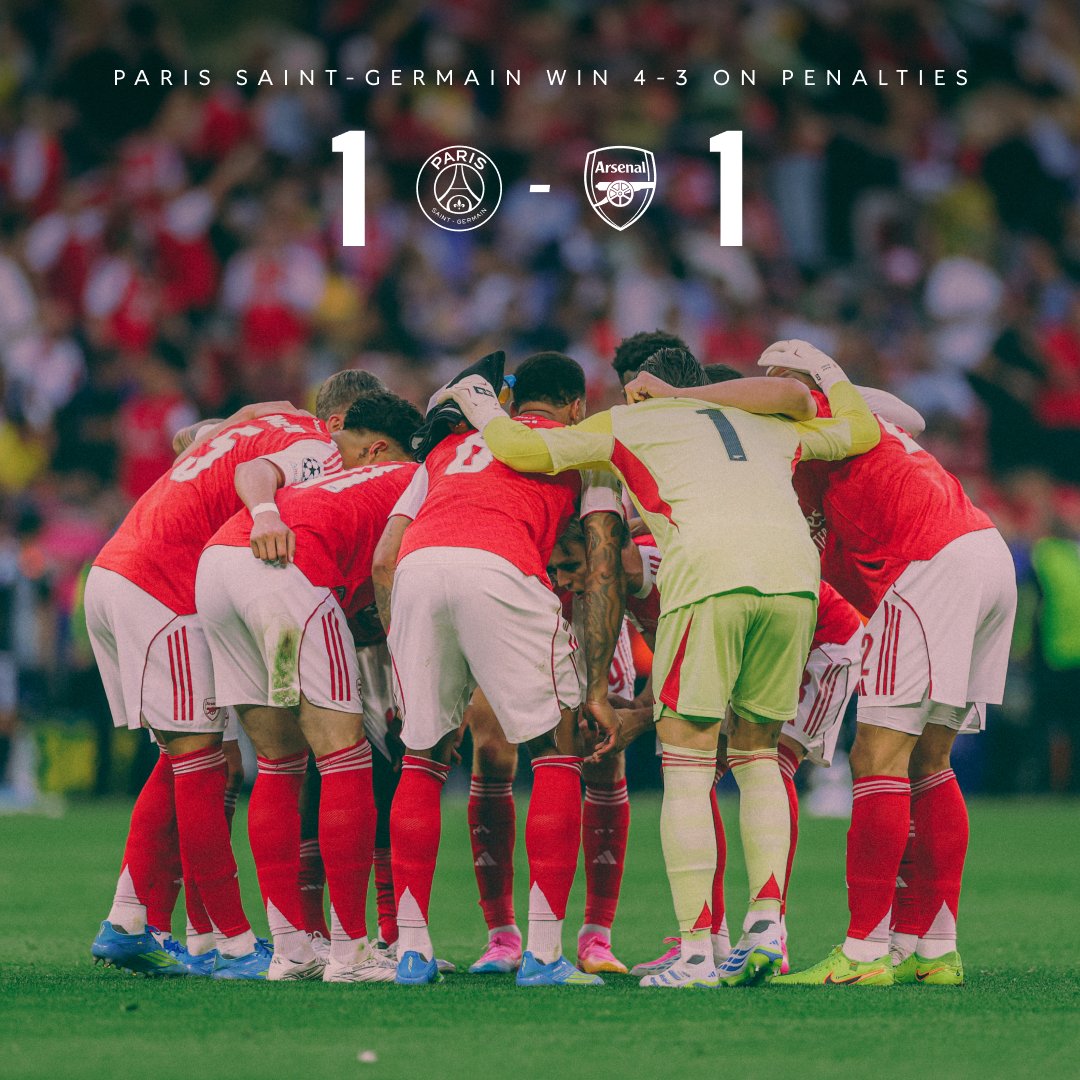
🗣️ Declan Rice to TNT on losing the #UCL Final. "It's a lottery. Some of the best teams ever have lost on penalties in finals, and we were on the receiving end.
"We win and lose together, and I am so proud of these boys. What a season! I am gutted, but trying to keep a little perspective of where we started in July and where we are now. We'll be back.
"[On Gabriel and Eze], we love them and we are with them. It happens in football. They won't be the last players to miss penalties in finals, and without those two we wouldn't have won the Premier League.
"Gabriel, I have run out of words for him as a player and with Eze, he's got crucial goals for us this season. It's cruel, but we'll take the positives and keep going."
Arsenal's UCL Trajectory
📈 2023/24: ¼-finals
📈 2024/25: ½-finals
📈 2025/26: Final
The progression is undeniable. Trusting the process means knowing the next step is glory. One winner next season, & it's Arsenal. Proud of this season's performance. Europe, we'll be back. 🔴⚪️🏆
Three men lost their lives on Monday protecting their community.
Amin Abdullah, the security guard and father of 8, stood in front of the gunmen so 140 children could hide.
Mansour Kaziha, a pillar of the mosque for nearly 40 years, called 911.
Nader Awad ran toward the danger to draw the shooters away.
They were fathers, husbands, pillars of their mosque. They chose others over themselves.
Our hearts are with their families and the entire Muslim community of San Diego.
Islamophobia kills. This is not a debate. It’s reality.
🤍 Innā lillāhi wa innā ilayhi rājiʿūn
The spreading shadow of violence across Nigeria has breached the borders of the South West, turning a once stable region into a landscape of fear. From the harrowing mass abduction and tragic killing of an educator in Oyo State to the increasingly perilous highways of Ekiti, Ondo, and Ogun, the normalization of terror is taking root. This security collapse raises serious questions, especially since the Amotekun Commanders across the South West collectively maintained in 2025 that the region's forests would never be allowed to serve as permanent hideouts or bases for criminals, also South West Governor's forum stated that there was "no empirical evidence of bandits in the South West, but security measures are being strengthened to prevent any incidents". How then did heavily armed bandits penetrate these heavily guarded corridors so deeply, rendering our spaces entirely unsafe for everyday citizens?
To the Executive Governors of the region, the title of "Chief Security Officer" must cease to be a mere protocol ornament. You are the Number One Citizens of your states, bound by a sacred constitutional covenant to protect the lives and livelihoods of your people. Standard press releases of condemnation and reactive condolences are no longer acceptable, we need actions. When citizens cannot farm, travel, or send their children to school without the looming threat of death, the fundamental contract between the government and the governed is entirely broken.
True leadership demands immediate, proactive coordination. Governors must take absolute charge of their internal security by sitting down with their state Commissioners of Police (CP) to directly engage the Inspector-General of Police (IGP) and open up every other necessary channel. It is time to enforce a unified front where the police, military, local security outfits, and indigenous intelligence networks seamlessly come together to systematically secure our forests from external forces. History will judge your tenures not by the infrastructure you build, but by how fiercely and effectively you unite these forces to defend the human lives meant to utilize them.






![JacobsBen's tweet photo. 🗣️ Declan Rice to TNT on losing the #UCL Final. "It's a lottery. Some of the best teams ever have lost on penalties in finals, and we were on the receiving end.
"We win and lose together, and I am so proud of these boys. What a season! I am gutted, but trying to keep a little perspective of where we started in July and where we are now. We'll be back.
"[On Gabriel and Eze], we love them and we are with them. It happens in football. They won't be the last players to miss penalties in finals, and without those two we wouldn't have won the Premier League.
"Gabriel, I have run out of words for him as a player and with Eze, he's got crucial goals for us this season. It's cruel, but we'll take the positives and keep going."](https://pbs.twimg.com/media/HJl3PwEXEAQGzvP.jpg)