@AvivTamar1@OdedRechavi Fool it in what way? fool it to hide the fact it was written with AI, I agree. But if you mean fool experts by polishing bad ideas into a wow proposal, we are not there yet, at least in the life sciences. If AI can help come up with a great ideas to include, I see no prob there.
@KarinaYaniv@OdedRechavi which software? All the ones I've tested totally failed with tests I've made. Id like to test.
Frankly, surprised by your confidence in you or software able to reliably know use of AI. Again, we need to distinguish between AI-junk and its use as super-thesaurus or grammarly.
@KarinaYaniv@OdedRechavi I've been reviewing papers and grants for years and I definitely know i can't tell. You need to distinguish between text written exclusively by AI and full written text polished by AI.
@AvivTamar1@OdedRechavi No! Integrity doesn't hinge on accountability. Accountability and transparency help to weed out those without integrity over time. But assuming higher dishonesty in grants due to lack of transparency seems unlikely to me. Regardless, is AI fueling a dishonesty tsunami? Doubt it
@AvivTamar1@OdedRechavi The system depends scientific integrity, obviously. Are you saying that AI makes it so easy to fabricate data that scientific integrity will collapse?
@KarinaYaniv@OdedRechavi Oh in fact - really? Based on?
There already penalties for failed proposals not ranking highly. So, no the system isn't new, just harsher. Proposals in most institutions are screened and often reviewed prior to submission. No way what you describe is real.
@OdedRechavi They already have a cap of discussed proposals (44) per panel that are selected on the basis of Part 1 of proposal. So they are saying they cant even handle that?
@AvivTamar1@OdedRechavi Grants are very much based on real results. It is often argued that the amount of these preliminary results expected now by panels and reviewers is unrealistic - to the point grants are being submitted whose planned experiments are mostly already done.
A story that started before the lab moved to @EntomologyHUJI. Great to finally have this out. Challenging Y chromosome genomics and genetic engineering led by @roccodamato83, Elad and Alessia.
New preprint! 🦟🧬 We describe draupnir, the only Y-linked gene transcribed during meiosis in Anopheles gambiae and test whether its regulatory sequences can drive expression from the Y chromosome to power a sex-ratio distorter.
https://t.co/eMgG83REKx
New preprint! 🦟🧬The key to engineering daughter-killing in mosquitoes isn't what X-linked gene you target with CRISPR. It's when during sperm development you cut it. X-poisoning in Anopheles at last. https://t.co/qZ9FhfgmHw
מכון וולקני אחראי על מחקר יישומי לטובת חקלאות ישראל, מסחור והפצה של תוצרי המחקר הוא יעד חשוב ומרכזי בליבת הפעילות.
אני רואה בתפקיד, ובהצטרפות לשרות הציבורי, שליחות וציונות. זהו תפקיד המאפשר תרומה, הלכה למעשה לסקטור החקלאי הישראלי ולהצלחתו דרך מסחור הידע שקיים ומפותח במכון וולקני.
@Fredros_Inc Why does this have to develop into a conflict? The PIs raise the funds for student income from external grants and funders, and this depends and requires a record of published research. Papers are important for the development of all authors, and for science in general.
@Fredros_Inc That sucks. 3 papers is a big ask when calculating costs, especially if its mandated that pub is oa without funding support. Would posting on an archive and not pay for open access be work-around?
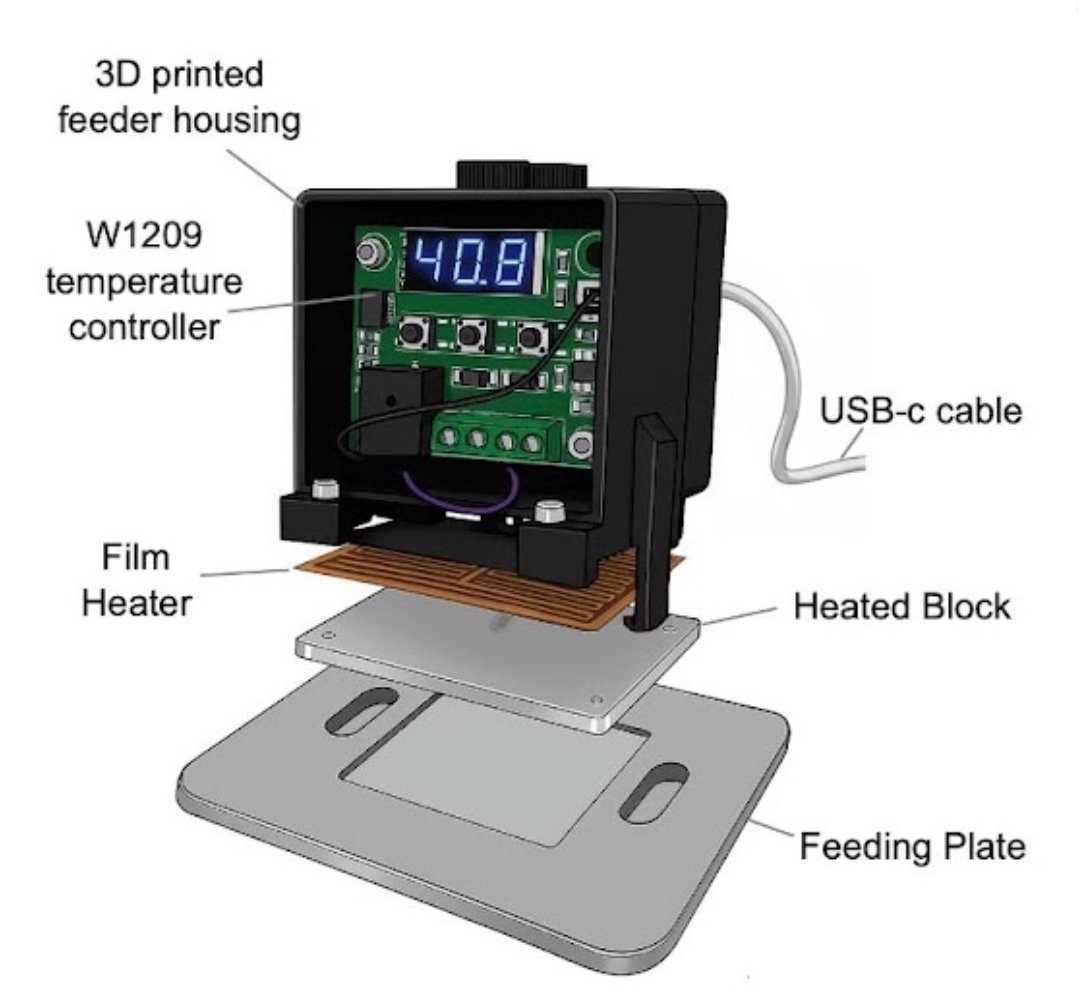
Our latest work with @DipteraAI out now on @biorxiv. We built an open, cheap and accessible mosquito membrane feeder 🦟⚙️. 3D-Feedies have been a game changer in our insectaries. Hope you'll give it a try:
https://t.co/xwXOTZq99f
The OpIE2-DsRed marker disrupts blood-feeding in female #Anopheles gambiae #mosquitoes by bending the proboscis. A tweaked OpIE2-b promoter fixes it. Check it out:
https://t.co/M5KXpEgCSn