I wrote a critical response to Rainer Mühlhoff’s new book on AI and fascism for @jacobinmag_de. In short, I argue that Mühlhoff lumps together very different ideologies and, as a result, fails to recognize the causes of the tech elite’s rightward turn.
Der Bestseller des Philosophen Rainer Mühlhoff warnt vor einem neuen KI-Faschismus im Silicon Valley. Doch wer erklären will, warum die Tech-Elite wirklich nach rechts rückt, sollte Cyberlibertarismus und Neoreaktion nicht in einen Topf werfen.
https://t.co/FD24hcWGN7
Der Bestseller des Philosophen Rainer Mühlhoff warnt vor einem neuen KI-Faschismus im Silicon Valley. Doch wer erklären will, warum die Tech-Elite wirklich nach rechts rückt, sollte Cyberlibertarismus und Neoreaktion nicht in einen Topf werfen.
https://t.co/FD24hcWGN7
Furthermore, bureaucracies have a serious epistemic downside that manifests even under favorable conditions: the fragmentation of knowledge across specialized roles undermines understanding. Yet, understanding is not always crucial for their epistemic success overall. 3/3.
Bureaucracies can efficiently organize knowledge production on a large scale, yet are associated with serious epistemic shortcomings. I try to explain how both can be true in my forthcoming Synthese paper, »The Social Epistemology of Bureaucracies«. 1/3. https://t.co/ZBLc1sLnqQ
On the one hand, bureaucracies *can* produce and distribute knowledge quickly and reliably, but only under certain ideal conditions (e.g., negligible conflicts between roles and interests, efficient communication technology, and a relatively stable environment). 2/3.
Mills underestimates the extent to which Marx’s criticism is indexed to a specific historical situation that arguably no longer obtains today because we find ourselves in a situation of theoretical crisis. 6/6.
I haven’t yet posted about a paper of mine that came out in Inquiry last year: »Non-Ideal Theory as Ideology«. Here’s a quick overview. 1/6. https://t.co/SrFd7cHzXn
I also show that Mills’s interpretation of Marx is untenable for a related reason. The young Marx is not hostile to ideal theorizing per se, but criticizes both ideal theorizing and non-ideal theorizing as insufficient political strategies in the Europe of the mid-1840s. 5/6.
I think the paper exposes some general methodological weaknesses of contemporary natural theology because it shows that it’s not feasible to argue for God’s existence simply by comparing naturalistic atheism with a very specific form of theism.
https://t.co/lhXPhNNbbM
I have a new paper out: ›Natural Theology and Divine Freedom‹
The basic idea: You cannot both maintain (1) that there are a posteriori arguments for God’s existence that make it rational to believe that He exists and (2) that God always has the freedom to do otherwise.🧵
This is a problem for Richard Swinburne and William Lane Craig but it’s no reason to worry for Averroës, Avicenna, Spinoza, and other philosophers who deny (2) that God always has the freedom to do otherwise.
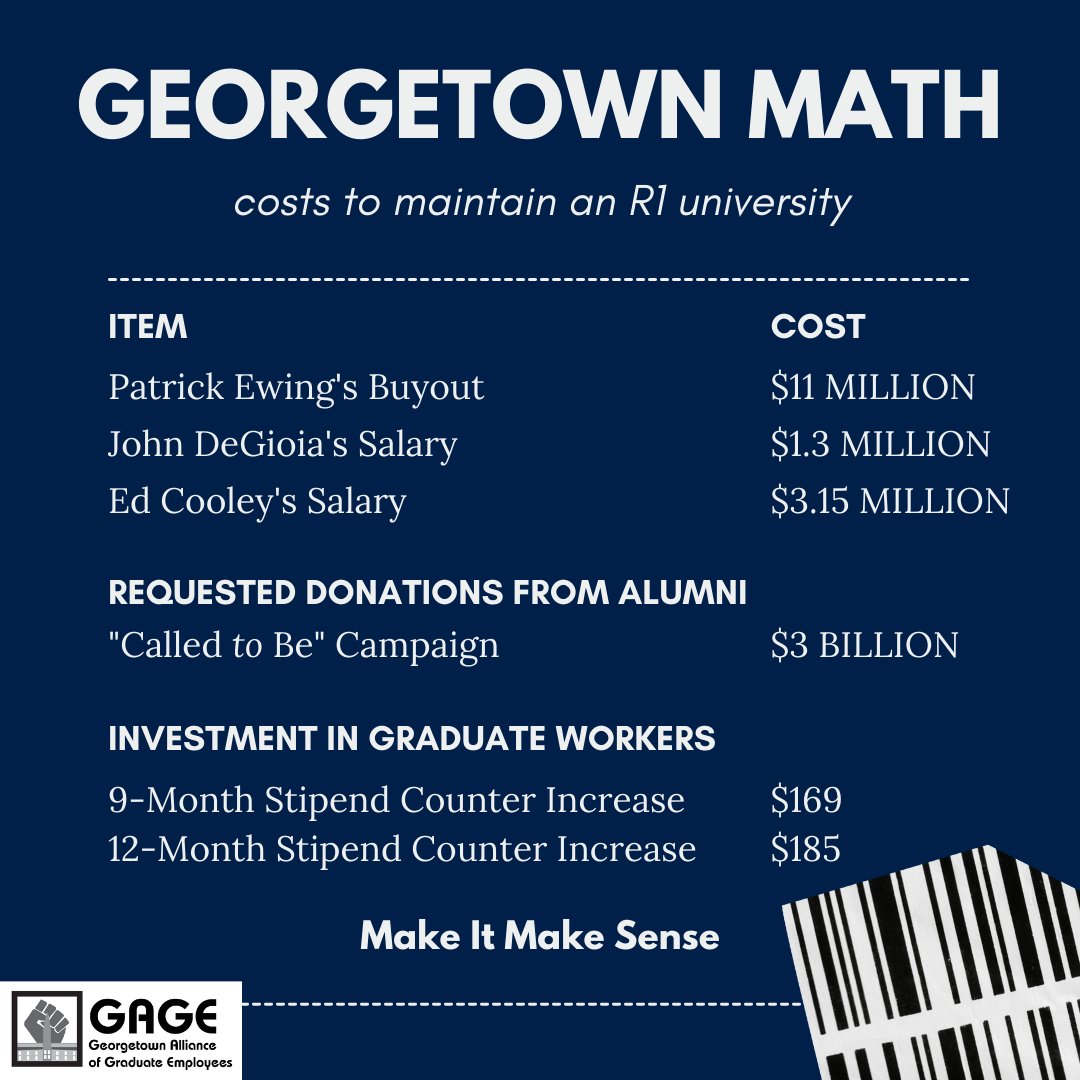
Today, @Georgetown provided another insulting counter at the bargaining table, only offering to raise 9-month stipends an additional $169 and 12-month stipends an additional $185.
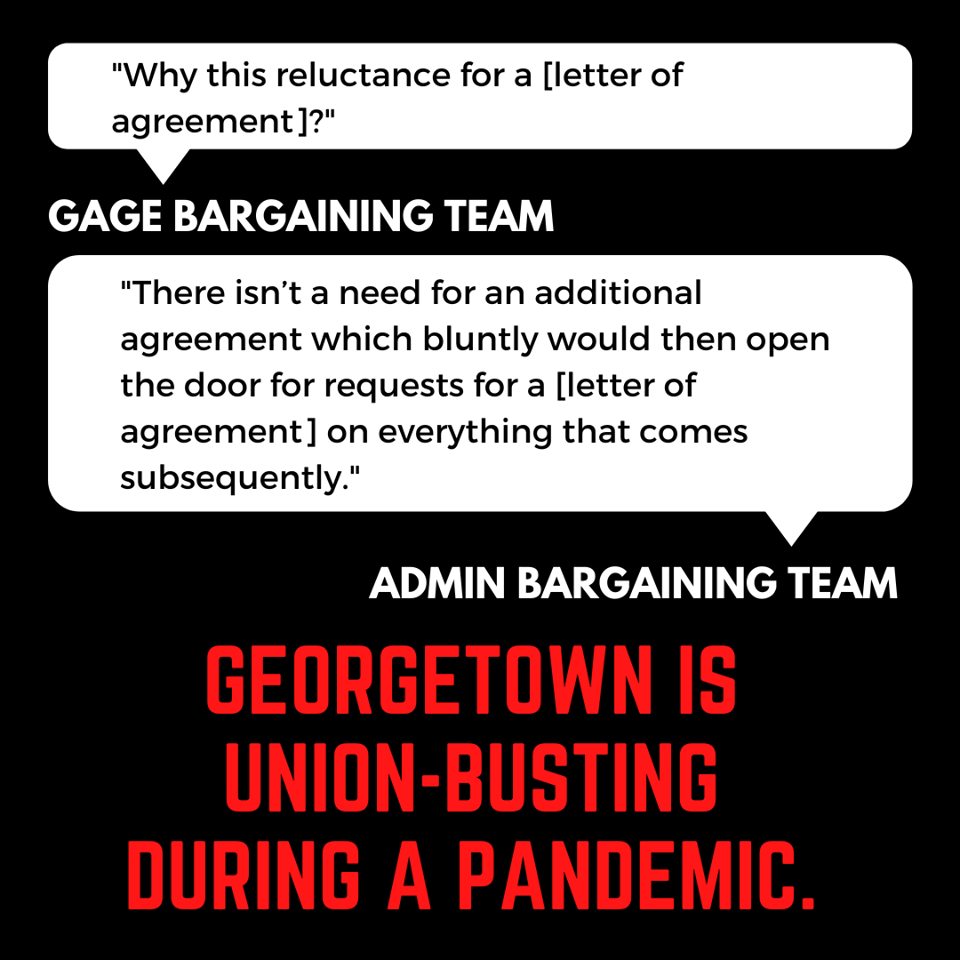
@Georgetown's bargaining team refused good-faith negotiations and instead insisted that non-binding alterations to university policy should meet our needs-- therefore denying that there is a need for us to bargain, despite our right to do so. #GUunionbusters