@TonandDK I agree with you. The analysis above assumes that Google and Tesla will dominate the AV market, but there are and will be many other players entering the field. At the end of the day, people just want an app that gets them from A to B as cheaply as possible.
Interesting stat of the day!
Another signal that major US indices might be nearing their top. The massive run on AI stocks is heavily driving this recent capital influx into US equities.
Shocking stat of the day:
Foreign purchases of US equities are up to a record ~$850 billion over the last 12 months.
This figure has more than QUADRUPLED since the start of 2025.
This is also ~450% above the average recorded during since 2000.
As a % of total equity market cap, foreign purchases are up to ~1.3%, the highest level since the post-Financial Crisis recovery in 2010.
By comparison, the 2021 meme stock frenzy peak was ~1.1%.
Foreign demand for US equities has never been stronger.
Strictly speaking, 95% of them aren't investors at all, but rather gamblers, just like in a casino. They buy something on the financial market simply because they heard about it somewhere else. A real investor does their homework and acts with informed knowledge.
The margin of time
Most investors believe the margin of safety is simply buying a stock below intrinsic value. That’s true, but it’s also incomplete. The greatest investors understand that a margin of safety is far more than just a discount.
The irony is that many investors become so obsessed with paying the perfect price that they completely miss extraordinary businesses. They spend years waiting for a stock to fall another 10% or 20%, only to watch it compound fivefold without them. They didn’t lose because they overpaid. They lost because they never owned greatness.
The market doesn’t owe you your price. It doesn’t know what price you wrote on your watchlist, and it certainly doesn’t care. Sometimes your limit order is simply evidence of stubbornness disguised as discipline.
This is where I think many investors misunderstand the margin of safety. There isn’t just one. There are at least four. There is a margin of safety in price, in the quality of the business, in management, and perhaps most importantly, in time.
An extraordinary business has its own built in margin of safety. Great management can recover from mistakes, dominant competitive advantages can withstand recessions, and high returns on capital create value year after year. Those qualities protect investors in ways a cheap price alone never can.
A mediocre business selling at half of intrinsic value may actually have less margin of safety than an exceptional business selling at a premium. Why? Because intrinsic value itself may be shrinking. Cheap is not the same as safe.
Time may be the greatest margin of safety of all. If a business compounds intrinsic value at 20% or 25% for decades, time has an incredible ability to erase valuation mistakes. Paying somewhat too much for a phenomenal business often produces a far better outcome than buying an average business at an enormous discount.
That doesn’t mean valuation doesn’t matter. It absolutely does. Paying less is always preferable to paying more, all else being equal.
The ideal investment isn’t simply a wonderful business. It isn’t simply a cheap business either. It’s the rare moment when an extraordinary business temporarily becomes available at an extraordinary price.
Those opportunities are uncommon. They may not appear every year, and sometimes they don’t appear for several years. Investing isn’t about finding dozens of bargains. It’s about recognizing the handful that can truly change your financial future.
You don’t need fifty successful investments. You probably don’t even need ten. Two or three extraordinary investments held for a very long time can create more wealth than a lifetime of constantly chasing average opportunities.
Think about Berkshire Hathaway decades ago. Think about Walmart in the 1980s, Microsoft in the 1990s, Amazon after the dot-com crash, or MercadoLibre during periods of fear. Missing dozens of ordinary bargains wouldn’t have mattered very much if you owned just a few businesses like those.
Many investors focus on how much they might lose by paying a little too much. Very few focus on how much they might lose by never owning a great compounder at all. Opportunity cost is invisible, which is precisely why it’s so dangerous.
People celebrate saving 15% on the purchase price. They rarely calculate what it cost them to miss a business that compounded at 20% annually for the next twenty years. Sometimes the biggest investing mistake isn’t overpaying. It’s refusing to pay a fair price for an extraordinary business.
Here’s another interesting thought. A margin of safety can actually grow after you buy. As a great business continues increasing its intrinsic value year after year, the gap between what you paid and what the business is worth keeps widening. With a melting ice cube, the exact opposite happens.
1/👇
The price of optimism
Last night over dinner, a friend and I were talking about stocks and investing. At one point he asked me what I thought about today’s market. My answer surprised him. I told him I’m becoming increasingly neutral / bearish because truly attractive opportunities have become remarkably difficult to find.
The interesting part is that I don’t think businesses have become worse. In many cases they’re better than they’ve ever been. Revenue is growing, margins are expanding, and management teams continue to execute well. The problem isn’t the businesses. The problem is the expectations.
I think one of the biggest misconceptions in investing is that the stock market prices businesses. It doesn’t. It prices expectations about businesses. The stronger the story becomes, the less attention investors pay to the mathematics.
Every bubble in history began with a story that was at least partially true. Railroads changed America. The Internet changed the world. Artificial intelligence will almost certainly transform countless industries. The story is often correct but the investment often isn’t.
Investors frequently confuse a wonderful business with a wonderful investment. Those are not the same thing. A wonderful business purchased at an irrational price can produce years of disappointing returns, while an ordinary looking business purchased with enough pessimism already reflected in the valuation can become an extraordinary investment.
Perhaps one of the simplest investing principles ever spoken remains one of the most valuable: be fearful when others are greedy, and greedy when others are fearful. Most people remember the quote. Far fewer stop to ask what greed actually looks like in practice.
Greed doesn’t always look like euphoria or reckless speculation. Sometimes it looks like complete certainty. It looks like believing a company can do no wrong, that every quarter will exceed expectations, and that valuation no longer matters because “this time is different.”
Just look around this platform. How many people are posting their portfolio gains? How many conversations revolve around risk instead of upside? How many investors are asking what assumptions are already embedded in today’s price instead of simply projecting higher revenues, higher margins, and higher stock prices?
One of the most dangerous habits in investing is asking only what a business could become. That’s an interesting question, but it isn’t the most important one. The more important question is what today’s price already assumes the business will become.
Every stock is simply a claim on tomorrow. The question isn’t whether tomorrow will be wonderful. The question is how much of tomorrow has already been sold to today’s investors.
I think optimism itself has become an asset class. Investors aren’t simply buying businesses anymore. They’re paying increasingly higher prices for increasingly optimistic assumptions about those businesses.
Eventually reality catches up. It always does. Not because reality necessarily became worse, but because expectations drifted beyond what reality could reasonably deliver.
One lesson that took me years to appreciate is that every dollar you invest has two jobs. The first is to own a great business. The second is to avoid paying so much for it that even exceptional execution produces mediocre returns. Most investors obsess over the first job while almost completely ignoring the second.
The irony is that great businesses are not particularly rare. Underpriced great businesses are. That’s why investing is often less about discovering exceptional companies than having the patience to wait until exceptional companies become temporarily unpopular.
1/2👇
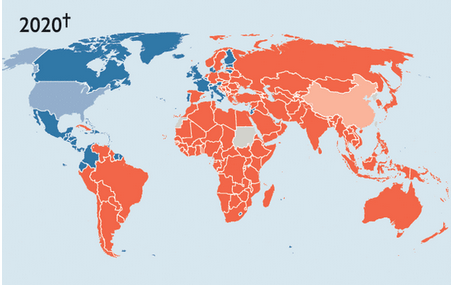
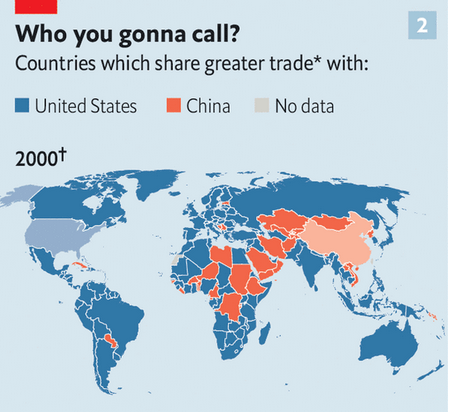
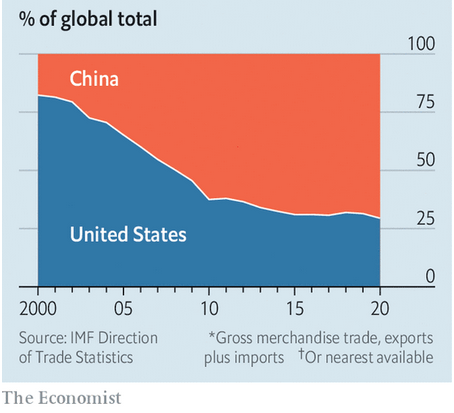
China is (by far) main trading partner for (vast) majority of countries in the world - US's global economic clout diminishing fast as China takes on market shares
#BREAKING:
WTI #oil settles at $60.19 a barrel, down for a 10th consecutive day -- the longest streak of daily losses since the contract was launched 35 years ago.
#OOTT#OPEC#SaudiArabia#Permian
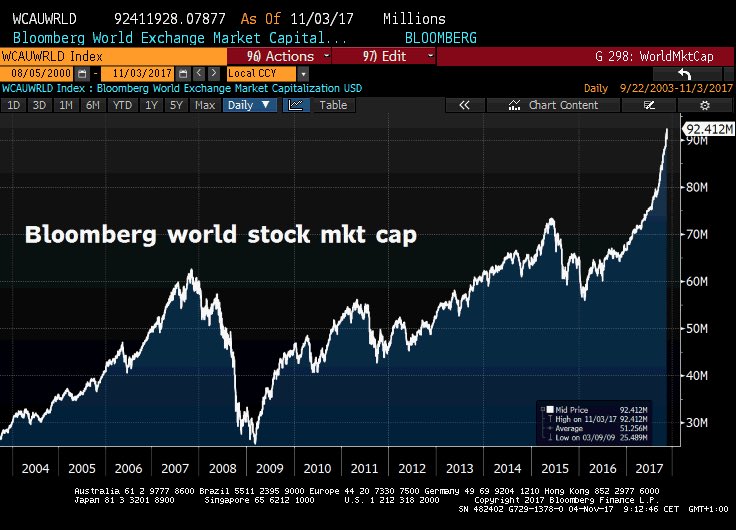
Global mkts have lost another $2tn in mkt cap in this week's rout as investors reacted heavily to multiple high-profile 3Q results misses as well as fairly tepid batch of global macro data. Since Jan high, global stocks lost $15tn in value, equal to combined GDP of Eurozone & UK
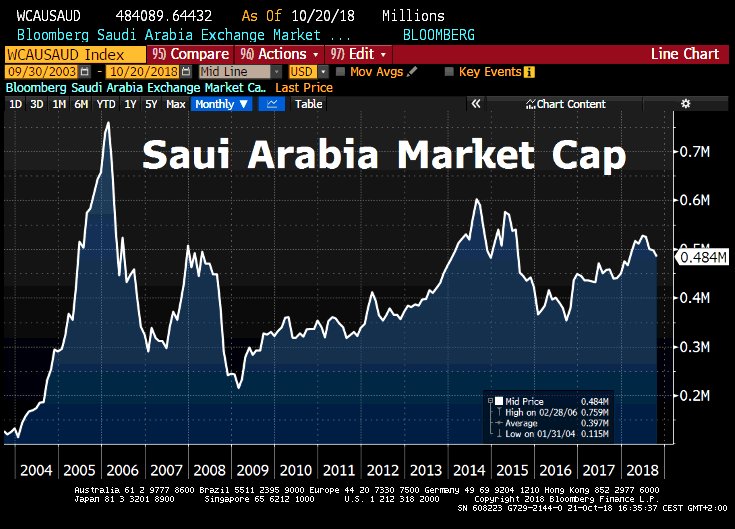
International investors back away from Saudi Arabia. Fund managers pull $650mln from country’s equity market after Jamal Khashoggi’s death, damping Saudi ambitions to move away from its heavy reliance on domestic investors. https://t.co/eKqzbFg7eg