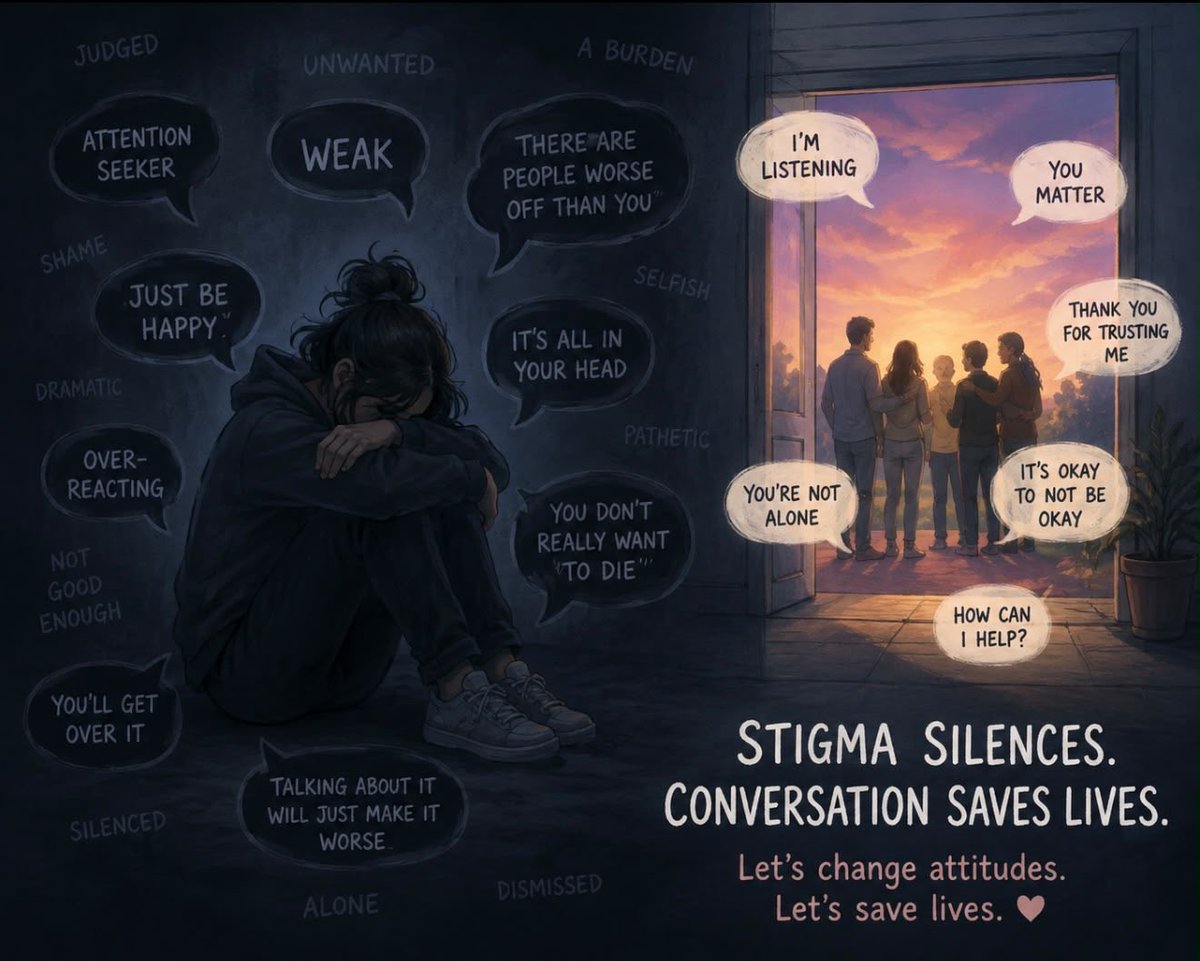
And we need to encourage help-seeking among them by reducing the stigma of suicide. Please sign my petition #signagainstsuicide
https://t.co/2SOcCGct2R
Good to see an attempt to understand why highest suicide rates are in middle-aged men.
What is driving this?
Economic factors - highest rates began after 2008 recession.
Alcohol - a policy blind spot for successive Govts.
Physical ill-health, isolation, offenders.
We often stress the need for services to reach suicidal men who don’t know where to turn.
But many men in crisis are already within reach.
We found 2/3 of middle aged men who died by suicide had contact with services in previous 3 months, 1/3 in past week. @NCISH_UK#WSPD26
@YvetteCooperMP is legally obliged to act to prevent avoidable suicides from shockingly poor uptake of training in Staying Safe From Suicide. I’m waiting for a reply to my letter.
@Alison_McGovern@DHSCgovuk@NHSEngland
Good to see so many positive messages about #suicideprevention on #WSPD26.
But they should also be tinged with outrage:
That 100 under 18s die by suicide/yr in England
That 1 in 65 male deaths is by suicide
That suicide is the leading cause of death in postnatal women.
It’s #WorldSuicidePreventionDay.
There are a lot of special “days” but this one really matters.
It galvanises new initiatives. It reminds people who are struggling of the support out there.
It is a focus of commemoration for families bereaved by suicide.
#WSPD2026
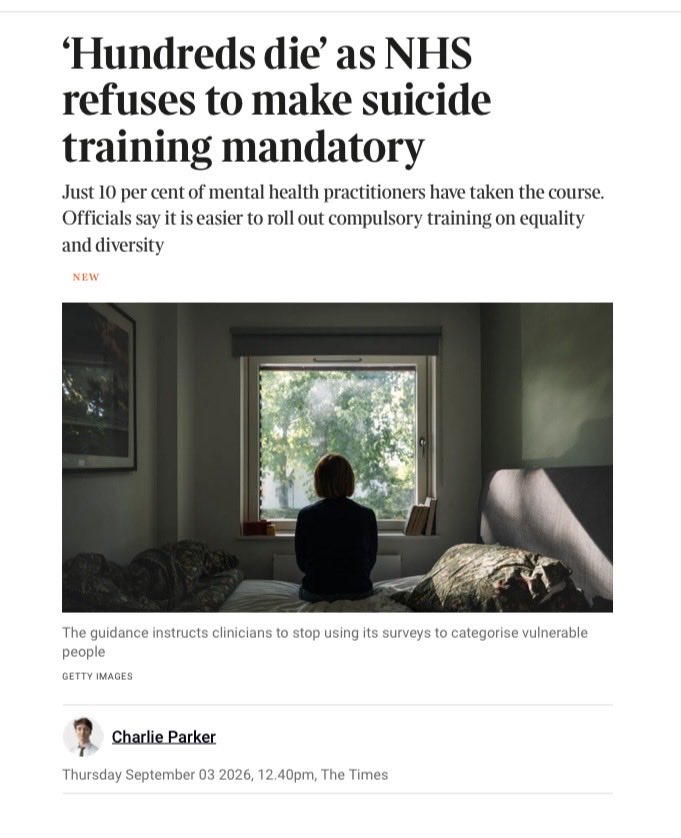
I’m calling for training in Staying Safe From Suicide to be made mandatory. Hundreds of avoidable suicides have taken place because of very poor uptake of training. @YvetteCooperMP@NHSEngland@DHSCgovuk#suicideprevention
The Times reports the hundreds of avoidable suicides taking place because of disgracefully low uptake of training in new NHS England guidance. @andyburnham@YvetteCooperMP
https://t.co/7EmoaOmRCU
Admiration for @philippirie who campaigns and takes action in the face of the most awful loss and pain. His commitment to others, prevention, hope, a better society, stronger economy and effective mental health services, is inspiring. It’s also deeply achievable. @thetimes
Today in The Times I’ve spoken about something deeply personal.
In 2018 my brother Tariq took his own life. He never told anyone, not his closest family and friends, what he was going through. Looking back, we believe stigma was a large part of it.
He isn’t alone. More than 7,000 people die by suicide every year in the UK, and over 70% were not in contact with the mental health services that might have saved them. It remains one of the biggest killers of young people.
I’m supporting this campaign because of Philip Pirie, who lost his son Tom in 2020 and has since rallied experts and politicians around the country to push for change. When he approached me, I was very happy to join forces with him.
Together we’re calling – alongside psychiatrists, charities and MPs from across the political spectrum – for a national public health campaign to reduce the stigma around suicidal thoughts and encourage more people to reach out for help.
Public health campaigns work: we’ve seen it with drink-driving and HIV/AIDS. And the evidence suggests this one would more than pay for itself. Every life saved spares a family unimaginable grief and the country real cost.
Giving people permission to speak saves lives.
If you’re struggling, or worried about someone who is, the Samaritans are there free, day or night, on 116 123.
https://t.co/fyCirbJDro
@nuwandiss@NCISH_UK Seems a backward step. There’s an NHS-wide initiative taking a different, more personal approach backed by patients, academics, clinicians. https://t.co/59XA5LWrhp
We held Tom’s memorial football match in Acton on 27 June. Great turnout on a very hot day, and lovely to see everyone again. Post-match pizzas will be on the menu next year!
https://t.co/oqDAdFFI8p
Very strong words ahead of expected social media ban from @mollyroseorg -
Ian Russell tells us govt is rushing in a blanket ban, rather than more sophisticated controls, under political pressure, in a 'deplorable way'
Talk to public health colleagues this wk. 1st slide on national suicide rate, showing
•long-term fall, culminating in 2007, lowest rate on record
•⬆️ after 2008 recession, the economy always a major driver
•rise in 2018 when standard of proof required at inquest was lowered.