Rand collapsed after the rate increase today. Why? No-one knows.
My theory is: The “failed state” narrative is seeping through to currency & bond markets. Elevating fears that the growing interest burden on gvt debt, coupled with lower revenues, will push SA over the fiscal cliff
If you don't monitor the largest emerging market currencies, worth highlighting that $USDZAR (Dollar-South African Rand) came within a hair of its record high this morning. Aggressive three-day move here (blue bar)
OOPS! Treasury Secretary Janet Yellen said on Monday that the United States could be unable to pay its bills by June 1 if Congress does not raise or suspend the debt limit, putting pressure on President Biden and lawmakers to reach an agreement to avoid a default.
Revealed: Britain's biggest high street lenders including Barclays and Lloyds have been given a 24-hour deadline to rescue Silicon Valley Bank UK as it teeters on the brink of an insolvency process overseen by the Bank of England. https://t.co/EqymU3WBat
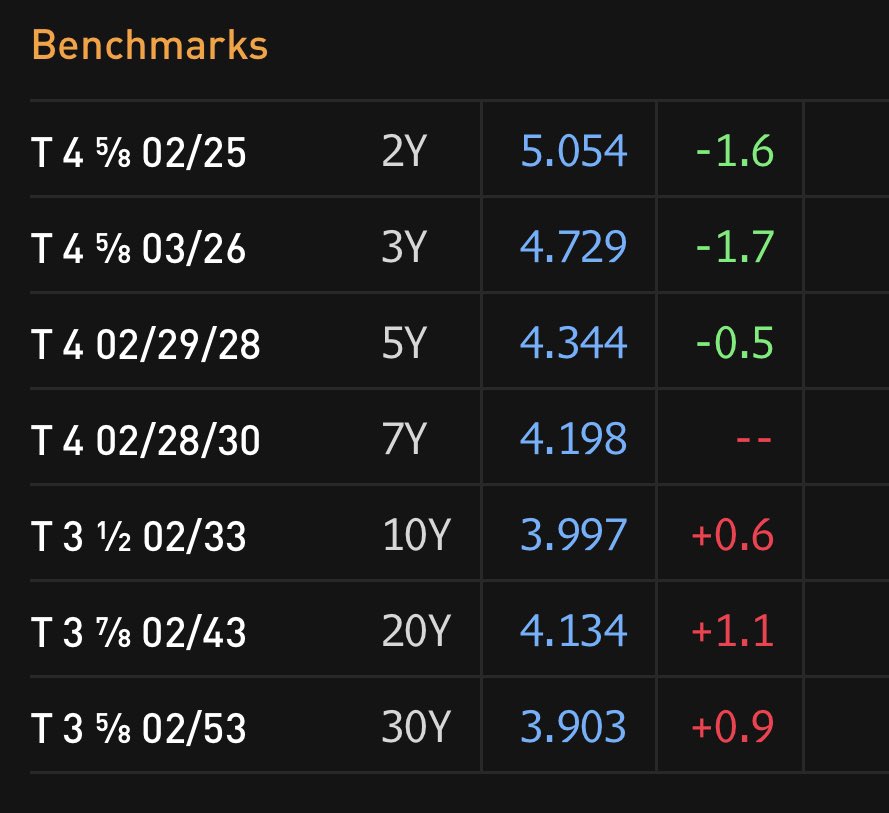
Around 5% for the 2-year and 4% for the 10-year, US yields have settled at what some believe are new and more stable levels.
It’s a hard one to call, however—not only because of considerable economic fluidity but also the significant overlay of monetary policy-induced volatility.
Current market expectations for the path of the Fed Funds Rate...
-Mar 22, 2023: 50 bps hike to 5.00%-5.25%
-May 3, 2023: 25 bps hike to 5.25-5.50%
-Jun 14, 2023: 25 bps hike to 5.50-5.75%
-Pause
-Rate cuts start in Jan 2024 w/ a Fund Funds Rate of 4.2% at year-end 2024.
Greylisting : As with SA's credit rating downgrade to junk, the impact is not evident to most. It’s not like the lights go out immediately.
Rand as usual tells the story: It was the weakest emerging markets currency in the world last week and has lost 8% of its value year-to-date
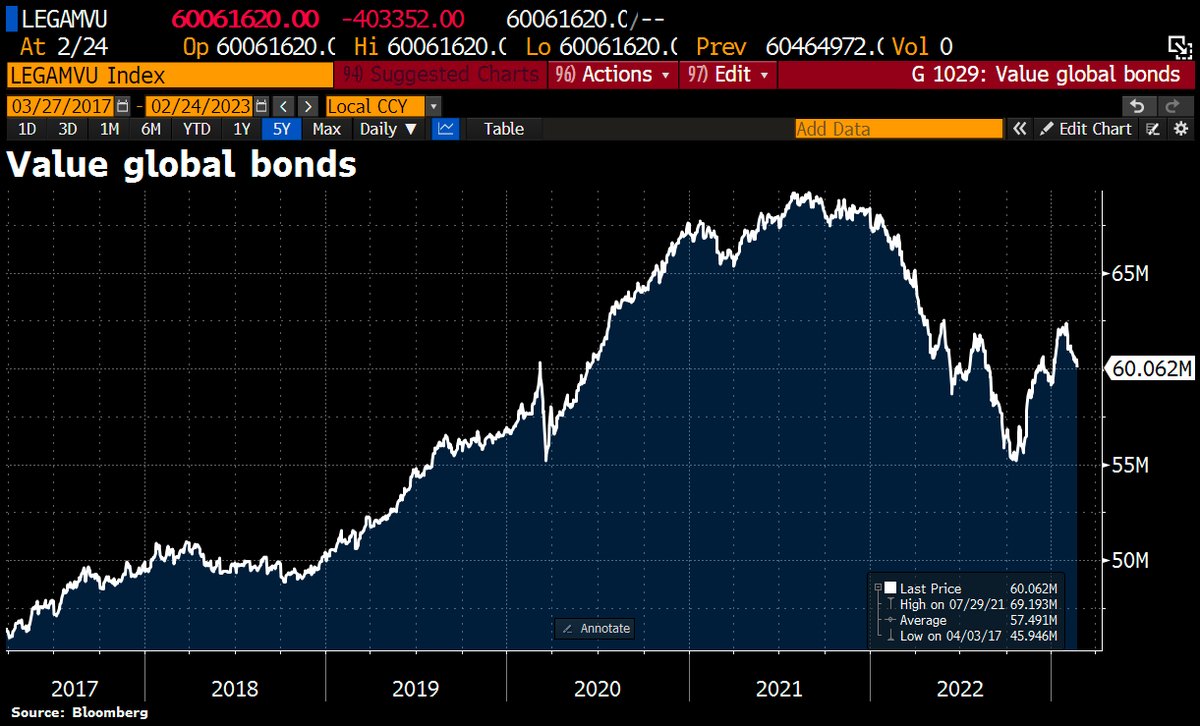
The value of global bonds has plunged by $574bn. This brings the total bond losses over the past 4 weeks to $1.8tn. Almost all gains since the beginning of the year have been wiped out.
Good Morning from #Germany where natural #gas storage rose over the past week to 238.3 terawatt-hours, or 97% full, compared w/5y avg of 89% for this time of year, according to Gas Infrastructure Europe. A week earlier it was 96% of capacity.
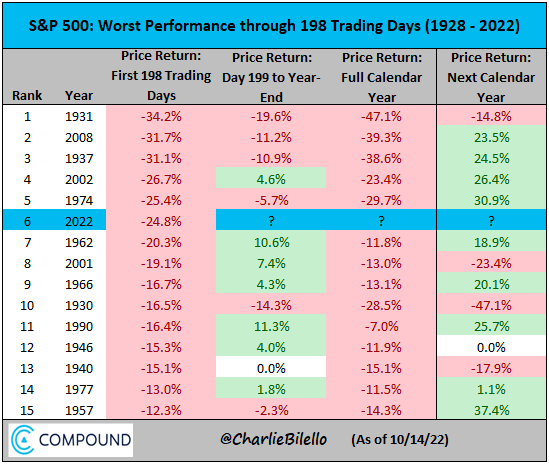
Years in which the S&P 500 was down more than 2022 at this point in time (198 trading days)...
1931 (Great Depression)
2008 (Global Financial Crisis/Recession)
1937 (Recession)
2002 (Bursting of dot-com bubble/Recession in '01)
1974 (High Inflation/Recession)
Last week, #Fed officials signaled more constantly that rates would go higher…not just for longer but also in a faster way. Today’s hot #inflation numbers, both headline and core, reinforce that likelihood and make a third 75 bps hike — historic in several ways — a done deal.
In the latest of his series of interviews with industry veterans, @Scranston talks to @36ONE co-founder and portfolio manager @Cy36ONE about fees, risk management and getting the right team.
#assetmanagement
https://t.co/310Mvxqj6g
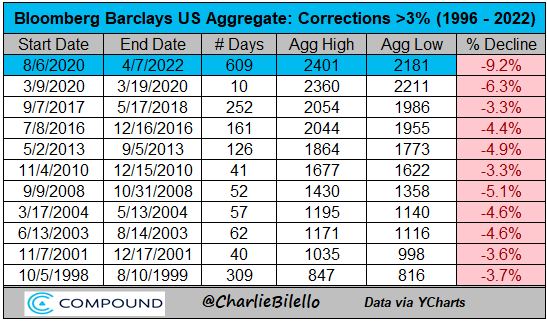
The US bond market is down 9.2% from its peak in August 2020. This is the longest (609 days) and largest correction in bonds that we've seen in recent history.
(note: daily data via @ycharts goes back to 1996)
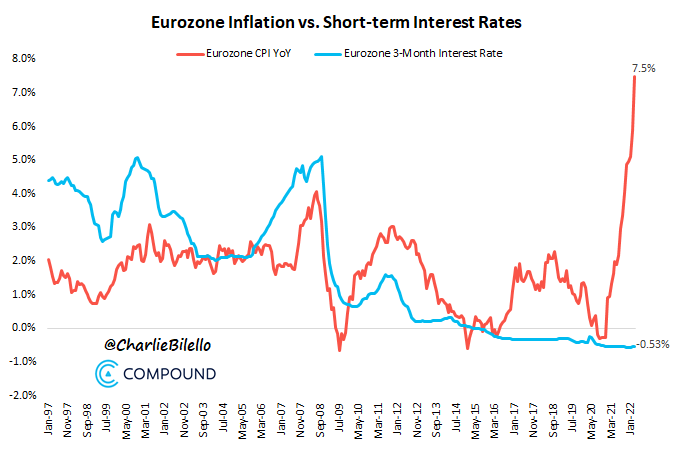
Eurozone inflation has moved up to 7.5%, its highest level ever.
Meanwhile, the ECB is still holding interest rates at negative levels with no plans to normalize.
This is perhaps the greatest disconnect between monetary policy and rising prices that the world has ever seen.