@SamaHoole @Healthdptdegen When I tell my patients I eat carnivore they usually ask, “you don’t eat any vegetables?” My reply is “I eat them everyday. I just let the cow process it into beef.”
Impossible Meat thinks they did something new! Ruminant animals been doing it for millennia!
Public service announcement:
Don't read this while having any kind of beverage unless you enjoy having your drink go up your nose or down your windpipe! 😂😂
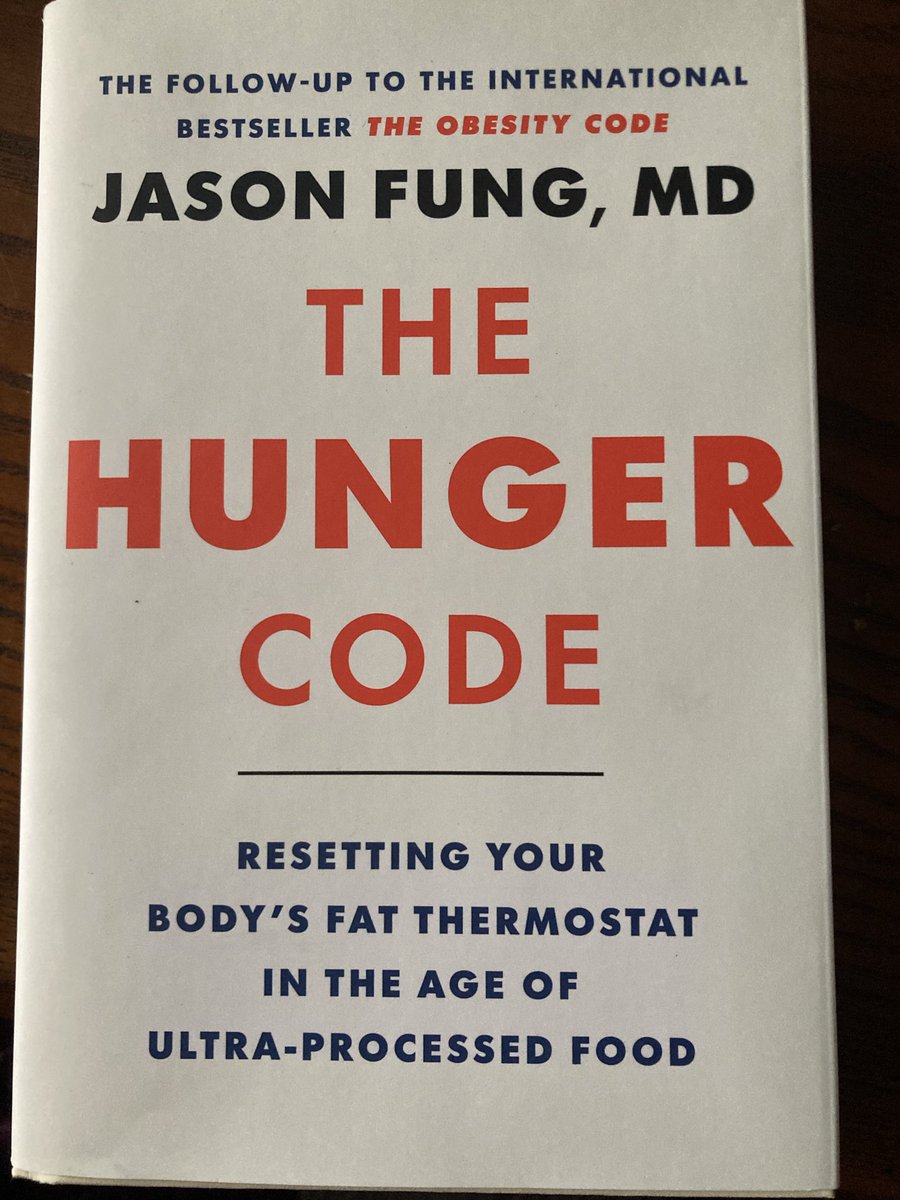
The only thing @drjasonfung does better than explain the science in plain English is make you crack up while he does it. Another home run right here, doc. ⚾️
Some of the sharpest minds in the realm of ketogenic diets have compiled the most authoritative book on ketogenic diets in clinical (and personal) use.
I invite all to click the link and download the entire book for free!
https://t.co/nzPjLtgJQB
@DominicDAgosti2
Let me explain why eating a cow is the most vegan thing you can do, and I'm going to do it slowly, because this deserves savouring.
The vegan eats plants. Admirable goal: reduce harm, tread lightly, don't unnecessarily destroy life for sustenance. Genuinely noble in principle.
The problem is the execution. Because plants, as it turns out, are extraordinarily difficult for humans to extract nutrition from. We lack the multi-chambered stomach. We lack the microbial colonies that break down cellulose. We lack the enzymes that neutralise the defensive chemicals plants produce specifically to stop things from eating them. Oxalates, lectins, phytates, tannins, glucosinolates: the plant kingdom is not defenceless. It just fights differently.
So the committed vegan spends enormous energy trying to eat their way around a biological system that was never designed for them. They soak the legumes to reduce the phytates. They ferment the grains to reduce the lectins. They supplement the B12 their body can't get from plants. They combine proteins carefully because no single plant source is complete. They process, blend, extract, and fortify: and at the end of it, they're still working with a nutritional profile that requires a pharmacy aisle to fill the gaps.
Now enter the cow.
The cow has been solving this problem for 50 million years. It has four stomach chambers specifically designed to extract maximum nutrition from the plants humans can't eat. Its rumen is a fermentation vessel of extraordinary complexity: billions of microorganisms breaking down cellulose, neutralising antinutrients, converting inflammatory plant fats into stable saturated fats through a process called biohydrogenation.
The cow is doing, biologically, what the vegan food industry is trying to do industrially: except the cow does it without factories, without hexane washing, without methylcellulose binders, and without a carbon footprint that requires an offset scheme to paper over.
The cow eats the grass you couldn't eat. On the land you couldn't farm. With a digestive system you couldn't replicate. And it hands you, at the end of this process, the most bioavailable nutrition on the planet. Complete protein. Haem iron. Vitamin B12. Fat-soluble vitamins. Creatine. Carnosine. Zinc. Everything your body needs, in the form your body evolved to use.
You are not eating a cow instead of plants. You are eating a cow *because of* plants. The cow is the plants. The cow is just the plants run through the world's most sophisticated biological processor, upgraded by 50 million years of iterative evolution, available from your local butcher for about a fiver a kilo.
Second-hand veganism isn't a compromise. It's an upgrade.
The vegan eats plants directly, fighting the biology the whole way. The second-hand vegan outsources the plant-eating to a species that was literally built for it, and receives the benefits without the deficiencies.
One of us is working with the biology. The other is working against it. One of us needs supplements. The other does not.
The cow did not ask for your respect. But it has probably earned it.
@MirrorManStanly@SamaHoole I think it is a great reason to stay away from all seed/vegetable oils! If one understands the oxidative stress they induce, it means they should not be in our food supply at all!
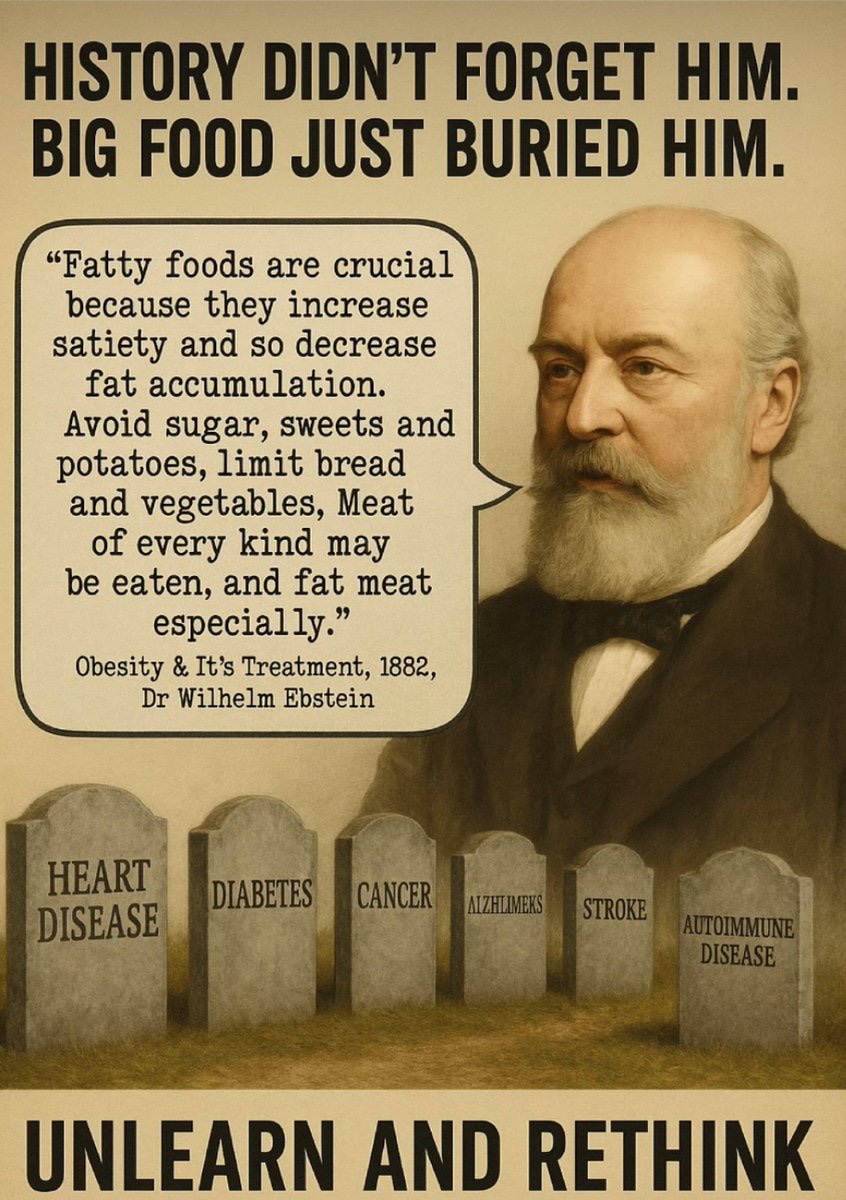
It’s staggering to me how in one breath people will belittle a 144 year old treatment for obesity and in the next, they will gush about a drug that’s been around for about five years and has over 100 possible side effects.
You don’t just need willpower to cut sugar.
You need to spot the 100+ names it hides under.
Food companies use “organic cane juice” and “maltodextrin” to fool you.
But it’s STILL sugar.
Here are 111 hidden names to watch for on labels (and avoid): 👇❌
@SamaHoole I am an ER doc and I just found out from this that I am a “dangerous” doctor. I recommend all those dangerous things frequently. I then tell them, “I want you to be healthy enough to not need to come to the ER.” (Thanks Dr. Philip Ovadia)
Standard American Diet fat sources, 1900:
- Butter: 18 pounds per person annually
- Lard: 12 pounds
- Tallow: 8 pounds
- Seed oils: 0 pounds
Disease rates:
- Obesity: 1.2%
- Diabetes: <0.5%
- Heart disease: Rare before age 70
Standard American Diet fat sources, 2025:
- Butter: 4 pounds per person annually
- Lard: <1 pound
- Tallow: Basically none
- Seed oils: 80+ pounds
Disease rates:
- Obesity: 42%
- Diabetes: 11.6%
- Heart disease: #1 killer
Scientists: "The problem is definitely the 4 pounds of butter, not the 80 pounds of industrial seed oils that didn't exist before 1911."
Sure.
The thing that decreased 77% is causing the diseases.
Not the thing that increased from zero to 80 pounds.
Absolutely.
That's definitely how causation works.
How are you finally vindicated when you stand up to the false narrative?
You trust your clinical data/exerience, endure being called a dangerous conspiracy theorist, idiot, grandma killer while being de-platformed and ridiculed....then after about five years when you are proven correct, those same people will say, "Just get over it and move on."
The satisfaction of this makes it worth every second of the pain, frustration and suffering. 😉
@JMichael_Smith@MaryBowdenMD Third, there needs to be a take back of medicine from corporations. This will require legislative changes to shore up and enforce corporate practice of medicine laws.
1950s Austria: Dr. Wolfgang Lutz is treating patients with standard medical approaches and getting mediocre results. Chronic diseases respond poorly to pharmaceuticals. Patients improve temporarily but don't recover fully.
He starts researching historical dietary approaches and discovers older literature about low-carbohydrate diets. He's skeptical but decides to try it with patients who've failed other treatments.
His protocol: Limit carbohydrates to 72 grams daily maximum, about 6 "bread units." No restriction on protein or fat. Patients can eat meat, eggs, cheese, butter freely. Just keep the carbs low.
The results surprise him. Diabetic patients see blood sugar normalize. Obese patients lose weight without hunger. Patients with inflammatory conditions report dramatic improvement. Digestive issues resolve.
He continues refining the approach over decades. Treats thousands of patients with low-carbohydrate dietary intervention. Finds it effective for diabetes, obesity, inflammatory bowel disease, arthritis, and various other chronic conditions.
1967: He publishes "Leben Ohne Brot" (Life Without Bread) documenting his clinical experience. The book describes case studies, explains the metabolic rationale, and provides practical implementation advice.
The medical establishment ignores it. This is the height of low-fat diet dominance. A physician advocating unlimited fat consumption is heretical.
Lutz doesn't care. He has patient outcomes. He continues prescribing low-carb high-fat diets for the next 40 years. Publishes follow-up research. Documents long-term success with patients staying on the diet for decades.
2000: At age 89, he publishes updated research showing patients who'd been on his diet for 30+ years remained healthy with no adverse effects from high fat consumption.
He dies in 2010 at age 97, still eating low-carb himself, still advocating the approach he'd prescribed for 50+ years.
His work gets rediscovered by modern low-carb movements. The clinical outcomes he documented match what current researchers are finding - low-carb high-fat diets reverse chronic disease.
But we wasted 50 years because his findings contradicted the profitable narrative. He had the evidence. The industry had the marketing budget.