@timbocop So there's almost a sense of being in a synchronous dialogue with the author, even though they wrote their side years before you read it and composed the thoughts that form your side of the dialogue.
@timbocop This also reminds me of when I first read Diana Laurillard's Conversational Framework - I remember thinking some authors write as if they are preemptively conversing with their readers and others seem to be broadcasting with out a thought for their readers.
@timbocop in answer to your question, it would strike me that a student involved in a 2-way conversational dialogue with an AI with immediate responses from both parties is involved in synchronous learning.
@timbocop Does the synchronous vs asynchronous dichotomy stand in for dialogue vs broadcast - with the pretence that synchronous is somehow more dialogic? The whole favouring of lectures (F2F or Zoom) perhaps because they 'could' allow a conversation even if they rarely do?
Join us on Fri 24 June as we hear from @alanjrenwick and explore the recent Citizens’ Assembly on Democracy in the UK.
What might the findings might mean for democratic innovation and governance in Scotland and the UK?
Register free ⬇️⬇️https://t.co/2h3Ds4YqGN
At my next session “Sustainable Futures” @ #UoELTConf22 - I was talking with someone in the break about ‘Resilience’ - I’d be interested to hear the intersections of these two areas being touched on
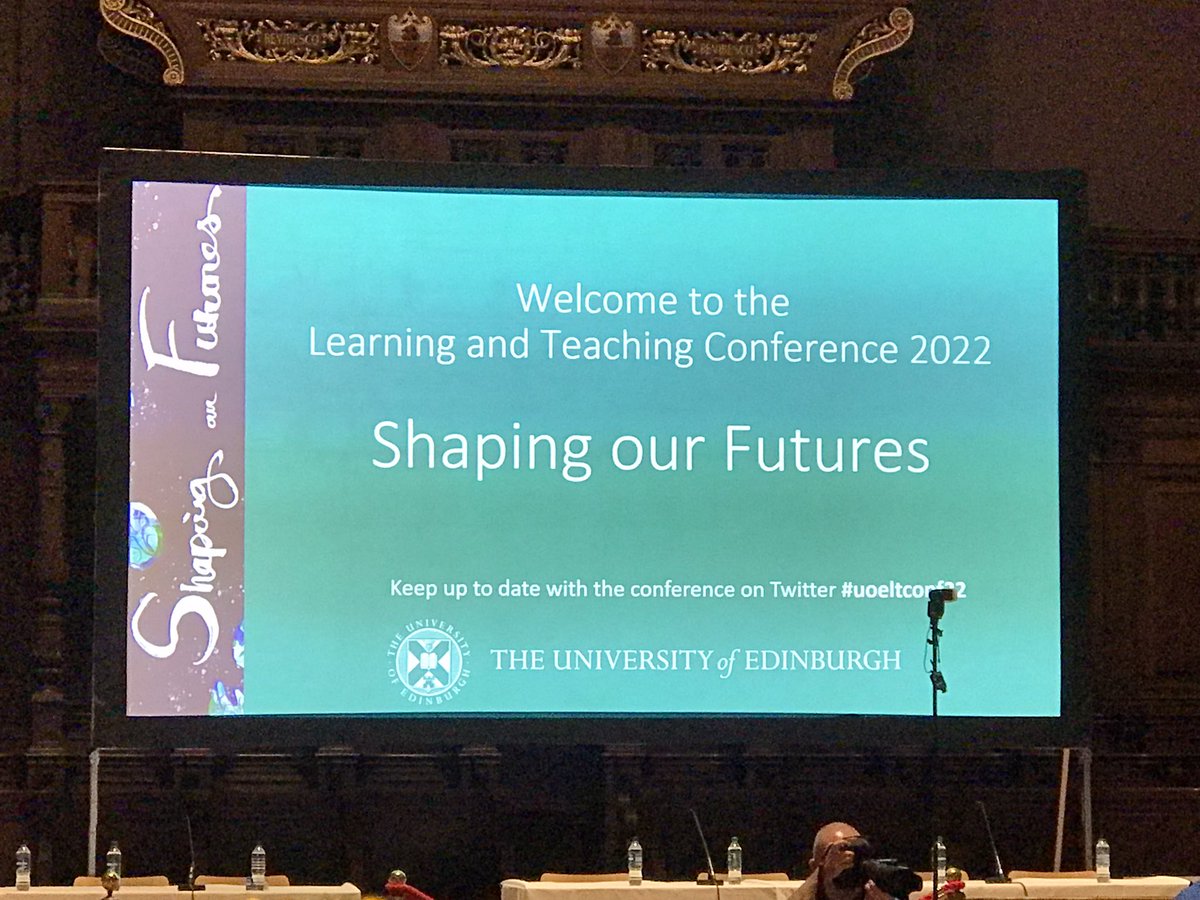
Today’s the big day - welcome to the Learning & Teaching Conference 2022!
The doors are now open for registration for our in-person delegates at McEwan Hall, and the live-stream will begin for our online attendees at 09:00. #UoELTConf22