@AllisonPearson@jimbarrington Don't blanket cover them all as culturally bereft. Many will be if they're from a background that practices mysoginistic tripe, but many will be well brought up and respectful. The wheat and chaff will sort themselves out and we deport the chaff.
Britain has 17.5 million hectares of agricultural land.
65% of it cannot grow a single crop.
Too thin. Too high. Too wet. Too steep. The kind of slope where a tractor becomes a story they tell in the village pub for generations.
It grows grass. Because grass is what evolved to grow there.
The cow eats the grass. The sheep eats the grass.
Your stomach cannot eat the grass.
Take the ruminants off and the food production from that land becomes zero.
Not lower.
Zero.
The ruminant is not blocking a better option.
The ruminant is the only option.
The activist who wants the ruminant removed is not reducing meat consumption.
He is outsourcing it. To Brazilian feedlots on cleared rainforest, shipped six thousand miles in a refrigerated container.
The British hill goes to bracken.
The Amazon goes to soy.
The supermarket label changes from Hereford to Mato Grosso.
This is presented as the ethical position.
It is the most expensively packaged self-deception in modern politics.
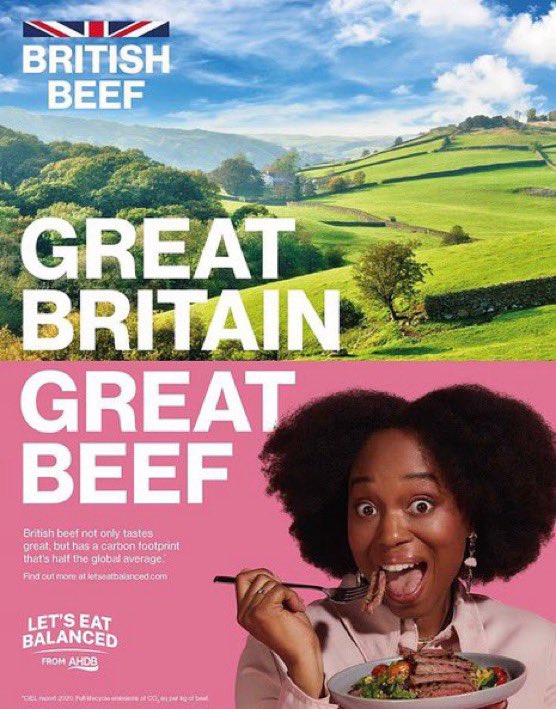
Two adverts by the Agriculture and Horticulture Development Board (AHDB) promoting British beef and milk have been banned by the Advertising Standards Authority (ASA) after television presenter and environmental campaigner Chris Packham complained that they misled consumers about the products’ carbon footprints. Here are the adverts. Support British farmers. Buy British milk and British Beef.
🇬🇧 🥛🥩
A Muslim jihadist cut off the hands of a Christian girl because she refused to marry him and become a sex slave. She managed to escape before he tried to behead her.
This past year, more Christians have been killed in Nigeria than Palestinians in Gaza.
The media remains silent.
@aligreen9999@MoorlandAssoc That isn't borne out in practice, and the potential for wildfire would cause a far more imminent threat without having the manpower to deal with it.
@aligreen9999@MoorlandAssoc That might well be the case but surely you recognise that the MA advocate for practices that actually work to preserve and promote the ecology and health of heather moorland, which includes peat preservation, rather than the lunatic policy practices currently being enforced?
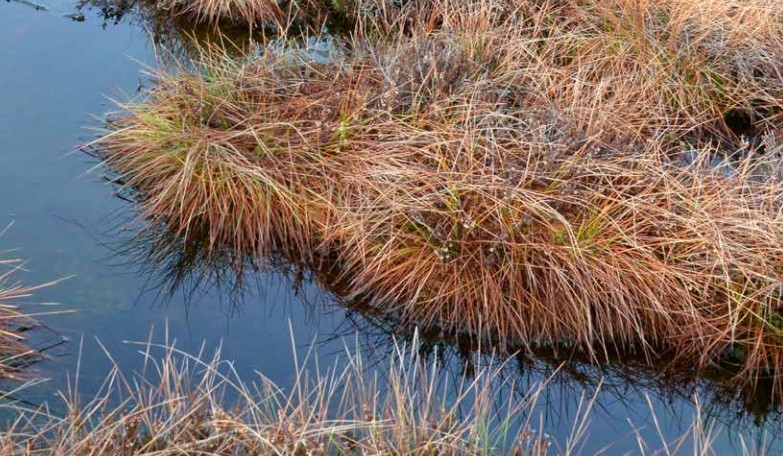
📊 Who actually decides what “good” moorland looks like? And why are those decisions happening behind closed doors?
Natural England’s definition of 'Favourable Conservation Status' for blanket bog isn't just an academic exercise. It dictates how moors are assessed, shapes millions in public funding, and impacts the livelihoods of farmers and land managers.
Yet, when we asked for the underlying evidence and quality-assurance records that shaped this critical policy, the audit trail was missing.
When taxpayer money and Defra policy are involved, transparency is non-negotiable.
📉 Policy must be evidence-led, not assumption-based.
📑 Major public documents guiding land management must withstand public scrutiny.
🌿 The governance process cannot be reduced to a few short sign-off emails.
We fully support ambitious nature recovery, but it must be rooted in openness. Decisions that affect biodiversity, carbon storage, wildfire risk, and rural communities require a complete, transparent audit trail. The countryside deserves nothing less.
Read more on our website.
Grass grows. Cow eats grass. Human eats cow.
The simplest agricultural equation on the planet, and somehow the most controversial.
Compare it to the alternative being proposed.
Petroleum is drilled in the North Sea. Shipped to a refinery in Rotterdam. Converted into nitrogen fertiliser via the Haber-Bosch process at 450°C. Shipped to Brazil. Sprayed on soy planted where rainforest used to be. Soy is harvested by a combine made in Illinois running on Saudi diesel. Shipped to Belgium. Extracted with hexane, a petroleum solvent. Hexane is mostly removed. Isolate is shipped to a food-tech start-up in California. Combined with methylcellulose, beetroot extract for the blood effect, coconut oil, sunflower oil, gum arabic, yeast extract, and twelve other ingredients you wouldn't feed a dog. Extruded through a high-shear processor to mimic muscle fibre. Shipped to a supermarket in Hackney. Bought by a man with a tote bag.
Tote bag man eats the product, gets indigestion, and posts a video about how the cow is the problem.
Eight thousand miles. Sixteen industrial processes. Four continents. Three solvents. One marketing budget the size of a small country's GDP.
Or.
Grass. Cow. Human.
Three words. Same field for a thousand years.
We have somehow convinced ourselves the eight-thousand-mile version is the sustainable one.
The greatest piece of stagecraft in human history.
"Life expectancy has doubled since 1900, so clearly modern food is working."
Yes. Brilliant point. Absolutely watertight.
Tell me, when you picture a Victorian dying at thirty-eight, what do you think killed him?
Was it the butter on his bread?
Was it the lard in the pan?
Was it the grass-fed mutton? The eggs from the yard? The unpasteurised milk straight from the cow he could see from the kitchen window?
Or was it cholera, tuberculosis, dysentery, smallpox, sepsis from a splinter, childbirth in a room with no soap, a boiler explosion, a coal mine, a war, a workhouse, and the entirely reasonable medical practice of being bled by a man with a leech?
We did not extend life expectancy by replacing his lard with sunflower oil.
We extended it by inventing the toilet, the antibiotic, and the idea that surgeons might wash their hands occasionally.
The margarine is doing nothing. The margarine is, if anything, slightly working against the project.
The plumbing did the heavy lifting. Give the plumber a statue.
They attacked wool. We got polyester.
Half a million tonnes of microplastic fibres enter the ocean from synthetic clothing annually.
Microplastics are now in human blood, lung tissue, and placentas.
Wool biodegrades in months.
Polyester persists for centuries.
They attacked leather. We got PVC.
PVC production releases dioxins.
The vegan leather peels within two years.
Both require petroleum.
Leather is a byproduct of food production.
It lasts decades.
It biodegrades.
The ethical alternative requires an oil well.
They attacked butter. We got margarine.
Trans fat disease for a generation.
Now on its third formulation.
Butter contains vitamins A, D, E, and K2.
Margarine contains seed oils and an ingredients list.
The butter never changed.
The butter never needed to.
They attacked beef. We got plant-based burgers.
Pea protein extracted with hexane.
Seed oils. Nineteen other ingredients. A supply chain across multiple continents.
Soy driving deforestation in Brazil at a scale that dwarfs British cattle farming.
Beef on British marginal land grows on hills that cannot grow crops.
Sequesters carbon. Fertilises without a factory.
Complete protein. Every fat-soluble vitamin. No dead zone.
In every case: the traditional animal product was nutritionally superior, environmentally lighter, and cheaper to produce.
In every case: the ethical replacement was industrially complex, petrochemically dependent, and worse for the body using it.
The ethics were the marketing.
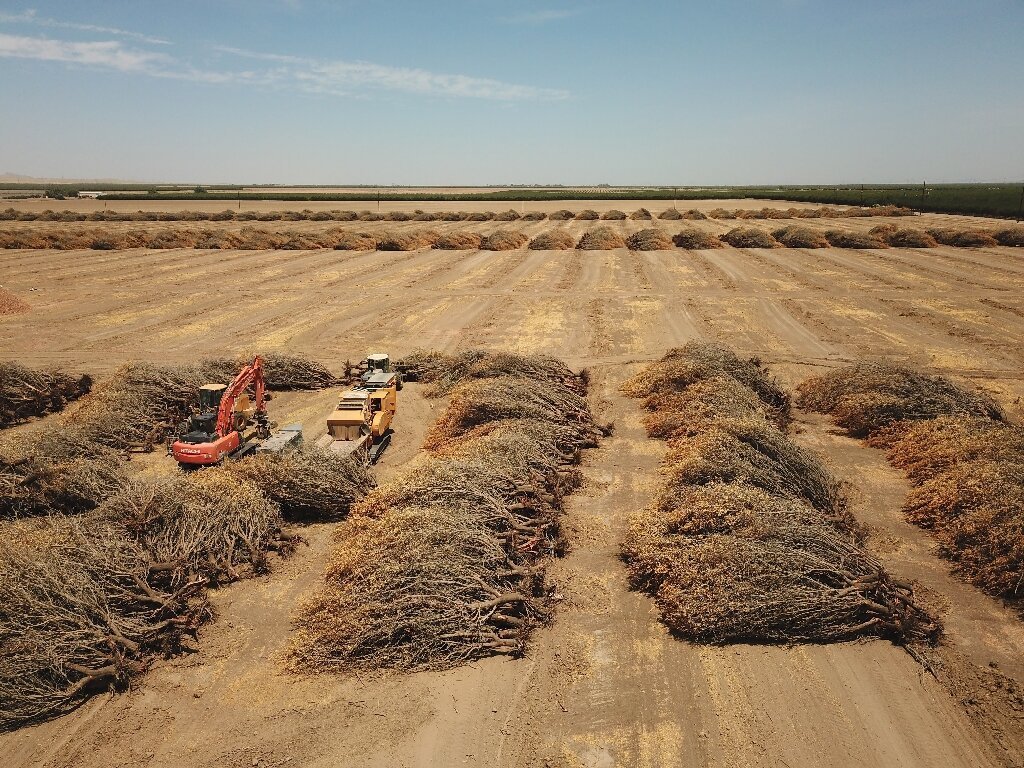
Almonds are an environmental catastrophe.
People hear that and assume you mean in some abstract, projected, 2050 kind of way.
No. Present tense. Happening now. Today, while someone posts about their oat-and-almond-milk morning ritual and refers to it as 'conscious consumption.'
- 1.1 trillion gallons of water used annually in California alone
- 1,900 gallons required to produce a single pound of almonds
- 10% of California's entire water supply consumed during historic drought conditions
- Approximately 50 billion bees killed per year from pesticide and fungicide exposure during mass pollination events
- Entire Central Valley sections converted to monoculture desert requiring permanent irrigation infrastructure
- Fungicide cocktails applied during February bloom, peak bee vulnerability, routinely implicated in colony collapse
- Almonds provide essentially no complete protein, moderate oxalate load, and require industrial processing to make palatable
- Virtually every almond ever eaten has been shipped internationally at least once
The person drinking almond milk in a reusable cup is, on balance, responsible for the deaths of more living creatures before 9am than a British beef farmer manages in a fortnight.
But the cow breathed out, so.
Labour Loves the Countryside. It Just Hates the People Who Run It.
A woman walks into a tailor's shop in Helmsley, North Yorkshire. She loves the heather hills, she says. The wooded dales. The purple moorland stretching to the horizon. What she cannot stand is the shooting that takes place on the Glorious Twelfth.
Jeremy Shaw, the tailor, has heard this before. He considers whether to explain that the heather she travelled three hours to admire exists because of the grouse moor she despises. The gamekeepers who manage the land, suppress the bracken, and keep the moorland in the condition that makes it worth visiting. The cake, in other words, was baked by the baker she came to castigate. What is worrying is that the government shares her confusion.
On March 18, Labour published its Land Use Framework. Half a million acres earmarked for solar panels. Nine percent of farmland committed to rewilding. And buried on page 45, a proposal to license game bird shooting, potentially restricting pheasant and partridge releases onto estates. The trail hunting ban came first. Licensing comes next. Each measure arrives with its own rationale. Together they form a programme.
Licensing does not prohibit. Bureaucracy does not ban. Smaller shoots simply cannot absorb compliance costs, fold quietly, and nobody in Whitehall answers for the consequence. A Natural England case near Helmsley shows the method. A longstanding partridge shoot was barred from releasing birds until after the season had already started. Shoot days cancelled. Revenue gone. Natural England's hands formally clean.
Helmsley bucks every trend in British retail. Four pubs in the town square. A Michelin-starred inn nearby. A tailor forty years in business in what a mentor once called a dying trade. Seventy-five percent of Shaw's revenue is shooting-related. The Pheasant hotel runs at sixty percent shooting occupancy through winter. The deli sells local cheese to Norwegian and German sportsmen. Shooting contributes £3.3 billion annually to the UK economy and supports nearly 147,000 jobs. Pull the shooting thread and the weave comes apart.
One Helmsley pub changed hands a few years ago. The new owners decided they wanted nothing to do with shoot trade. They lost heavily, then went back to the estates cap in hand. The market delivered the verdict that policy is not yet ready to impose openly. Licensing achieves the same result without anyone having to take responsibility.
The conservation argument collapses under scrutiny. Grouse moor owners have restored 217,000 acres of upland heath in the past 25 years. The almost-extinct curlew is four times more likely to fledge on a managed grouse moor than on unmanaged moorland. The landscape that Whitehall has identified as the problem is the reason the landscape exists in the form they claim to value.
When asked what economic trade-offs it had actually modelled, the government was vague. Officials said they recognised shooting's cultural importance and would work with industry toward a sustainable relationship. Starmer has been invited to visit Helmsley and see how the economy functions. He has not replied.
He should go. He should meet the gamekeeper loading double guns through winter to keep the household solvent. The beaters earning seventy pounds a day. The tailor measuring 24 keepers for tweed suits stitched with Essex lining and Yorkshire zips.
What rural Britain is being offered instead is a licensing regime that will first eliminate smaller shoots, then larger ones, then the hotels and tailors and pubs, until the moorland reverts to bracken and the towns that shooting sustained join the dying high streets that apparently only the countryside had managed to avoid.
The heather on the North York Moors, Jeremy Shaw at Carters Country Wear, and the market town of Helmsley. All three exist because of shooting. Labour's Land Use Framework puts all three at risk.
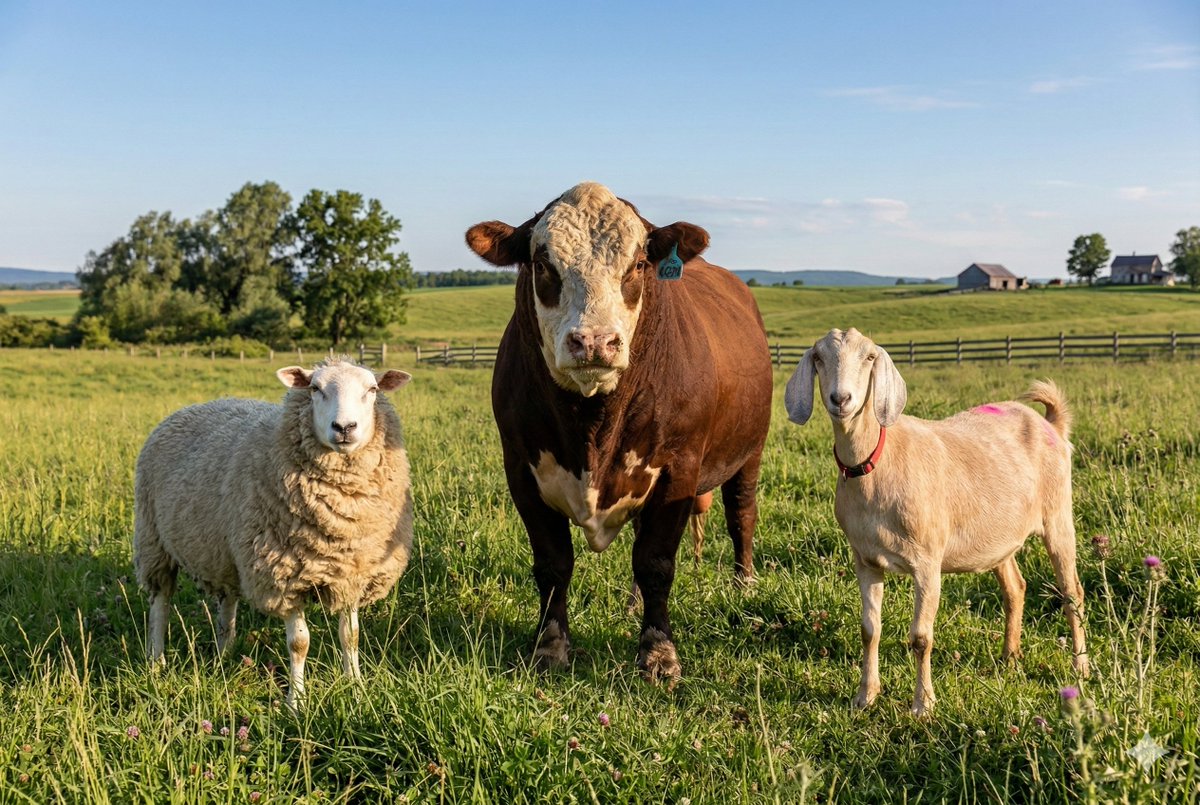
Let's be clear about what the Ruminati are, because the name was chosen for us by a newsletter that meant it as a criticism and we kept it.
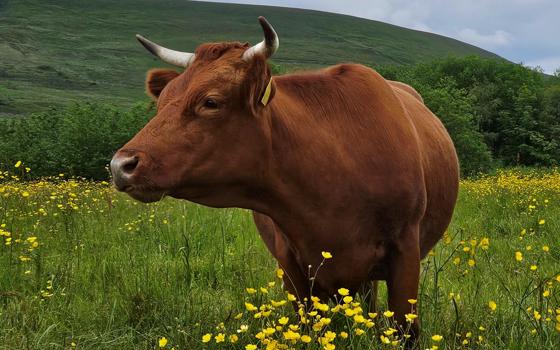
Gerald is a bull. He eats grass on land that has been permanent pasture since 1763. The grass converts sunlight and rain into protein. Gerald converts the grass into beef, manure, and seven wildflower species in a south corner that had none of them before he arrived. His methane is the carbon that was in the grass two weeks ago and will be back in the grass in twelve years. This has been the arrangement for the entirety of cattle domestication and the net carbon position of British permanent pasture over that period is: improving.
Doris is a ewe. She eats fell grass that grows on land too steep, too thin, too wet, and too acidic for any crop ever suggested by anyone who has actually looked at it. She maintains the open sward structure that forty-seven plant communities and three red-listed bird species depend on. Without her, the fell becomes purple moor grass. It has been tested. There is a control fell. The control fell has been ungrazed since 2004. The control fell has purple moor grass and no skylarks.
Keith is a goat. He eats the things Gerald and Doris won't touch: bramble, knotweed, dock, thistle, rush, ivy stems, and whatever is happening in Steve's garden. His rumen handles tannins and oxalates that would damage a dog's liver. He converts material that would otherwise advance unchecked across the British countryside into cheese, manure, and a net outcome column that has been positive on every row since entry seventeen.
They are not destroying the planet.
They are the planet.
This distinction has been available in every field in Britain since before the policy documents existed.
Nobody thought to look in the fields.
The fields are still there.