Our managing editor Judith is retiring. She would like everyone to know that she will be hanging out her shingle as a freelance editor. In her time with us, she sent 39 of our 78 volumes to press, editing & typesetting most of them. You can find her on Bluesky as academic-editor.
A #Roman wooden barrel, once used to bring supplies to the soldiers stationed at Bar Hill fort on the Antonine Wall (Scotland) - hopefully it was a little luxury that made frontier life a bit more bearable!
A monumental example of early European mosaic art.
This 2,400 year old floor from the Aigai Palace in Vergina, Greece—constructed during the reign of Philip II—offers a rare glimpse into classical Macedonian grandeur.
It's the great Virgil's birthday today. So here are four books that add to the fun of simply reading his poems (to which, it hardly needs repeating, no other Latin poet comes close):
Over the last few years we have had several hundred thousand autodidacts make use of our hub of Classics resources that are available online - entirely freely - if, that is, you know where to look. Here it is again: dive in, explore and share as you like! https://t.co/rorKmCLvb9
The internet shutdown in Afghanistan happened in real time in my online poetry class on Monday. The women's accounts dropped out one by one. The last to go was Neda. Just before her image froze, I promised to put her poem on Twitter. She's 11. Online was her last hope of education. @WRNAfghanistan
Saw someone say, “Stop hoarding books, we don’t need paper books anyway” and I can’t express how misguided this is. Online libraries disappear, digital books can be altered, and with Big Tech seeking to destroy history and literacy, print media has never been more essential.
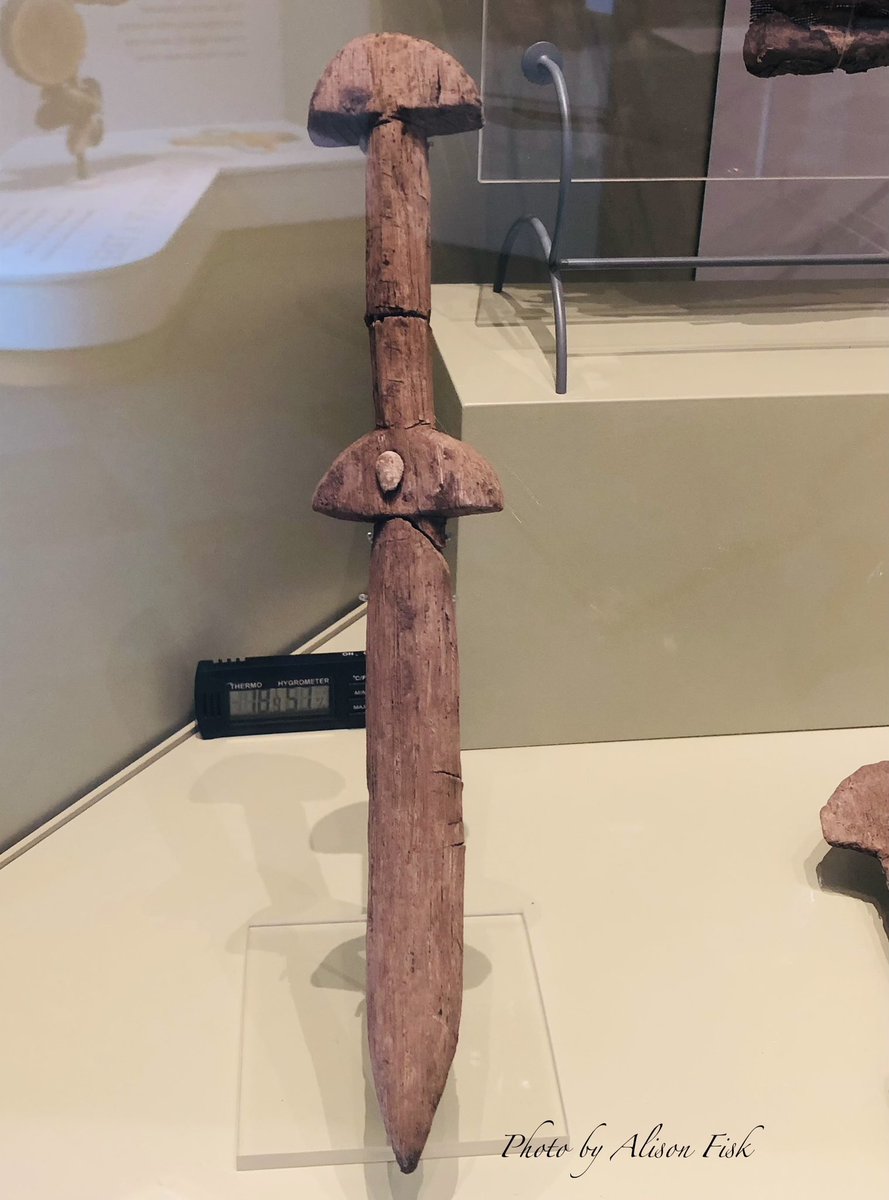
At almost 2,000 years old, this child’s wooden toy sword is a remarkable survival from Roman times!
Found in the living quarters of the cavalry barracks at Vindolanda fort in 2017. Dated c. 120 AD. Chesterholm Museum 📷 by me
#Archaeology
Truly excellent that this remarkable restaging in Oxford of Euripides' Orestes, with the triple mix of Ancient Greek language, costume & music, is now available online. (Link below.) For the three Antigone articles we hosted about the performance see here: https://t.co/DVWDOfPSmx
A clever bit of artistry in this manuscript, making it appear like a dog has gone through one side of the page and out the other - 15th century, Kraków, MNK 3025 I, pp. 469-470
Excellent, hilarious and inexpensive productions of TWO Ancient Greek plays on in central London this week! I’m doing a post show talk tomorrow night. Do come ! https://t.co/KoCbAtiSJR
A 2nd Century AD, Roman mosaic featuring a whimsical scene of a Rabbit driving a chariot pulled by Geese.....
It is known as the "Rabbit Chariot Mosaic" and is from the Villa Adriana (Hadrian's Villa) in Tivoli, Italy. This particular mosaic is celebrated for its whimsical and humorous depiction of animals in human-like roles. It is considered a playful and humorous piece of Roman art, reimagining traditional chariot races with unexpected animal participants. Such lighthearted and imaginative scenes were sometimes found in Roman villas, reflecting the artistic and cultural tastes of the time.
According to unofficial sources, this mosaic is housed in the Louvre Museum in Paris, within the Department of Greek, Etruscan, and Roman Antiquities. While the Louvre has an extensive collection of Roman antiquities, including numerous mosaics, there is no official record of this specific rabbit-chariot mosaic in their online collections database or on their official website. The mosaic is frequently shared online with the Louvre's name attached, which has led to the widespread belief that it is part of their collection.
#archaeohistories
Finally out!
Incredible, close, recreation of Ancient Greek tragedy “Orestes” - the full performance. Also two terrific short videos explaining the process of realising it.
https://t.co/QlnphYJE8W
Brilliant work. These are must-sees, and should surpass the Rediscovering Ancient Greek music video (2017) - which has had more than a million views.
The Lewis Chessmen! 🤩
Characterful medieval chess pieces with wonderfully expressive eyes! 👀
From a large gaming hoard found on the Isle of Lewis, Scotland, in 1831. National Museum of Scotland, Edinburgh
📷 by me
#Archaeology
A #Roman marble sculpture of two dogs playing or grooming together; found in Monte Cagnolo (Italy), & made 1800-2000 years ago. The Romans loved dogs just as much as many of us still do today! 🐶
#Archaeology#RomanArchaeology (📷 British Museum)