Blog time!
We feel that we understand things when certain patterns of explanations are in place. If reality doesn't follow those patterns, our understanding suffers. On to the 3rd of such eureka fallacy I've blogged about: explanation by optimization.
https://t.co/u3L3ucgpbj
arXiv alert! 📄🚨
A review paper about the physics of news, rumors, and opinions
https://t.co/VkMBzY9gYK
w @manlius.bsky.social @sarawalk.bsky.social Guido Caldarelli et al.
Another theme is the revolutionary change LLM chatbots brought about. The shift from the big-data era of AI as super-human predictors to AI as human simulacra. I.e., from a mainstream science viewpoint, a change to a methodologically more familiar ground.
3/3
arXiv alert 📄🚨 https://t.co/Uv1yIlNe8r w Milena Tsvetkova
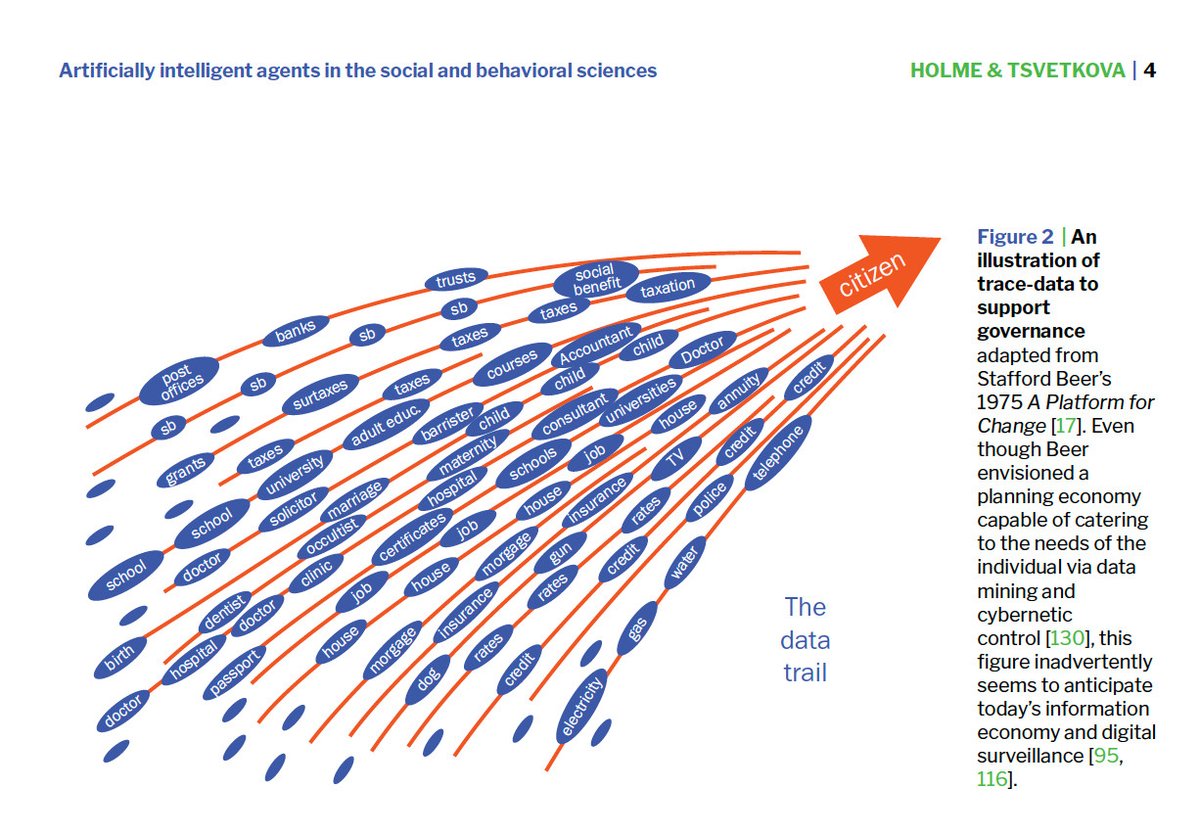
Such a fun paper to write! The background of today’s social/behavioral science w AI agents. The history itself is a roller-coaster ride connecting many of the big themes of the last century of human-centric science 1/3
The main theme is how entwined we are with the technology we use to study ourselves—how readily we accept replicas of ourselves and our environment as tokens of scientific insight.
2/3
Jia et al. experimentally show that when individuals can tailor their actions to each neighbour - a freedom termed social networking agency - they display higher cooperation, trust and fairness in economic games. @_IvanRomic@pholme
https://t.co/nydSxrT2aS
New paper in NHB 📄🚨
We ran extensive experiments to show that making the rules of some canonical economic games looser makes people more cooperative
https://t.co/3lwJyDFUCP
(a bit late, but) this is a preprint/project I really have enjoyed! They might talk like us, but they surely don't learn like us. 📄🚨
https://t.co/HIx6jSCNDL
The Nordic trick—without two-digit temperatures (C) in the forecast, let's define summer as a state of mind. Which, of course, needs a mixtape: 🎶
https://t.co/ohuseH5OjO
I channeled my inner Marvin Minsky to give a different perspective on AI science. It ended up being about how our lazy attitude toward our language stops science from its (utopian-level) full potential … and stuff.
https://t.co/zrefwBc9EI
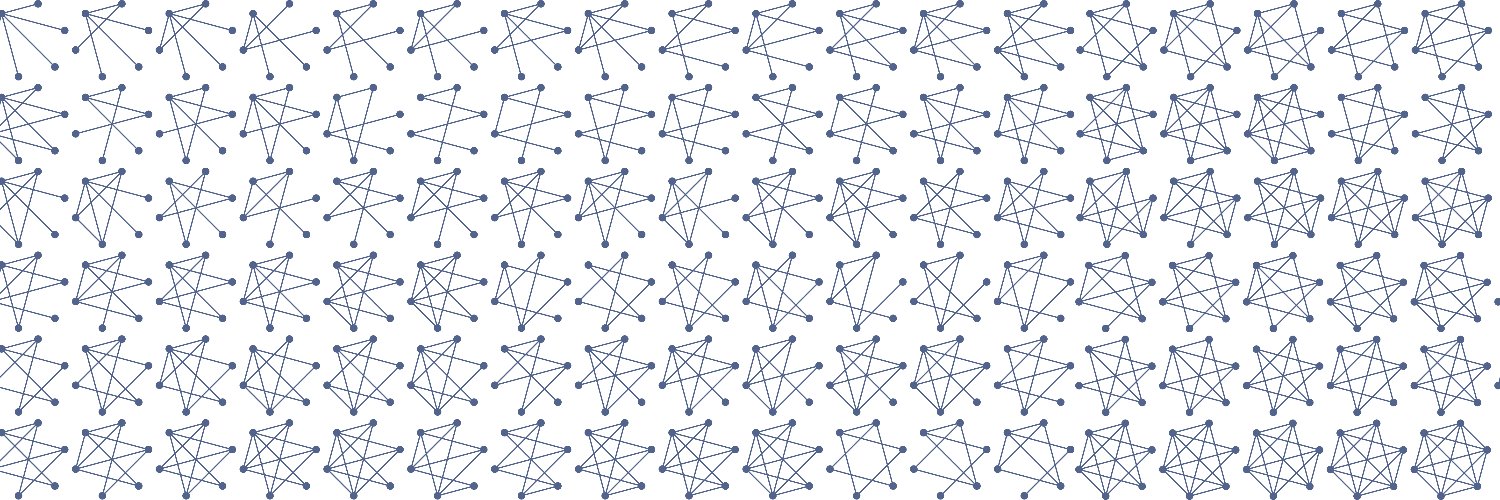
5-6 years ago, I coded Picasso's "constellation drawings" (1924) into adjacency lists for network fans out there. It's about time to share them publicly: https://t.co/QNAoJCUvg8
Disclaimer: They are probably pretty buggy (see the Readme)