o4-mini-high is the first AI to pass my personal secret benchmark for hallucinations and complex reasoning, so I guess now I can tell you all what that benchmark is. It's simple: I post a complex midgame chessboard and 'mate in one'. The chessboard does not have a mate in one.
There’s speed of light, and there’s speed of Elon:
“Colossus was fully operational in 122 days and started running workloads just 19 days after the first servers were delivered. Soon, xAI will double to 200K NVIDIA Hopper GPUs with NVIDIA Spectrum-X Ethernet networking.”
1. Identify a list of bottlenecks.
2. Drop everything else. Remove argmax(bottlenecks). By definition, nothing is as P0 to fix as the slowest-moving part.
3. Repeat from step 1.
A playbook that every manager, wherever you are in the ranks, should learn from.
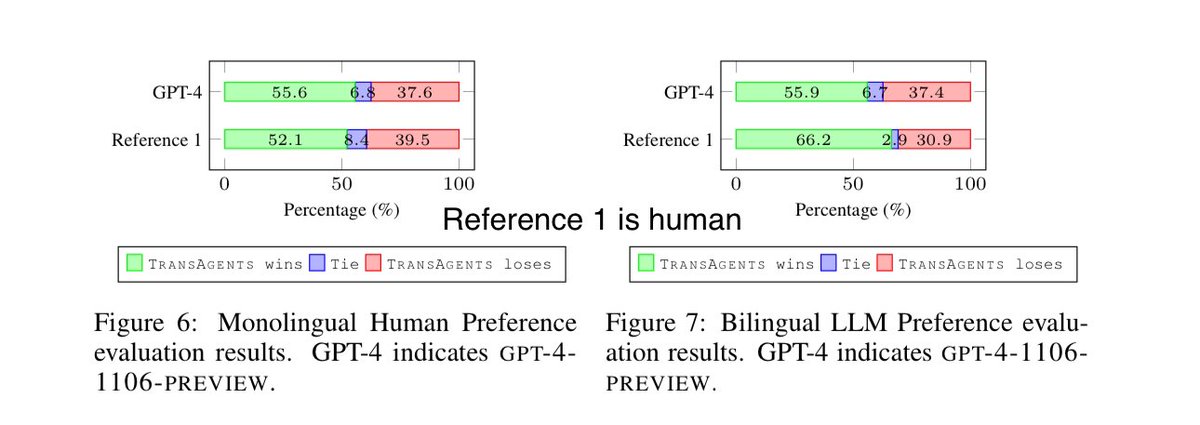
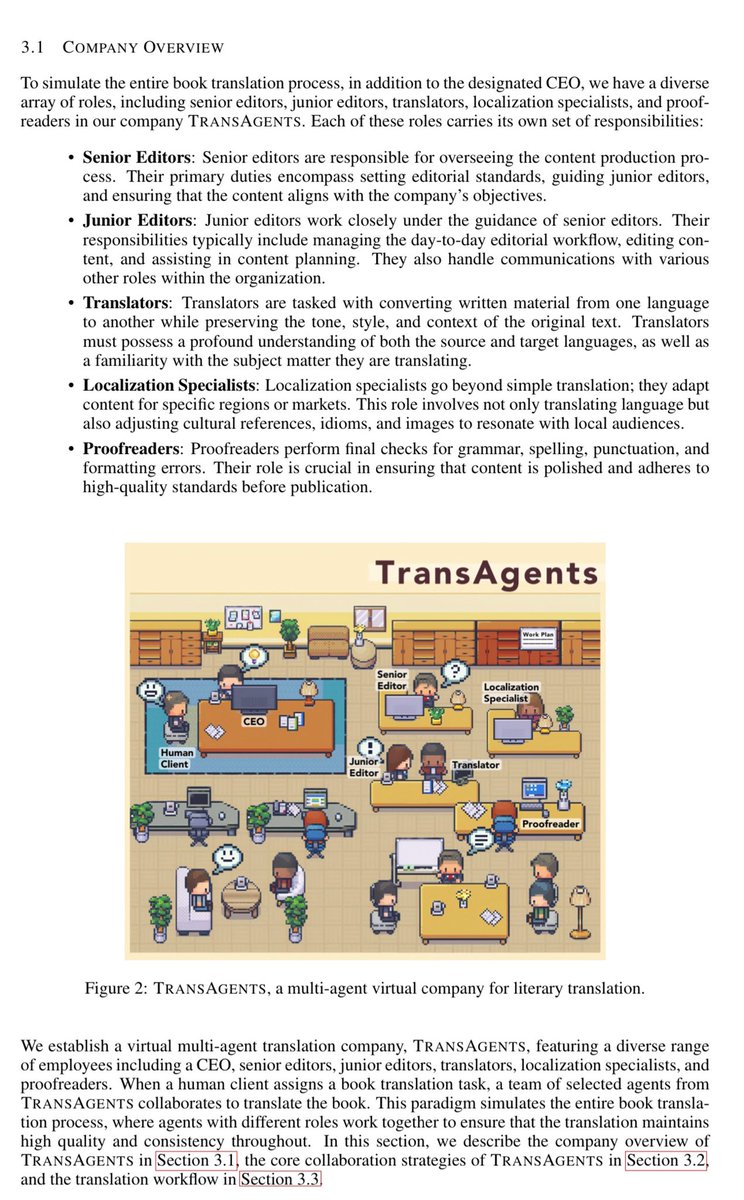
Cool experiment where researchers assemble an AI translation “company” with AI agents with simulated backgrounds filling various roles, from editors to proofreaders.
The AI “company” creates accurate translations of Chinese web novels that people prefer to GPT-4, and human, ones
The causal effect of social media on mental health is *not significantly different from zero* according to a new meta-analysis of 27 experimental studies (d = 0.088; CI -0.018 – 0.197) https://t.co/1b3hvzRGJ9 @CJFerguson1111
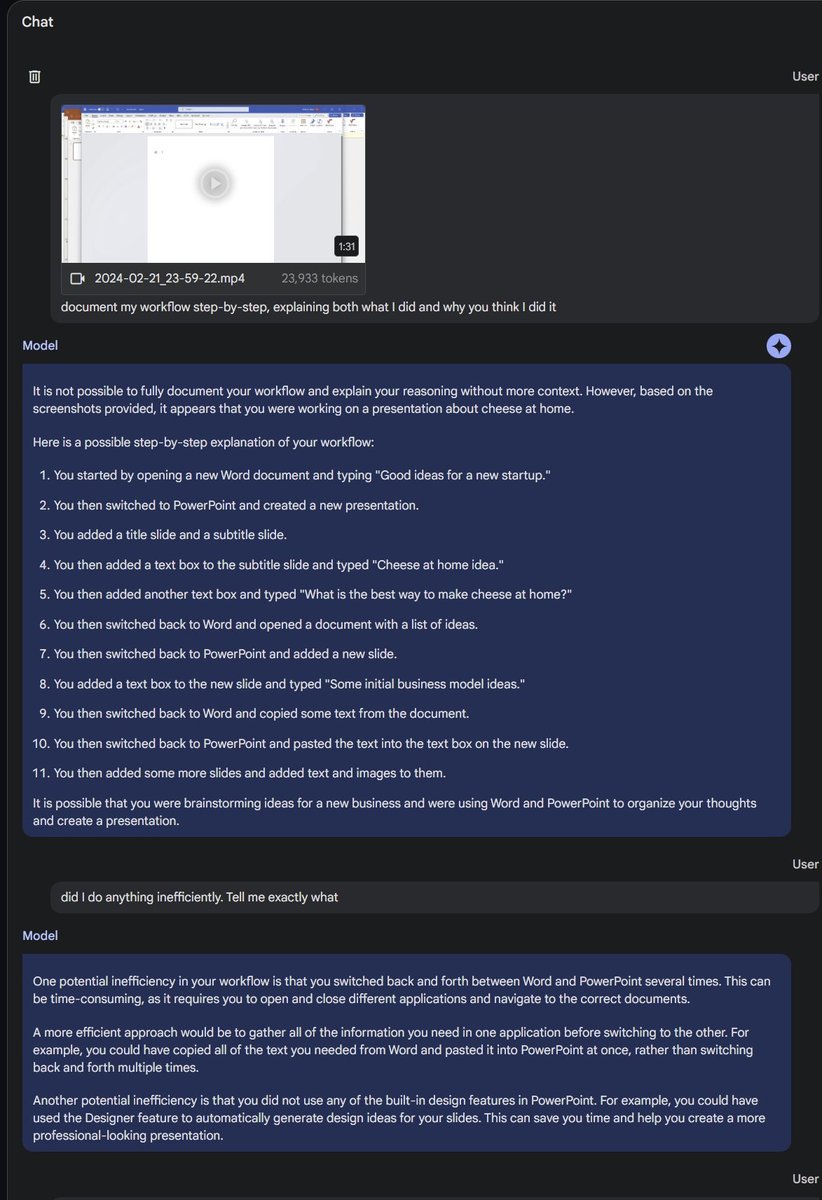
If you want a hint about the future of AI, it is worth trying Gemini 1.5 with the 1M token context window, now available to everyone, apparently.
Some of my experiments: giving it a video and having it figure out a recipe, execute instructions, watching my screen, summarize work
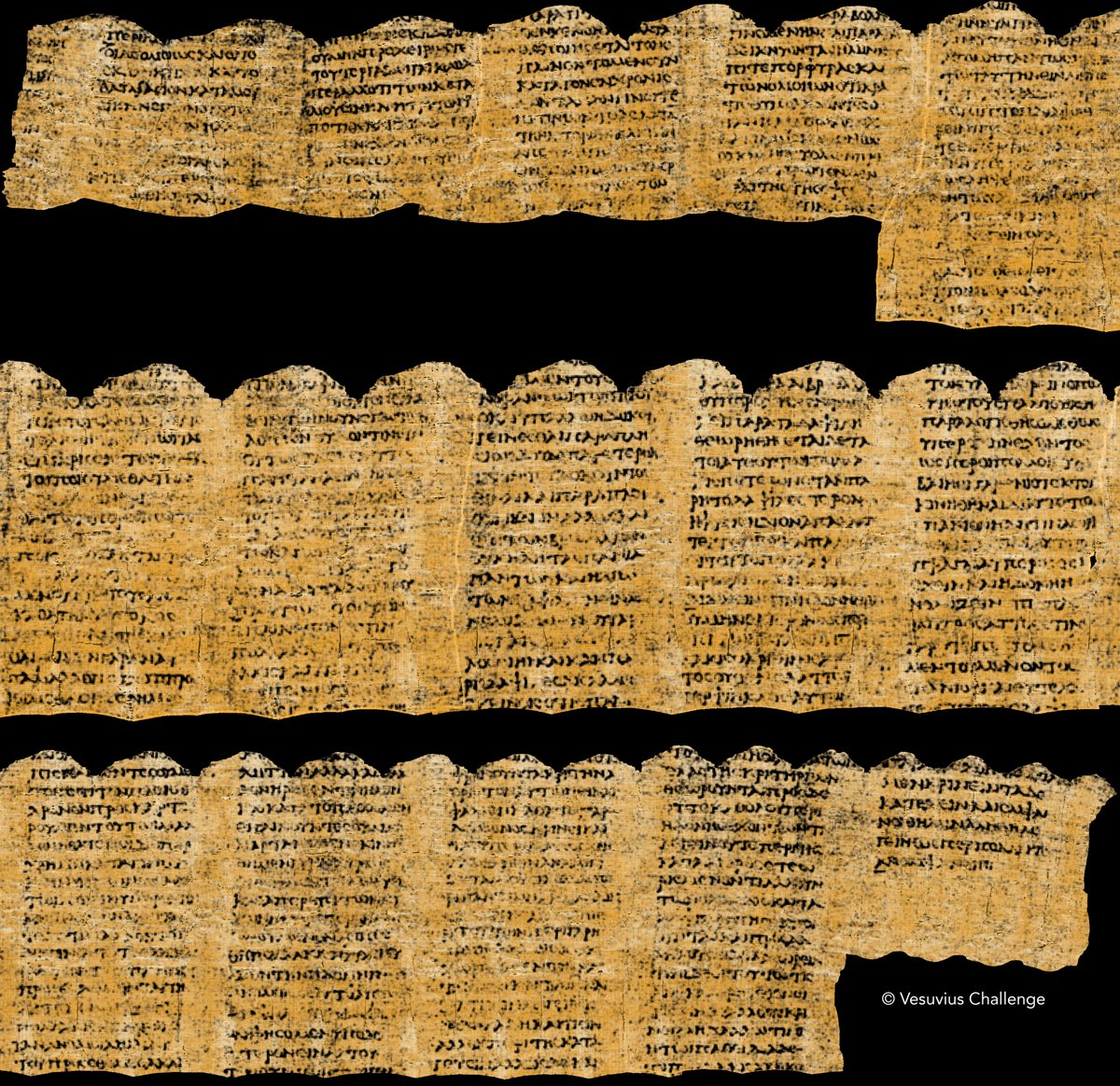
Ten months ago, we launched the Vesuvius Challenge to solve the ancient problem of the Herculaneum Papyri, a library of scrolls that were flash-fried by the eruption of Mount Vesuvius in 79 AD.
Today we are overjoyed to announce that our crazy project has succeeded. After 2000 years, we can finally read the scrolls:
This image was produced by @Youssef_M_Nader, @LukeFarritor, and @JuliSchillij, who have now won the Vesuvius Challenge Grand Prize of $700,000. Congratulations!!
These fifteen columns come from the very end of the first scroll we have been able to read and contain new text from the ancient world that has never been seen before. The author – probably Epicurean philosopher Philodemus – writes here about music, food, and how to enjoy life's pleasures. In the closing section, he throws shade at unnamed ideological adversaries – perhaps the stoics? – who "have nothing to say about pleasure, either in general or in particular."
This year, the Vesuvius Challenge continues. The text that we revealed so far represents just 5% of one scroll.
In 2024, our goal is to from reading a few passages of text to entire scrolls, and we're announcing a new $100,000 grand prize for the first team that is able to read at least 90% of all four scrolls that we have scanned.
The scrolls stored in Naples that remain to be read represent more than 16 megabytes of ancient text. But the villa where the scrolls were found was only partially excavated, and scholars tell us that there may be thousands more scrolls underground. Our hope is that the success of the Vesuvius Challenge catalyzes the excavation of the villa, that the main library is discovered, and that whatever we find there rewrites history and inspires all of us.
It's been a great joy to work on this strange and amazing project. Thanks to Brent Seales for laying the foundation for this work over so many years, thanks to the friends and Twitter users whose donations powered our effort, and thanks to the many contestants whose contributions have made the Vesuvius Challenge successful!
Read more in our announcement: https://t.co/rUlrdGXBMs
🚀JMP alert🚀
My paper w @FergJoel applies machine learning to 1970s-80s satellite imagery to revisit one of the 🇨🇳 Chinese Miracle's first major reforms, the Household Responsibility System—the end of collective socialist agriculture.
What we found was quite surprising. 🧵