To approve your Claude's requests for permissions, I recommend using a little desk buddy.
Mine lives off tokens and gets upset if you don't approve things quickly enough. It's connected to the app via bluetooth.
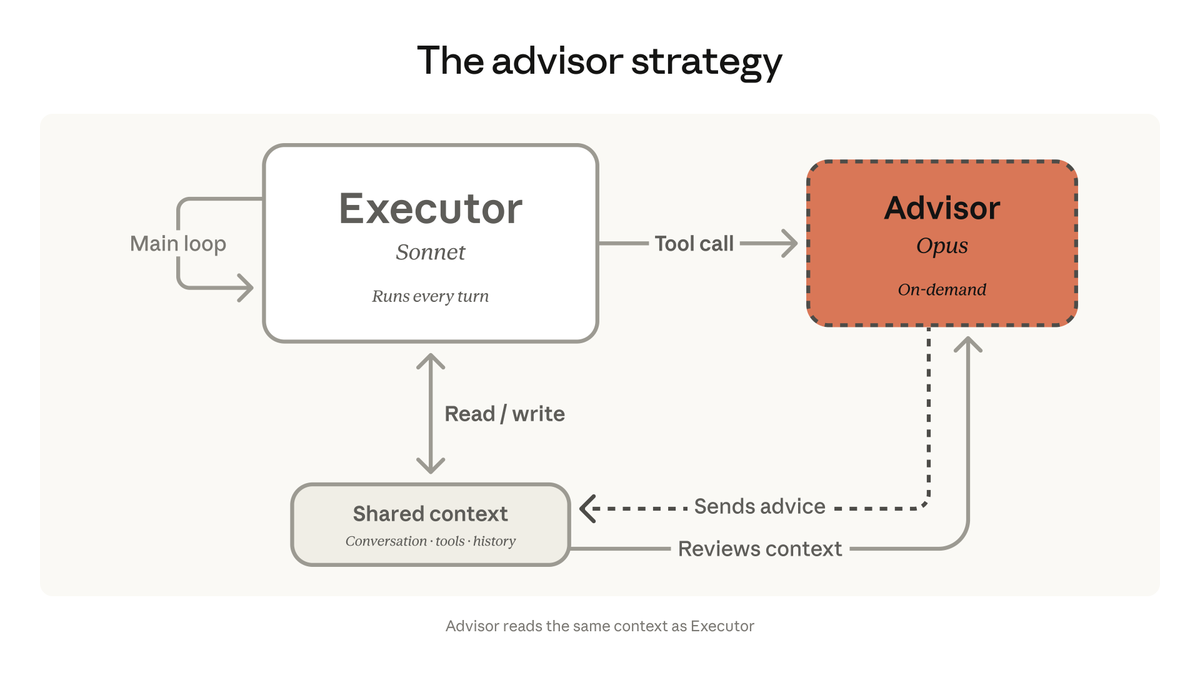
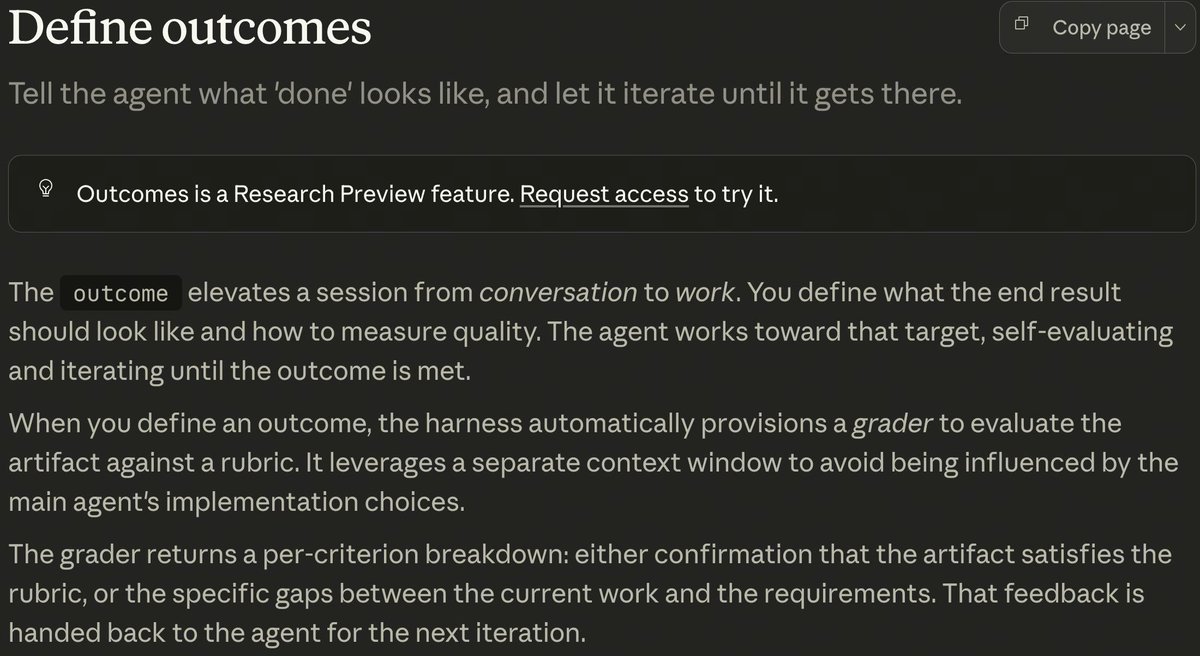
We're bringing the advisor strategy to the Claude Platform.
Pair Opus as an advisor with Sonnet or Haiku as an executor, and get near Opus-level intelligence in your agents at a fraction of the cost.
Google's TimesFM is a legit SOTA time-series foundation model — beats Chronos, 1000× faster, zero-shot magic on weather, traffic, search trends.
Its pretraining data? Google Trends and Wikipedia pageviews. Zero financial data. So you don't want to directly use it to predict next-week stock prices yet.
Where it could earn its keep: volatility, volume, order flow — anything with real seasonality. And as a feature, not a signal.
Future direction worth exploring: finetune it on decades of OHLCV, macro, and order-flow data. The repo already ships a stock-finetuning example.
https://t.co/URE9r4qTv6
https://t.co/TXxTap4ir7
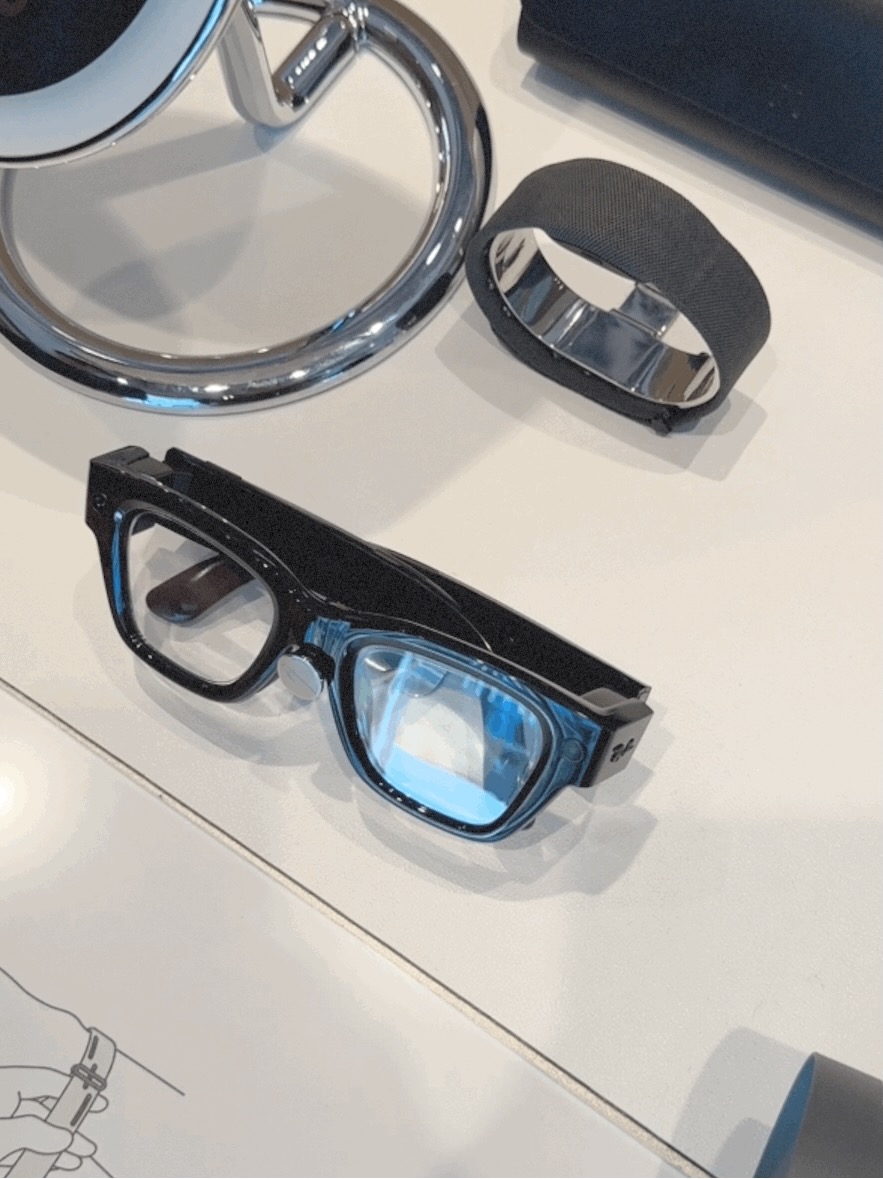
Robert, it's a pair of enhanced smart glasses that test the market rather than full AR glasses that offer an absolutely immersive experience. So put your expectation so high
I'm so disappointed in the Meta Raybans with display.
Been waiting for a great "AI Glasses" to come along for more than a decade since I wore Google Glass every day for a year.
The Meta Raybans with a display is a huge miss.
1. They don't work for my eyes. Let's leave that aside. Even if I had perfect vision I still would be very depressed today (see my last two posts for more about this issue).
2. Are they integrated with my phone? No. They don't show anything that my phone does. No Gmail notifications. No Slack. No Discord. No nothing.
3. Do they let me turn on the microphones and do real work with AIs? "Vibe coding," for instance. No. You can't even capture the text from the captions app.
4. Do they introduce a new way of entertaining yourself? Only one game. No mixed reality. But gets worse from there. No YouTube. No Netflix. No other streaming apps.
5. Is there a way to look at the Web? No. So can't read reviews of restaurants, or look at anything else humans would want to look at.
6. The armband is far less comfortable than I was expecting. While it is magic in bringing a new way to control the device I'd hate wearing it, just like I hate wearing my Apple Vision Pro, which gives me headaches after an hour. The armband made my hand hurt after a few minutes. I can't imagine wearing it all day long.
7. Even if the AI does something interesting, the screen simply isn't high enough resolution or have enough field of view to make it really satisfying to work with. I'd love to talk to my glasses and have it fire up something like @genspark_ai, do a bunch of things like make me a slide deck, or write a report, or analyze restaurants near me, and display those. It can't do it in a way that really makes you go "now that is useful."
8. No integration with popular headphones. The speakers on the glasses are OK for a lot of things, but I'm a music crazed person and, sorry, the new Apple Airpods Pro 3 sound way way way better than the speakers in the glasses. But no way to control the headphones from the glasses and armband.
9. These are HUDs (heads up displays). They can NOT do augmented reality or virtual reality or mixed reality like the big scuba masks, like Apple Vision Pro, can do. The press didn't explain that. It isn't even close to as magical or capable as the bigger headsets.
10. They look cheap. Even compared with its other "audio only" glasses, which are available in much nicer looking forms. The glossy black surface, and thick frames, aren't even close to as nice as the @EvenRealities that I have.
So who are the Meta Raybans for?
1. An influencer that needs to get invited to Meta's next events. I'll never be invited again to Meta's launch events, so I don't care, but if I were still playing that game I would have bought a pair to keep my standing with the Meta PR team.
2. An Instagram content developer. Taking a photo or video and uploading them from the glasses is better while skiing or running or something like that than using a phone.
3. A gadget freak. If I had unlimited budget and wanted to show them to my friends to have a conversation I'd buy them just to keep my standing as the biggest gadget freak in the world (@vicgundotra is the guy in my head who has that crown -- when he worked as an executive at Google he funded Android, but hired me at Microsoft because I worked at a company making a tablet PC that he was drooling over).
If you are an AI freak, like me, you will find them disappointing.
For AI freaks an always listening device like the one from @LimitlessAI is a better choice.
This leaves a huge hole open for OpenAI and others, including Apple, to fill. Tim Cook should be breathing a huge sigh of relief this week. And the lack of a line at the store, should tell you that Silicon Valley/San Francisco already is avoiding. (I chose to pick mine up at the only Meta store that exists, which is near its headquarters, for that reason. Where Apple's stores are PACKED there was literally no one at the store).
Given the billions spent to develop these over more than a decade, huge disappointment.
AI’s boost to annual productivity growth is strongest in the early 2030s but eventually fades, with a permanent effect of less than 0.04 percentage points due to sectoral shifts
Interesting interview with Nobel Laureate MIT economist Daron Acemoglu, suggesting AI may automate only about 5% of tasks and boost global GDP by just ~1% over the next decade. https://t.co/7bGQrair4t
A related study: PWBM estimates that AI will increase productivity and GDP by 1.5% by 2035, nearly 3% by 2055, and 3.7% by 2075: https://t.co/ETmRXZYWwb
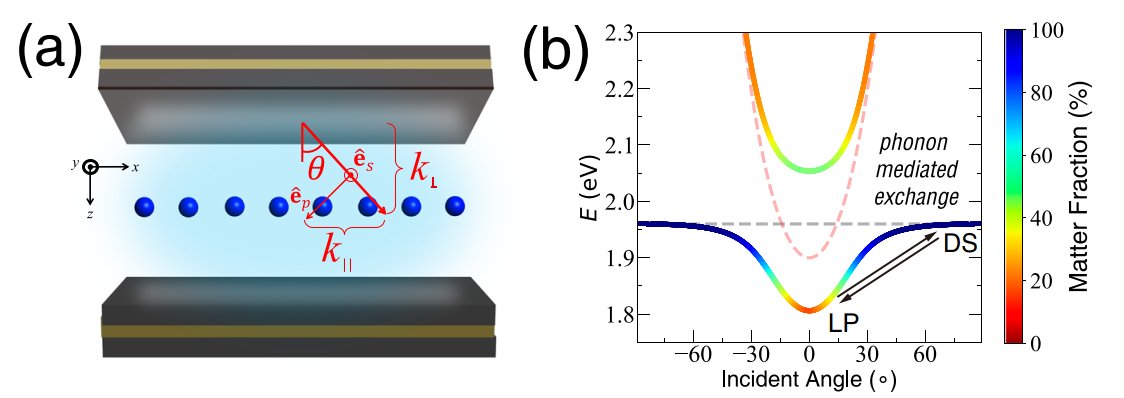
Interesting cavity-polariton paper by numerical quantum dynamics simulations. Exciton-polaritons can move rapidly and travel ~100 µm in a single picosecond, promising ultra-fast energy transport for perovskite photovoltaics and other optoelectronic devices.
Their key contributions:
Developed a model showing that polariton group velocity is renormalized due to phonon-assisted scattering into dark excitons. The effect scales linearly with coupling strength (λ) and temperature (T) at high T.
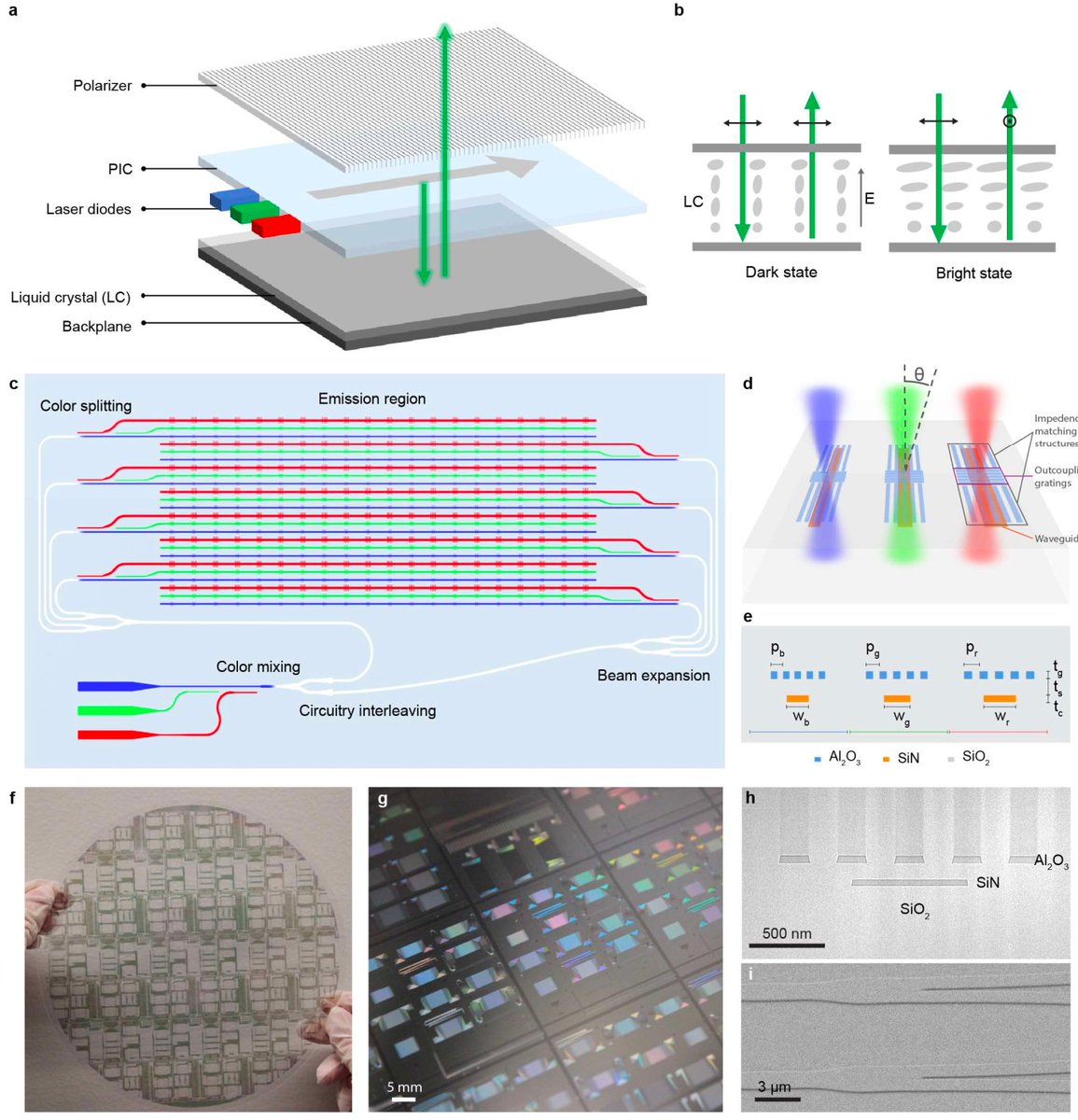
The study on photonic-integated-circuit laser displays posted before is finally published: https://t.co/mTi15OFPxD. Congrats to the team -- fantastic work!
Ultracompact laser displays for AR and 3D holography enabled by visible photonic integrated circuits. Really innovative work by extremely talented friends! Preprint here: https://t.co/TTyllVlRTe