Artist’s rendering of a WWI American Expeditionary Force “doughboy” firing the BAR “from the hip.” The BAR magazine belt had a metal cup onto which the rifle’s butt was seated when firing in this manner. (Picture source: Osprey)
The M1918A2 variant of the BAR was equipped with a bipod and carrying handle, and weighed 4lb heavier than the original M1918. It was used widely in WW2, the Korean War, and even in the Vietnam conflict.
The Browning Automatic Rifle was accepted as the U.S.’ standard infantry automatic rifle in May of 1917. Designated as the M1918, the BAR could fire semi-automatic or full-automatic. Its selector switch can be moved from “S,” Safe, “F,” Semi-Automatic, and “A,” Full-Automatic.
Weapons: The Browning Automatic Rifle - Born out of the need for infantry tactics to take down machine guns in WWI, the BAR combined the automatic fire of a machine gun with the accuracy and portability of an infantry rifle.
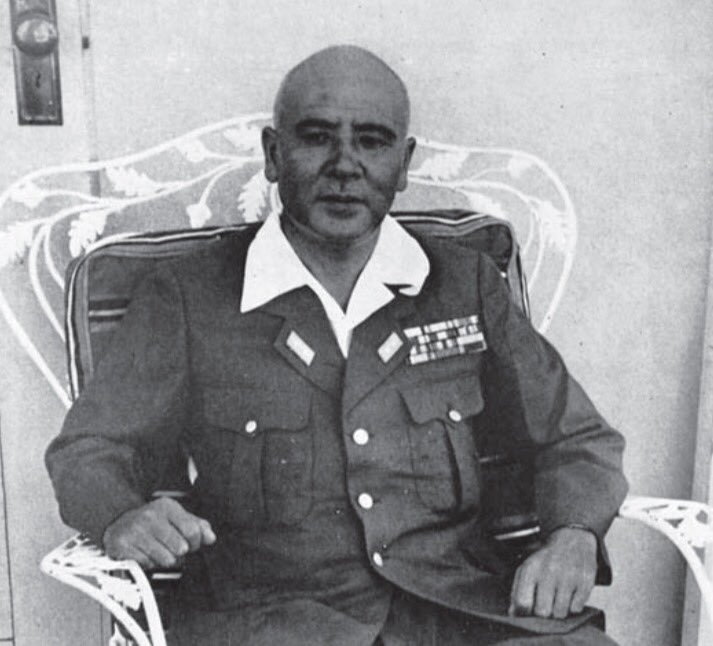
The Japanese commander Gen. Homma, meanwhile, was, at this point, “deeply disappointed” in the progress of their campaign. He’s lost 7,000 men since fighting began, and the defenders’ resistance was unexpectedly tenacious. Tokyo’s mid-January deadline for victory hadn’t been met.
It is at this point in the battle that MacArthur cabled Washington his intention to go down fighting with his men. With the withdrawal to the Orion-Bagac line, “all maneuvering possibilities cease. I intend to fight it out to complete destruction.” (Manchester, American Caesar)
Despite considerable difficulties and pursued by the relentless Japanese, the battle-weary, shell-shocked, hungry and sick Filipino-American defenders complete their withdrawal to the Orion-Bagac Reserve Battle Position by the 26th of January, 1942.
“1. Disintegration of the 51st Division (PA) had left a gap open on the left flank of the II Corps for several days through which Japanese had been able to push troops.
Bataan’s first defensive line falls - The Mauban-Abucay line is abandoned: Wainwright enunerates six reasons for the abandonment of the Mauban-Abucay Main Line of Resistance and withdrawal of Filipino-American forces to the Orion-Bagac Secondary/Reserve Line:
Nakanishi’s men established a West Road roadblock well inside I Corps lines, forcing Wainwright himself to lead a number of unsuccessful attacks to dislodge them. I Corps’ precarious situation would eventually lead USAFFE HQ to order the abandonment of the MLR on 22 January.
January 20, 1942: In the evening, 700 soldiers of the Imperial Japanese Army’s 3rd Batallion, 20th Infantry under Lt. Col. Nakanishi, infiltrated behind I Corps lines at Mauban Ridge, through abandoned positions last held by the 1st Infantry (PA) and 31st Fiield Artillery (PA).
The two Corps commanders were confident that the rough, mountainous terrain and dense forest cover surrounding the western and eastern sides of Mt. Natib were sufficient natural barriers to any Japanese attempt at breaking through the MLR. They were wrong.
Threatening MacArthur’s left - Crisis in I Corps: As early as MacArtur’s visit to the front on Jan. 10, he and Sutherland already noted with concern how both Wainwright and Parker failed to strengthen the ends of both I and II Corps closest to Mt. Natib.