I like learning. MSK Physiotherapist with a special interest in Philosophy and the pursuit of knowledge.
Free time: Books📖, Training 🏋️and Video Games 🎮
1. Does drawing harder boundaries between science and "misinformation" increase or decrease public trust in science?
In four studies conducted in the context of COVID-19, we tested this question by comparing different approaches to science communication.
https://t.co/gCXWe5KscK
Resistance training is for everyone! Our newly published umbrella review shows that children and adolescents with overweight or obesity can achieve meaningful improvements in body composition and cardiometabolic health through consistent RT participation. 💪 #gottalift
https://t.co/JEbQogfB3E
@drgandalf52 I think the most unrecognised thing I do is sitting dow with people, listening and validating their concerns, explain their conditions, possible management options and the pathway for those in the NHS. At least I've been thanked more for that than for any clinical skill
Low back injury risk in deadlifting is not explained by spinal posture alone. A more precise framework integrates load management, movement variability, dynamic trunk control, and individual adaptation. https://t.co/QVbR6wz8Gw
A lot of people dislike artificial sweeteners because they're artificial. They have a bias towards things that feel natural
So, they invent things that artificial sweeteners supposedly do, like triggering insulin responses based on taste alone
But this doesn't happen in trials:
Less than one-quarter of the population performs resistance training on a regular basis. Time is considered the primary barrier to participation.
It shouldn't be.
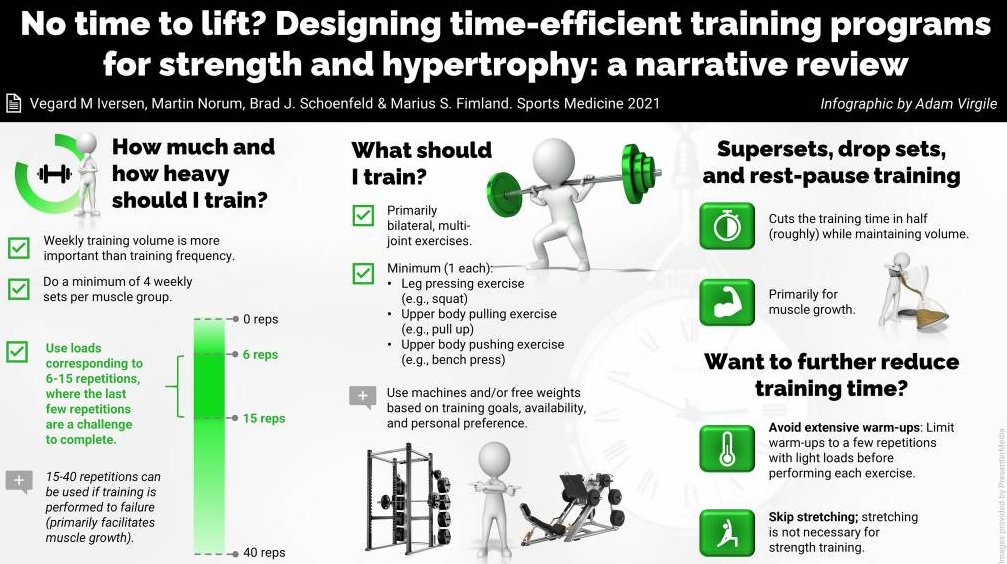
An emerging body of evidence shows that as little as two 30-minute resistance training sessions per week can produce meaningful improvements in strength, muscle hypertrophy, functional capacity, and various health-related outcomes.
Several years ago we published a paper titled, "No Time to Lift? Designing Time-Efficient Training Programs for Strength and Hypertrophy" (PMID: 34125411) that detailed time-saving strategies for workouts. Here are some of the highlights:
1. Training efficiency can be enhanced by emphasizing bilateral, multijoint exercises performed through a full range of motion.
2. Incorporating techniques such as supersets, drop sets, and rest-pause training can reduce session duration by about half compared to traditional approaches, while still maintaining overall volume load.
3. When using moderate to higher repetition ranges, specific warm-ups may be largely unnecessary, and cool-downs are not essential.
4. Resistance training performed through a full range of motion can improve flexibility, minimizing the need for dedicated stretching unless further gains in range of motion are required for daily activities.
https://t.co/EjnlUfuYGE
Bottom line: Just lift 💪
#noexcuses
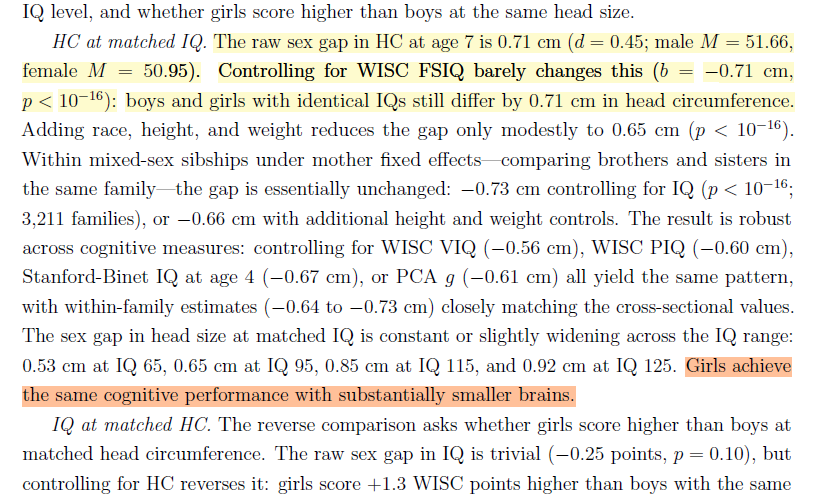
There's a common argument made to justify the claim that males must be smarter than females:
Males have larger brains, even with matched body sizes, and brain size causes higher IQ.
But, in fact, at matched IQs, women still have smaller brains on average. The intercepts differ!
There's a widespread myth that zero-calorie sweeteners like aspartame spike your blood sugar and insulin levels.
This has no basis in reality.
To the body, the effect is indistinguishable from drinking water.
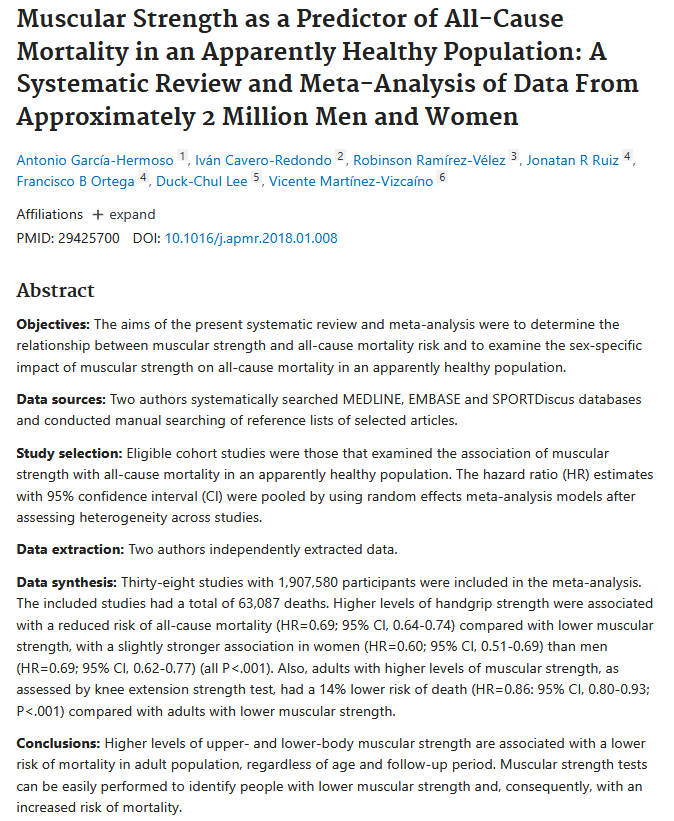
Muscular Strength as a Predictor of All-Cause Mortality in an Apparently Healthy Population: A Systematic Review and Meta-Analysis of Data From Approximately 2 Million Men and Women
https://t.co/fvz3JmNi7e
Intermittent fasting is no better than regular dieting and only slightly better than doing nothing, according to a Cochrane review of the evidence
https://t.co/MdDrSuep7H
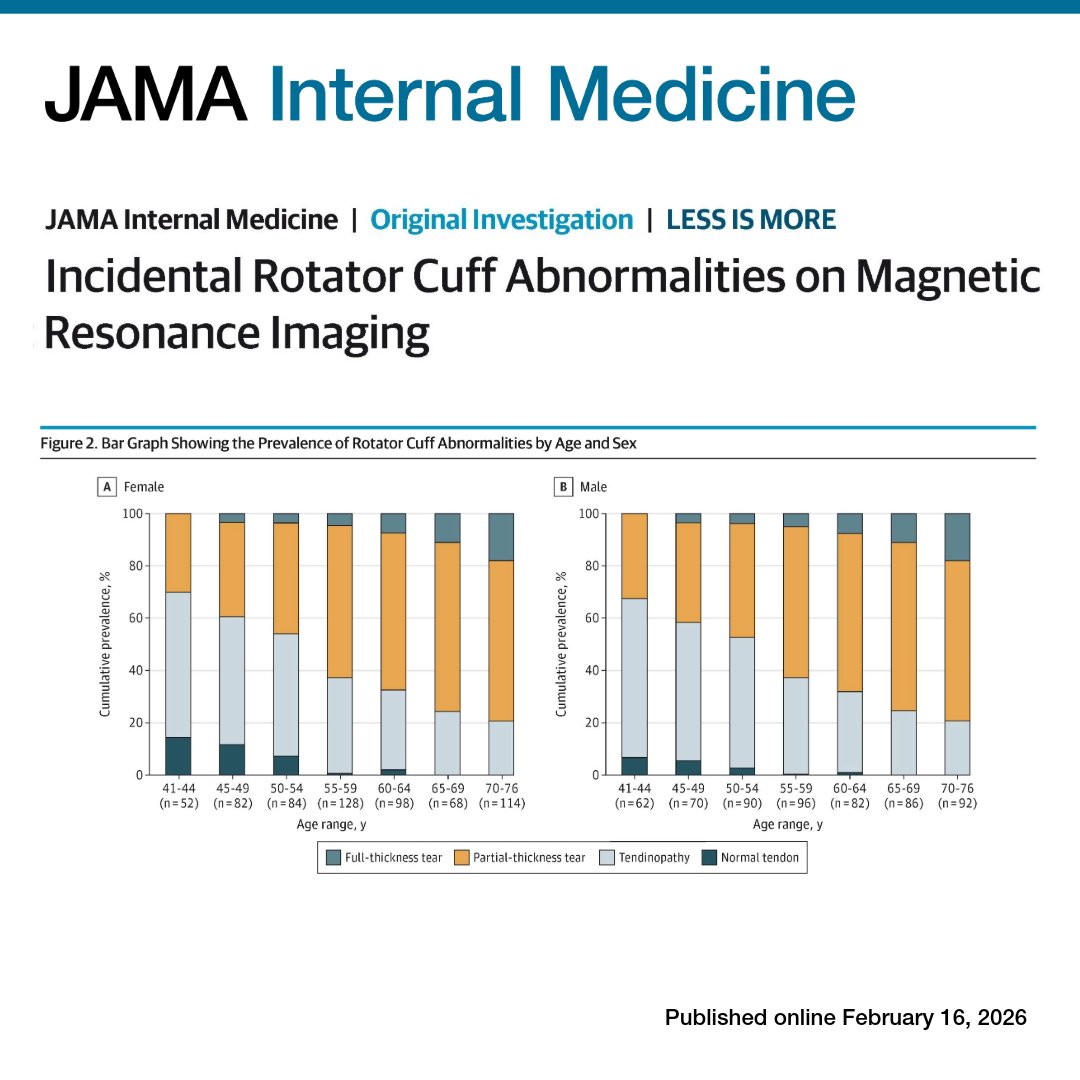
From @JAMAInternalMed: #RotatorCuff abnormalities on #MRI were found in 99% of adults aged 41 to 76, including 96% of asymptomatic shoulders, indicating most findings are age-related rather than disease.
https://t.co/f33KbhzT4z
I wrote this on X yesterday: Bending from the knees (instead of the back) ruined a generation. Now they’re giving horrible advice to the next generation.
It was an experiment. I was curious where people would go with this.
When I wrote it... I wasn’t saying technique doesn’t matter. And I wasn’t saying people should lift recklessly.
I was pointing out how a coaching cue became a fear-based rule—and how that rule shaped how people think about their bodies. Fear grips people today. In my office people fear movement patterns, jumps, hops, stairs etc and always have a reason... I have X,Y or Z. When in fact... X,Y and Z would feel better if they trained properly.
“Lift with your knees, not your back” became “Never lift with your back.”
Over time, it became dogma.
The implicit message people absorbed wasn’t about load management or skill.
It was this: your spine is fragile.
And that idea stuck.
Many said there's data to support this... well... not really.
There is no high-quality randomized controlled trial evidence showing that teaching people to lift “with their knees instead of their back” reduces injury risk.
None.
This has been studied extensively in occupational health and ergonomics. Multiple trials have examined manual handling training—teaching people to squat instead of stoop, to protect their backs, and to use “proper” technique.
The result has been consistent: it does not reduce the incidence of low back pain or injury.
That doesn’t mean posture is irrelevant.
It means posture alone isn’t protective, as we were taught to believe.
Biomechanical studies also complicate the story.
Yes, different lifting strategies change how forces are distributed—between the spine, hips, and knees.
But spinal loading during stoop vs squat lifting is often similar, not dramatically lower with knee-dominant lifts.
And importantly: loading is not injury.
The spine is a load-bearing structure designed to bend, extend, rotate, and tolerate force. What it does not tolerate well is being underloaded for decades, then suddenly being asked to perform.
The same issue exists with deadlifts.
Despite how strongly people argue about “proper deadlift technique,” there are no RCTs proving that one deadlift style or one “correct” spinal posture reduces injury risk in isolation.
What is associated with lower injury risk?
– Gradual exposure
– Appropriate loading
– Consistency
– Supervision for beginners
– Building tissue capacity over time
Not rigid rules about spinal position.
This is the key point that often gets lost:
Fear-based movement advice doesn’t make people safer.
It makes them avoidant.
And avoidance leads to deconditioning—of muscles, connective tissue, bone, and yes, the spine itself.
That lack of durability or resilience causes harm... because now they're fragile. And now they'e at higher risk of injury.
So when I say that message “ruined a generation,” I’m talking about what happened downstream:
– People afraid to bend
– People afraid to lift groceries
– People who believe one wrong move will “blow out” their back
– People who never trained spinal tolerance at all
Now we’re at risk of repeating the same mistake—just with more jargon.
Good coaching isn’t “never bend your back.”
Good coaching is teaching people how to bend in various conditons, under appropriate load, with progression, so tissues adapt.
That applies to knees, hips, spines, shoulders—everything.
Technique matters, but capacity matters more. And capacity is built through exposure, not avoidance.
That’s why I posted what I did.
Not to dismiss form.
But to challenge fear.
I've met tons of researchers who hate stats!
If you're one of these, this book is for you ⤵️
Save (with 𝘤𝘭𝘪𝘱𝘱𝘦.𝘮𝘦) & Repost
The author says it perfectly:
"The most important concepts of statistics can be explained, so that ordinary people can understand it."
— No complex formulas.
— No expensive software needed.
— Just spreadsheets & clear thinking.
The book covers:
— Sample surveys
— Data presentation
— Confidence intervals
— Statistical tests
Written for people who need to collect data.
— Analyze results.
— Present findings.
But don't want to become mathematicians.
Real examples throughout.
— Like the Fitness Club survey with 30 kids.
Shows you exactly how to spot bias.
When to use different tests.
How to avoid common mistakes.
Perfect for public health researchers.
Statistics doesn't have to be scary.
(𝘢𝘵𝘭𝘦𝘢𝘴𝘵 𝘪𝘯 𝘵𝘩𝘦 𝘣𝘦𝘨𝘪𝘯𝘯𝘪𝘯𝘨)
💬 Comment if you'd like a link to download this book!
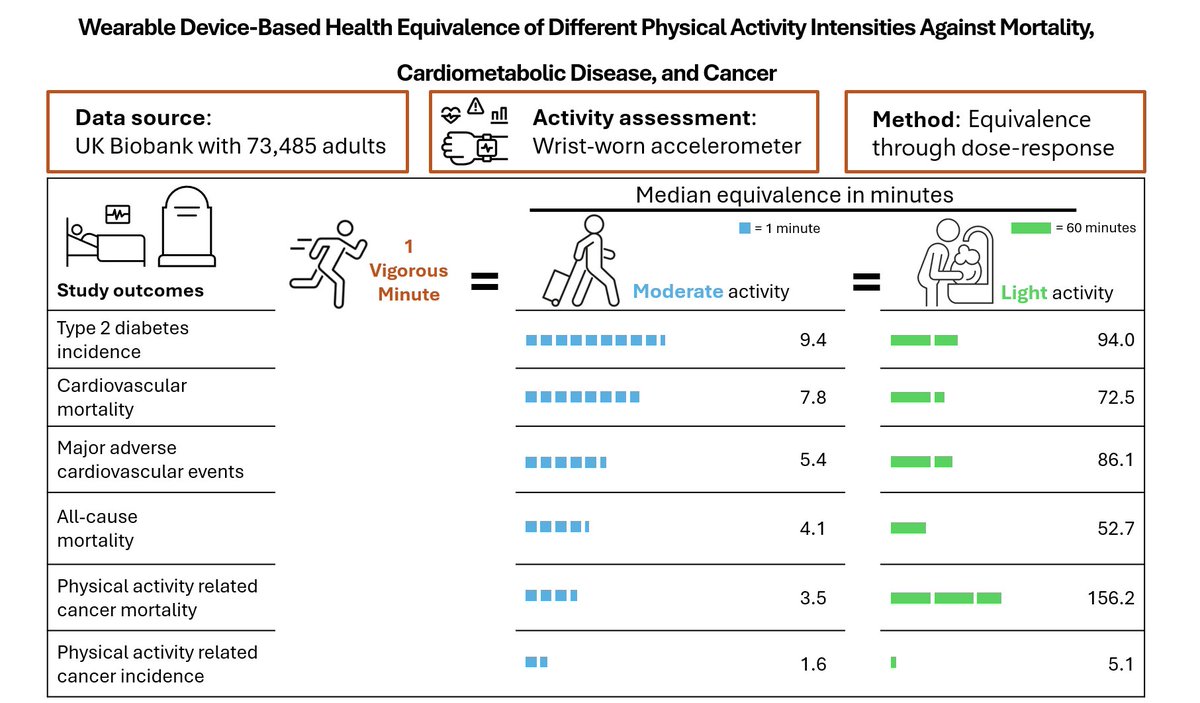
New paper, health value of each minute of different physical activity intensities against 6 health outcomes.
https://t.co/WwBNBA8bpz
Pretty much the whole industry (incl. @Google Fit @Apple Fitness+) assume that 1 minute of vigorous activity = 2 minutes of moderate activity, in terms of heart health value. Our UK Biobank analyses show that they may be far off, e.g. 1 minute of vigorous = 9.4 minutes of moderate = 94 minutes of light intensity activities, in terms fo type 2 diabetes risk. 1 min of vigorous = 7.8 mins of moderate = 73 minutes of light, in terms of CVD risk.
#wearables #interventions #guidelines #physicalactivityprescription #exercise #trackers #epidemiology
@Matthew_Ahmadi
Misinformation about health is flooding social media, exposing the limits of current regulations and intervention: what works and doesn't work
https://t.co/cRlQK1SSLy via
@EmmaGrundtvig et al