Australia's Bureau of Meteorology has been audited station by station. The report reveals that the agency has systematically erased cooling trends from the historical record, replacing them with synthetic warming.
At Rutherglen, Victoria for example, raw data from 1913 to 2006 showed a cooling trend. But the Bureau's adjusted chart flips this into warming. No physical justification, just statistical sleight of hand.
Comparisons at Deniliquin also reveals the tactic - how past highs have been lowered to fit the narrative. Minimums from 1910 onward here are reduced by as much as 1.8C. These edits weren't based on new evidence. They were applied decades later by opaque homogenization models.
The report's author calls it the rewriting of Australia's temperature history. But it's not just happening in Australia. Climate agencies in the UK and US have also cooled the past so as to exaggerate or even fabricate modern warming trends.
This manipulated data is then paraded as truth by politicians and the media with the original measurements buried.
You are probably drinking too much water.
Dr. Laszlo Boros strongly warns against drinking water habitually or in large quantities without the natural cue of thirst.
This directly contradicts much of the conventional hydration advice that encourages people to drink three liters of water per day, a gallon per day, or hit a predetermined hydration target.
He considers environmental water one of the sneakiest sources of deuterium because it enters the body directly.
Unlike food, it arrives without carbon.
It absorbs into tissues and mixes directly with your cytoplasmic water.
This matters because the body is already designed to produce its own deuterium-depleted water.
Every day.
As mitochondria combine protons with oxygen, they create metabolic water inside the mitochondrial matrix.
According to Dr. Laszlo Boros — Hungarian medical biochemist, retired professor at UCLA School of Medicine, author of 100+ peer-reviewed papers and one of the world's leading deuterium researchers — this is the most important water in the body.
And the amount of metabolic water you produce depends heavily on the fuel you burn.
Approximately 100 grams of fat generate around 110 grams of metabolic water.
100 grams of carbohydrates produce only around 55 grams.
Nearly half as much.
Fat produces substantially more metabolic water per unit of food consumed.
This is one reason Boros spends so much time discussing fat metabolism and follows a carnivore ketogenic diet himself.
Excessive water intake creates a different problem.
According to Boros, drinking too much water — especially without salt — lowers blood osmolarity, which causes the brain to swell.
The pituitary gland sits inside a tight bony compartment at the base of the skull called the sella turcica.
When the brain swells from excess water, it physically compresses the pituitary gland inside this rigid bone.
That can shut down its ability to release crucial hormones.
Because the pituitary regulates sex hormones, fertility hormones, and thyroid-stimulating hormones, overdrinking can disrupt the entire endocrine system and contribute to chronic conditions like infertility and autoimmune thyroid issues.
The most critical hormone affected is antidiuretic hormone (ADH), also called vasopressin.
ADH normally signals the kidneys to reabsorb and preserve the body's own deuterium-depleted metabolic water.
Without ADH, your body cannot hold onto its clean water.
Boros points out that if you drink a liter of water in 30 minutes, you will simply pee it right back out.
Because people constantly suppress ADH by forcing themselves to drink water, Boros notes that the average American has an ADH level of about 0.6, compared to a normal level of 1.0.
In his view, the general population has essentially given itself a water-wasting disease called diabetes insipidus.
Diabetes insipidus is a condition where the body cannot properly balance fluid levels, leading to excessive production of large volumes of urine and intense thirst.
The downstream consequence is not just water loss.
The suppression of these metabolic regulators can contribute to the buildup of visceral and subcutaneous fat.
To show how dangerous overriding thirst can become, Boros gives an extreme example.
A mother in New Jersey took her kids on a mountain walk and drank approximately 1.5 liters of water in 15 minutes.
The rapid water influx caused severe brain swelling.
By the time she drove back to her garage, she fell into a coma and died.
Extreme case.
But the principle is clear.
More water is not always better.
Now, the natural objection arises:
"What about the studies showing performance drops before thirst kicks in? You can't rely on thirst — it lags behind the actual need."
Boros addresses this directly.
His argument:
Those studies were almost certainly run on subjects whose ADH system was already suppressed from years of chronic overdrinking.
If you have spent years forcing yourself to drink 3-4 liters a day whether thirsty or not, you have gradually damaged your hypothalamic cells' ability to produce ADH.
It takes approximately six months of gradually reducing water intake to restore ADH production to normal levels.
A subject with suppressed ADH entering a dehydration study will show impaired performance before thirst — not because thirst lags, but because their thirst signal itself is broken.
They lost the ability to produce sufficient ADH — the key hormone in the hypothalamic system that drives both water retention and thirst signaling.
Prime the subjects correctly — gradually restore their ADH production before the study begins — and Boros argues you would see a completely different result.
The studies are not wrong.
They are measuring the wrong population.
Boros does not see a reason to drink water when you are not thirsty.
Thirst is the signal.
It tells you when to drink.
It also tells you when to stop.
His argument is not that people should restrict water.
His argument is that people should stop overriding the signals that evolved to regulate it.
This is an important distinction.
Boros is not saying: Don't drink water.
He is saying: Drink when thirsty. Drink enough. Then stop.
Even Dr. Gabor Somlyai's deuterium-depleted water protocols in his book "Deuterium Depletion" recommend around 1.5–2 liters per day.
Not a gallon per day.
Not constant hydration.
This is the researcher who has followed 2,649 cancer patients over 32 years and whose company sells deuterium-depleted water.
If anyone had an incentive to recommend drinking more of it, it would be him.
Yet his protocols still recommend around 1.5–2 liters per day.
Thirst is a precise physiological signal.
Just like hunger.
Like sleepiness.
You don't go to sleep just because a bed is in the room.
The body already knows when it needs water.
The problem begins when we stop listening.
Grounding increased ATP production and reduced mitochondrial ROS.
These are the results of the first grounding-mitochondria experiment ever published.
For years, grounding's effect on oxidative stress was considered speculative — lacking direct empirical support.
In June 2025, Giulivi and Kotz at the University of California, Davis changed that.
Using fluorescence-based assays specifically designed to avoid the confounding effects of metal probes, they performed the first direct measurement of grounding's effect on mitochondrial function.
Three conditions were tested:
Grounded — wire submerged in solution and connected to earth.
Sham — identical setup, same wire submerged in solution, but not connected to earth.
Not grounded — no wire, no cable, no connection of any kind.
What they found:
Grounded mitochondria produced 5–11% more ATP.
Grounded mitochondria produced 22–33% less ROS.
Mitochondrial membrane potential decreased 5–6%.
That last finding sounds like reduced mitochondrial function.
But it is the opposite.
The authors explain that a modest reduction in membrane potential can dramatically reduce ROS production while maintaining or increasing ATP output.
The mitochondria run cleaner and more efficiently.
The authors connect this directly to the stakes that matter.
Lower ROS means less oxidative damage.
And less oxidative damage means slower progression of the processes associated with aging and chronic diseases linked to mitochondrial decline.
The implications extend far beyond a test tube.
This is the same mitochondrial machinery operating inside every cell of your body.
It may help explain why ungrounded modern humans accumulate oxidative damage at rates their ancestors did not.
Naturally, a skeptic might ask:
What if the wire itself changed the chemistry?
What if trace metals, surface effects, or physical contact influenced the results?
That is precisely why the sham condition existed.
The sham used the identical setup.
Same copper wire.
Same stainless-steel wire.
Same physical contact with the solution.
The only difference:
No connection to earth.
So what did the sham condition show?
For ROS production, the sham and not-grounded groups were statistically indistinguishable.
The physical presence of the wire alone could not trigger the dramatic reduction in oxidative stress.
The same pattern appeared in ATP production.
While the sham condition produced a small increase compared to the not-grounded group, the highest ATP production occurred only when the system was connected to earth.
The physical presence of the wire was not enough.
The electrical connection was.
Once that same wire was connected to earth, ATP increased and ROS fell significantly.
Meaning, the effect was not mechanical. Not chemical. Not coincidental.
It was electrical.
And the story becomes even more interesting.
The authors note that the gold-standard method for measuring mitochondrial respiration — Clark-type oxygen electrode polarography — has historically been performed under grounded conditions to reduce electrical noise.
In modern oxygraph systems, mitochondria routinely come into contact with metal electrodes.
According to the authors, that grounding influences charge distribution, membrane potential measurements, and potentially oxygen consumption rates themselves.
Because most mitochondrial studies employ metal probes, the authors warn that prior research may suffer from underestimated respiratory control ratios or misinterpretation of mitochondrial coupling efficiency.
The implication is striking.
Many researchers believed they were measuring baseline mitochondrial function.
In reality, they may have been measuring what the authors call the natural bioenergetic state.
A state modern humans have largely lost.
Modern humans are largely ungrounded.
Most mitochondrial experiments were not.
I'm a cardiologist. Something just happened today that I genuinely did not see coming — and it could change the future of preventive medicine more than anything I've written about on this platform.
Midjourney — the AI company that became famous for generating images from text prompts — just announced a medical hardware division and unveiled a working prototype of a full-body scanner unlike anything that's ever existed.
It's called the Midjourney Scanner. And it works like this.
You step into a shallow pool of water. You stand on a platform that slowly descends — about two inches per second — through a ring containing roughly half a million tiny ultrasonic transducers, each the size of a grain of sand. Every one of them acts as both a speaker and a microphone, sending ultrasonic waves through your body from every angle and recording what comes back.
60 seconds later, you step out. The scan is done.
No radiation. No magnets. No claustrophobia. No IV contrast. Just sound, water, and an almost incomprehensible amount of computing power — roughly 2 petaflops processing 17 gigabytes per second of raw acoustic data — reconstructing a 3D map of your entire internal anatomy down to half a millimeter resolution.
Organs. Tissues. Blood vessels. Bones. Muscle. Fat distribution. All segmented by AI in real time.
As a cardiologist who has spent months writing about how the standard screening playbook misses the majority of future heart attacks — this is the technology I've been waiting for without knowing it existed.
Here's why this matters for the future of your heart.
Right now, getting a detailed look inside your cardiovascular system requires either a CT scan (radiation), an MRI (magnets, claustrophobia, 45-60 minutes, $1,000+), or a coronary CT angiogram (radiation, IV contrast, limited availability). These are powerful tools. I order them regularly and they save lives.
But they're reactive. You get them when something is already suspected. They're expensive. They're uncomfortable. And for most people, they happen once — maybe twice — in a lifetime.
Imagine instead: a 60-second scan with no radiation that you could repeat monthly or quarterly. Tracking cardiac structure over time. Watching body composition shift. Detecting changes in organ size, fluid distribution, or vascular architecture before symptoms ever develop. Building a longitudinal dataset of YOUR body that AI can analyze for patterns no single snapshot would reveal.
That's what Midjourney is building toward.
The company plans 50,000 scanners worldwide over six years, with capacity for a billion scans per month. The first location — the "Midjourney Spa" in San Francisco — opens at the end of 2027 with 10 scanners alongside saunas, cold plunges, and a gym. The scan costs a few dollars. The experience is designed to feel like wellness, not medicine.
The technology is built on Butterfly Network's ultrasound-on-chip platform — 40 modules per scanner — combined with Midjourney's own AI segmentation and reconstruction stack. David Holz, the founder, claims the system aims for image quality comparable to MRI in many aspects but at nearly 100x the speed with zero radiation.
Now the caveats — because I'm a physician and the caveats matter enormously.
This is a Gen 1 prototype. About a dozen people have been scanned so far. Current scan time is actually closer to 20 minutes, not 60 seconds — the system is bottlenecked by bandwidth and reconstruction algorithms. The 60-second target is aspirational for future hardware generations.
It is not FDA-cleared for diagnostic use. Midjourney is starting with body composition maps — a category below diagnostic imaging in the regulatory hierarchy. The path from "beautiful 3D body scans" to "clinically validated diagnostic tool that your cardiologist can act on" runs through years of clinical trials, comparative studies against MRI and CT gold standards, and FDA review.
No independent clinical validation has been published. The imaging claims come from Midjourney's own demonstrations. Comparative data against established modalities does not yet exist.
And the privacy implications of full-body internal scans at planetary scale — a billion scans per month — is a conversation that hasn't even started yet.
So I want to be precise. This is not ready for clinical medicine today. It may not be ready for years. Many ambitious medical hardware projects have failed in the gap between prototype and product.
But.
The fact that a working prototype exists — producing real segmented 3D anatomy from sound waves and compute alone — means the physics works. The engineering works. The question is no longer "is this possible" but "how fast can it be validated and scaled."
And if it is validated — if the resolution holds up against MRI, if the AI segmentation proves reliable, if the regulatory path clears — then what we're looking at is the most significant new imaging modality in 50 years.
For my entire career, preventive cardiology has been limited by the fact that seeing inside the body is expensive, slow, uncomfortable, and infrequent. We catch disease late because we image rarely. We image rarely because imaging is hard.
A 60-second, no-radiation, spa-based full-body scan that costs a few dollars would demolish every one of those barriers.
I've written about AI detecting inflamed arteries. About gene editing curing cholesterol. About GLP-1 drugs rewriting metabolic medicine. About cellular reprogramming reversing aging.
This is the missing piece: the ability to see inside every human body, routinely, safely, and affordably — so all of those interventions can be deployed before the disease arrives instead of after.
The company that taught AI to generate images from imagination just built a machine that generates images from the human body.
The future of medicine showed up today from the last place anyone expected.
Halogen. Incandescent. Sodium streetlamps.
All warm. All yellow. All GONE.
Ripped out in a single decade and replaced with white LED glare.
Headlights that blind you. Streetlamps like floodlights. Bulbs that scream NOON at midnight.
Brighter on paper. Colder, harsher, uglier in the real world.
Everything bleached the same dead white.
Bring the warmth back.
I'm done with bland.
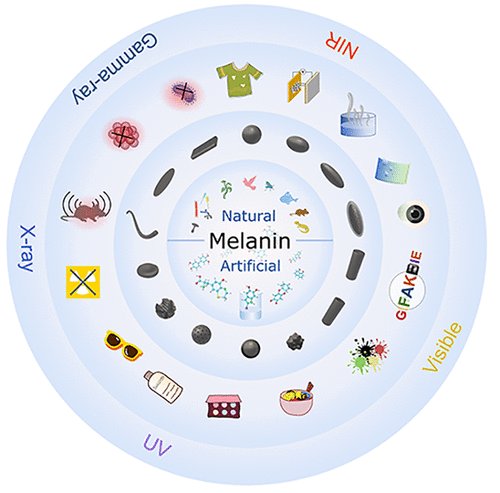
Melanin is the missing link explaining how humans interact with the energy around them.
It uses light to generate an electric field within the body.
Sunlight, grounding, organic food and healthy relationships strengthen this field.
Blue light, non-native EMFs weaken it.
Wait bruh. Eating a food "out of season" or something flown in from another part of the world can be bad for my health?
Yes.
Your body reads seasonal and light coded signals from the food you eat.
This 2018 study in Nutrients (PubMed 30115853) fed rats the exact same cherries but the cherrys were fed to the rats either “in season” or “out of season.”
What does that mean?
Rats were kept under controlled light cycles that mimic seasons (long day “summer” vs. short day “winter”). They were fed the same cherries (harvested in summer long day conditions) either “in season” (matching the rats’ current light cycle) or “out of season” (a mismatched shorter light cycle). Some rats were also on a high fat obesogenic diet.
So what happened?
Eating the cherries out of season (a photoperiod mismatch) changed gene expression and the physical structure of white fat tissue in a way that made the rats fat cells more prone to storing fat, especially when combined with a junky diet. In season cherries did not have the same effect.
Your ancestors ate with the seasons for a reason.....they didn't have giant cargo planes and ships lol. But that protected them.
Modern grocery stores and fed ex let us eat summer fruit in February and your metabolism pays a bad health toll.
Eat local & in season gets you a better nutrient profile and your body gets the right environmental signals.
Less inflammation and better fat metabolism when your eating habits are aligned with nature instead of modern life.
Now combine this with no eating at night after the sun goes down and you will have a diet approved by the natural force that developed you over millions of years.
NEW PAPER: Exercise, circadian rhythms, and muscle regeneration
(Biggest takeaways from this paper)
Your muscles have their own circadian clock. When it gets out of sync with age, muscle repair slows, satellite cells weaken and sarcopenia (age related muscle loss) accelerates.
Timed exercise (“chrono-exercise”) acts as a powerful secondary zeitgeber that resets those muscle clocks, boosts regeneration, mitochondrial function and protein synthesis.
Morning workouts advance your central clock, lower post wake cortisol, improve sleep quality and amplify anabolic hormones.
Afternoon/evening workouts align with peak muscle strength, gene expression for glycolysis & repair and may enhance hypertrophy even more effectively.
So when your circadian rhythm drifts with age and chronic dark days and bright nights, repair slows and you lose muscle faster. But “chrono-exercise” (timing your workouts right) resets that clock and supercharges regeneration.
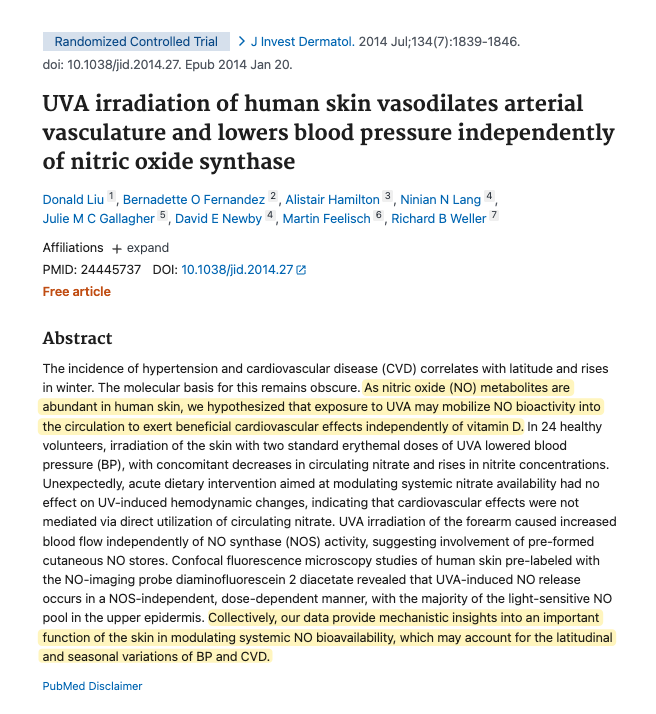
Richard Weller’s (@WellerRichard) team shone UVA on human skin and watched blood pressure drop.
The skin released nitric oxide stored in its upper layers, Independent of vitamin D entirely.
Sunlight lowers blood pressure through a pathway NO PILL TOUCHES.
"avoid the sun at all costs" may have killed more people than it ever saved.
PMID: 24445737
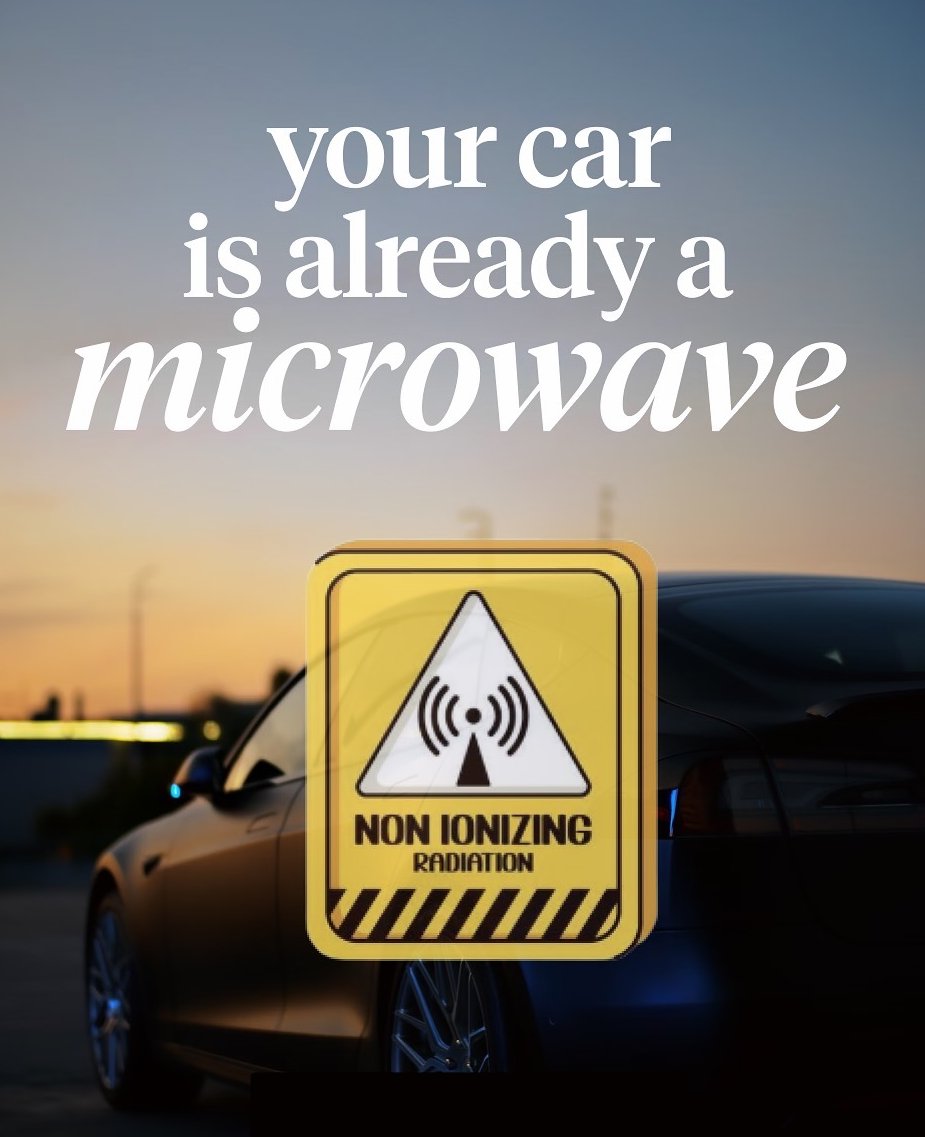
Your Car is already a Microwave.
Quite Literally.
"RF Radiation intensity was estimated to be 393% higher inside a car when cellphone is used along with a Bluetooth. The estimated SAR values are 514 times higher than the biological limit at 1800 MHz"
Now Imagine an Electric car with 40+ RF sensors?