Coding agents can now operate graphics tools. How will they change the way we design graphics algorithms and conduct graphics research?
Join the discussion at the 1st Workshop on Agentic Graphics on Dec 1 afternoon at #SIGGRAPHAsia2026!
🔗 https://t.co/0HhJfgsWkP
🌍 Seeing agents build worlds with code, I keep coming back to one thought:
🎯 I’d make that bet again.
In June 2025, we released IR3D-Bench, my co-first-author work published at NeurIPS 2025 Datasets & Benchmarks.
We asked a simple question: if a model claims to understand a scene, can it reconstruct it?
Give it an image. Ask it to predict the objects’ positions, shapes, sizes and materials. Turn those structured scene parameters into a Blender render. Put the reconstruction next to the original.
Now there is something concrete to inspect. Did it miss an object? Put it in the wrong place? Get the spatial relations right?
A fluent answer can hide uncertainty. A misplaced object cannot.
Our experiments showed a gap worth paying attention to: models could recognize many attributes and use rendering tools, yet precise spatial reconstruction remained difficult. Feeding the rendered result back to the model helped improve some failed cases.
Recently, I’ve been following work from other teams exploring related questions:
🧱 3DCodeBench: procedural 3D assets from text or images.
🎬 4DCodeBench: reconstructing geometry, appearance and motion from video as graphics programs.
🧠 Code as Worlds: executable world hypotheses for physical reasoning.
These are different tasks, with distinct contributions from their respective authors. I’m excited to see the research direction develop; I’m not claiming that these projects originated from ours.
Here’s why I keep betting on code as world representation.
Once a model expresses a scene through an executable description, it has to commit to details. Where is the object? How large is it? What changes over time? Which relationships must hold?
Those choices can be run, inspected and challenged. Change a coordinate. Render another view. Check whether the result still agrees with the observation.
There are limits. A convincing image, correct motion and successful interaction are three different tests. IR3D-Bench studies static synthetic scenes; it does not solve full physical-world modeling.
But that is a concrete place to start, and a direction I want to keep working on.
An AI says it understands the world. Show me what it can reconstruct.
▶️ We’ve put together a 55-second demo of IR3D-Bench. Watch the video, compare the reconstructions, and judge the idea for yourself.
🌐 Project & demo: https://t.co/2GL5MXTiO4
📄 Paper: https://t.co/W3hdrSuuaw
💻 Code: https://t.co/c3o2vlZwQh
Students sometimes ask me if it still makes sense, in this accelerating age, to pursue a PhD in AI.
Perhaps counterintuitively, I think it's a great time to do so.
I wrote up some thoughts on this here: https://t.co/RRqGR0qi1R
Introducing GAE — Geometry-Native Autoencoder.
The key choice is where generation happens. GAE lets video models generate directly in a geometry-native latent space.
We believe geometry is more fundamental than texture for future video and world models. Texture describes how a scene looks; geometry describes how it is structured and what becomes visible as the camera moves.
GAE learns a compact latent space from geometry features, then trains a video generator in that space. Camera trajectories guide generation, and the generated state decodes into RGB, depth, and 3D.
Generation in a geometry-native space is the core.
🎬 Watch the scenes unfold in the teaser below.
Paper: https://t.co/lMJ6aQua4S
Code: https://t.co/VEhxfTzBGa
Project: https://t.co/kCF8YeZuTH
Introducing GAE🥳🥳
Generate once. Decode RGB + point clouds.
GAE generates directly in a geometry-native latent space. The same generated latent supports both appearance and 3D geometry.
The key choice is where generation happens. GAE compresses geometry-foundation features into a shared latent space. A conditional flow model generates directly in that space; RGB and geometry are decoded from its final state.
The video pairs show camera-conditioned world generation; the character pairs show text-to-image generation. These native showcase clouds are not reconstructed from generated RGB.
Code: https://t.co/euE8mZKI4G
Page: https://t.co/M0dMYwIOPp
A painting you can walk into.
A world you can come back to.
Meet WorldCrafter: a video world model with memory.
Through the door in Las Meninas. Back again. Then a look in Morisot's mirror.
Paper and model are available now:
Code: https://t.co/SKCLx2bCo9
Page: https://t.co/Hp2MQi04Wd
🚀 Excited to share our latest work MotionCrafter!
🌟 The first Video Diffusion-based framework for joint geometry and motion estimation.
📄 Paper: https://t.co/BhX6cR80PA
🌐 Project page: https://t.co/8l0VpqlmmJ
#ComputerVision#3DVision#3DReconstruction#OpenSource#arXiv
✨Excited to share Olaf-World!
Why do latent actions fail to transfer across contexts? Non-identifiability.
We introduce SeqΔ-REPA: align latent actions with semantic effects from frozen self-supervised video reps → strong zero-shot action transfer + data-efficient adaptation.
Check out our VolSplat for improving multi-view consistency and geometric accuracy of feed-forward #3DGS with voxel-aligned prediction!
Project: https://t.co/yDLAyBg847
Paper: https://t.co/awyNOEC1RB
Code: https://t.co/ewoJyWeoQF
🚀A new way to use diffusion models for style transfer!
Style Matching Score (SMS) is accepted to #ICCV2025🌺
We reframe image stylization as a style distribution matching problem.
-Paper: https://t.co/3Aj1IMcijN
-Code: https://t.co/CXi7sc1iPx
-Project: https://t.co/l0m5mnsd2v
One of the biggest bottlenecks in deploying visual AI and computer vision is annotation, which can be both costly and time-consuming. Today, we’re introducing Verified Auto Labeling, a new approach to AI-assisted annotation that achieves up to 95% of human-level performance while cutting labeling costs by up to 100,000x and time by 5,000x.
Read the full paper: https://t.co/eKc1sALnV3
Amazing slides for anyone wanting to learn GS from scratch. Thanks, Forrest! Special thanks for highlighting our #LightGaussian work, where visibility-based importance scoring to prune 'least-important' Gaussians is crucial for rendering efficiency.
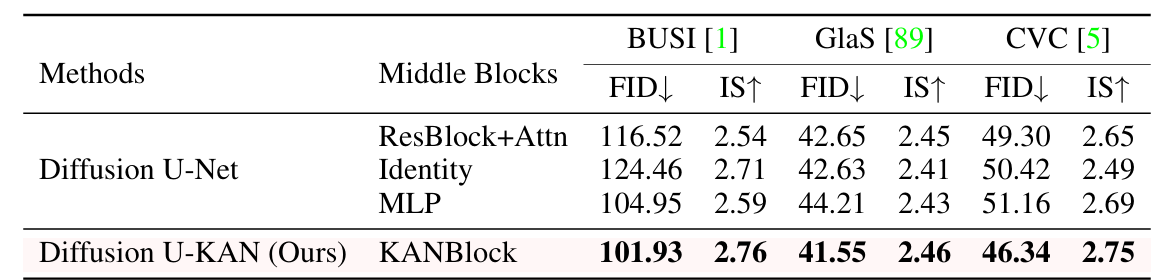
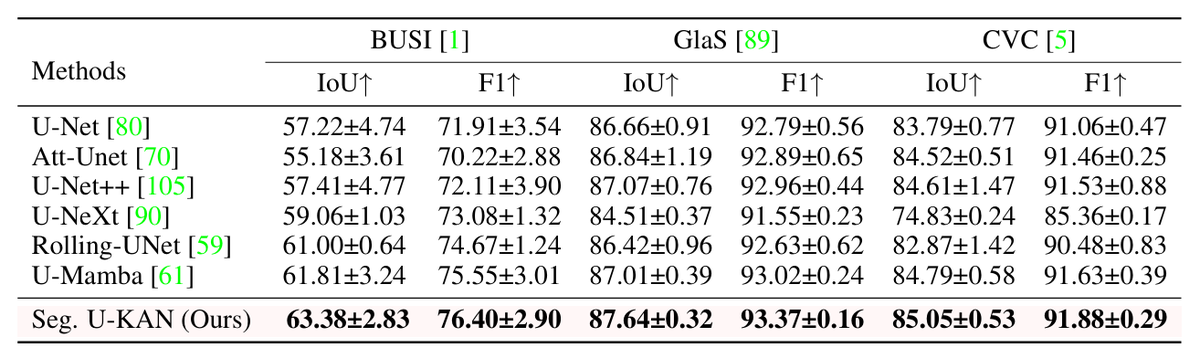
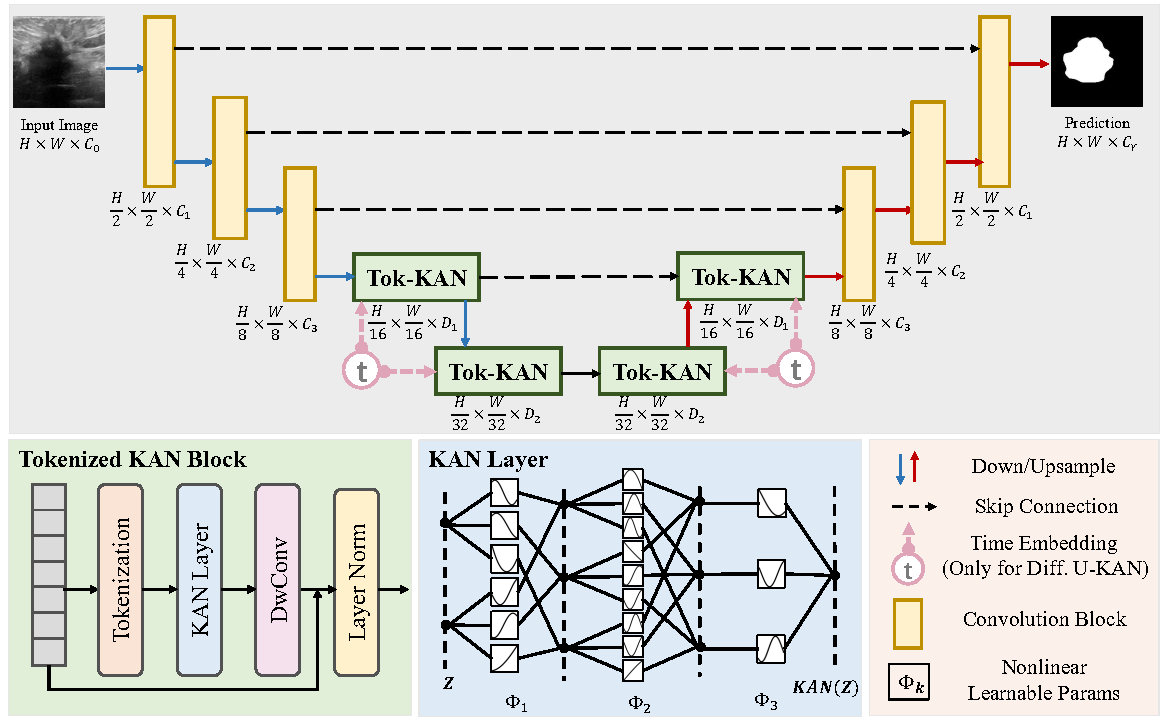
🧐Can the success of Kolmogorov Arnold Networks (KAN) in mathematical and physical domains be extrapolated to more universally applicable vision tasks? Yes, U KAN!
📢By instilliing the potential of KAN into U-Net architecture, we develop a strong vision backbone called U-KAN, which is characterized by enhanced non-linear modeling capabilities, improved interpretability, heightened accuracy and competitive efficiency. These endeavors are not only empirically validated in medical segmentation but also exhibits efficacy as an improved U-Net noise predictor in Diffusion model for generative tasks.
Project Page: 👉https://t.co/zcqVPPv0OJ
Paper: 📸https://t.co/mIsaJ7sD44