Most modern drainage systems struggle after a few decades. Tipón’s hydraulic channels in Peru have survived for centuries while still moving water with remarkable control.
Look closely at the gradient beside the staircase. The flow speed changes without overflowing the terraces, which suggests the slope was carefully calculated long before modern fluid engineering existed.
The Inca Empire relied heavily on gravity-fed infrastructure across difficult mountain environments.
Could modern cities build public infrastructure today with this kind of long-term durability in mind?
The DOJ's deadline to charge Fauci for lying under oath about funding gain-of-function research in Wuhan is in 6 days. We can’t allow the statute of limitations to run out. He MUST be charged!
Agree? RT.
Photosynthesis shouldn't work.
the energy from a photon has to travel through a forest of proteins to reach the reaction center in 200 femtoseconds.
That's faster than classical physics allows.
In 2007, Berkeley proved the electron doesn't pick one path.
It takes every possible path simultaneously and collapses into the fastest one.
a leaf does quantum computing at room temperature.
While millet is now unknown to most Filipinos, recent archaeology showed that ancient Filipinos primarily cultivated it (along with taro) as their staple food, not rice which came way way later. Millet makes good doughnuts by the way. My best doughnut yet.
Modern city infrastructure often falls apart within a single lifetime. Yet the water at the Tipón archaeological site in Peru has been flowing through these exact stone channels for over 500 years.
The Incas built a self-sustaining hydraulic network without a single electric pump, and we still aren't entirely sure how they mapped the underground springs with such flawless precision.
The crude walls at Ollantaytambo completely clash with the absurd precision of this carved fountain. It leaves an uncomfortable gap in the official timeline, suggesting a much older civilization actually laid this flawless groundwork.
The water pouring through this 2,000-year-old monument is running on the exact same Roman plumbing system that existed before the empire collapsed.
Archaeologists digging out the Antonine Fountain at Sagalassos realized the original mountain spring was still completely functional under the centuries of earthquake rubble.
Our modern infrastructure struggles to last a decade, yet this ancient pipeline seems to have just been quietly waiting for someone to turn the tap back on.
#Illustration by American artist, Edwin John Prittie for the children's book, 'Bumper The White Rabbit', first published in 1922, by American writer, George Ethelbert Walsh .
It looks like Milan’s high fashion is finally supporting cannabis legalization 🧐
Just look at this masterpiece - a stunning cannabis🌱 bud suit with incredibly detailed trichomes! 💃
Fashion meets the canna culture, yeap! 💚🫂
Fascinating! @JoelSalatin talks about ancient grasses that his pigs have awakened.
Nobody can identify these grasses & the leading theory is that their seeds have lay dormant for 100s of years, waiting for the right conditions.
This is environmentalism by participation.
En 1530, Michelangelo est condamné à mort par le pape Clement VII après s’être opposé aux Medicis
Il se cache 2 mois dans une pièce sous la Basilique San Lorenzo, où il dessine au charbon sur les murs
La pièce est redécouverte en 1975
Les dessins n’étaient pas destinés être vus
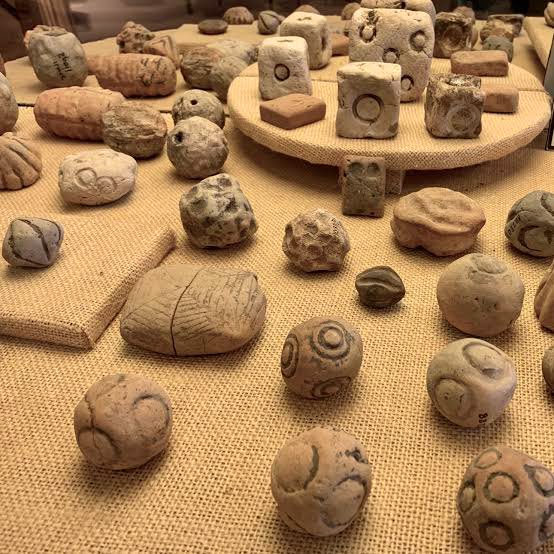
At Poverty Point in Louisiana, archaeologists kept finding the same thing over and over.
Small pieces of fired clay.
Thousands of them.
Actually tens of thousands.
They weren’t beads.
They weren’t sling stones.
They weren’t ornaments.
They were cooking technology.
Archaeologists call them (PPO) Poverty Point Objects.
Hand-shaped from local clay.
Usually about the size of a golf ball.
Fired hard enough to survive repeated heating.
Most date to roughly 1700–1100 BCE, when the enormous earthworks at Poverty Point were being built.
And they solved a simple but stubborn problem: how to boil food without pottery.
The clay pieces were heated in open fires and then dropped into pits or containers lined with baskets, hides, or packed earth filled with water and food.
The hot clay transferred heat into the liquid.
Batch after batch.
Meal after meal.
Clear evidence of repeated, organized cooking on a scale large gatherings would require at one of the biggest earthwork centers in ancient North America.
No metal tools.
No ceramic pots.
Just clay, fire, and people in the Lower Mississippi Valley solving the problem of boiling food more than 3,500 years ago.
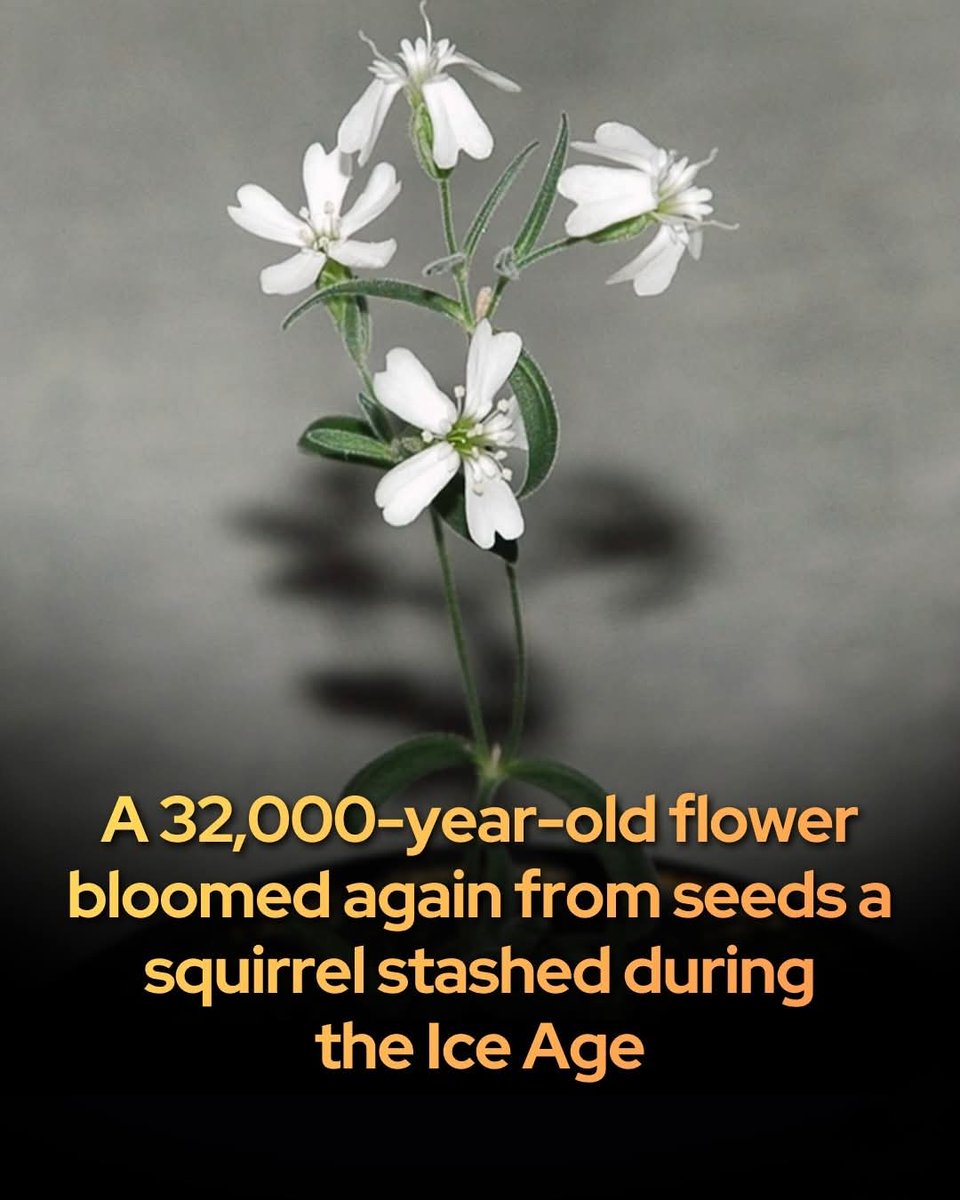
Scientists revived a plant from 32,000-year-old seeds found frozen in the Siberian permafrost.
Making this the oldest organism ever brought back to life.
Researchers discovered the seeds of the Silene stenophylla plant buried 124 feet beneath the earth near the Kolyma River. Tucked away inside an Ice Age squirrel’s burrow, the seeds were preserved at a constant 19°F (-7°C), a deep freeze that effectively prevented cellular decay since the era of woolly mammoths. While the mature seeds were damaged, scientists extracted viable tissue from immature samples and placed them in a sterile growth medium. The result was a successful regeneration, leading to plants that not only flowered but also produced fertile seeds of their own, displaying subtle evolutionary differences from their modern-day descendants.
This extraordinary feat does more than just resurrect a lost piece of history; it provides a vital blueprint for the future of biodiversity. By studying how these cells remained viable across thirty-two millennia, experts hope to enhance the longevity of modern seed banks like the Svalbard Global Seed Vault. As permafrost continues to yield living fragments of ancient ecosystems, the discovery suggests that the Earth’s frozen layers are not just a graveyard of the past, but a potential laboratory for preserving the genetic heritage of our planet against future global disasters.
source: Yashina, S., Gubin, S., Maksimovich, S., Yashina, A., Gakhova, E., & Gilichinsky, D. Regeneration of whole fertile plants from 30,000-y-old fruit tissue buried in Siberian permafrost. Proceedings of the National Academy of Sciences.