🚨 Attention🚨🚨🔥🔥🔥:
Remember there are many scammers and misleading information about #pinetwork.
#pi PCT didn't authorized any exchanges. They didn't make any connections with any exchanges. Stay updated, aware and protect your #pi coins until open mainnet.
#pinews
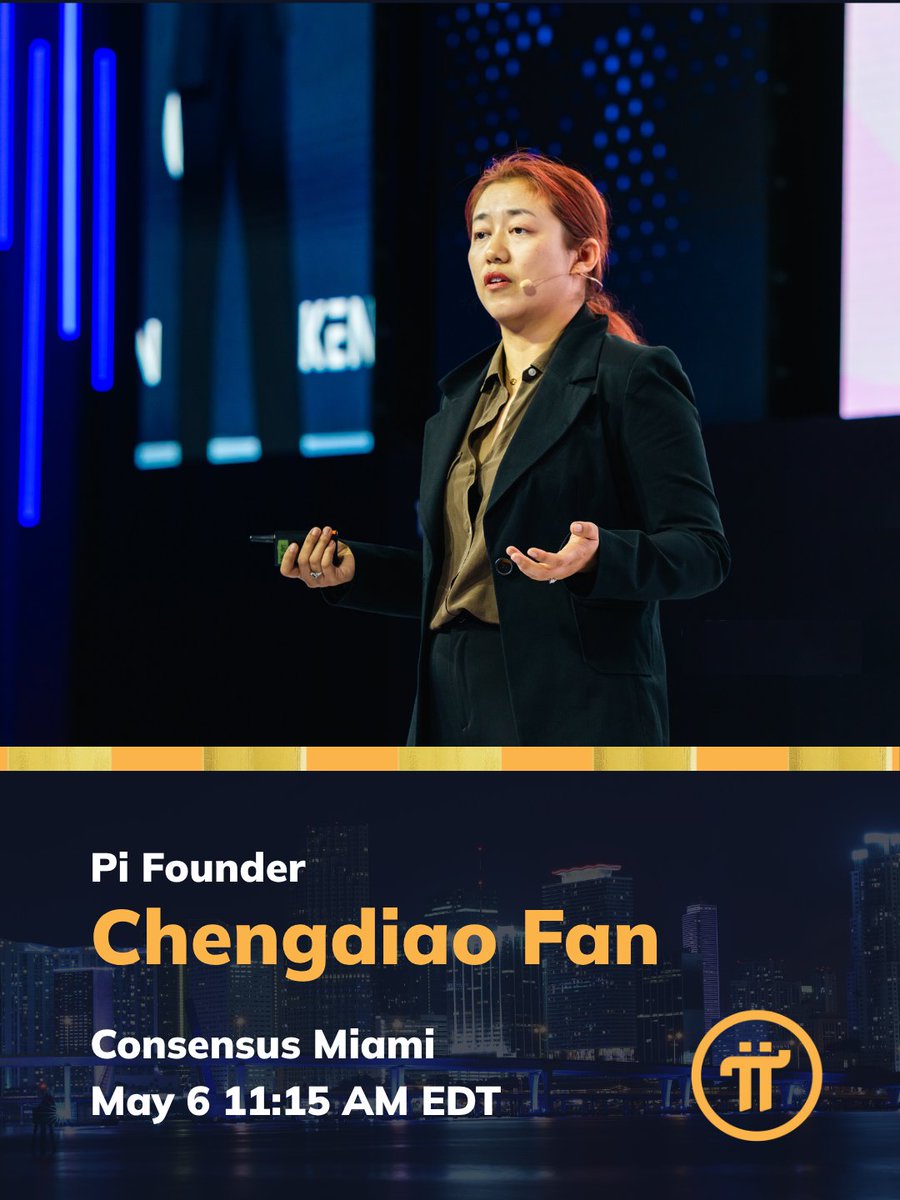
Pi Founder Chengdiao Fan’s talk at Consensus 2026 was centred on a simple but important challenge:
The frequent misalignment between token design and real product innovation.
Her presentation, “Aligning Web3, AI, and Blockchain for Utility,” explored how tokens can be treated as tools that can support user acquisition, product engagement, and long-term utility.
One implementation of this approach is Pi Launchpad, Pi’s design for ecosystem tokens and launch mechanisms that aims to help products acquire real users who can engage, provide feedback, and use those tokens within actual product experiences.
As AI makes it easier to build applications, the limiting factor is no longer creation.
It is distribution and usage.
Pi’s approach combines blockchain infrastructure, innovative token and launch mechanisms, identity verification, and a large engaged network of real users to address that gap directly.
Enjoy the full talk & leave your thoughts on Pi’s approach to tokens and launch mechanisms!
https://t.co/YiYqcxo0jJ
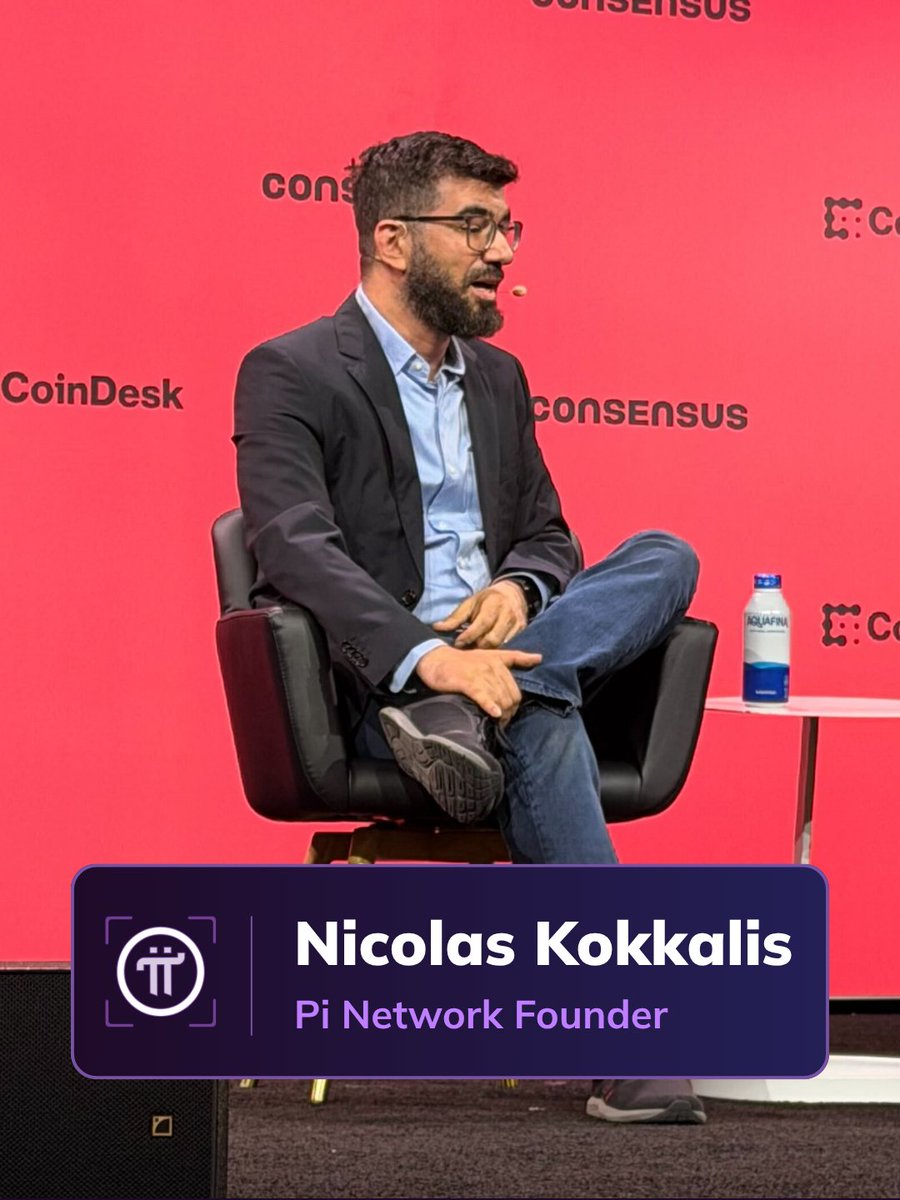
Watch Pi Founder Nicolas Kokkalis speak in the Consensus 2026 panel “How to Prove You’re Human in an AI World (Without Doxing Yourself)”.
The discussion focused on how digital trust and identity verification systems must evolve as AI makes it possible to generate bots, agents, and synthetic identities that closely resemble real human behavior at scale.
The panel explored a core question for the AI era: how systems can continue to verify real human participation without requiring unnecessary disclosure of personal information.
A key theme was that proof of humanity is context-dependent, with different systems requiring different levels of verification depending on use case and risk.
The importance of privacy-preserving design was also highlighted, ensuring verification can scale while remaining usable for real users.
As AI lowers the barrier to building and interacting online, the harder challenge may be connecting digital systems to real users, trusted participation, and meaningful utility.
Pi’s Layer 1 blockchain, identity verification, payments infrastructure, non-custodial wallets, smart contracts, and engaged global community are all part of Pi’s ongoing work to address that challenge.
Watch the full presentation now!
https://t.co/nFCz9nF7RR
For the first time, OKX has made Pi available to millions of people in the US through its platform, adding another access point to the Pi ecosystem for US users.
Pi continues to expand its global network of Pioneers and partners, and strengthen ecosystem participation, utility, and real user adoption across the world.
More users. More usage. Stronger network
Vibe coders and creators can now tap into Pi Network’s massive user base of over 60 million Engaged Pioneers by easily bringing their external AI-created apps to Pi’s real distribution network and utility ecosystem through Pi App Studio!
Creators, who may be technical developers or non-technical product people, can build apps using platforms such as Codex, Claude Code, Replit, Cursor, Lovable or other AI-assisted coding tools, and then use Pi App Studio to convert those apps into Pi Apps.
That changes the equation for creators.
AI can already help people generate apps quickly; the harder part is distribution and turning those apps into products people actually use.
Pi helps close that gap.
Instead of rebuilding infrastructure from scratch, creators can connect their apps to an existing ecosystem with users, payment capabilities, identity verification, decentralized human infrastructure and platform-level tools already in place.
This feature makes Idea → App → Users that much faster.
Because your ideas are too good not to be seen.
Try the Pi App Studio Now! If you’re a vibe coder or know someone building apps with AI who needs distribution, head to Pi App Studio today to convert AI-created apps into Pi Apps and access the Pi ecosystem’s users, infrastructure, and monetization opportunities.
Pi Founder Nicolas Kokkalis spoke today at Consensus 2026 Miami on the panel, “How to Prove You’re Human in an AI World (Without Doxing Yourself).”
The discussion focused on one of the most urgent challenges in the AI era: how to maintain trust and verify real human identity as AI systems become capable of generating convincing bots, profiles, and interactions at scale.
Stay tuned for the full video!
Network Update: The Pi Mainnet has successfully upgraded to Protocol 22!
Node operators, please ensure your systems are up to date and stay tuned for instructions regarding the upcoming v23 upgrade.
The Pi Mainnet is upgrading to Protocol 23 – Deadline: May 15.
All Mainnet nodes are required to complete this step before the deadline to remain connected to the network. This upgrade takes longer to complete, so plan accordingly.
Details here: https://t.co/9VehO7hhj1
Pi’s first smart contract capability is now live on Testnet: subscriptions!
This fosters real, recurring, utility-driven use cases.
Think e-commerce, streaming, online tools, and more, powered on-chain.
Read more in the Pi mining app.
To open the Testnet subscription smart contract to technical review and community feedback, Pi has released the second Pi Request for Comment (PiRC2).
Developers are encouraged to try integrating subscriptions in their own apps, review the subscription contract design, and test for bugs or edge cases, if any.
https://t.co/nLpGQQngvs
The Pi Mainnet has successfully upgraded to Protocol 21.
Node operators, please ensure your systems are up to date and stay tuned for instructions regarding the upcoming v22 upgrade.
Pi Network has released an RPC server, currently available on Testnet, supporting the development, testing, and future deployment of smart contracts within the Pi ecosystem.
The RPC server enables developers to build responsive applications, test contract behavior, and integrate services using real-time blockchain data.
Node operators and third-party services can also run their own RPC servers.
Read the blog to learn more, and explore the RPC capabilities as a developer.
https://t.co/a7s7zHVREm
Consensus Miami is getting a slice of Pi!
Pi Founder Chengdiao Fan will speak at Consensus 2026 on Wednesday, May 6, from 11:15–11:35 AM EDT at the Convergence Stage.
As AI dramatically lowers the barriers to building products, competition increasingly centers on authentic data, user acquisition, and trusted human participation.
Chengdiao’s presentation will explore how Pi’s blockchain infrastructure, verified identity, and globally engaged network can support utility‑driven products and AI‑era business models.
The session presents a fresh perspective on crypto tokens not as exits, but as tools for sustainable growth and real‑world adoption.
See you all there!
To complete first or second migrations, Pioneers must set up Pi Wallet two-factor authentication (2FA) through Step 3 of the Mainnet Checklist.
This step is required to further strengthen account and wallet security before real Pi is transferred, an irreversible and immutable blockchain transaction.
To complete 2FA, Pioneers may need to add a trusted email address if one has not been set up yet.
Over 119,000 Pioneers have completed second migrations of their transferable balances so far, as the gradual rollout continues.
Explore the full update below ⬇️
https://t.co/jF30vH1mLE
🚨ALERT: A new wave of #PiNetwork scams is spreading, falsely claiming to offer 2FA for second migration—and many users are already affected.
These scams mimic official processes, tricking users into entering sensitive wallet details.
Reminder: There is NO external link for 2FA.
Only enter your passphrase on the official wallet site: https://t.co/Iryuct6tPo
Stay alert—second migration involves referral bonuses, making it a prime target for attackers.
The Pi Mainnet is upgrading to Protocol 21 – Deadline: Apr 6. All Mainnet nodes are required to complete this step before the deadline to remain connected to the network. Details here: https://t.co/9VehO7hhj1
🚨 BREAKING: A Pi Moderator just clarified the issue of whether second migration can be received despite a tentative status in KYC.
"The answer is No.
With tentative status, they can't receive new migrations even if they had received first Migration when their KYC was previously Green.
...A tentative status means no migration anymore till you are back to green."
Since Pi Day 2026, Pi Network has continued its gradual rollout of second migrations and referral mining bonuses.
This opens the door for Pioneers to bring additional Pi to Mainnet and further participate in the ecosystem. Note that first migrations still take......
Since Pi Day 2026, Pi Network has continued its gradual rollout of second migrations and referral mining bonuses.
This opens the door for Pioneers to bring additional Pi to Mainnet and further participate in the ecosystem. Note that first migrations still take priority for the network to complete, and second migrations do not impact the rate of first migrations.
Read more about second migrations https://t.co/FybNaW61kT
As announced on Pi Day 2026, the initial version of the Token Launchpad has been released as a Pi App on the Testnet with a test token! Watch the video walkthrough to learn the implemented design in action, and read the blog—originally published in the Pi Day announcement—to understand its deeper meaning. https://t.co/tHRFMspF5x
Pi believes financial literacy is necessary for people to live in an AI-pervasive economy, so Pioneers should start learning today by testing the Testnet Launchpad app through the Pi Browser.
The Pi Mainnet has successfully upgraded to Protocol 20, laying the foundation for supporting smart contracts. Node operators, please ensure your systems are up to date and stay tuned for instructions regarding the upcoming v21 upgrade.