Thank you Hon'ble CM Assam for championing the cause of children's safety and rights.
We are honoured to have contributed in sparking the conversation on Children's Rights on the Internet, in collaboration with @assampolice.
Infantia sparked a national conversation on children’s digital rights.
The event was hosted by @assampolice with @PIIRPolicy & @UNICEFIndia, the conclave called for urgent and empathetic action to protect kids online.
Highlights:
✅ Emphasised trust-based, mindful digital parenting
✅ Pledged to uphold children’s dignity, privacy & consent
@baawraman We should be careful not to confuse age-gating with age-appropriate design.
Age-gating mechanisms discussed, particularly Parental consent(Data Protect Act), ID checks, consent managers, DigiLocker may sound cool, but children don’t access the internet in neat policy diagrams.
Under-16 social media bans may sound tough.
But what happens when children simply appear online as adults?
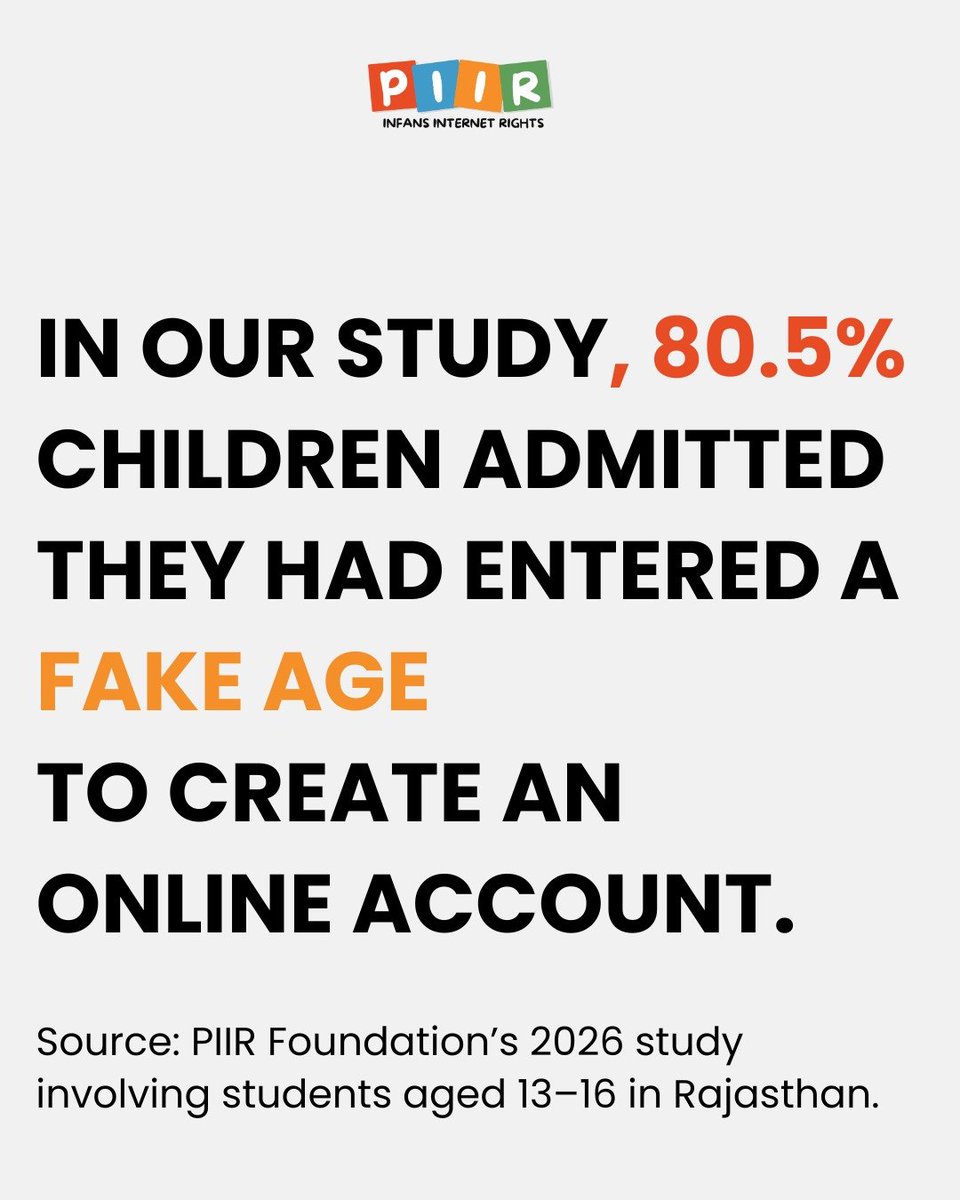
Our research found that 80.5% of surveyed students aged 13–16 had entered a fake age to create an account.
@baawraman
In collaboration with @UNICEFIndia & Odisha Police, we recently conceptualised #JUVENTICA, a conclave on Children’s Rights on the Internet.
A conversation on childhood in the digital age, not just as a cyber safety issue, but a rights issue.
@baawraman
https://t.co/tWAFFkVfo3
Looking forward to presenting PIIR Foundation’s research findings on the Digital Personal Data Protection Act, 2023 at #Juventica, designed and conceptualized by @PIIRPolicy
Our study looks at a simple but critical question: if parents are now placed at the center of children’s data consent, are they actually equipped to understand and navigate the digital environments their children inhabit every day?
An important conversation on children’s digital rights, safety, and the evolving role of parents in the age of the internet.
@UNICEFIndia@odisha_police
Really glad and honoured to have designed and conceptualised #Juventica with Odisha Police and UNICEF, building on the idea of #Infantia that we created last year with @assampolice.
Parents, teachers, and police coming together to talk about children’s safety on the internet, but through a children’s rights lens. That shift matters.
During the conclave, also shared findings from our research on the Data Protection Act, which puts parents at the centre of children’s data decisions, and why many parents may need to go back to school, not for exams, but to understand the platforms, settings, and digital worlds their children live in.
Grateful that through @piirpolicy, we could help start and anchor this conversation in India, and increasingly across Asia.
Looking forward to #Juventica in Bhubaneswar.
Designed and curated by @PIIRPolicy in collaboration with Odisha Police and UNICEF India, the conclave brings together parents, teachers, practitioners and institutions to talk about something that can’t stay on the margins any longer: children’s rights on the internet.
Another step in pushing the conversation forward.
We are honoured to design and curated #Juventica, in collaboration with Odisha Police and UNICEF, the conclave brings together parents, teachers, practitioners and institutions to talk about something that can’t stay on the margins any longer: children’s rights on the internet.
Children now grow up online too. Odisha Police, in collaboration with @UNICEFIndia presents #Juventica, Children’s Digital Rights & Safety Conclave.
Police Bhawan, Bhubaneswar | March 14
A conversation with parents, teachers, children and others on digital rights and safety of children.
My take on Karnataka’s proposed social media ban for under-16s. Like alcohol prohibition, bans rarely eliminate behaviour. They push it underground. Teenagers will still find ways around it.
It’s also unclear how such a ban could be technically enforced by a state, and blanket restrictions risk overlooking children’s digital rights recognised under the UNCRC.
In this piece, I share my thoughts along with insights from our research which we did at @PIIRPolicy on how Children understand consent and Internet.
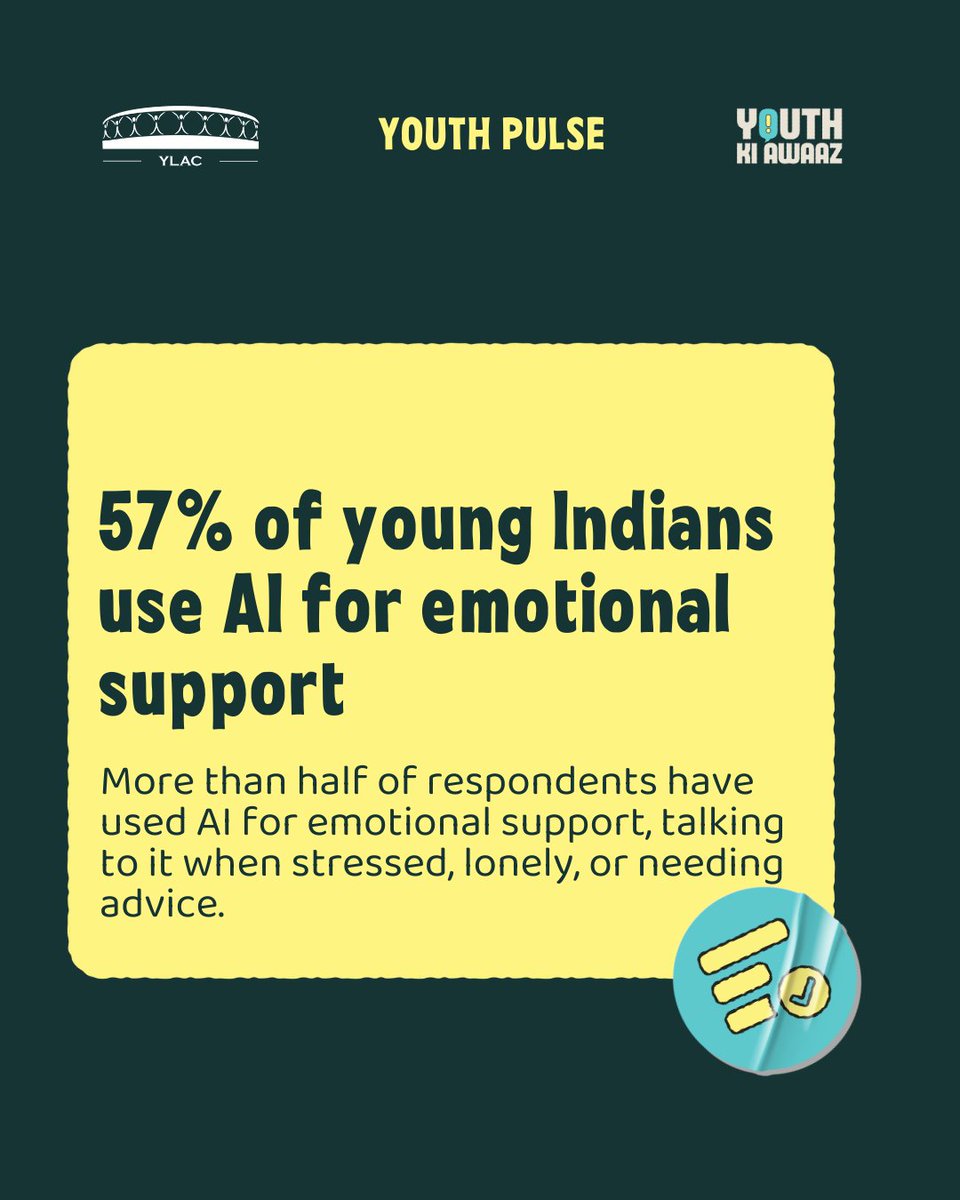
Young people are turning to AI for emotional comfort. A young person recently told me that they took AI's help to frame messaging to their partner about wanting to break-up. First I thought that's fair, we all take advice from our friends on how to do difficult conversations, so why not ask a large language model now. However, after reflecting I also thought, that the friend would sometimes push back and say maybe you should not break up, and instead of just giving the right messaging, perhaps suggest ways to work things out!
This and many other such experiences (and @anshul_tewari and I spiralling over it) prompted @ylacofficial and @YouthKiAwaaz to launch this survey with young people on how they are using AI for counselling, therapy, friendly advice and emotional support. We find what was thought of as fringe behaviour is mainstream among young people. And while it is may not be all bad, since for many people, a bot could be the best support they have, as a society we need to study this intently and think about safety-by-design for young people in AI chatbots. The solutions can be simple but powerful. For example, should a chatbot nudge a young person at some point to talk to a real human about their problem? What happens to privacy of these deeply personal chats? How to make sure that we do not lose the human experience of life?
I hope platforms, policymakers, educators, people who work on children's well-being will act on this now and not later. It is encouraging that Sam Altman spoke about this a few days ago too. We need to take steps to shape AI products and their usage now in a way, that it helps young people have a healthy and balance relationships.
Here is the link to the report: https://t.co/UopTcvftTm
Parenting can’t stop at ‘mera bachcha phone bohot chalata hai’.
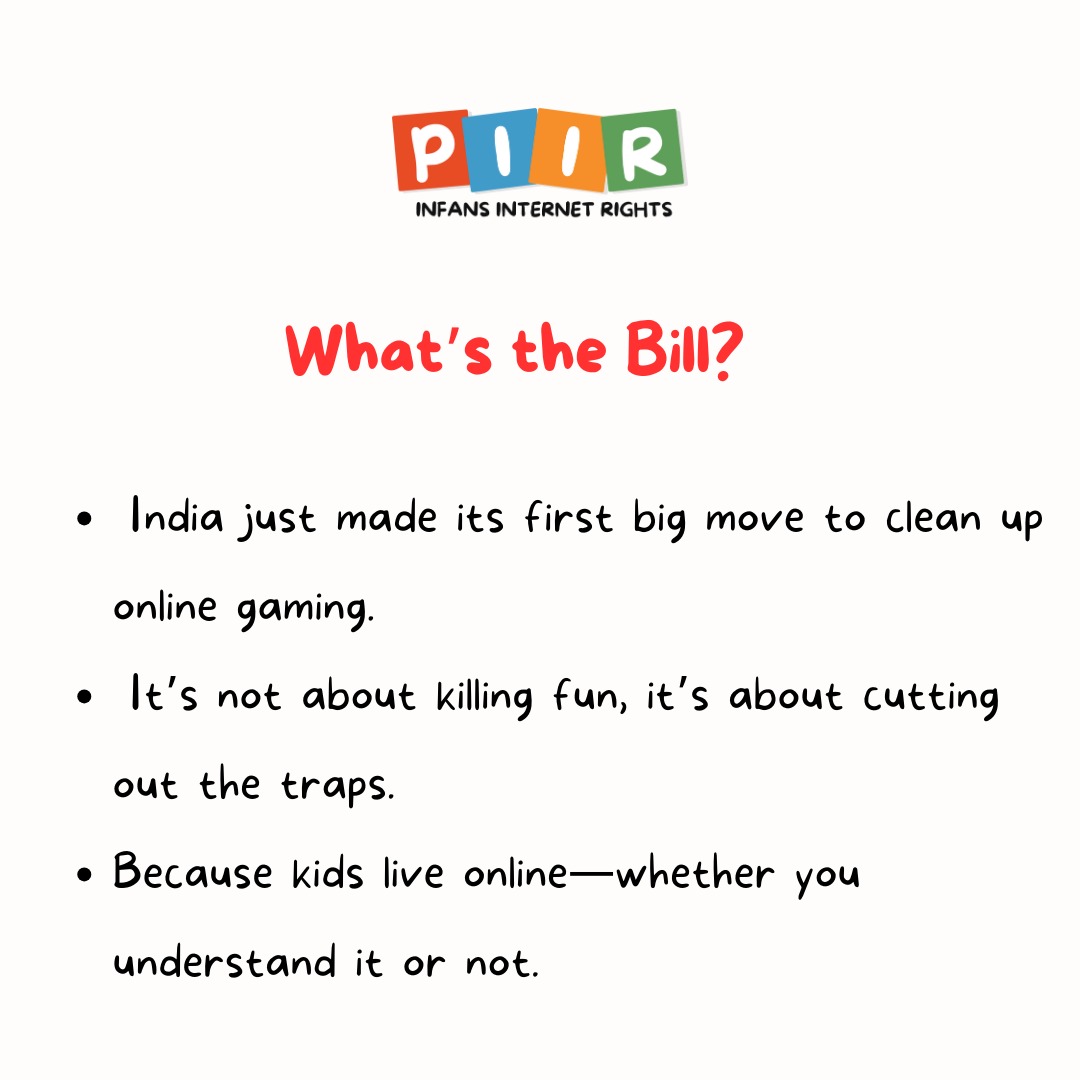
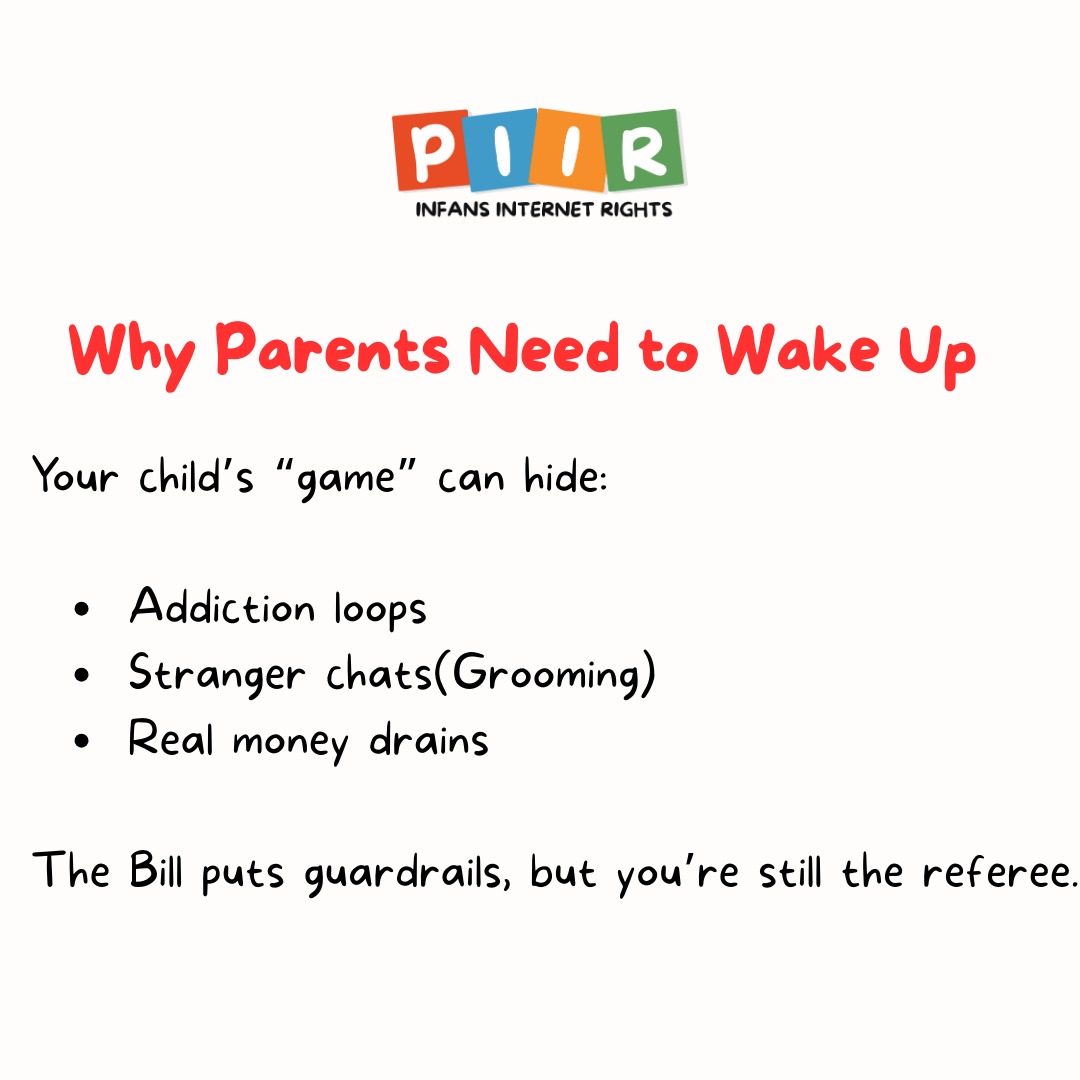
The Online Gaming Bill hands parents the joystick.
The question is: are parents ready to play the part?
A couple of days back, I received appreciation letters from @HardiSpeaks Sir, DGP @assampolice , for the work we did revolutionizing tech policy and communications for law enforcement in India. It means more than the words on the page.
For over eight years, I had the privilege & honour of working under Harmeet Sir.
Years that shaped not just my career, but my life. His direction, his clarity, and that towering personality, both in stature and in spirit(as visible in the picture), left a mark on my persona.
He’s also the reason I found my calling in children’s rights on the Internet.
The work I do today with @PIIRPolicy exists because he believed in me, pushed me to think bigger, and showed me what it means to lead with vision.
But here’s the truth: no rulebook can replace your role.
Learn the lingo. Use the tools. Talk to your kids.
Because in online gaming, ignorance isn’t protection, it’s the biggest risk.
Dear Parents,
The Online Gaming Bill 2025 isn’t just about kids’ screens, it’s about your blind spots.
For too long, “I don’t understand this digital stuff” has been the excuse. Not anymore.
This law sets limits, bans betting games, and makes parental consent a must.
ALARMING: AI-powered 'nudify' apps fuel deadly wave of digital blackmail.
Warning that this story discusses suicide: https://t.co/xeesTfFVAT
Source: AFP
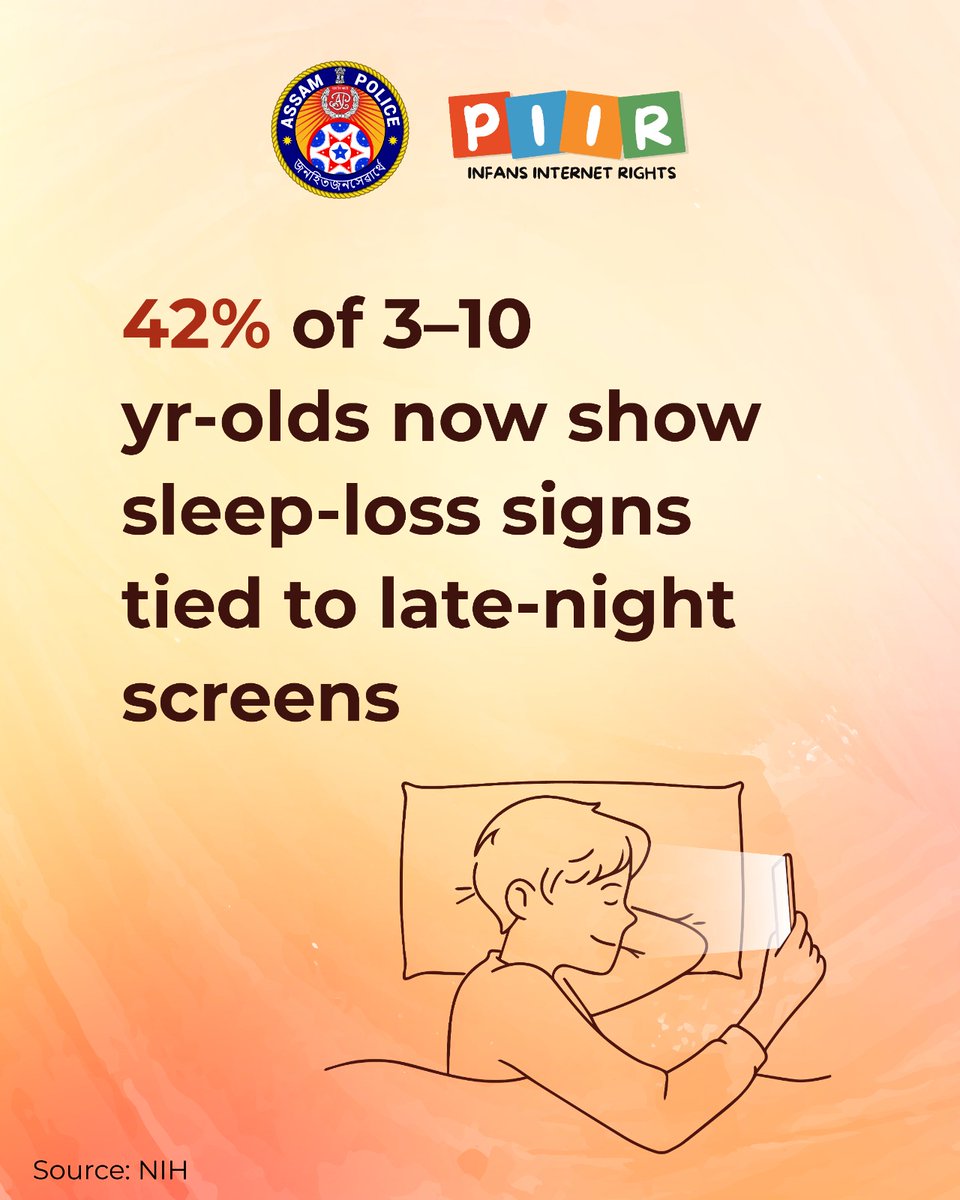
Screens shouldn’t steal your child’s sleep!
42% of children aged 3–10 are facing sleep-loss due to late-night gadget use.
Let's step in early, replace screens with stories and reclaim restful nights.
@assampolice
Our kids are getting trapped in digital quicksand—1 in 4 Indian school children now face Problematic Internet Use (PIU).
Parents, your vigilance is their lifeline!
Let's build safe digital boundaries and help them navigate away from online harm.
#PIUAwareParenting@PIIRPolicy