Being an exceptionally talented musician is one thing. But to stand before such high-caliber fellow musicians, a large audience, and cameras—all while remaining composed, communicating skillfully and effectively, showing genuine enjoyment, and staying focused on the creative process—that is what truly amazes me.
Political extremism on both sides is bad, but the reason I tend to zero in on the far left is because it’s hijacked everything I’ve ever loved—literature, art, music—and has convinced almost the entire world that the value of art lies in its relation to social justice.
TALES OF GRIMWICKE — Chapter I is 22 minutes of AI fantasy animation inspired by the many anthropomorphic animal stories I read as a kid, with a dark twist:
The model: Seedance 2.5 (@ByteDanceSeed_ ) via @Segmind_ai. 847 takes generated, mostly 30-second multi-shot prompts, over 5 hours of footage. 127 clips made the cut. About $4.5k in generation, four weeks from first take to publish.
Characters and locations came out of @midjourney. Using MJ for the location plates was a revelation: the cinematography and art direction are a level above, and it renders far better as a plate than Nano Banana or GPT Image. Nano Banana (@GoogleDeepMind run on @fal) did the heavy lifting editing those plates, building anchor frames and turning MJ characters into turnaround sheets. Then I let Seedance do as much of the framing and camera operating as possible. That gave the best results.
A lot of what I do in my Unreal Engine films came with me: a handheld, imperfect camera operator instead of smooth moves, focus hunting, and above all weather and atmospherics. The model does water, snow, smoke and rain really well, and leaning into that is what keeps it from looking like a Temu Pixar film.
The tools I built: a portal (Node on @flydotio) that holds the bible, the refs, every prompt and every take, with a Claude agent (@claudeai) that writes the prompts to the house rules. A Premiere Pro (@AdobeVideo) panel that browses the archive, drops selects on the timeline, versions the project, strips music, and sends fixes back to Seedance. Everything is done in 720p with no upscaling, because it looks terrible. Narration is my own voice through @ElevenLabs speech-to-speech. Music from @Artlist_io.
None of this would exist without @PJaccetturo and @Kavanthekid. Their narrative work, Nexus and Chronicles of Bone, proved long-form AI film was possible, and their podcasts, newsletters and X posts, updated constantly as the workflow changes under everyone's feet, showed how to actually do it.
Chapter II is currently in the works and I will release it initially on my YouTube channel, The Darkest Age (@CharlieDriscollAI). Consider subscribing there to see it as soon as it drops!
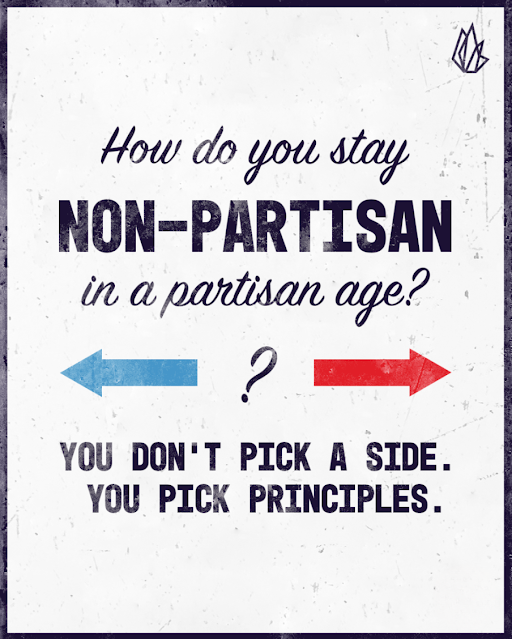
Nonpartisanship gets hardest precisely when it matters most.
The real test is whether you apply your principles consistently when doing so angers allies, helps opponents, or costs you politically.
"Nobody has the right to live their lives being protected from offence, or from insult or from hurt feelings - it is an occupational hazard of living in society"
And if you really can't take it, become a hermit"
Here is the brilliant full speech
They all loved her
RIP Widders
@wekatweets@JosephMooneyMP@chrisluxonmp I get it. Not breaking the law, just breaking the terms of service of the SM companies I guess. I just wish we had major political parties who felt they coud win the battle of ideas in open debate. It’s not like they don’t have smart people @JosephMooneyMP
🇯🇵🇺🇸 Happy Independence Day to our friends in the United States!
This song is very popular here in Japan and many artists often cover it. I particularly love this one.
@dpfdpf If you let leaders wriggle out of institutional neutrality by saying things like “this is my personal view”, you don’ get any institutional neutrality.
EPISODE 156: Coleman Hughes Takes on America's Most Contentious Debate
@JTLonsdale sits down with @coldxman to discuss his new @uaustinorg course: "The Legacy of Slavery"
(00:00) Episode intro
(01:40) Teaching the Legacy of Slavery
(06:20) Coleman's journey from Columbia to UATX
(08:30) Dr. King vs Derrick Bell
(11:20) Racial disparities by IQ and salary
(13:00) Thomas Sowell & the Real History of Slavery
(19:00) America's Founding Hypocrisy
(24:00) Will the Left cancel Dr. King?
(26:20) Understanding the 1619 Project
(30:25) Breakdown of the black family
(37:20) Is America wealthy because of slavery?
(43:50) Are you worried about woke AI?
(45:40) Three solutions for racial progress
Stephen Wolfram, founder of Wolfram Research, explains how LLMs are quietly dismantling our deepest assumptions about consciousness:
He argues that large language models have done something philosophy and neuroscience couldn't:
"In terms of consciousness, I have to say, the idea that there's sort of something magic that goes beyond physics that leads to sort of conscious behavior, I kind of think that LLMs kind of put the final nail in that coffin."
His reasoning is that LLMs keep doing things people assumed they couldn't:
"There were all these things where it's like, oh, maybe it can't do this, but actually it does. And it's just an artificial neural net."
Wolfram then challenges a core assumption about conscious experience: the feeling that we are a single, continuous self moving through time.
"I think our notion of consciousness is a lot related to the fact that we believe in the single thread of experience that we have. It's not obvious that we should have a persistent thread of experience."
He points out that physics doesn't actually support this intuition:
"In our models of physics, we're made of different atoms of space at every successive moment of time. So the fact that we have this belief that we are somehow persistent, we have this thread of experience that extends through time, is not obvious."
Then Wolfram offers a striking origin story for consciousness itself.
@stephen_wolfram suggests it traces back to a simple evolutionary pressure: the moment animals first needed to move.
"I kind of realized that probably when animals first existed in the history of life on Earth, that's when we started needing brains. If you're a thing that doesn't have to move around, the different parts of you can be doing different kinds of things. If you're an animal, then one thing you have to do is decide, are you going to go left or are you going to go right?"
That single binary choice, he argues, may be the seed of everything we now call awareness:
"I kind of think it's a little disappointing to feel that this whole wanted thing that ends up being what we think of as consciousness might have originated in just that very simple need to decide if you are an animal that can move. You have to take all that sensory input and you have to make a definitive decision about do you go this way or that way."
The takeaway is unsettling but clarifying.
If LLMs can produce complex behavior from simple rules, then consciousness may not be a mystical add-on to physics.
It may just be what happens when a layered enough system has to make a decision.
Hi Randy. I don’t know why more people aren’t realising that Elon doesn’t benefit from TSLA doing well in the lead up to the spaceX IPO. TSLA in the doldrums means more retail investors will sell to jump to the next big thing, namely SpaceX. IPOs are risky, so the smart money holds onto its TSLA stock knowing that the good news is likely to start flowing again post the SpaceX IPO.
David Friedberg today on @Tesla:
"I think we're going to look back one day and have this laughing observation that Tesla started out as an electric car company, ended up becoming an autonomous car company, and the autonomous competency lead to the robotics revolution. Even if the socialist ban robotics on Earth, you could ship all those robots to the Moon and they could get to work and create an entirely new manufacturing frontier for our civilization, for humanity."
(via @theallinpod)