My waiter had dementia and forgot my order.
I visited a cafe in Japan that ONLY hires people with Dementia. It's called the Cafe Of Mistaken Orders.
Sometimes the servers bring you the wrong food, never bring your order, or sit down and join you instead.
But the point of this cafe is to be a place for dementia patients to feel needed and have purpose.
And this cafe is working. Japan has discovered that being socially connected actually slows down the progression of dementia.
So now there are 8,000 dementia cafes all over Japan!
The U.S. should be more like Japan. We should keep elders out of nursing homes, find ways to give them purpose, and part of society until their last days.
Activist: "Your sheep are unsustainable."
Farmer: "Compared to what?"
Activist: "Anything. They're a drain on the land."
Farmer: "This land grows grass and nothing else. Too steep to plough, too wet to crop, too thin to bother. The sheep is the only thing alive that turns it into food."
Activist: "Grow plants instead."
Farmer: "Nothing arable grows here, I've told you. So walk me through it. A solar-powered animal eats a crop I can't, on ground I can't farm, and hands me back the most bioavailable protein going. What's the more sustainable version of that?"
Activist: "Lab protein. Soy."
Farmer: "Both want flat land, inputs, and a factory. Mine wants rain and a fence. And while she's at it she grows a fleece, a renewable textile that composts in a hedge, off the same blade of grass."
Activist: "Wool's barely used anymore."
Farmer: "Because you swapped it for plastic dragged out of the ground, shedding microfibre into the rivers, sat in landfill for four centuries. You picked the oil jumper and called the wool one wasteful."
Activist: "It's still livestock."
Farmer: "It's grass, sun, sheep, dinner, and a jumper, on land that otherwise feeds nobody. If you've got a tidier loop than that, I'm all ears."
Activist: "..."
Farmer: "Sustainable means it keeps going on its own. She's been managing that on this hill since before the word turned up."
They attacked wool. We got polyester. Half a million tonnes of microplastic fibre enter the ocean every year from synthetic clothing. Microplastics are now in human blood, lung tissue, and placentas. Wool biodegrades in months. Polyester persists for centuries.
They attacked leather. We got PVC and polyurethane. The vegan leather cracks within two years. Both require petroleum. Real leather is a byproduct of food production, lasts decades, and biodegrades. The ethical alternative requires an oil rig.
They attacked butter. We got margarine. Trans fat disease for a generation. The formulation has been quietly revised three times since. Butter contains vitamins A, D, E, and K2. The butter never changed. The butter never needed to.
They attacked whole milk. We got oat drink. Water, sunflower oil, three stabilisers, and a flavouring. Tested on no human population for any meaningful length of time.
They attacked beef. We got plant-based burgers. Pea protein extracted with hexane, seed oils, methylcellulose, and nineteen other ingredients. Beef grows on hills that can't grow crops, sequesters carbon, and fertilises without a factory.
They attacked tallow and lard. We got industrial seed oils. Heart disease, obesity, and chronic inflammation followed the switch within a single generation.
They attacked egg yolks. We got egg whites in a carton. The most nutrient-dense part of the egg, drained off and discarded. The white, the least useful component, sold at a premium.
In every case the traditional animal product was nutritionally superior, environmentally lighter, and cheaper to produce.
In every case the ethical replacement was industrially complex, petrochemically dependent, and worse for the body using it.
The ethics were the marketing. The marketing was the product. The product was the problem.
A pasture in the Lincolnshire Wolds has carried cattle for a thousand years.
It's worked by the Crawford family. Has been since the reign of George IV. Two hundred years of calving in the small hours, of bringing the herd in before storms, of two hundred years of knowing that the Lincoln Reds prefer the south-facing slopes in spring and the sheltered hollow when the wind comes off the North Sea in October.
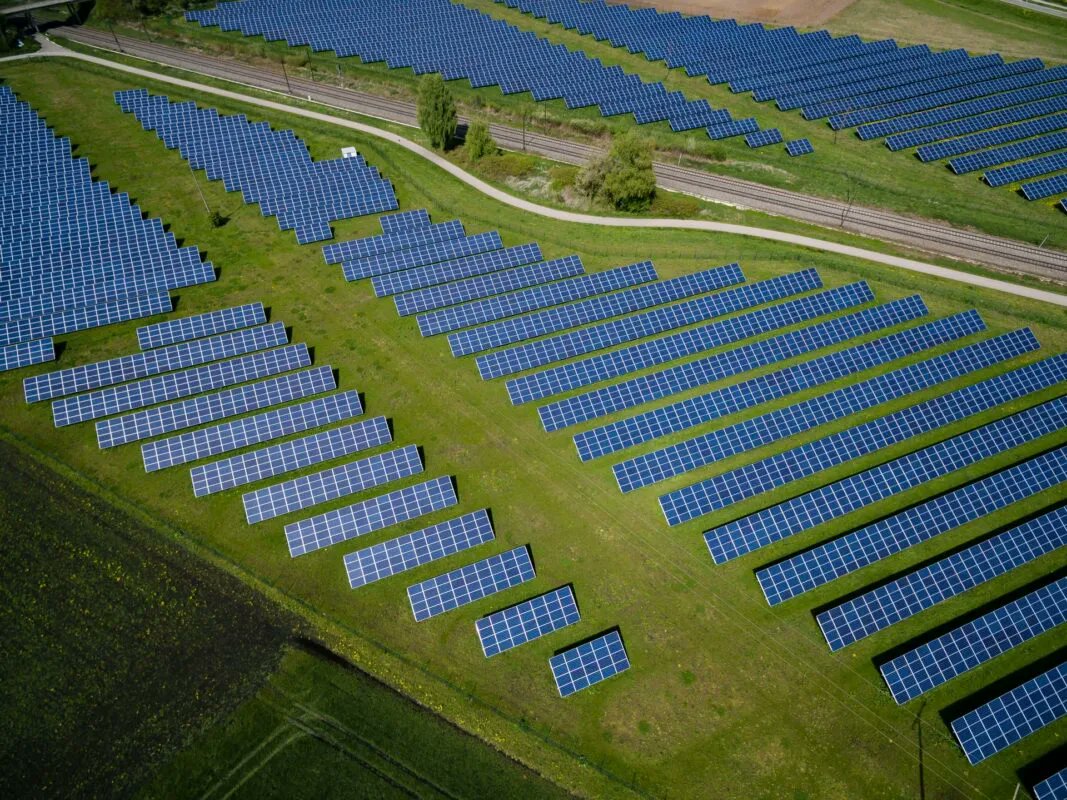
In 2025, a solar developer offered them £1,250 an acre per year, index-linked, on a forty-year lease. The suckler herd was running at a loss before subsidy. With subsidy, the margin was thin enough that one bad winter or one TB reactor wiped it out.
The family is thinking about it.
You can't blame them. The maths is not subtle. The maths is a father and a son walking the herd at first light, neither of them speaking, both of them knowing that the figure on the developer's letter is more than the farm has cleared in a decade.
If they sign, the panels go up in 2027.
The herd will be dispersed at Louth, which is now the last remaining livestock market in Lincolnshire. Two hundred head of one of the oldest beef breeds in Britain, descended from cattle the Norse settlers brought across the North Sea, finished on grass without a grain of cereal, broken up and sold to whoever turns up with a trailer. Fewer than five hundred original-population Lincoln Reds remain in the world. The Crawford herd was one of the larger ones.
The barn becomes a substation. The cattle grid gets lifted. The hedge the great-grandfather planted in 1958 gets pulled out to widen the access track for the construction lorries.
The Crawfords did not choose this. The economics were engineered, in Westminster, over fifteen years, to make this the only sensible option.
The panels are not the villain. The panels are the symptom.
The villain is a country that decided British beef mattered less than electricity it could have generated from the roof of the Amazon warehouse outside Grantham. The shelf in the supermarket where the Lincoln Red used to sit will be filled, quietly, by Irish beef, then Australian, then Brazilian, and nobody will tell the shopper why the country stopped feeding itself.
The roof of the warehouse is still empty.
The herd is gone.
🇹🇷 A stray cat in Turkey shows up every morning to hug the man who fed her.
Not sometimes. Every single day.
His shop is now packed with people who come just to watch.
Margarine was the great winner of the low-fat era. It is worth being honest about what it actually was, and what it still is.
The cheapest vegetable oil on the planet, beaten with hydrogen gas under pressure until it stopped behaving like oil and started behaving like a solid.
The reaction produced trans fats. Molecules so structurally wrong the human body cannot metabolise them. Molecules that lodge in cell membranes where the fat that built you used to sit, drive inflammation, and raise the exact cardiovascular risk margarine was being sold to prevent.
Trans fats are now banned or restricted across most of the developed world because they were, conservatively, killing tens of thousands of people a year.
This is what an entire generation of mothers was told to spread on their children's toast instead of butter.
Butter, which is cream that has been shaken, eaten by humans for somewhere between four and ten thousand years.
Margarine, an industrial product invented in 1869 to feed Napoleon III's army on the cheap, reformulated repeatedly as each version was quietly found to be more harmful than the last, and marketed each time as the heart-healthy choice.
The adverts showed sunflowers. The tubs were yellow. The names suggested a farmhouse. The product inside was an industrial fat the human body had no machinery to process, sold against the real food it had been brought in to replace, in the name of preventing the disease it was actively causing.
And here is the part nobody mentions. The trans fats were quietly removed in the 2000s. The new version is a blend of rapeseed, palm, and sunflower oils, processed with hexane solvent, deodorised, bleached, and emulsified into a tub. Still industrial. Still seed oil. Still nothing the human kitchen had until a hundred years ago.
It still sits on the shelf next to the butter. Still in the same yellow tub. Still marketed as the heart-healthy choice. The little symbol on the lid still tells you a charity has approved it.
The butter was never the problem. The thing they told you to replace it with was the problem then, and a reformulated version of the same thing is the problem now.
The cow was right. The factory was wrong. It is still wrong. They just changed the wording on the side of the tub.
We have, at this hour, disturbing reports of a Hereford cross operating, with apparent impunity, on a sixteen-hectare site in Herefordshire. The animal is named Gerald. The following is a reconstruction of his activities, hour by hour, compiled from witness statements and the kitchen window.
5.45am. Gerald wakes up. He is, by every published account, ruining the climate. He addresses this by standing in a field that is currently sequestering carbon. He is unaware of his complicity.
6.10am. Gerald scratches his shoulder against the gatepost. He has been doing this on the same gatepost for two and a half years. The gatepost has, by long use, achieved a particular polish that the farmer's wife has, twice, considered photographing.
6.30am. Gerald begins his daily assault on the atmosphere. The assault consists of eating grass. The grass, six months ago, pulled the carbon directly out of the air. Gerald is removing the carbon from the grass that removed it from the sky.
8.30am. Gerald exhales. The exhalation contains methane. The methane will, over the next nine years, break down into water vapour and CO2. The CO2 will be absorbed by next year's grass. Gerald will eat next year's grass. The cycle has completed itself before any spreadsheet has noticed.
10.45am. Gerald produces a pat. The dung beetles, by Friday, will have buried it. The soil under Gerald's hooves is building, year by year. He has not invoiced for this.
12.00pm. Gerald lies down. He chews. The rumen is converting cellulose (which no human can digest) into protein (which every human depends on). He is performing alchemy. He is doing it lying down.
1.30pm. Gerald stares at a magpie for forty seconds. The magpie leaves first. Gerald has, by quiet agreement, won.
3.00pm. Gerald drinks 30 litres at the trough. The water is rain. The other 14,970 litres in the "15,000 litres per kilogram" headline are also rain.
The grass would, in his absence, die in autumn and rot in the field. The carbon would return to the atmosphere either way. Gerald is the optional middle of a process that was going to happen regardless.
The optional middle is, however, the part that feeds people.
The optional middle is also the part that builds the soil.
Gerald has, by close of business, ruined nothing.
The accusations will, in the morning, be repeated.
Gerald will, in the morning, fail those too.
Activist: "Beef uses an obscene amount of water. Fifteen thousand litres per kilo."
Farmer: "Where did the water come from?"
Activist: "What?"
Farmer: "The fifteen thousand litres. Where was it before it was on the bill."
Activist: "I don't know. A river?"
Farmer: "The sky. About ninety-four percent of that figure is rain that fell on the field and got drunk by the grass. The cow ate the grass. The rain was on its way down whether the cow was here or not."
Activist: "But it still counts as water used."
Farmer: "By the grass. Which would have used it whether I farmed or moved to Spain. The cow isn't commissioning the rainfall. The rain isn't on the cow's payroll."
Activist: "Then just don't have the cow."
Farmer: "The rain still falls. The grass still drinks it. The water cycles back into the air anyway, just without anyone getting fed in the middle."
Activist: "It's not that simple."
Farmer: "It's rain, grass, cow, river. Or it's rain, grass, rot, river. Same circle, fewer dinners. Meanwhile every almond in your milk took a gallon of pumped aquifer water in California to grow. That one you might want to worry about. The rain in Wales is doing fine without your concern."
Activist: "Your cows are putting carbon into the atmosphere."
Farmer: "Where did they get it?"
Activist: "What?"
Farmer: "The carbon. Where did the cow get it before it put it anywhere."
Activist: "From... eating?"
Farmer: "From eating grass. And where did the grass get it."
Activist: "The soil?"
Farmer: "The air. The grass pulled it out of the air last spring. The cow ate the grass. The cow breathed some of it back out. It went back into the air it came from."
Activist: "But it's still going into the atmosphere."
Farmer: "It's going back. There's a difference between a thing going somewhere and a thing going back. You've described a circle and you're frightened of it."
Activist: "Then just don't have the cow."
Farmer: "The grass still dies in autumn. It rots where it falls. The carbon goes back into the air either way, just without anyone getting fed in the middle."
Activist: "It's not that simple."
Farmer: "It's grass, cow, breath, grass. Or it's grass, rot, air, grass. Same circle, fewer dinners. If that's complicated for you I'd stay away from the water cycle. That one's got clouds in it."
@aliciaandrz Relapses are part of life, the important thing is that you got past it and it’s great to know how the medication is helping you in this way xx