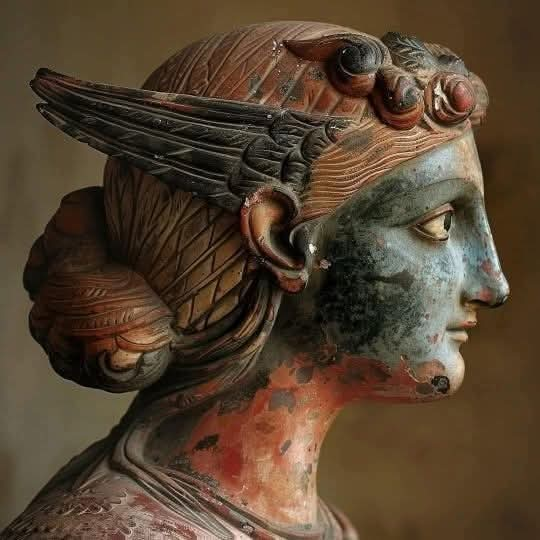
Prodigious Etruscan woman statue :
In the 6th century BC, Etruscan cities and culture reached the peak of their development...
Sculptural forms in Etruscan art developed from the generalized, sometimes roughly executed images of early 6th Century BC to the more perfect, harmonious ones of the end of the century. Masters, as noted above, often turned to terracotta and bronze.
#archaeohistories
The immortal Patsy Cline performs with Bob Wills and his Texas Playboys as her backup band at a show in Kansas City, 1958. Can you imagine having been there for this show? Both Patsy and Bob are musical royalty!
#IronMaiden. “Infinite Dreams.” 1988. Birmingham NEC, UK. 7th Son was such an epic way for Maiden to close out the 80s because it pretty much captured the best of the previous 6 releases. Said differently, if heavy metal was a video game, Iron Maiden completed it right here.
The artifacts discovered in Mogilanska Mogila, are believed to belong to a Thracian princess from the Triballi tribe and have been dated to the 4th Century BC. The most fascinating discoveries were made in Tomb 2, where a chariot with two horses was found, both ritually killed during the burial. Silver reins and silver decorations from the horses bridals were also uncovered.
Additionally, the tomb contain the remains of a young woman believe to be a servant who was ritually sacrificed alongside the owner of the chariot. In the western part of the Tomb, the skeleton of a young girl was discovered, adorned with a remarkable golden wreath weighing 205 grams. The wreath was accompanied by gold carvings adorned with Sphinxes and plant motifs.Other notable finds within the tomb included silver vases, a silver jug, a rhyton-shaped amphora, clay figurines and more.
The artifacts are currently displayed at Vratsa Museum, Bulgaria.
#archaeohistories
#Motorhead. “Motörhead.” 1980. Theatre Royal, Nottingham. The attitude here… ‘fuck everything you’ve heard before, we are Motörhead and we play rock n roll” *life changes forever* 💥♠️
The Cosquer cave in France contains various rock art engravings dating back as far as 27,000 years ago.
The cave has more than 200 parietal figures and is also the only decorated cave whose entrance opens underwater (37 m) due to the Holocene sea level rise.
The 2500-year-old Geto Dacian silver and gold crown/headdress was discovered in a tumulus with several chambers full of treasure northeast of Dobrogea, on the territory of Agighiol commune, Romania.
When burial was made in a tumulus, the Geto Dacians used incineration. Accordingly, the eyes of Zamolxis on the Geto Dacian crowns equated with funerary offerings and tribute given to deities in temple rituals, thus attesting to what Herodotus said about the Getae that they considered themselves immortal.
The Histories, Herodotus
[94] The belief of the Getae in respect of immortality is the following. They think that they do not really die, but that when they depart this life they go to Zalmoxis, who is called also Gebeleizis by some among them. To this god every five years they send a messenger, who is chosen by lot out of the whole nation, and charged to bear him their several requests. Their mode of sending him is this. A number of them stand in order, each holding in his hand three darts; others take the man who is to be sent to Zalmoxis, and swinging him by his hands and feet, toss him into the air so that he falls upon the points of the weapons.
#archaeohistories
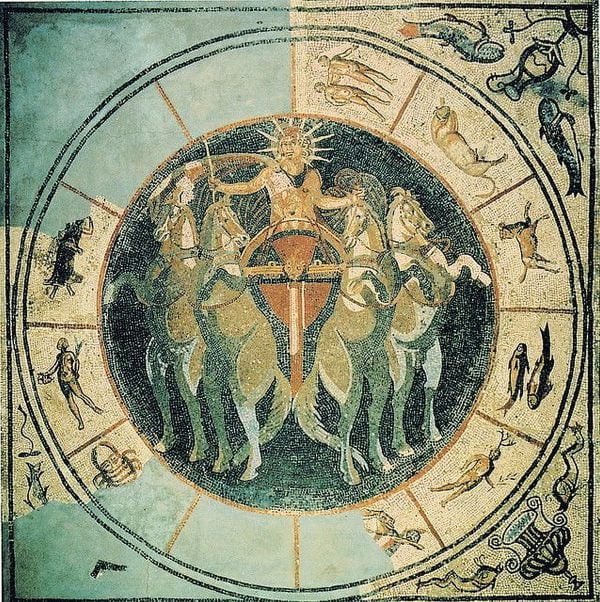
#MosaicMonday
This photo in no way does justice to how detailed and amazing this mosaic is, but it was the best I could find 😭 Depicted: Sol Invictus surrounded by the signs of the zodiac.
📍 Roman villa at Münster-Sarmsheim
🏛 Rheinisches Landesmuseum, Bonn
#FrescoFriday
Detail of the ‘dancing figures’ from the so-called Villa of Cicero at Pompeii. The fluidity of the poses, as though floating in the air, combined with the arresting diaphanous material of their dresses is simply stunning.
🏛 MANN Napoli, inv. 9295